This is a promotional post for SIMOVO
Traveling abroad is exciting, but staying connected can often become stressful. From expensive roaming charges to searching for local SIM cards in an unfamiliar country, internet connectivity is one of the biggest challenges travelers face today. This is exactly why eSIM technology has become so popular—and why SIMOVO eSIM is now a trusted choice for travelers around the world.
In this complete guide, we’ll explain what SIMOVO eSIM is, how it works, and how you can use it abroad easily and confidently, even if you’ve never used an eSIM before.
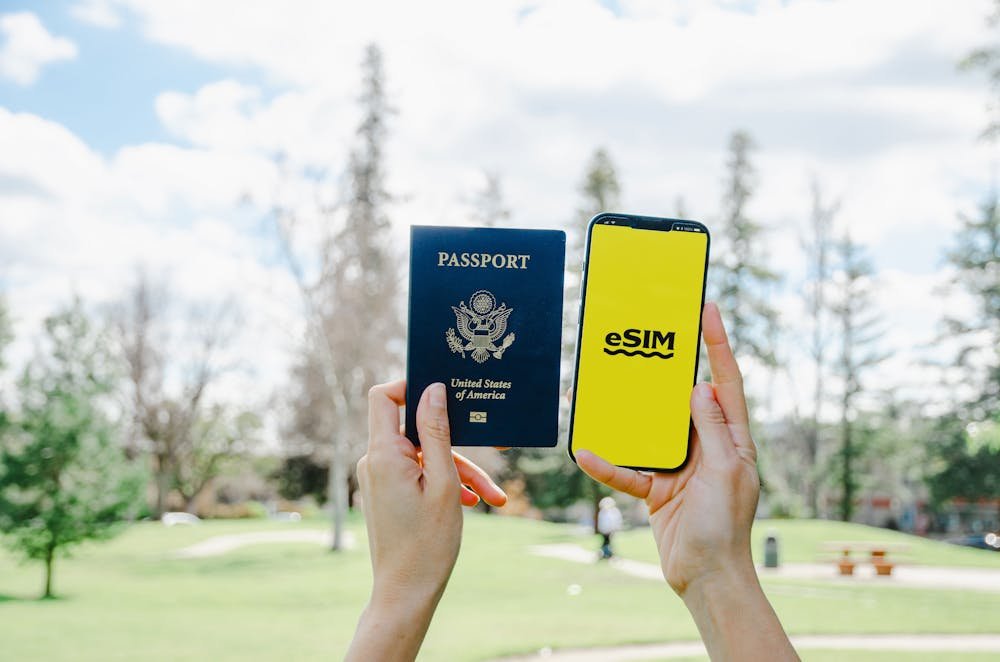
SIMOVO eSIM is a digital SIM that allows you to access mobile data without inserting a physical SIM card into your phone. Instead of swapping SIMs, everything is done digitally by scanning a QR code.
This modern solution is designed especially for travelers who want:
Fast and easy internet access
SIMOVO eSIM works on most modern smartphones and gives you instant connectivity wherever you travel.
When traveling internationally, staying connected is essential for everyday tasks such as navigation, bookings, communication, and safety. SIMOVO eSIM makes this simple and reliable.
Here’s why travelers choose SIMOVO:
International roaming with your home SIM can be extremely expensive. SIMOVO eSIM offers affordable data plans with transparent pricing, so you always know what you’re paying.
You don’t have to wait until you reach your hotel or find a SIM shop. Once installed, SIMOVO eSIM connects you to the local network almost instantly after landing.
You can keep your physical SIM in your phone and continue receiving calls, OTPs, and important messages on your main number.
Setting up SIMOVO eSIM is quick and simple, even for first-time users.
SIMOVO eSIM works across multiple countries and regions, making it perfect for:
Whether you’re exploring busy cities, relaxing at tourist destinations, or traveling between countries, SIMOVO keeps you connected without interruption.
With a reliable internet connection, your travel experience becomes smoother and safer. Using SIMOVO eSIM abroad allows you to:
No matter your travel style, SIMOVO supports all your online needs.
A strong internet connection is crucial while traveling. SIMOVO uses trusted local mobile networks to deliver stable performance and fast data speeds, depending on availability in each country.
This ensures:
You can rely on SIMOVO whether you’re sightseeing, working, or relaxing.
To get the best experience, it’s important to choose the right plan based on your travel needs.
Consider the following before buying:
SIMOVO offers flexible options so you can choose what suits your journey best.
Absolutely. SIMOVO is designed for all travelers, including those using eSIM for the first time. The setup process is simple, and clear instructions are provided with every purchase.
If you ever need help, SIMOVO’s customer support team is available to guide you through installation or answer any questions.
Using an eSIM instead of physical SIM cards helps reduce plastic waste and packaging. SIMOVO supports a more sustainable way to stay connected while traveling, making it a smart choice for eco-conscious travelers.
Staying connected abroad doesn’t have to be complicated or expensive. With SIMOVO eSIM, travelers can enjoy fast, reliable, and stress-free internet access without dealing with traditional SIM card problems.
From instant activation and wide coverage to flexible plans and clear pricing, SIMOVO makes international travel easier and more enjoyable.
If you’re planning your next trip and want a smooth connectivity experience from day one, SIMOVO eSIM is a reliable solution you can trust.
Spearfishing enthusiasts are constantly on the lookout for the most inspiring places to dive into the underwater world. These locations offer not only rich marine life but also breathtaking landscapes that enhance the overall experience. This guide highlights some of the top destinations where spearfishing becomes an unforgettable adventure.
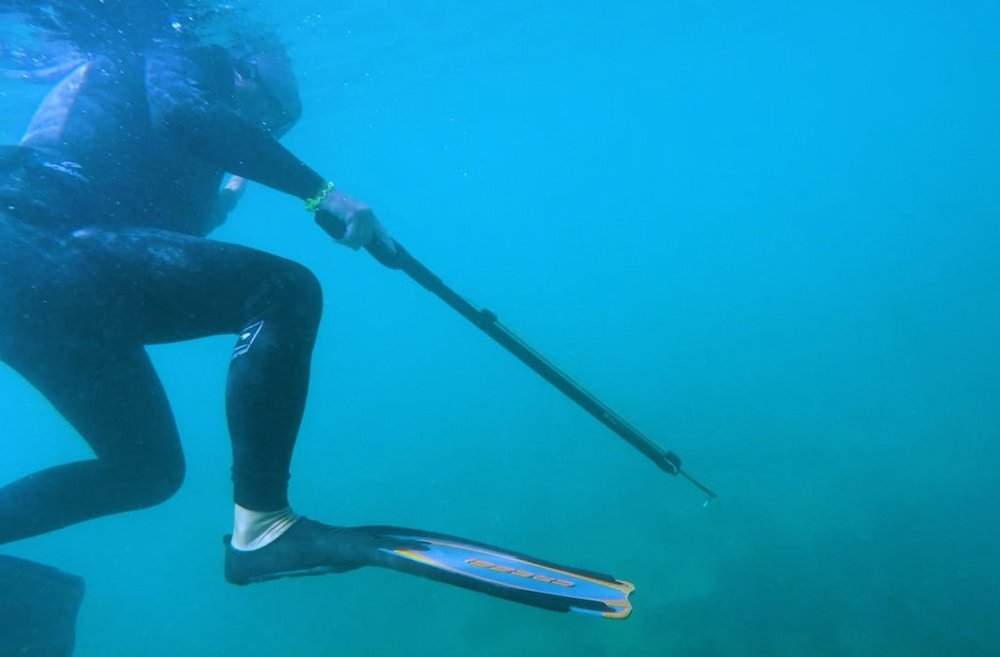
Spearfishing is more than just a sport; it's an opportunity to connect with nature in some of the most beautiful and inspiring places on Earth. Whether you're a seasoned spearfisher or a beginner, choosing the right location can make all the difference. From the vibrant coral reefs of the Pacific to the serene waters of the Mediterranean, each destination offers unique challenges and rewards. Equip yourself with the right speargun to enhance your experience.
The Pacific Ocean is home to some of the most inspiring places for spearfishing. Hawaii's Big Island, for instance, provides a stunning backdrop with its volcanic landscapes and crystal-clear waters. Here, you can encounter a variety of fish species, including parrotfish and mahi-mahi. The Great Barrier Reef in Australia is another must-visit, with its diverse marine life and vibrant coral formations offering a spearfishing paradise.
These locations not only offer incredible spearfishing opportunities but also allow you to immerse yourself in the local culture and natural beauty. Whether you're exploring the reefs or hiking the coastal trails, the Pacific's diverse ecosystems provide endless inspiration for adventurers.
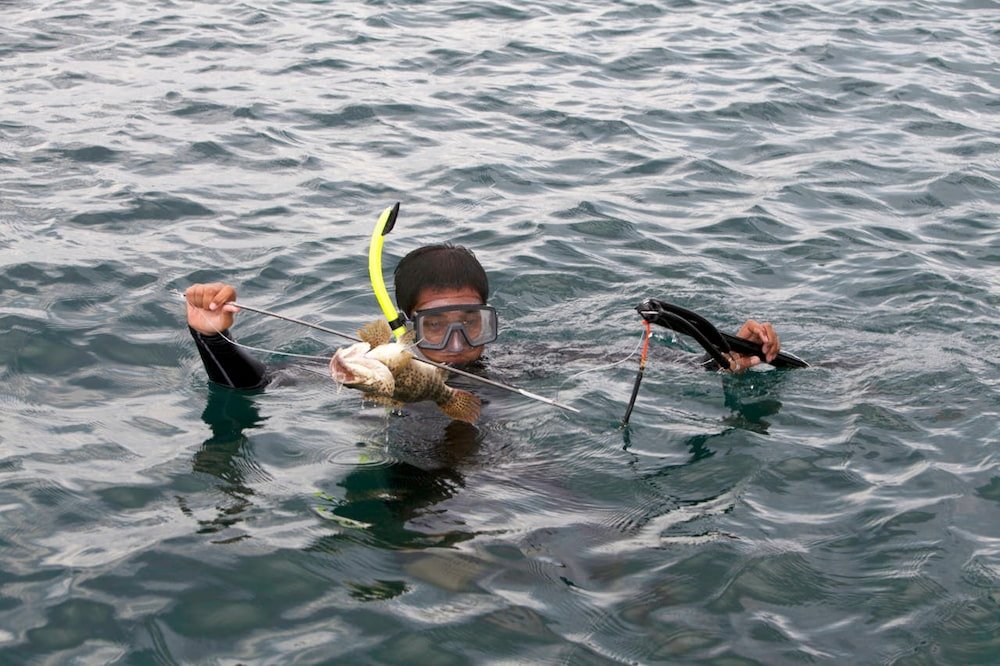
Beyond Hawaii and Australia, the Pacific islands of Fiji and Tahiti present equally compelling spearfishing destinations. These tropical paradises feature warm, nutrient-rich waters that support thriving populations of tuna, wahoo, and grouper. The underwater visibility often exceeds 100 feet, allowing spearfishers to spot their targets from impressive distances. Many of these islands also offer guided spearfishing tours led by local experts who possess intimate knowledge of the best diving spots, seasonal migrations, and traditional fishing techniques passed down through generations. The combination of world-class spearfishing and the warm hospitality of Pacific island cultures creates an experience that resonates long after you've returned home.
The Mediterranean Sea is renowned for its rich history and diverse marine life, making it an inspiring destination for spearfishing. The Greek Islands, with their ancient ruins and clear waters, offer a unique blend of cultural exploration and underwater adventure. Here, you can find a variety of species amidst the historical backdrop, creating a truly memorable experience.
In addition to the Greek Islands, the coastal waters of Italy and Spain provide excellent spearfishing opportunities. These regions are known for their vibrant marine ecosystems and picturesque landscapes, making them ideal for those seeking both adventure and relaxation.
While exploring these inspiring places for spearfishing, it's essential to prioritize sustainability and safety. Engage in responsible fishing practices by targeting non-endangered species and adhering to local regulations. Use eco-friendly equipment and strive to leave no trace behind to preserve these environments for future generations.
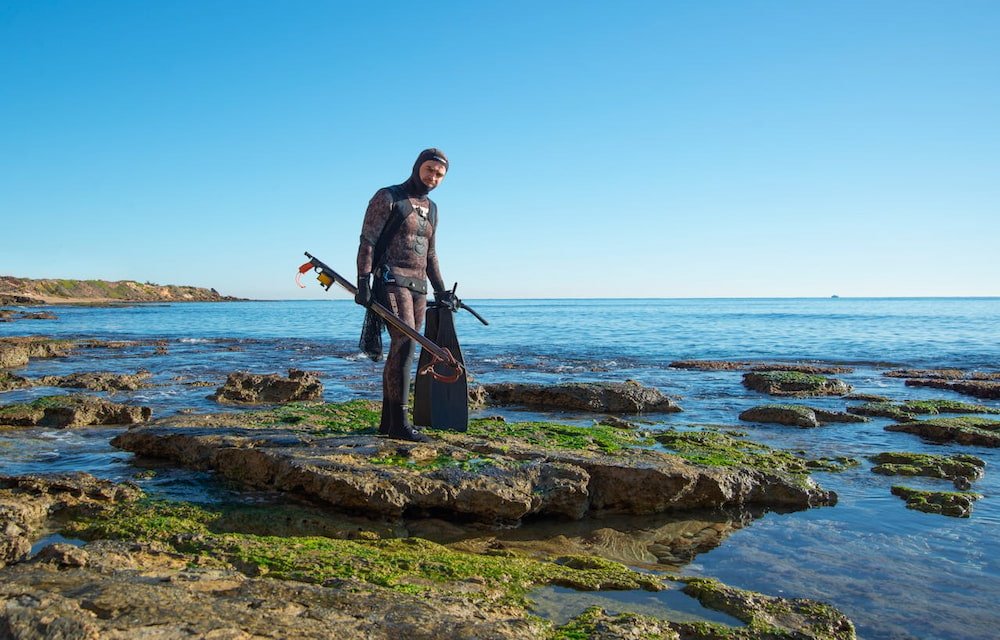
Safety should always be a top priority. Familiarize yourself with local conditions, such as tides and currents, and never dive alone. Wearing appropriate safety gear, like buoyancy vests, and informing someone of your plans can help mitigate risks and ensure a safe and enjoyable experience.
Exploring the most inspiring places for spearfishing doesn't have to break the bank. Traveling during off-peak seasons can help reduce costs, and opting for hostels or campsites instead of hotels can further cut expenses. Renting gear locally is often more economical than transporting equipment from home.
For those new to spearfishing or on a tight budget, consider purchasing second-hand equipment or joining community groups where you can borrow or rent gear affordably. Planning meals around local produce not only saves money but also enriches your experience with regional flavors, making your spearfishing adventure both affordable and fulfilling.
As a seasoned traveler, I've learned that a little insider knowledge can go a long way. That's why I'm sharing some key insights about Truist Park, a gem that often tops the list of must-see spots for backpackers in Atlanta. If you're planning a visit, you'll want to know what to expect and how to make the most of your experience.

Truist Park, a popular destination for backpackers, presents a unique experience in Atlanta. I aim to provide details about its rich history, formation, and how to get there to ensure your visit meets expectations.
Formally opened in April 2017, Truist Park, previously known as SunTrust Park, stands as the home ground for Major League Baseball’s Atlanta Braves. In agreement with Truist Financial, it was renamed Truist Park in 2020. Over the years, it's become a synonym for triumph, witnessing the Braves win prestigious titles. Apart from providing a stadium for games, the Park also embeds 'The Battery Atlanta,' an enthralling entertainment district with ample restaurants, music venues, and retail shops, adding to the park's vibrancy.
Truist Park resides in the bustling Cobb County, Atlanta, Georgia. It's easily accessible via various modes of transport, from both inside and outside the state. For locals, MARTA offers several routes that lead to the Park. Out-of-town visitors, including backpackers, will find Atlanta’s Hartsfield-Jackson International Airport, roughly 20 miles away, very convenient. To ease the commute, I suggest the CobbLinc Bus from the airport, as it provides direct connectivity to the Park. Even driving to the Park is effortless, thanks to Interstates 285 and 75. Moreover, there are plenty of hotels near Truist Park catering to different budget options, ensuring your stay is comfortable and offers easy park accessibility.
As a backpacker, immerse in the vibrant atmosphere of Truist Park, the sanctum for the Atlanta Braves and savor an array of amenities for an unmatched experience.
Marking the hub of baseball in Atlanta, Truist Park hosts the city's beloved Atlanta Braves. In most games, spectators get a thrill out of the electrifying competitions that take place here. The seating arrangement gives everyone a clear view of the field, making it a perfect spot for taking captivating photos of day or night games. You'll find it bustling with fans clad in navy, red, and white, cheering for their favorite team. Here, baseball isn’t merely a game; it's a cherished tradition that brings together a community.
Beyond baseball, Truist Park offers unique features that enrich the visitor's experience. Starting with 'The Battery Atlanta,' a mixed-use development housing an exhaustive variety of eateries, shops, and concert venues, it presents opportunities for enjoyment even beyond the baseball games. I'd also recommend exploring the Coca-Cola Roxy Theatre - a state-of-the-art facility hosting concerts and events. For the history enthusiasts, the Braves Museum provides a heroic journey through the Braves' history. Another feature is the Xfinity Rooftop, offering a panoramic view of the stadium and an interactive gaming area.
Apart from adrenaline-pumping sports, Truist Park is also a food paradise for budget travelers. I'm delighted to share some tantalizing food and drink alternatives within the park. Chains like Fox Bros. Bar-B-Q and pizza outlet Antico’s dish up crowd-pleasing meals, while craft beer fans can enjoy a variety of brews at Terrapin Taproom. Best part? You're allowed to bring your own food and drinks, keeping costs as backpacker-friendly as possible.
Within Truist Park's confines, a few tips can enhance a backpacker's experience. Be it saving money or packing for a game day, you'll find beneficial advice in this section.
Saving money during your visit to Truist Park comes down to being strategic. First, consider potentially cheaper seating areas, such as the General Admission sections. Second, take advantage of the "outside food" policy. It permits guests to bring food inside, as long as it fits into a clear, gallon-size container.
Next, don't overlook public transportation. Atlanta's public transit system, MARTA, provides cost-efficient travel and prevents hefty parking fees. Lastly, consider staying in budget-friendly hotels. It's a fuss-free way to cut costs without compromising your experience.
Smart packing contributes to a smoother experience on game day at Truist Park. Make sure you carry essential documents like your ID, game tickets or electronic confirmation, along with some cash and cards for purchases.
A poncho or small umbrella can be handy for unpredictable weather, given that umbrellas are allowed in the park as long as they do not obstruct other guests' views. Considering the stadium's outdoor nature, don't forget sunscreen and a hat or sunglasses to protect you from harsh sunlight.
Lastly, remember to pack any food you plan to bring within the park's permitted dimensions. Equipped with these essentials, you're set for a memorable game day at Truist Park.
Keeping yourself safe and relishing your time at Truist Park becomes effortless when you're informed about their security measures and prepared for varying weather conditions.
A visit to Truist Park must include an understanding of its security protocols. All entrants, including backpackers, undergo thorough screening through walk-through metal detectors, ensuring a safe environment for everyone. Bag policy allows backpacks or bags that fit under a stadium seat. It's vital to remember that the Park prohibits certain items like weapons, hard coolers, or glass bottles. To ensure a seamless entry, stick to the essentials and keep unnecessary items in nearby hotels.
Avoid carrying any prohibited items; always go through the list of allowed and prohibited items available on Truist Park's official website before your visit. Also, taking note of the emergency exits and safety announcements during the game provides an extra layer of safety.
One cannot predict the weather, but backpackers can surely prepare for it. Given Atlanta's weather can fluctuate, it's advisable to carry a rain poncho and wear layered clothing. That way, in case of sun, rain, or chill, you're adequately equipped to enjoy the game.
Keeping yourself updated with the day-to-day weather conditions of Atlanta during your visit can save you from unforeseen weather changes. Consider using weather tracking apps or websites. Remember, in case of severe weather, Truist Park has protocols in place to ensure everyone's safety. Stick to their guidelines, and your visit can remain a pleasurable experience, regardless the weather says.
As a backpacker, your focus should be on immersing yourself in the excitement of the game and the vibrant atmosphere of Truist Park. Stay informed, stay prepared, and most importantly, enjoy your adventure.
More and more people are heading towards the comfort and convenience of private planes, which offer fewer interruptions and more privacy in their travel plans. International airports are getting busier every day, and so are people. We’ll let you in on a secret: These trending airports do not seem so busy if you are not there to catch a commercial flight. We bring you a list of airports that will make it to the top choices of people traveling the world this year. With an adjustment to your mode of travel, you can enjoy the attractions of each port without losing your flight or getting stuck in security lines. But beware — you might end up loving it too much to ever fly commercial again.

The Singapore airport also hosts a yearly workshop called ‘Enchanted Night at Changi Experience Studio’s Holiday Camp.’ It provides you and your kids the experience of a lifetime with arts and crafts and welcomes you for a magical sleepover. If interested, you can taste the fun at this June workshop.
Home to Oryx Airport Hotel, the airport is also thoughtful about its passengers. You can enjoy some spa time, a game of squash, or dive into an 82-foot swimming pool. There is so much to do at the airport that it can almost make anyone way too excited for the adventures of Qatar itself.
Narita Airport hosts many art exhibitions for people traveling to Japan. One of the best things about art is that you can tell a lot about people just by looking at what they create. You can also taste authentic delicacies at the airport, keeping the excitement of exploring a new space alive.
The airport serves the capital of Colombia, Bogotá. One of the most pleasing features of this International Airport is its lactation booths. These are available to all lactating mothers and offer a comfortable, safe, and hygienic space to feed their babies.
The Parisian DNA also comes across in the food, concerts, intimate music settings, and the airport's duty-free store. Charles de Gaulle Airport is a commotion of French culture, especially now that the Olympics are nearing.
Events like the G20 in India (2023) or the Paris Olympics (2024) tend to attract huge crowds. Services can often slow down, causing emotional anguish to a passenger tired from a long series of flights. So why not stand out and opt for a private jet hire? Let’s see how they can elevate your experience.

On a commercial flight, you will likely sit with a stranger, but when you fly a private jet charter, you get to pick your fellow passengers in the aircraft. The latter promises you complete privacy.
Many people find it easier or ideal to work when flying. Flying in a private jet offers you amenities like onboard Wi-Fi, with enough speed to carry out essential functions like sending emails and having meetings. Commercial flights' lack of privacy and space might constrict you from executing work practices.
Space is another factor, interdependent on privacy and productivity. Usually, commercial flights have dedicated time slots for using the lavatory, and passengers are only allowed to move within the cabin's space. However, with a private plane rental, passengers can choose the aircraft size and have free reign to move around.
Both commercial and private flights provide first-class amenities to their passengers. However, the latter is more luxurious. While light beverages and pre-prepared meals are included with your tickets on a commercial flight, on a private jet charter, you can order your favorite meal with beverages of your choice. Furthermore, if it's a long-distance flight, you can stretch out on the couch — yes, private jets can be a lounge in the sky if you’re looking for such an experience.

This guide covers some of the incredible benefits of flying privately. However, let us know if you think we should have mentioned your favorite part of traveling in a private plane rental. It might make it onto our next list of the luxurious perks of private aviation.
Imagine exploring ancient cities, with towering temples framed by lush, dense jungles in Guatemala. The remnants of the Mayan civilization offer a treasure trove of rich archaeological sites. These are ideal for those eager for both adventure and history. Whether you're a seasoned backpacker or a first-time explorer of non-typical tourist routes, preparing for this journey can be exciting.

But check this out – Guatemala is a hotspot for eco-tourism, with many options for travelers seeking adventure amidst the beauty of nature. Consider incorporating spelunking tours into your itinerary to explore hidden caves and underground rivers, or embark on a thrilling hike up volcanic mountains for breathtaking vistas. Here are essential travel tips and insights to guide you through your adventure.
The core areas of ancient Maya, known for their historical and cultural significance, span across Guatemala's northern regions and highlands. Key sites include Tikal, the colossal city in the northern rainforests, and the lesser-known Yaxha and Nakum. Heading south, Quirigua displays intricate sandstone carvings worth a visit. For those interested in contemporary Mayan culture, the Ixil Triangle offers a view into ongoing traditions and daily practices.
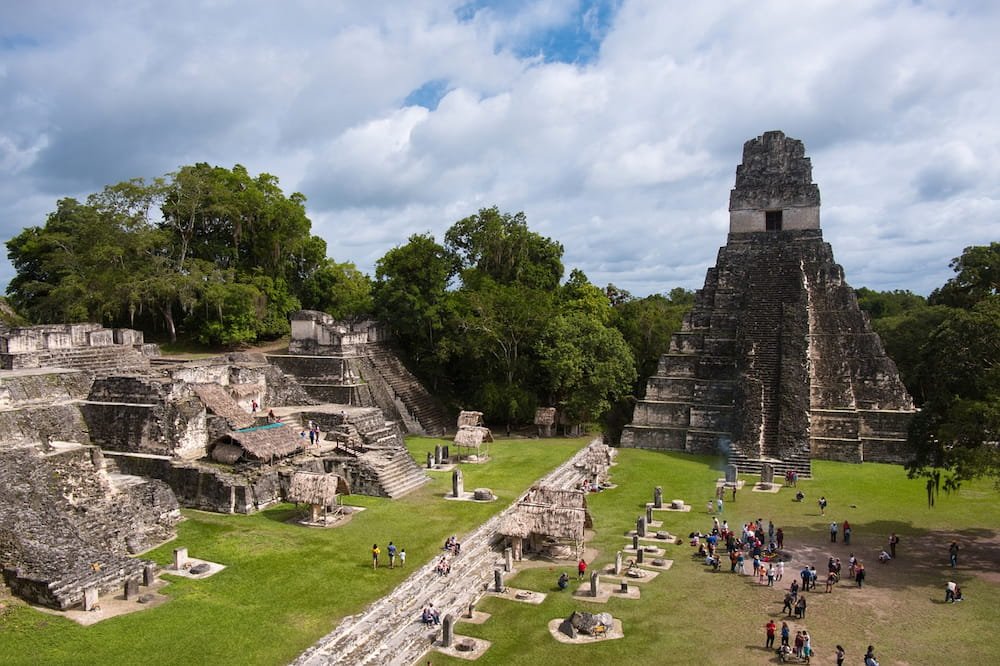
To fully grasp the magnificence of the Maya civilization, consider dedicating ample time to each site. Tikal, for instance, deserves at least a full day to appreciate its vast expanse and towering temples. Climbing to the top of Temple IV, the tallest pre-Columbian structure in the Americas, rewards you with a breathtaking panoramic view of the surrounding jungle canopy. The ethereal experience of watching the sunrise or sunset from this vantage point is an unforgettable highlight for many travelers.
Choosing the right time for your visit enhances the experience. The dry season, between November and April, presents the best conditions for exploring jungles and ruins comfortably. This period minimizes the chance of rain interrupting your explorations. Additionally, consider aligning your visit with local Mayan events such as the Wayeb' or the Rabin Ajaw festival in Cobán to see vibrant, cultural celebrations.
While the dry season is ideal for outdoor exploration, there are benefits to visiting during the shoulder months of May and October. During these times, you can expect fewer crowds at popular sites, allowing for a more intimate experience with the ancient ruins. The occasional rain during these months can also enhance the lush beauty of the jungle landscape, making for some truly spectacular photo opportunities. Just be sure to pack a lightweight rain jacket or poncho to stay dry during any passing showers.
Venturing into Guatemala's rural areas, where many ruins are, calls for careful planning. Public transportation is infrequent in remote zones. It is beneficial to organize your travels through local providers who include transport, guides and meals. Prioritize your safety by staying informed of the latest travel advisories. Essential items to pack include insect repellent, a first-aid kit, sun protection, and plenty of water. Respect local customs and environmental rules to preserve these historic sites.
Learning a few key phrases in Spanish and the local Mayan language can go a long way in facilitating meaningful interactions with the local communities. Simple greetings, expressions of gratitude, and basic questions can help bridge cultural gaps and demonstrate your respect for the people and their heritage. Many locals appreciate the effort to connect, even if your language skills are rudimentary. Carrying a pocket phrasebook or downloading a language app can be helpful tools in navigating these interactions.
To fully experience the Mayan regions of Guatemala, immerse yourself in its living culture. Participate in local activities like traditional cooking classes or weaving workshops—these not only deepen your appreciation but also support the local economy. Festivals offer a profound way to enjoy authentic expressions of the community through dance, music, and cuisine.
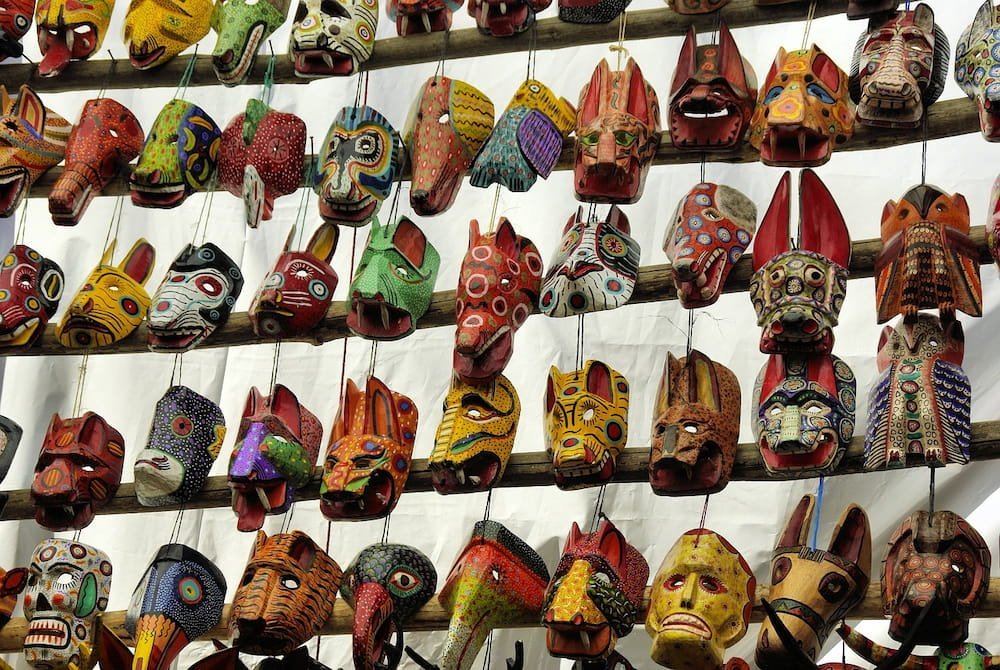
Armed with these guidelines, your journey through the ancient Mayan landscapes promises to be both thrilling and enriching. This adventure will surely provide more than just photos; it offers memories that will last a lifetime.
Everyone can live out their own fairy tale at Disneyland. Everyone can find something they like to do in this park and feel like they're back in their youth. But how can you enjoy your trip without being too busy? This full guide will show you how to get around Disneyland with kids, point out the must-see spots, and give you family-friendly tips to make the trip more fun for everyone.

Disneyland has become the undisputed leader as a park with the best attractions and shows. "Many other parks, such as a theme park in China that was supposed to compete with Disneyland, have failed and closed their gates to visitors." - writes TravelWise.
It's important to plan your trip to Disneyland with your kids well so that you have the most fun and the least amount of stress. You should become familiar with the park's layout by studying the maps available on the website or in the Disneyland app. This will help you figure out where the must-see sites and places to eat are, so you can get around quickly. It is important to correctly adjust the time for the trip. To reduce the time you have to wait at the attractions, it is better to choose weekdays. Also, don't forget to use the Disneyland app to save a lot of time. It keeps track of ride wait times and shows real-time park updates. It also has an easy-to-use food ordering tool that makes shopping for food more convenient. TravelWise says that if you plan ahead, your family's trip to Disney will be magical and easy to handle, so you can focus on making experiences with your kids that they will never forget.
The two main parks in Disneyland Resort are Disneyland Park and Disney California Adventure. You can save your time by getting to know these parks better by looking at maps of them online. Figure out which sights and entertainment areas are the most important for you to see first.
Time is very important. Wait times can be cut down by a lot if you go during the week or an off-season. To get to the most popular rides before everyone else, get there early in the morning when the gates open.
For young children, Fantasyland is the heart of Disneyland. This is where fairy tales come to life. It's a must to see "Peter Pan's Flight" and "Dumbo the Flying Elephant." The impressive animatronics on the newly remodeled "Alice in Wonderland" ride give it a fun new twist.
To keep your kids interested, you need to visit Mickey's Toontown. Any child would love to visit Mickey, Minnie, and their friends at home.
Tomorrowland is both exciting and charming in a future way. When kids use "Buzz Lightyear Astro Blasters" to shoot lasers at Zurg, they can feel like they're in space. You shouldn't miss the "Finding Nemo Submarine Voyage" either. Anyone can enjoy it, whether they are a kid or an adult.

At Disneyland, the live shows are a great way to relax and see some amazing shows. The story of Elsa and Anna is told in a way that you will never forget in "Frozen – Live at the Hyperion" at California Adventure. It is on par with Broadway shows.
You can't spend a day at Disneyland without seeing at least one show. Kids of all ages will love the "Main Street Electrical Parade" because of its bright lights and sounds. "Fantasmic!" is also a show that happens at night and mixes fireworks, characters, and real actors to make a spectacular fantasy.

Disneyland can be too much for both kids and adults. There needs to be regular breaks. To relax, look for places with less noise, like the "Redwood Creek Challenge Trail" in California Adventure. It's important to stay hydrated and use sunscreen often, especially on hot days.
The Child Swap or Rider Switch services can help you enjoy some of the bigger rides even though you have little ones with you. While the other parent waits with the child, one parent can ride. When it's time to switch, neither parent has to wait in line again.
You might want to book a character dining experience instead of waiting in line to meet a figure. This way, your kids can meet figures in a less tense setting while they eat.
It doesn't have to be scary to go to Disneyland with kids. Your family can have a magical and unforgettable day at this famous amusement park if you plan ahead, pick the right rides, and follow some secret tips. Do not forget that Disneyland is more than just rides and shows. It's also about the beautiful times you spend with your family. So enjoy the magic, go on the journey, and make memories that will last a lifetime!
Have you ever seen a tent suspended between trees? I remember seeing this concept a few years ago on social media and was super interested in trying it out. Well, we recently had the opportunity to test out the Tentsile Flite 2-person Tree Tent and have put together a little review based on our limited experience using it.
I will preface this review by saying this is purely a product review based on finding a suitable location, putting the tent up, improvising a sleeping situation, and pulling the tent down. We did not do a full camping test so our feedback is somewhat limited in this regard.
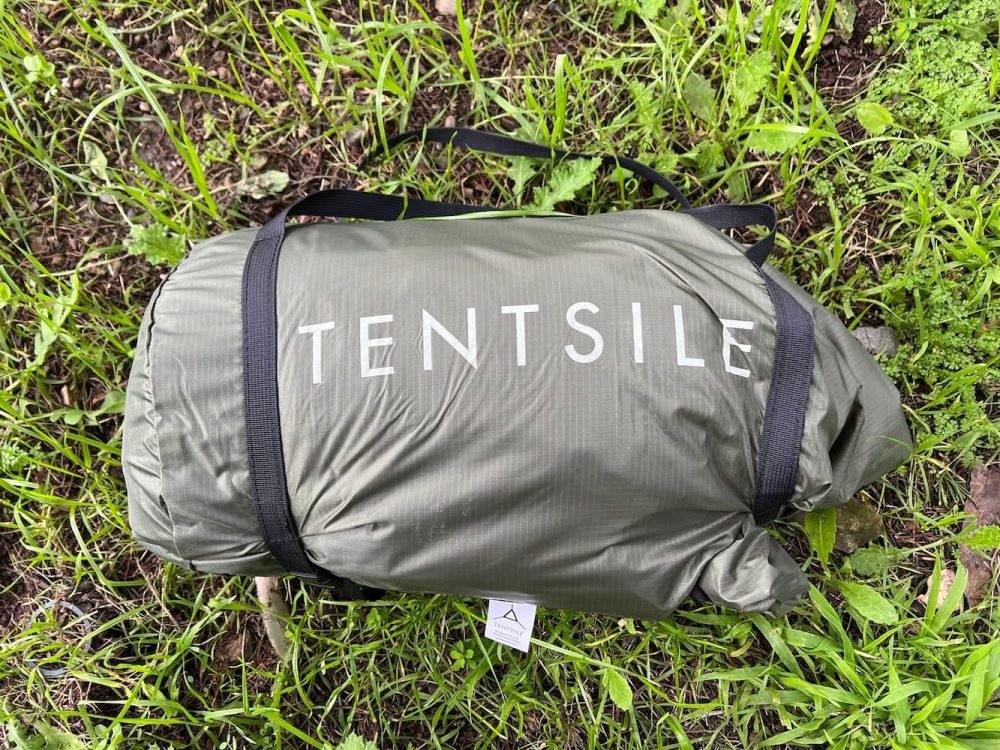
Living in San Francisco we are surrounded by parks and rugged coastline with ample tree cover. At first I thought this would make it pretty easy to do a test but as you will read below, it was a little more difficult than I had hoped. I have broken this review into sections to make it more digestible. Here goes...
The first impression was that the tent was quite heavy in comparison to other 2-person tents. This is due predominantly to the ratchet and D rings. For a 2-person tent, it felt significantly heavier and bulkier than normal. When I compared it to similarly priced 2-person ground tents it was at least double the weight, if not more, coming in at 4.7kg (10.4lb) .
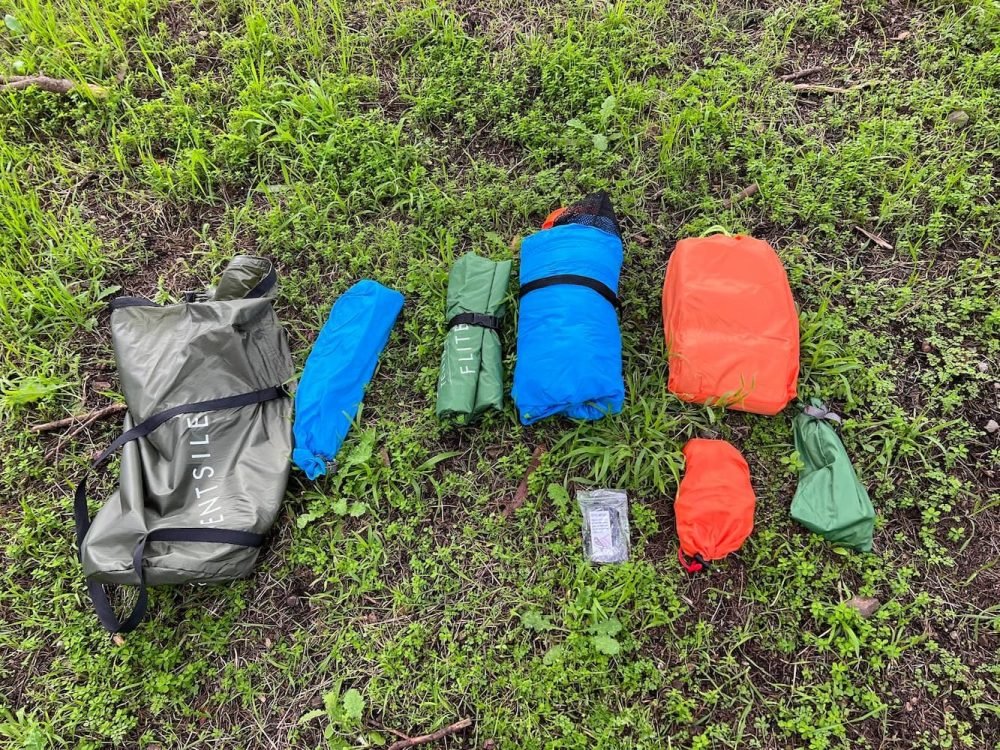
It took quite some time to find 3 trees that would work (due to the required distance apart, the arrangement of the trees, and the girth of each trunk). I realize there is a ground kit but this was not included so I couldn't review it and this also would be extra weight (1.5kg) and cost ($85).
This need for a rather specific tree arrangement will eliminate some sites completely if there are no suitable trees (or no trees at all). Of course, it's important to remember that a standard ground tent has its own issues if the ground is uneven, rocky, or too wet. As you'll read in my conclusion, there is actually a good crossover between the issues for a ground tent vs a tree tent.
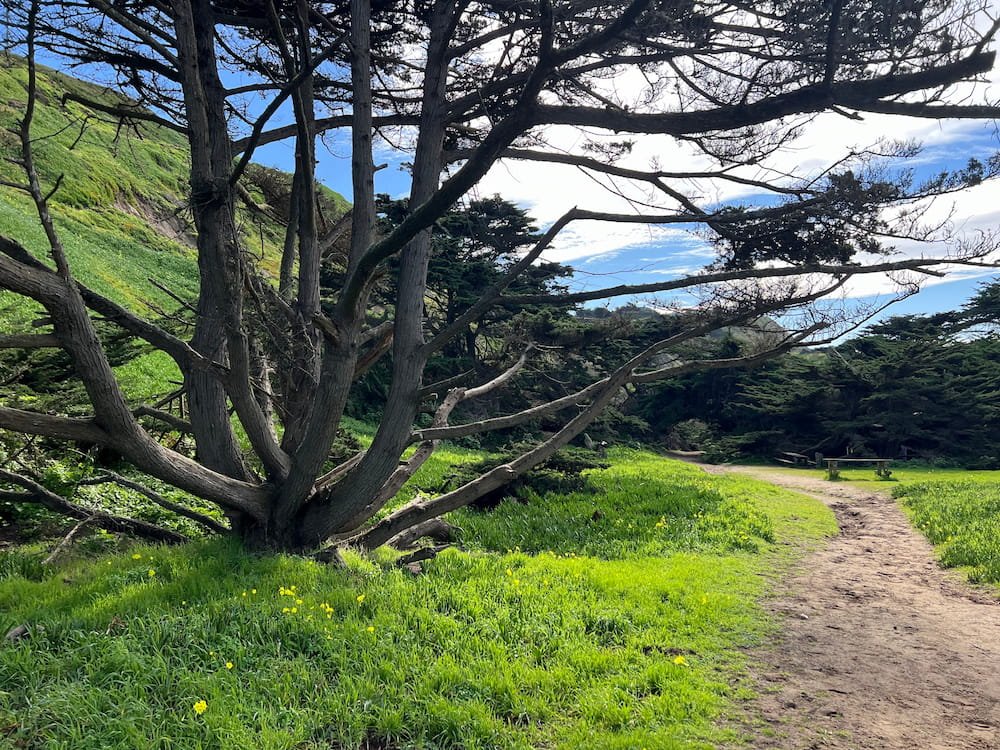
Once we found 3 suitable trees, it was far more time-consuming and complicated than I expected to put the tent up. If I was tired due to hiking, or it was the end of the day I would not want to take on this battle. Not to mention if it was raining (which it did while we were packing up).
That being said - I'm sure it would get easier and quicker with more practice but there are inherent issues that come with this design.
Aligning the tent between the 3 trees was challenging, especially trying to get each strap the same height on each tree.
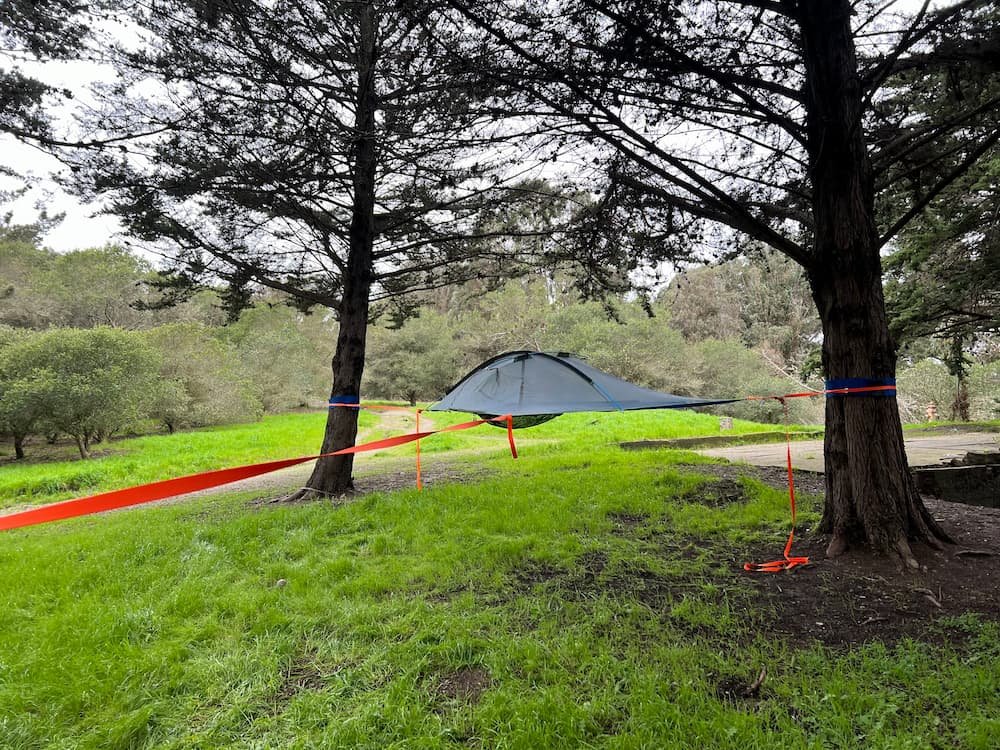
Tensioning the straps took some effort. If you have never used a ratchet system before this is going to be quite frustrating for your first few attempts. It took me around 6 or 7 attempts before I managed to get an even tension on all 3 straps so that there wasn't a significant sag in the floor of the tent.
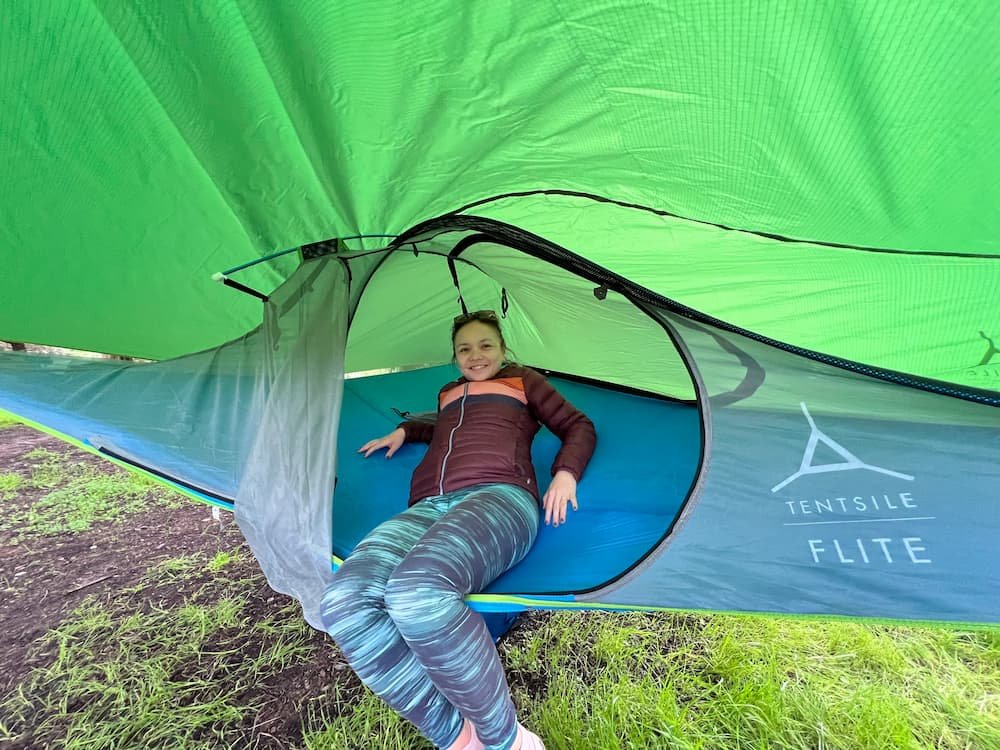
Once the tent was erect and taut it was extremely comfortable to lie down on as a single person. As soon as we both jumped in we sorta sank together into the middle and there was not a lot of room.
With a pack and other items it would have felt even tighter and the extremely low roof felt a little claustrophobic.
Due to the hammock-style of the tent you would probably not need to pack sleeping pads if you're in a warm climate (saving around 800g based on 2 pads) which is a plus. However, if you were taking this to a cold climate you would most definitely need those sleeping pads for insulation as the floor provides no insulation at all.
No matter how taut you end up getting the straps, this tent is much more affected by wind than a standard ground tent. It's significantly harder to erect in windy conditions and sways even in light winds.
Where it comes into its own is the benefit of being elevated during heavy rains/flooding which is a huge plus. If you've ever set up your tent near a creek or low-lying land and then had rain overnight you know how sucky getting flooded camping is.
Being elevated also means that air can flow beneath the floor of the tent. This could be a benefit in warm conditions but would not be good in colder temperatures, especially if you don't have a sleeping pad.
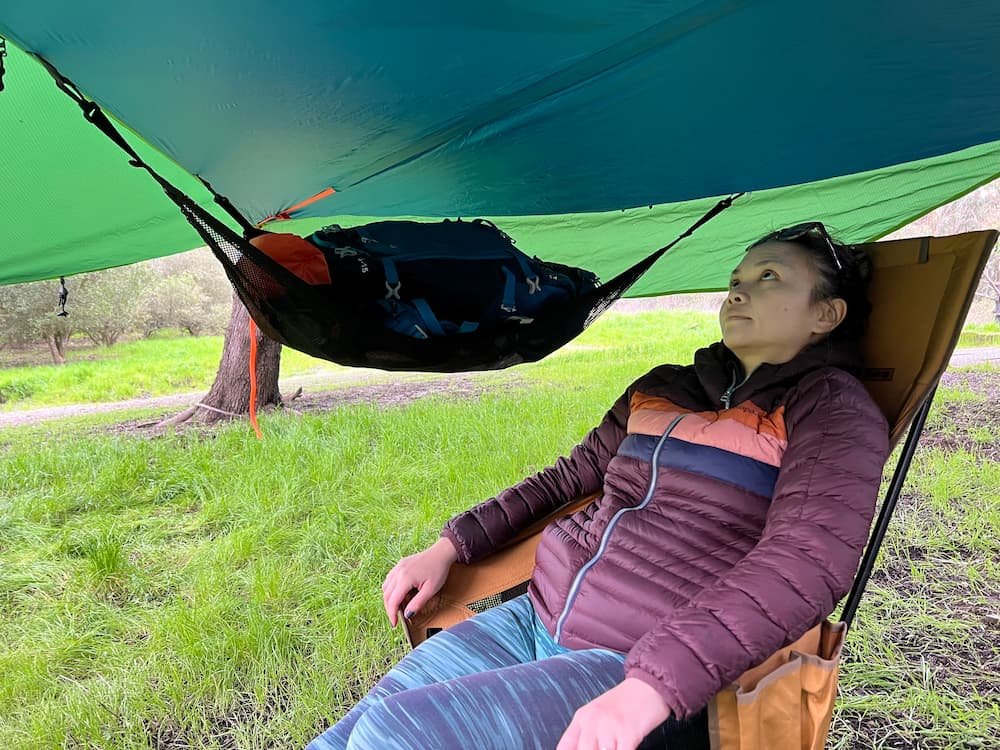
Given the limited interior space, there is a small mesh bag that can be hung below the tent. This is actually quite a novel idea as it gives a lot more space inside the tent while keeping the bags dry though there are a couple of issues.
Firstly, you would not want to keep any food in your pack as this could attract critters. Secondly, you also wouldn't want to keep anything valuable in your packs as it's much more accessible to theft.
As you can see from the picture below there is a massive benefit to this design which basically gives you a place to sit and chill out that's out of the sun and rain. This was a huge benefit when we finished putting the tent up and wanted to get out of the rain.
Due to the size of the tarp, it's also pretty easy to get into or out of the tent from underneath without stepping outside.
Packing up was very straightforward though also took a little longer due to the need for wrapping straps and tree wraps. This was definitely not a factor though. It was really as simple as releasing the ratchet, untying a knot, and disassembling.
I really wanted to love this tent. It looks cool and has some interesting applications. Unfortunately I don't think this would be my go-to tent for camping unless I knew that there were plenty of trees and it wasn't a long hike in.
However, I do think there is a market for this type of tree tent, especially the fun-factor for kids. This would make the perfect tent to take the kids on a camping trip. Imagine the fun they would have climbing in and out.
I also think this allows for some extreme camping that would simply not be possible with a standard ground tent. I've seen these pitched over rivers and even across canyons. It certainly makes for an epic social media post (which ironically is what first drew me to the design).
After providing our feedback from the review, Tentsile came back to us with the following tips:
"There are instructions available on Tentsile’s Youtube channel that explain how to adjust the underfloor strap so that you get two individual berths, and don’t roll into the middle."
"Although finding three trees in the right configuration can be difficult for a first-time setup, Tentsile has a guide on their Youtube channel that gives some tips and hacks for finding the right angles. They have also developed an App which can be used to help with this."
Studying abroad: the mere mention conjures images of bustling foreign cities, ancient universities, and the promise of adventures that blend learning with global exploration. It's an experience that goes beyond the confines of a traditional classroom, offering a unique blend of academic rigor and life-enriching travel. But what makes studying abroad so transformative, and how can you make the most of this opportunity? Let’s dive into the world of international education and discover how it combines the pursuit of knowledge with the thrill of discovery.
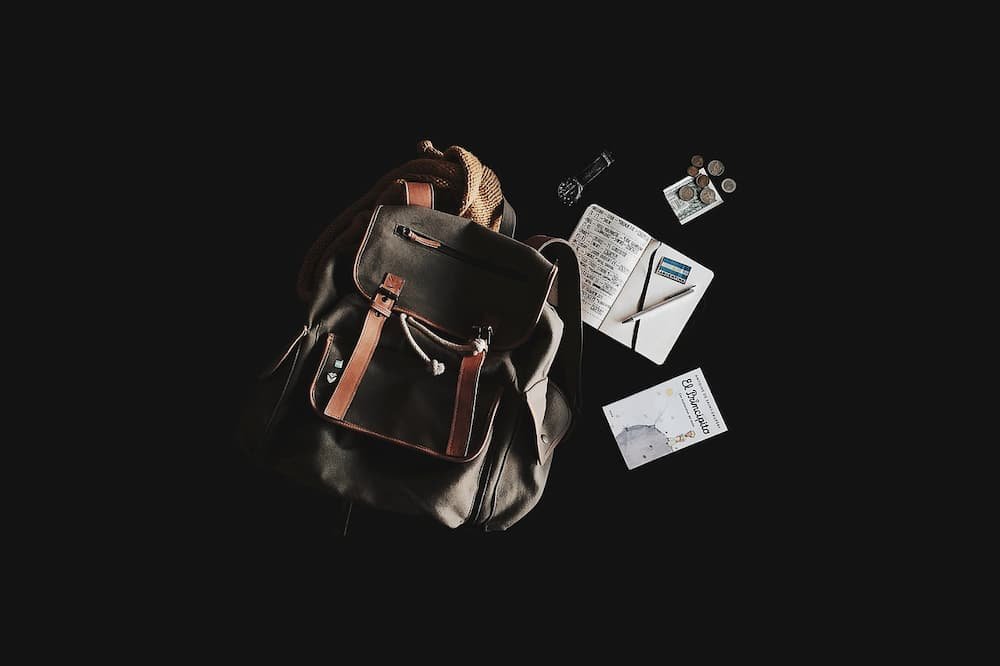
Have you ever wondered why millions of students pack their bags each year to study in a land far from home? The answer lies in the unparalleled mix of high-quality education and the immersion in a new culture. Studying abroad exposes you to diverse teaching methodologies, often in institutions renowned for their academic excellence and innovation. But it's not just about the grades; it's about growing in a setting that challenges and expands your worldview.
Imagine learning Italian in the heart of Rome or delving into international relations in Geneva. These aren’t just academic pursuits; they’re pathways to deep cultural immersion. You learn the local language, engage with the community, and understand global issues from a fresh perspective. It’s an education that textbooks alone cannot provide.
A personalized study plan is your map in this journey. It outlines what you need to learn, when you'll study, and how you'll assess your progress. This doesn't just include academic learning but also developing essential life skills like time management, critical thinking, and effective communication. How will you balance your studies with other responsibilities? How will you keep yourself motivated and on track? A well-thought-out study plan is flexible yet structured, allowing for personal growth while ensuring academic success.
In today's digital age, an array of resources and tools are at your fingertips. From online libraries and educational apps to study groups and tutoring services, these resources can enhance your learning experience. Have you explored which tools might best suit your learning style? Whether it's interactive tutorials, flashcards, or academic journals, integrating these tools into your study plan can make the journey both efficient and enjoyable. Also, don't forget that you can use additional online resources to study while traveling, which can greatly ease the stress of balancing studies and travel. A clear example of such a service is the Edubirdie portal, where you can find a large number of lectures or notes on various topics. You can find literally anything there, from the theory of deliberate play to scientific research in the field of psychology and health.
No journey is meant to be traveled alone. Building a support network of peers, mentors, and educators can provide encouragement, advice, and a sense of community. How will you connect with fellow students or find mentors in your field? Whether through online forums, campus organizations, or study groups, fostering these connections can make the journey less daunting and more rewarding.
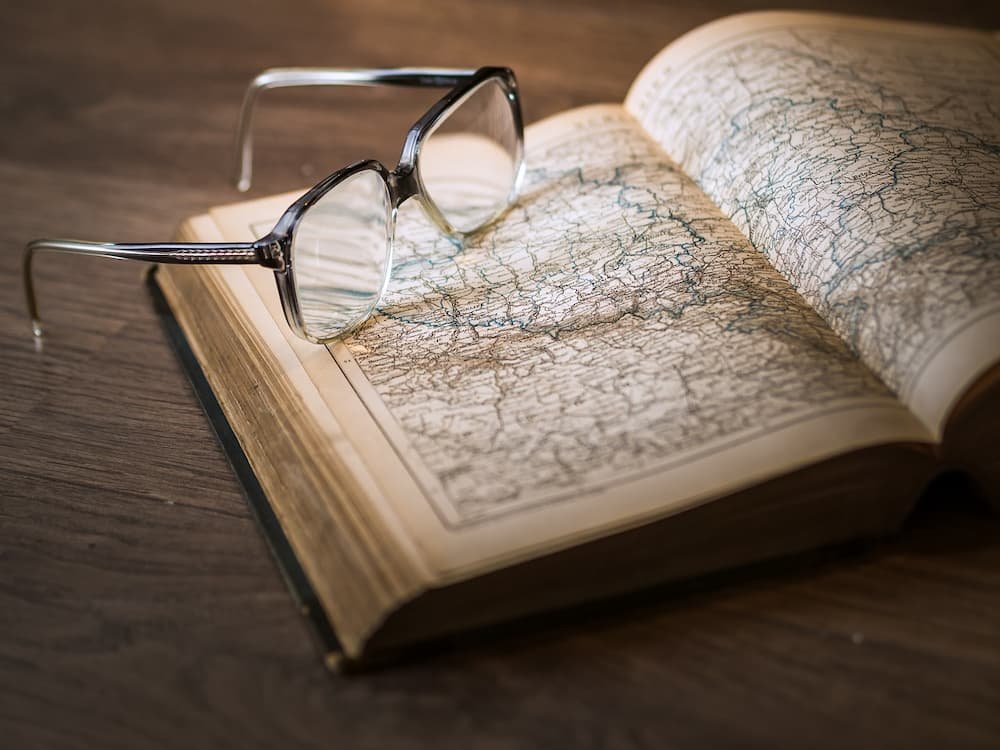
Every journey comes with its set of challenges, but it's the perspective you choose that defines the experience. Viewing obstacles as opportunities for growth transforms the journey into an adventure. How will you adapt to setbacks? What strategies will you employ to overcome obstacles? Embracing challenges with resilience and a positive mindset can lead to unexpected discoveries and achievements.
Adopting a growth mindset is key to navigating the educational journey with confidence and curiosity. This means believing that your abilities and intelligence can be developed through dedication and hard work. Are you prepared to step out of your comfort zone, embrace new experiences, and learn from feedback? A growth mindset not only propels you forward academically but also enriches your personal development.
Preparing for the educational journey is not a one-time task but a continuous process of planning, adapting and growing. It's about setting your sights on the horizon, armed with a clear vision, a well-charted map, and a resilient spirit. By understanding the importance of preparation, crafting a personalized study plan, leveraging resources, and embracing challenges, you're not just embarking on an educational journey; you're setting the stage for a lifelong adventure of learning and discovery. Remember, the journey itself is just as important as the destination. So, take a deep breath, embrace the excitement, and prepare to chart your own course. The world of knowledge awaits, and the journey you're about to undertake is nothing short of extraordinary.
One of the most compelling reasons to study abroad is the opportunity to take courses not available at your home institution. Whether it’s specialized subjects or unique fieldwork opportunities, international study programs offer a breadth of education that can significantly enhance your academic portfolio.
But it’s not just your intellect that grows; your personal development takes a leap too. Navigating life in a foreign country fosters independence, adaptability, and resilience. From managing everyday tasks in a new language to handling unforeseen challenges, the experience molds you into a more capable and confident individual.
Studying abroad places you in a melting pot of cultures, connecting you with people from all corners of the globe. These aren’t just classmates; they’re future leaders, innovators, and lifelong friends. The networks you build can open doors to international careers, collaborations, and a deeper understanding of global issues.
The friendships forged in the unique environment of international study are often deeper and more enduring. Shared experiences, from exploring local landmarks to celebrating traditional festivals, create bonds that last a lifetime. These connections enrich your life, providing a global support system and a reason to travel and explore even more.
Studying abroad is not without its challenges. Homesickness, cultural adjustments, and navigating academic expectations in a new environment can test your resolve. But it’s in overcoming these hurdles that the experience becomes truly transformative. Each challenge conquered is a step toward becoming a more adaptable and resilient person.
There’s an undeniable thrill in finding your footing in a new country. The success of managing your studies, social life, and daily logistics in an unfamiliar environment is a significant personal achievement. This independence is empowering, instilling a confidence that permeates all aspects of your life.
Studying abroad is more than an academic endeavor; it’s a journey of personal discovery and global exploration. It challenges you, changes you, and ultimately enriches your life in ways you never imagined. By combining education with world exploration, you gain not just knowledge but a broadened perspective, lifelong friendships, and memories that last a lifetime. So, are you ready to embark on this transformative adventure?
Skiing is a popular getaway activity that takes playing with snow to a whole new level. According to a report on the ski and snowboarding industry by Forbes, 10.5 million skiers visited resorts in the United States from 2020-2021, and more than one million of those visitors were first-timers. Whether it’s in Aspen or Breckenridge, skiing is perfect for thrill seekers and adrenaline junkies.

Before planning your next skiing adventure, there are some things you should consider. In our previous article about snow forecasting, we mentioned how areas affected by warmer temperatures can have less snowfall, which could affect your skiing experience. Monitoring snow forecasts helps you plan how you can make the most of your time on the slopes — and whether it’s safe to do so. Skiing is an extreme sport that can also result in injuries, so paying close attention to the weather and wearing the right gear is important to protect you from harm. Here are some tips for picking the right snow gear for your next ski trip.
Your hands help you stabilize movement with your poles when skiing, and it can be pretty distracting and difficult to navigate the slopes if they're cold or lack grip. To ensure your hands are at their best during your ski trip, remember to bring gloves that provide adequate insulation to keep them warm. Waterproofing on your gloves is also crucial, as it helps your hands keep dry in the snow. Don’t forget to test if the gloves provide a good grip on your ski poles and allow your fingers to move easily as well. The North Face’s Etip Recycled Gloves are a great find if you’re looking for durable gloves that provide warmth and a good grip on a chilly trip to the mountains.

Wearing snow goggles is important when you’re high up in the mountains to ski, especially because your eyes are at risk of exposure to too much ultraviolet (UV) light from the sun, which could lead to vision problems such as photokeratitis or snow blindness. The ski goggles from Oakley carry the brand’s patented Plutonite lens material, which provides 100% UV protection and is included in their Flight Tracker and Target Line models. These goggles also have the Flexible O Matter chassis that allows for a comfortable fit to your face and meets the American National Standards Institute’s impact requirements. Using quality goggles during a ski trip is crucial for vision protection and helps you avoid any unfortunate trips to your eye doctor.
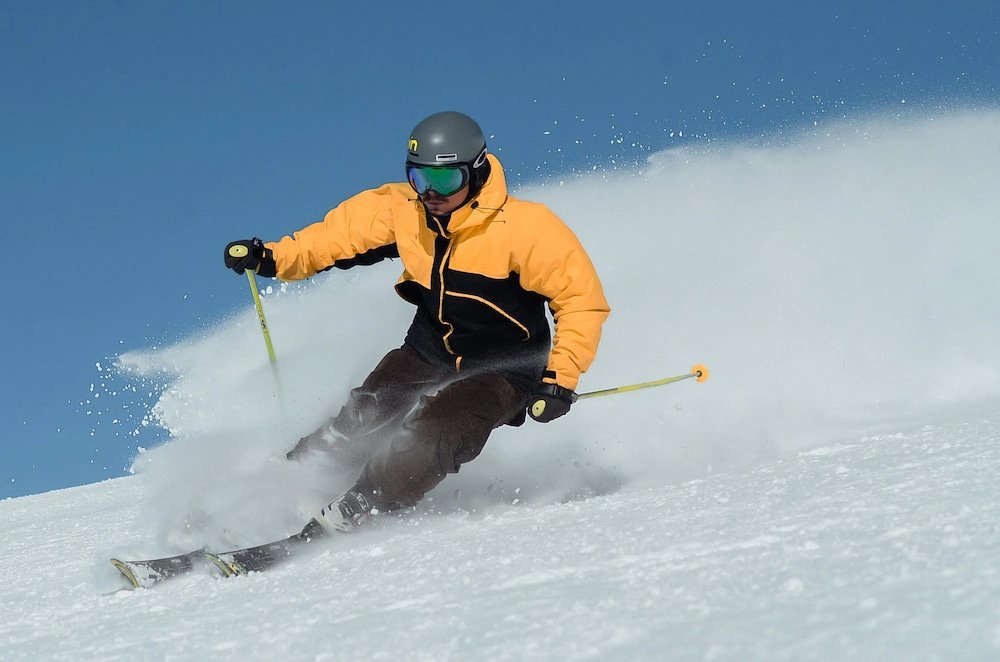
Wearing a helmet during a ski trip is necessary for preventing serious head injuries that may occur when you fall or hit obstacles. A study on snow sports injuries found that incidents of head or neck injuries were highest in freestyle skiing, which is why a good helmet is important to prevent fatal fall damage when you’re up in the mountains. Choose a helmet with a hard outer shell and a comfortable fit to help you have a smooth and safe skiing experience. REI Co-op’s Smith Method Mips Round Contour snow helmet is perfect for your trip, especially since it meets American standards for snow helmet certification and is lightweight with impact protection.
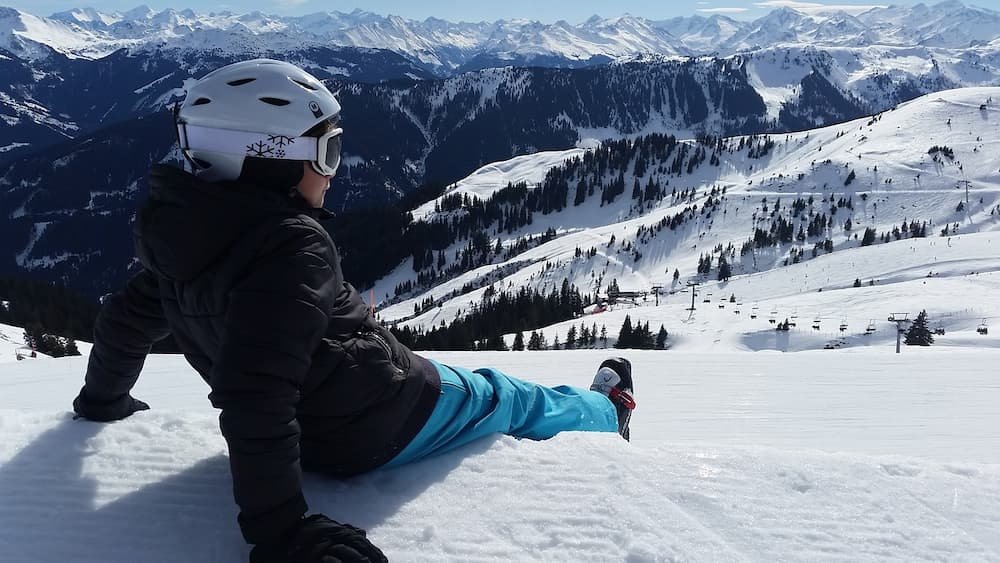
Ski boots connect your body to your skis, so you need a pair that enhances your balance, performance, and enjoyment to avoid any injuries. Make sure you have boots with a hard outer shell to avoid risks of ankle injuries and a soft inner layer to provide warmth and comfort for your feet. You can try the Radical Pro ski boots from Dynafit, which are light and comfortable and have a Hoji Lock system that allows you to use them comfortably when you’re climbing or descending.
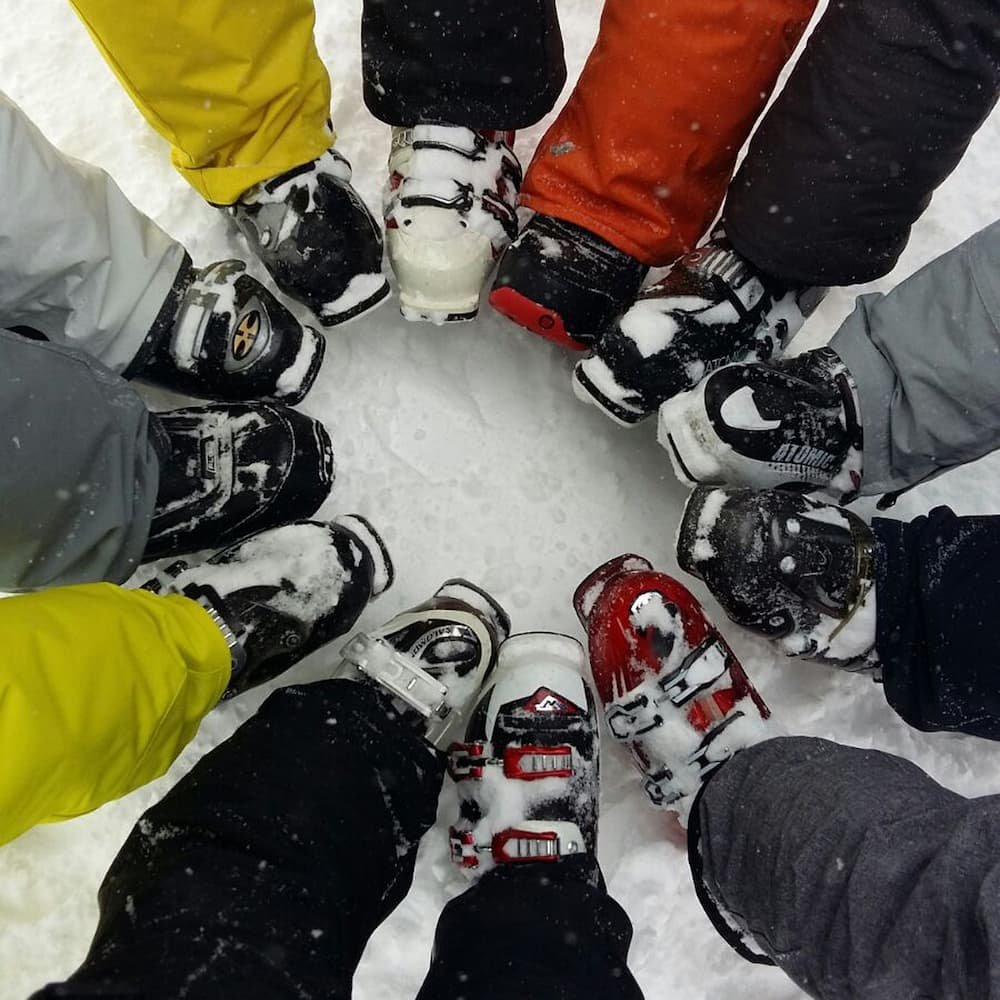
Using the right gear for your next ski trip prevents possible injuries and enhances your overall experience and performance. Be sure to follow these tips for a safe and comfortable skiing adventure.
As you prepare for the skiing season, understanding how snow forecasting impacts the sport is crucial. Different regions rely on accurate predictions to shape the ski and snowboard industry's operations, from opening day to the last run of the season. Snowfall predictions are essential because they dictate not only the quality and quantity of snow at resorts but also safety measures and resource allocation. As an example, you can find accurate snow forecasts from Piste Pro who offer valuable insights, ensuring enthusiasts like you have the best experience while hitting the slopes.

Weather patterns such as El Niño can cause variations in temperatures and precipitation, affecting snow conditions and consequently, the ski seasons in various regions. For instance, in areas where El Niño results in warmer sea surface temperatures, you might expect to encounter less snowfall, influencing the duration and enjoyment of your skiing activities. On the other hand, more frigid conditions lead to snowstorms that could extend the season and provide fresh powder. Resort operations must adapt to these forecasts, impacting everything from staffing to the grooming of trails.
The ability to accurately forecast snowfall is critical for ski resort operations, affecting everything from daily management to long-term planning. Advanced forecasting techniques and technologies enable resorts to prepare for the snow season effectively, ensuring economic stability and safety for visitors.
In the realm of winter sports, meteorologists use sophisticated models to predict snowfall, which is pivotal for ski resorts to manage their resources. The snow forecasts are based on various climate data including temperature, humidity, and atmospheric pressure. These forecasts inform resort operators about the thickness of the snowpack and expected precipitation levels. Resorts rely on such technological advancements to make decisions ranging from snow grooming to avalanche control measures.
When a promising snow forecast emerges, ski resorts must respond swiftly. They adjust their operations, deploying snow-making equipment if natural snowfall is predicted to be insufficient, and strategize lift operations to accommodate the influx of skiers. Employing forecasts from Piste Pro, resorts can obtain up-to-date information, allowing for real-time decisions that can enhance the skiing experience while ensuring the environment remains protected.
The financial health of ski resorts is intimately tied to accurate snow predictions. When meteorologists provide reliable forecasts, resorts can better schedule staff, manage ski lifts, and prepare hospitality services to match visitor demand. Accurate forecasts also help mitigate financial risks associated with unpredictable weather patterns, securing the economic viability of the resorts.
Understanding the complexity of snow forecasting is critical to anticipating how your ski season may unfold. Variations in climate patterns significantly affect snowfall and ski seasons in different regions.
In North America, particularly in the United States and Canada, ski seasons are deeply influenced by local weather systems. The National Weather Service (NOAA) monitors these systems, providing forecasts that help resorts manage and predict the skiing conditions. For example, in the Rocky Mountains, you can expect a longer ski season with consistent snowfall attributed to the continental climate and elevation.
European ski resorts are largely influenced by the complex weather systems of the Alps. Snow forecasts in these regions involve monitoring alpine-specific patterns, which can lead to varying snow conditions across short distances. In recent years, studies such as "Snow Moving to Higher Elevations" discuss the observable trend of snowlines moving upward, indicative of changing climatic conditions.
Climate change is reshaping ski seasons around the globe, as you can see in shifted patterns and trends in snowfall. Research such as "A mechanism for regional variations in snowpack melt" emphasizes the delayed snowpack melt, altering the timing of snow availability for skiing. Global warming introduces greater variability, influencing phenomena like El Niño and La Niña, which in turn affect regional ski conditions.
Your understanding of snow forecasting is crucial to navigating the ski season. Climate projections indicate a decrease in the length of the skiing season at various ski resorts, such as those in Aspen, due to climate change. Projected climate change impacts skiing. In regions of high elevation, you might notice less significant changes in snow-water equivalent (SWE) midseason Impact of Global Warming on Snow in Ski Areas. Recognizing these patterns allows you to plan your ski trips more effectively. As you prepare for the skiing season, keep informed about current climate trends and their impact on snow conditions to make the most of your time on the slopes.
