If you’ve made your way around the world with a backpack you’ll know how important it is to find the right gear to keep you comfortable. Brand names and looks mean nothing if the footwear is not the best possible fit for your feet. You can find orthotic insoles with Docpods.
A great backpack is a given. A comfortable pair of shoes is essential, but what about your socks? Is one of your most important pieces of equipment being misunderstood and underappreciated? Does the humble sock really deserve to be relegated to the bottom of your packing list?
Keeping your feet beautiful and happy should be your top priority if you plan on walking any serious distances while traveling. I’ve learned a lot about my feet over the years running ultra marathons, traveling, and working in the military. I once had a blister the size of my heel, and at times haven’t been able to walk because of the poor condition of my feet. By the time you’re having issues with your feet, it’s going to be too late. Your best line of defense is preparation.
My personal experience has led me to a number of conclusions about what is best for your feet. Here is a list of my top tips for keeping your feet looking beautiful and feeling happy while backpacking the world:
Start out light; train up in a steady manner until you are comfortable carrying all of your kit. Go out in all conditions so you know your personal limits; again, work up to the harshest environments and conditions, don’t start there and expect to enjoy yourself! Apply common sense and ask for advice. Hikers and backpackers are a community who loves to share and help each other.
Do not compromise on quality and comfort; the insole must fit and not allow your foot to move, blisters commonly occur in the heel region as a result. Research and test footwear before purchasing. Brand names and looks mean nothing if the footwear is not the best possible fit for your feet.
I have never found a shoe or boot that keeps all water out. I prefer to wear shoes and boots that have a high standard of drainage in-built. Better let it out as quickly as possible rather than trap it inside next to your foot.

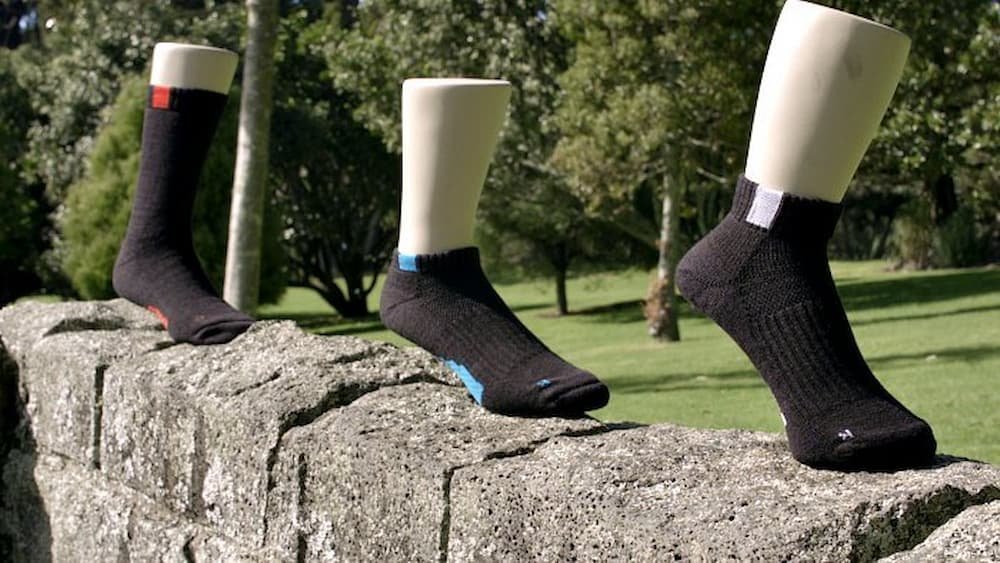
Socks that are specifically designed to fit your feet are the most appropriate. Find socks that compliment your feet and the footwear that you have purchased; there is no point in spending good money on great footwear to compromise them with poor quality, ill-fitting socks. Cotton is not appropriate for anyone considering a long backpacking adventure. I use a Merino Wool, Coolmax, and Bamboo blend.
Have multiple pairs and change them regularly, particularly if they get wet or you are in a hot environment. Keep your socks clean, dry, and free of dirt.
If you wear boots, break them in before you leave on your journey. There is no better way to ensure blisters than to walk for hours in shoes you have just bought. Wear your shoes indoors over a few days (without walking too much) and let the heat of your feet shape and soften the shoe material. Not only will they fit better but your feet will thank you for it in the long run.
Make sure your toenails are trimmed and filed. Keep your feet clean and dry, take your shoes off and air them regularly. Avoid letting calluses form. You can develop blisters under a callus, which become very hard to treat. Reduce (but don’t eliminate) calluses.

Know how to apply preventative tape to your feet and toes. Tape hotspots and know how to deal with blisters if they occur. If you do tape your toes and feet remember to roll your socks on and off to avoid rolling the edges of the tape.
Learn how to prevent and treat blisters, there are numerous articles and no end of good advice on this subject. If you are doing the hard yards find out and use blister patches, taping techniques, and a favorite of mine Hikers Wool or Sports Wool which you use to wrap your toes.
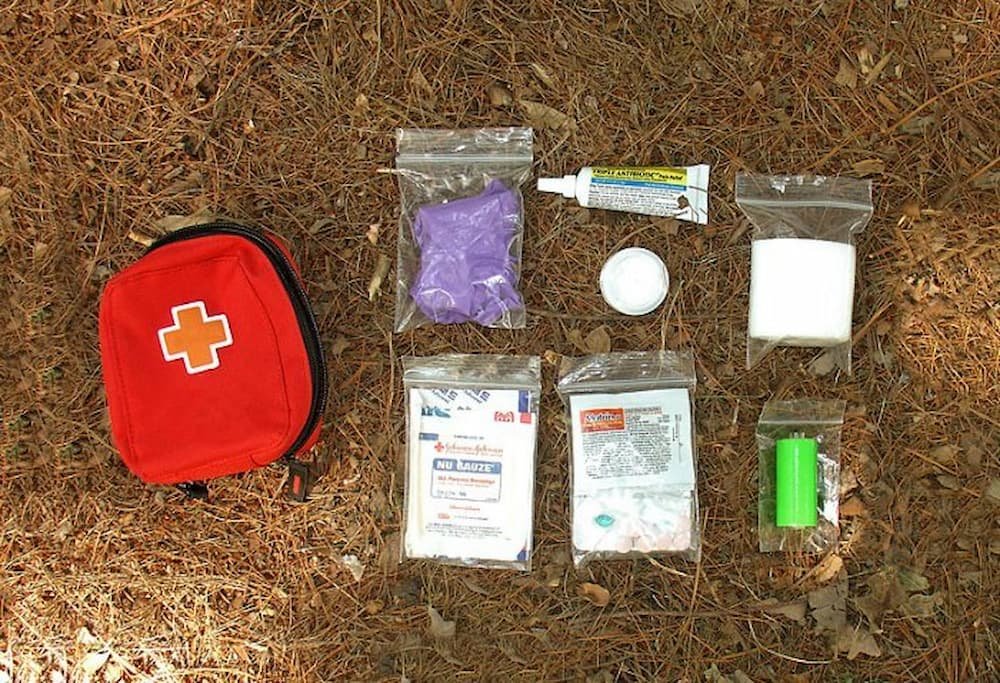
Carry a first aid kit that has appropriate foot care included. When I travel I always bring a nail file, clippers, and strapping tape just in case I can feel my feet begin to rub.
Remember to treat your feet with the respect they deserve. You won’t realize how important they are until it’s too late!
Travel is an eye-opening experience, often providing a window into some of the challenges that are faced around the world. Most westerners can tell you about the first time they visited a developing country – the different sights, sounds, smells and tastes are often a shock to the senses creating a vivid memory that will stay with them forever.
Unfortunately for some, these memories can be overshadowed by circumstances they might be unaccustomed to on a day-to-day basis – Corruption. While no country is exempt from the hands of corruption, there are places in this world where corruption has become so normal that it is just a part of daily life.
Rigged elections, bribery, money laundering, poor health care and limited funds for education are just part of the problem. When combined this leads to widespread misuse of public funding and a general mistrust in the public sector. Corruption halts economic development and undermines the justice system.

Transparency International has just released their Corruption Perceptions Index for 2014 which rates 175 countries (based on how corrupt their public sector is) out of a possible score of 100.
Corruption is a widespread issue in all countries. “A poor score is likely a sign of widespread bribery, lack of punishment for corruption, and public institutions that don’t respond to citizens’ needs” states the website.
The disturbing news is that not one single country received a perfect score and even worse, more than two-thirds received a score below 50.
It probably doesn’t come as much of a surprise to read that Somalia and North Korea share the title of ‘Most Corrupt Country’ for the third year in a row with a score of only 8 points.
1. North Korea/Somalia (tied score)
3. Sudan
4. Afghanistan
5. South Sudan
6. Iraq
7. Turkmenistan
8. Uzbekistan/Libya (tied score)
10. Eritrea
1. Denmark
2. New Zealand
3. Finland
4. Sweden
5. Norway/Switzerland (tied score)
7. Singapore
8. Netherlands
9. Luxembourg
10. Canada

After a two-year hiatus, I will add another country to my list of visited destinations at the end of this year. That’s right we are off to the Bahamas over the Christmas and New Year break and I couldn’t be happier.
Lisette and I had been throwing around a few ideas over the last couple of months on where would be best to go and finally decided on the tropical paradise that is the Bahamas.
1. Costa Rica – For an eco-friendly trip and to catch the San Jose Carnival
2. Miami – For the beaches and the amazing New Year's Eve Parties
3. Oaxaca – For the culture and Night of the Radishes Festival
4. Jamaica – For an all-inclusive resort and relaxation (no festival)
5. The Bahamas – For the beaches, diving, food, culture, and the Junkanoo Festival
The Bahamas came out on top since I was able to pick up some reasonably priced flights with United Air and managed to score a great deal on accommodation. Ended up splitting the time between Freeport on the island of Grand Bahama and Nassau on the island of New Providence.
Now all we have to do is wait a few months to enjoy these gorgeous white sandy beaches while sipping on a colorful cocktail with a miniature umbrella in it. Hopefully we get to check out a beach like the one below:

One of the activities we always like to throw in whenever we travel to a tropical island is scuba diving. Lisette has completed her PADI certification and has dived the Great Barrier Reef, Borneo, the Philippines, and Bali to name a few.
Me on the other hand, well I struggle with claustrophobia which limits my diving ability. Will have to see how I go when we arrive since my previous attempt off Boracay didn’t go so well.
Another exciting consideration is booking a Bahamas fishing charter to add a thrill to this island adventure.

What we are both really excited about is the Junkanoo Festival on both Boxing Day and New Year's Day. This carnival-like parade through the streets happens throughout the country on each of the islands with the largest parade being in Nassau.
The origin of the word “Junkanoo” is rather obscure. Some people believe it comes from the French “L’inconnu” which means “the unknown,” in reference to the masks worn by the paraders. Junkanoo may have West African origins, as the costumes and conduct of the masqueraders bear similarities with the Yoruba Egungun festivals.
It is believed that this festival began during the 16th and 17th centuries. The slaves in The Bahamas were given a special holiday around Christmas time when they would be able to leave the plantations to be with their family and celebrate the holidays with African dance, music, and costumes.

Traveling to faraway destinations can be a daunting experience for any traveler – and this unnerving feeling is magnified in the case of a first-time traveler going on an adventure solo.
But before you reassess your travel plans, it’s important to remember that these feelings are totally normal. Why? It’s because people tend to be creatures of habit and traveling is one of the best examples of an activity that forces you to be out of your comfort zone. There are going to be times that you get lost and overwhelmed with culture shock, days when you feel homesick or lonely, and moments when you wonder… Why the heck did I decide to do this?
While some people may find it easy to strike up a conversation with a complete stranger, it’s not always easy to do, especially in a foreign setting. The good news is that you’re not the first – and certainly not the last – person who will feel this way. Everywhere you go you’re going to meet people traveling alone, and funnily enough, they’re just like you. They’re also looking for new friends, new experiences, and new adventures. That’s why travelers generally get along so well – because they understand each other. We’re all away from home. We all miss our friends and family. We all have no one to hang out with. But now we do.
Here are a few quick tips on how to get a conversation started while traveling:
Whether it’s the long plane from Australia to South East Asia, a jolty bus ride through South America, or stuck waiting in transit in Europe, there’s an opportunity to look around and chat to fellow travelers. All you need to do is strike up a conversation and see where it goes. An initial question about the bus timetable, recommendations on what to do in a particular city or jokes about travel delays are a quick way to break the ice and get to know other people better.

Hostels are perfect for travelers on a budget – they are inexpensive and located in most cities around the world. They are also the best type of accommodation to meet and talk to other travelers, particularly as some dorm rooms can accommodate up to 20 beds. It’d be harder not to chat with someone in this environment. While some people may see the lack of privacy as a downside, if you do your research you can find hostels that have smaller rooms – some hostels even have rooms with only two beds.
If you’re intimidated to say hi to your fellow hostel compadres, just ask them a few basic questions about whether the hostel does laundry, what the Wi-Fi password is, where a good shop is to get some food to make breakfast, etc. From there, it’s a natural progression to ask about the person – their name, where they’re from, where they’ve traveled and where they’re going next. Hostels also have a lot of great places to chill out – you could easily take the conversation further in one of the common rooms or at a nearby bar or pub that evening.

Another great way to start chatting with someone is by asking about a particular item – or showing one off. When meeting like-minded travelers, one of the top questions is about one’s home country – where you’re from, whether that person has been there or plans to go there, what interesting sights and activities can be done in your hometown.
Flag patches, or country badges as some people call them, are a simple, cheap, and effective way to indicate to others where you’re from or even all the countries that you have been to. Backpackflags offer flags that are the same size (6.5 x 4cm) and are made of polyester. They can be safely washed in a washing machine and sewn onto your backpack, bag, jacket, or clothing (check out the instructions here).

An extra bonus is that it makes your items easy to identify (especially after that 24-hour bus ride where you barely had any sleep and also were nursing a hangover), and also is a great memento of all the countries you’ve traveled to.
If you’re still biting your nails at the thought of taking the plunge to talk to someone, just consider – what do you have to lose? A simple smile and hello can go a long way. While not everyone you speak to will become your friend, striking up a conversation is definitely a much better alternative to being solo for your entire amazing travel adventure.
Now it’s your turn. What methods do you use to initiate conversations and make new friends on the road?
Disclaimer: This article was kindly sponsored by Backpackflags.com, a product we now happily use. All views presented above are from our Backpacker Travel contributor.
One of the most unusual festivals in Japan is the naked festival (Hadaka Matsuri). Okay, so the participants aren’t completed nude, but picture this: tens of thousands of Japanese men with little more than a white loincloth (G-string or thong style) draped around their erm, loins, running crazily through the streets of the city to the main temple. The aim: trying to touch yet another naked guy who has been shaved of all body hair a few days before. To top it all off, this event takes place in February, one of the coldest winter months in Japan.
Before you think that this is some sort of bizarre and freaky version of the Full Monty, the festival has its origins in an attempt to dispel the plague and ward off evil spirits. Today, to cleanse themselves from such evil, one man – called the shin-otoko (literally “god man”) is chosen to take on the ills of the community. In preparation for what is considered to be a great honor, the god man must undergo fairly intense purification rites in the days leading to the event.
On the big day, teams of (rather drunk) thong-clad men lug a bamboo pole and continually shout “Wasshoi! Wasshoi!” as they snake their way through the streets to the temple. It’s quite a sight to see so many scantily clad men stumbling around in freezing temperatures, particularly in contrast to the layers of clothing worn by everyone else.

Once the men arrive at the temple, there is a fair wait until the shin-otoko arrives. The anticipation and frenzy build in the temple, however, as more and more teams of men arrive. As a spectator, it’s just as crowded trying to see what’s happening in the temple compound, but you can make out special bodyguards splashing icy water on the naked mass of men as the shin-otoko comes closer and as the crowd furiously fights and push to touch him.
As part of the festivities, at midnight, the lights are turned off and the temple priests hurl a couple of sacred wands (shingi) into the darkness. The men who catch these sticks apparently receive a year’s worth of good luck. Who wouldn’t want that?
The festival is held in various cities throughout Japan, however, the most famous is in Okayama prefecture, in western Japan (next to the Hiroshima region). It costs about 5,000 yen to get a good seat in the temple compound if you’re keen to be a spectator. Wasshoi!
I have been living in San Francisco for just over a year now and it really has been an incredible experience. The food selection is amazing, the people are friendly and interesting and there is nearly always something cool going on around town…. but…. I really miss having a warm summer.
Summer here typically consists of two months of relatively warm and clear weather from late September through November. This is really the only time you can safely head out in shorts and a tee.
To combat this lack of summer warmth we have been told to venture out of the city for weekends away as the temperature changes dramatically with only a 30-minute drive or more.
So we recently took this advice, rented a cheap car, and set off for sunny Santa Cruz which lies approximately 80 miles (128 kilometers) to the south of San Francisco.

The journey is around two hours but the drive itself was quite spectacular as we took the slower route along the coast down highway 1. Luckily for us, the weather was very clear, (normally a lot of fog as you exit the city) so the views were well worth the extra few minutes of driving.
There is a plethora of accommodation in Santa Cruz to cater to the influx of weekend warriors coming from the Bay area. The majority is made up of budget-style motels and they all seem to be located within a mile or so of the Beach Boardwalk.
For those seeking a more comfortable stay, Beachnest Vacation Rentals offers the finest assortment of vacation rentals and beach house rentals in Santa Cruz and nearby areas.
The majority of tourists seem to come to Santa Cruz specifically for the beaches and the historic Beach Boardwalk. It is surprising how often an advertisement will come on in San Francisco with their catchy tune but obviously works well.
Opened in 1907 the Beach Boardwalk is California’s oldest surviving amusement park and one of the few seaside parks on the West Coast of the United States.

The Boardwalk features both modern and classic rides, carnival games, restaurants, miniature golf, video game arcades, and family bowling, all located on a mile of sandy beach. One of the best things about the Boardwalk is that entry is free, of course, this doesn’t include any of the rides or games but is a great way to check out the park and decide if you want to go on any of the rides. Ride tickets cost anywhere from $3 – $5 and they also offer affordable ticket options where you can get a season pass for $69.95 which includes unlimited ride entry.
One of the main attractions of the park is the Giant Dipper. This classic wooden roller coaster was first opened in 1924 and recently surpassed a whopping 60 million visitors. It is a bone-shaking experience from start to finish but one that will definitely leave a big smile on your face.
Just off the coastline of Santa Cruz lies the Monterey Bay National Marine Sanctuary, the largest national marine sanctuary in the United States. Encompassing 276 miles of shoreline and 6,094 square miles of ocean it is home to one of the most diverse marine ecosystems on the planet, hosting marine mammals, seabirds, fish, invertebrates and amazing kelp forests that the local otters call home.
One of our favorite activities is to get out on the water in a kayak and Lisette and I always jump at any opportunity to do so. We decided that this time, rather than just grab a rental, it would be great to join a tour. After a quick search online I found Kayak Connection, a local business with great reviews that did both rentals and ocean tours through the marine park.

On the morning of our tour, our guide David greeted us with a big smile and thoroughly explained the safety aspects along with a brief on some of the marine animals that we would potentially see out on the water. We were lucky to have a gorgeous blue sky with very little wind as we set off paddling from Santa Cruz Harbor.
David was extremely passionate about the conservation of this protected area which was reflected in his enthusiastic approach to teaching us about the tainted history of over-fishing in the bay as we paddled through the harbor entry including how the otter population was nearly wiped out.
The area is a playground for whales, dolphins, and other marine life and we had only just cleared the harbor mouth when we were greeted by a friendly harbor seal. After an enjoyable paddle across the bay with spectacular views of the boardwalk and pier we arrived at the local surf spot, Steamer’s Lane. Here we watched a number of sea otters playing among the kelp. There were two in particular that were very inquisitive and swam right towards our kayak….amazing!!
On the paddle back we passed by the pier where hundreds of sea lions basking in the warmth of the sun on the wooden foundations. One even swam out to greet us and followed close behind for a while as we head back to the harbor.
Overall this was an incredibly memorable experience and one I would strongly recommend to anyone looking for an eco-friendly adventure.
The Redwood Canopy Tours at Mount Hermon offers visitors an exciting eco-adventure into the redwood canopy of the Santa Cruz Mountains. Enjoy the coastal redwood forest from the unique perspective only a zipline canopy tour can offer. The two-hour guided tour includes six zip lines and two sky bridges at heights of up to 150 feet. Each tour of up to eight is led by two certified guides who share their ecological knowledge and bring the history of the Santa Cruz redwood forest to life. The Redwood Canopy Tours are the original canopy tour ziplines in the redwood forest and is the first facility of its kind in the region.

Of course, if you are coming to Santa Cruz you are more than likely going to be here for the beaches and Boardwalk but here are a couple of other attractions you might like to check out while you are in the Santa Cruz area: The Mystery Spot and the Santa Cruz Surfing Museum.
We were looking for somewhere interesting to eat on Saturday night and happened to stumble across The Greek – Authentic Cuisine restaurant (with a little help from Yelp). This family-run establishment is apparently quite iconic in Santa Cruz due to the lively owner Vasilis and coincidentally it turned out to be his 64th birthday on the night that we were there.
The restaurant has a fun and lively feel with traditional Greek live music, plates smashing on the floor and a homely feel to the decor. Sara, our waitress, noted that Vasilis's hand-sketched all of the artwork that adorns the walls….quite impressive we thought.

The meal portions were very generous so we decided to go with the smaller size house specialty salad along with some dolmathes and tzatziki for starters. All in all the food was delicious and well worth checking out if you plan on visiting Santa Cruz.
For all you digital nomads out there, this is your perfect daypack! The Outdoor Products Power Pack Glide 2.0 daypack offers the perfect combination of storage, access, and comfort for all of your important items during your travels.

Frequent fliers will especially love the detachable laptop sleeve for those pesky airport scans and there is ample room to store all of your camera and electronic equipment.


High-density polyester twill.
18 liters
1.5kg (2 lbs. 5 oz)
45cm x 31cm x 17cm (17.7″ x 12″ x 6.5″)
Pewter, Military Olive, Black
Yes – removable fits 15″ laptop sleeve

My only negative was that I wish it was a little lighter, given the durable materials used combined with the vast array of compartments, this would be a difficult challenge.
In addition, it would have been awesome to include the option of a removable divider for the main compartment. This way all you photographers could section off your DSLR camera and lenses better.


I was totally surprised at how much stuff I could jam into this pack without losing any comfort. This is now my “go to” carry-on bag and is perfect for short trips.
Grab yours on Amazon
The Osprey Axis is a lightweight daypack that comes in a range of vibrant colors to help you stand out from the crowd, whether on the trails or in the city.
Smart functionality and superior comfort have partnered together to create the Axis backpack by Osprey. The main compartment has a padded laptop sleeve that fits most standard 15.4″ laptops and it includes a separate document sleeve for secure organization.

The stretchy interior woven pocket holds up to three MP3 players for when you are out and about. It features a mesh over-slotted EVA foam harness with a mesh back panel for excellent comfort and breathability. There is an Ear Bud Routing system which easily routes your earbuds through the top of the pack so wires won’t get tangled.
Dual side zip pockets can hold your water bottles and a light attachment will accommodate most blinker lights. Convenient key clip located in top slash pocket.
Osprey will repair for any reason, free of charge, any damage or defect in their product − whether it was purchased in 1974 or yesterday. If they are unable to perform a functional repair on your pack, Osprey will happily replace it.
210D nylon double ripstop, 420D nylon pack cloth.
18 liters.
0.64kg (1 lb. 8 oz)
46cm x 29cm x 22cm (18″ x 11″ x 9″)
Snappy Green, Juicy Orange, Prince Purple, Black
36.3cm x 24.9cm x 3.3cm (14.3″ x 9.8″ x 1.3″)
The shoulder straps often find a way to lengthen without assistance. Perhaps a better locking system would work well in this case.
The side pockets could be a little larger to accommodate wider water bottles too.
Overall this is a fantastic daypack for the price. You can’t go wrong with Ospreys' lifetime warranty. I also love the idea of a bright orange pack for greater visibility on hikes.
This is the third and final part of a series of posts on my experiences at my first ever Burning Man. If you missed the first two parts you can read them here:
Part 1: Burning Man – From a First-Timer’s Perspective
Part 2: Burning Man – Art, Theme Camps and More
Think for a moment about the best places in the world to party and I’m sure a few standouts come to mind. The top of my list would probably look something like this: Ibiza, Miami, Koh Phangan, Rio de Janeiro, Las Vegas or Cancun to name but a few. Well, take a piece of all of those places, put them in a blender, mix thoroughly and you are somewhat close to the day/ night-time party experience of Burning Man.
I don’t think I will even begin to do this explanation justice but I will give it a shot….
– Some of the best DJ’s in the world
– Incredible venues with mind-blowing sound systems and lighting
– Genuinely nice people who are there to have a good time (not to spoil yours)
– No lining up for hours to get into a club
– No discriminative dress codes – WEAR WHATEVER YOU LIKE!
– Not feeling the music or crowd? Hop on your bike and pedal to the next one, or jump on an art car (no painful taxi line in this place)
– No wanky bouncers…. in fact, no bouncers at all
– No expensive cover charge – just wander in for free
– Free drinks at the bar! Just remember to bring your own drinking vessel (cup)
– No curfew or lockout
Ok I’m sure I have missed out on a few bullet points but seriously with benefits like these who cares!
When you consider that Burning Man is quite possibly the most epic party place you will ever visit, then realize this is only one facet of the complete experience, it is difficult to comprehend. I have a feeling this is why so many Burners return, year after year, to the desert.
One of the things I seem to get asked most since our return is about the drug culture that seems to be synonymous with Burning Man.
If you are going to take them, be discreet, and whatever you don’t go lighting up a joint in public. This is not San Francisco people…. the Nevada police don’t take kindly to drugs (or even open alcohol containers) in public.
So with that out-of-the-way, there’s really no amount of words that can describe what a crazy, fun experience the parties are at Burning Man. So rather than try, here are some cool pics to whet your appetite instead:


As I mentioned in my original post, knowing what clothes to pack is up there among the most challenging aspects when preparing for your first Burning Man. Sure, you can look at hundreds of pictures online and get a feeling for what others have worn in the past, but there will always be that aching feeling of “Will I fit in?” or “Are people going to be judging me based on my attire?”.
I was advised early on to steer clear of any branded clothing. One of the ideals of Burning Man is non-conformity, so try to avoid wearing the clothes that you would normally wear at home in your day-to-day life.
You don’t need to go out and spend hundreds of dollars at costume shops or specialty Op shops to try to fit in either. Go to a secondhand store, buy some crazy stuff that you think looks cool, make some adjustments if needed and you’re off.
All I can say is wear whatever you want to wear. It doesn’t matter if you wear pink striped pants with a blue polka dot shirt – if you like it wear it.
Living in San Francisco we are pretty accustomed to nudity. We see it pretty often at various festivals and events held around the city. Burning Man is like San Francisco on steroids….. everywhere you go be prepared to see a full-frontal display of someone’s package. By the end of the week, you will have seen all shapes, colors, and sizes – both male and female so leave your prudish ways at the gate.
Goggles
Preferably not too tinted and with good peripheral vision
Dust Mask
A bandana doesn’t really cut it in a heavy dust storm
Good shoes
Boots are probably going to be best (flip-flops and bare feet are a no-no due to the alkaline soil)
Sunscreen
Derrr… you are in the desert
A Warm Jacket
It gets cold at night
Wearable Lighting
It also gets very dark at night and you want to be seen




One of the 10 Principles of Burning Man is Gifting – “Burning Man is devoted to acts of gift-giving. The value of a gift is unconditional. Gifting does not contemplate a return or an exchange for something of equal value.”
I was overwhelmed by the thoughtfulness that went into some of the gifts people had prepared. To be honest, I feel like this is where we were the least prepared of all. That is not to say that we were takers and didn’t give….. more so that I would like to invest more into gifting next time.
Generosity comes in all shapes and sizes – the offer of a jalapeno tequila shot one morning…. or perhaps an iceblock on a stinking hot afternoon.
You don’t need to go all-out making material items for gifting too. The gift of a heartfelt smile (to everyone you meet), a friendly massage, a helping hand or food and drinks are all perfectly acceptable when there is sincerity and warmth behind them.
Burning Man really does seem to highlight the aspects we soon forget in human nature… THERE’S GOOD IN EVERYONE!
Here are a couple of fun little trinkets that I was given. The best part for me is that someone took the time to make them.


The roots of Burning Man began as a bonfire ritual on the summer solstice in 1986. Larry Harvey, Jerry James, and a few friends met on Baker Beach in San Francisco to burn a 9ft (2.7m) wooden man as well as a smaller wooden dog.
Since then the annual ritual has grown each year, both in number of participants and in the size of the Man. This year was no exception as we arrived to find a mammoth alien-looking man standing atop a UFO. Inside the multi-story structure, there were all sorts of extraterrestrial paraphernalia, some zoetropes and exit slides…. not the best to attempt with a bare bottom I soon discovered.
The Man is located smack bang in the center of the city which makes it the most important landmark if you happen to get lost out on the playa. Due to this, it is also a popular meeting place.


The week-long event culminates on Saturday evening with the ceremonial burning of the Man. What seemed like the entire city population was out on the playa to watch the spectacle, starting with an inner circle of fire dancers and emanating out to a ring of brightly lit art cars, all circling the Man.
Before the Man burns, there’s a fireworks display which is met with cheers and roars from the eager crowd. Then the man is lit, creating a frenzy of whistles and more screaming before finally the entire structure erupts into flames, the heat so intense you can feel it from a football field away.


In addition to the burning of the Man, the burning of the Temple has become an important ritual on Sunday. Throughout the week you will find people congregating at the temple. Whether in prayer, meditation or simply leaving messages to lost loved ones, the temple is a highly personal and spiritual experience.
Every year, like with the Man, the Temple has a new theme. This year’s theme was The Temple of Whollyness – an epic central pyramid standing 64ft (19.5m) tall, designed with sacred mathematical proportions and constructed using innovative building techniques without the use of nails, glue, or metal fasteners.
The Temple’s name was derived from the idea that spirituality is a balance between three states of mind – to be holy, holey, or wholly present.


Our arrival onto the playa was such a smooth experience with barely a queue to be seen. Our exit on the other hand was not.
We had been tossing around the idea of leaving on Sunday (either just before the temple burn or just after) ‘vs’ leaving on Monday but it was mother nature herself that eventually decided for us. As it turned out there was a huge storm bearing down on Black Rock City that was due to hit by 12 pm on Monday.
The Burning Man committee broadcasted a message over the local radio station advising everyone to leave by 12 pm Monday or face being stuck on the playa as they were locking down the city. This created somewhat of a “mass exodus” just prior to sunset (before the temple was due to burn).
At 6.30 pm, we left our camping spot and joined the exit line. It wasn’t until five hours later that we reached the paved road in total darkness. By this time, I was already far too fatigued to be driving but stupidly I continued on for another 2.5hrs while the others slept in the back of the RV.
Luckily I was able to switch out with Ryan about 40 mins from Reno and we arrived there in one piece around 3 am.

It is not uncommon to experience a low after returning from a multi-day festival. As you should see by now, Burning Man is a place unlike any other and the transition back to reality can be a difficult one for some people. Luckily for us, we live among Burners….. our neighbors have been more than seven times each and there are several “post Burning Man” events held in San Francisco every year.
The reality still hits you hard though. That first day back where all you can do is dream of being on the playa. For now, I am happy processing and writing about this unforgettable experience that was my first Burning Man…….. anyway there’s always next year!

I hope that, in some way, my experiences can help you to get out there yourself. Thanks for reading all my rantings and a special thanks to my neighbors Lorna and Bertrand for your words of wisdom and everything else you have done to make our first Burn so very special.

This is Part 2 in a series of posts on my experiences at my first ever Burning Man. If you missed the first part you can read it here – Burning Man from a First-Timer's Perspective
Black Rock City is a city in the desert that was specifically built for one purpose – Burning Man. Over the years the event has grown from a small gathering of 20 people at Baker Beach in San Francisco to approximately 68,000 people in 2013 in the desert. Check out this cool timeline on the Burning Man site: Burning Man Timeline from 1986 to 2012.
Black Rock City resembles an analog clock face, with radial avenues representing the hours (2.00 through 10.00) and alphabetical streets in concentric streets around the circumference. The three most prominent landmarks are as follows:
Located at the center of the clock.
Located at 12.00, this is a place for reflection and prayer.
Located along the midline facing the Man at the 6.00 position; it serves as a good meeting place.
As you can see it is quite a distance from one side of the city to the other and believe me you will need to navigate much of the city as possible to fully appreciate the spectacle. The distance is also deceiving as the arched streets are much longer than it looks on a map, plus the ground is soft and uneven making for a bumpy ride at times.
Taking all of this into account there is no doubt in my mind that you need to have some form of transportation (other than your legs). Like most people, we opted for bicycles… although another really cool way of getting around is on an art car.
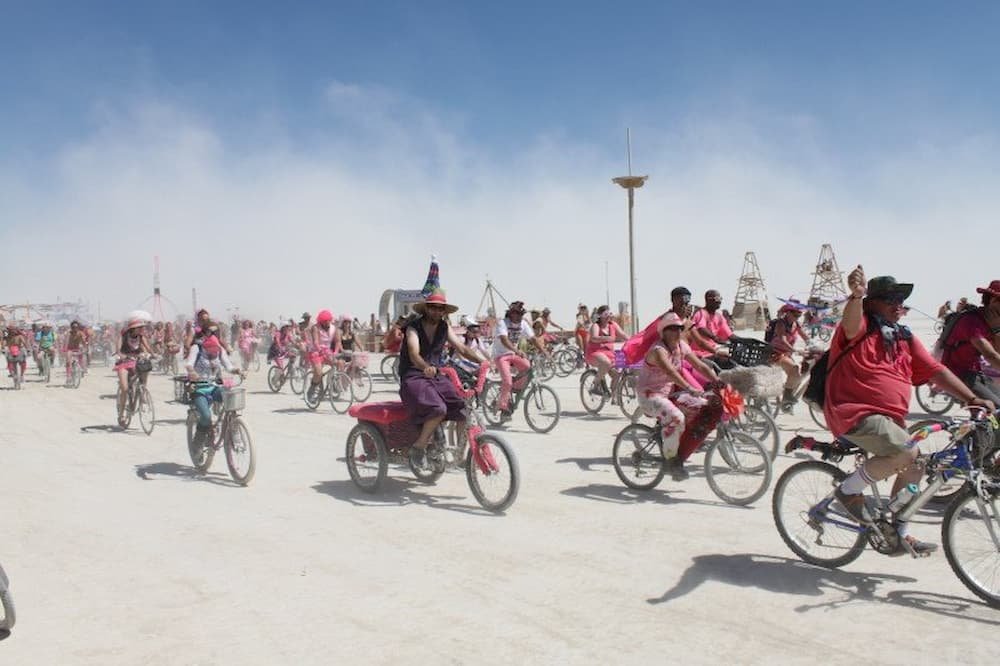
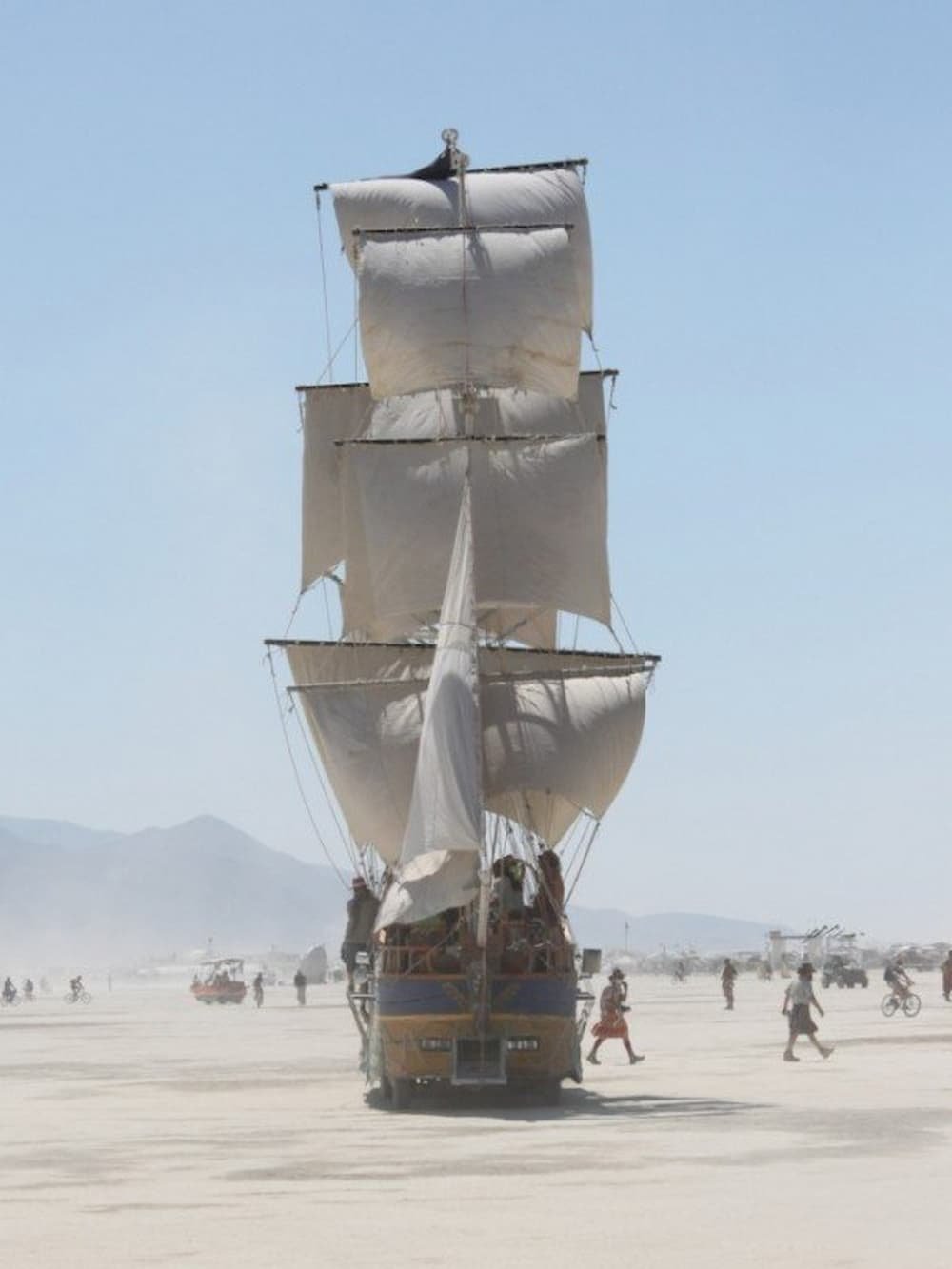
Riding your bike poses a few unique challenges on the playa. It is not uncommon to be riding across the playa and be struck by a dust storm or whiteout. Make sure to be very careful if this happens. We were riding towards the Man one afternoon when we got hit by a huge dust storm and couldn’t see two feet in front….. next thing you know a huge pirate ship emerged from the white, powering towards us.

a) Make sure to carry plenty of water with you (especially when venturing into the deep playa).
b) For your protection wear sunscreen, a hat, dust mask, and goggles.
c) Deflate your tires to compensate for the soft sand.
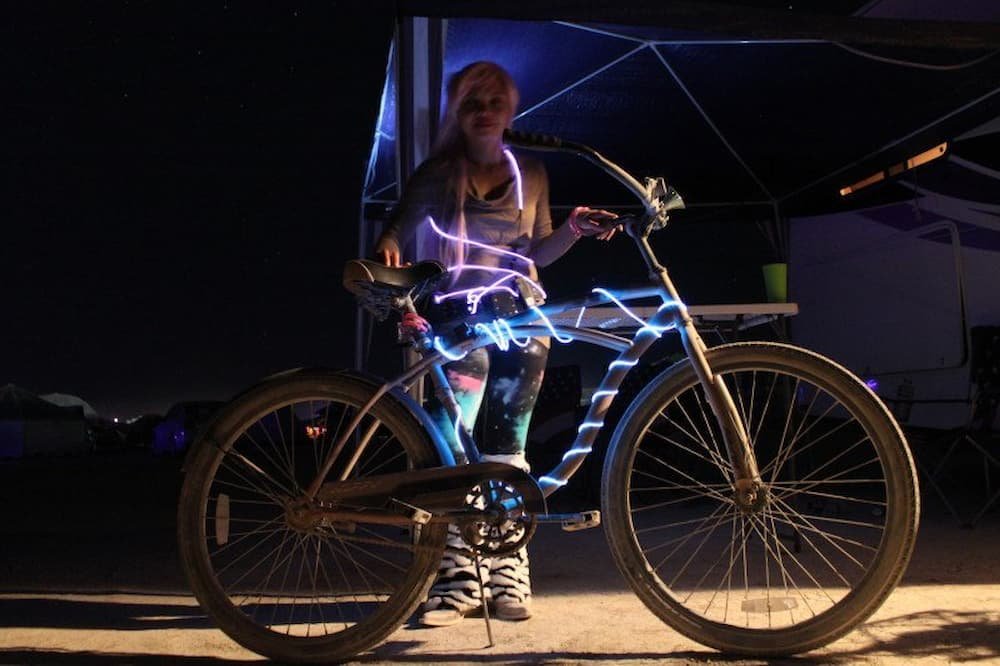
d) Illuminate your bike at night with a headlamp, tail light, and El-wire
e) Have some sort of bell or horn to warn people if they are in your path.


Some of the most creative people on the planet make the journey to Burning Man each year. Both for inspiration and to showcase their talents. It is common knowledge that many of the creative producers and set designers from Hollywood come to the playa in search of the bizarre and wonderful art that is on display.
Months of preparation go into the theme camps and art installations that you will see here – not to mention thousands of dollars. Art installations are on display throughout the city but you will find the biggest (and best) scattered around the central playa.
I have posted some of the art below but for a more comprehensive guide with some background check this link.


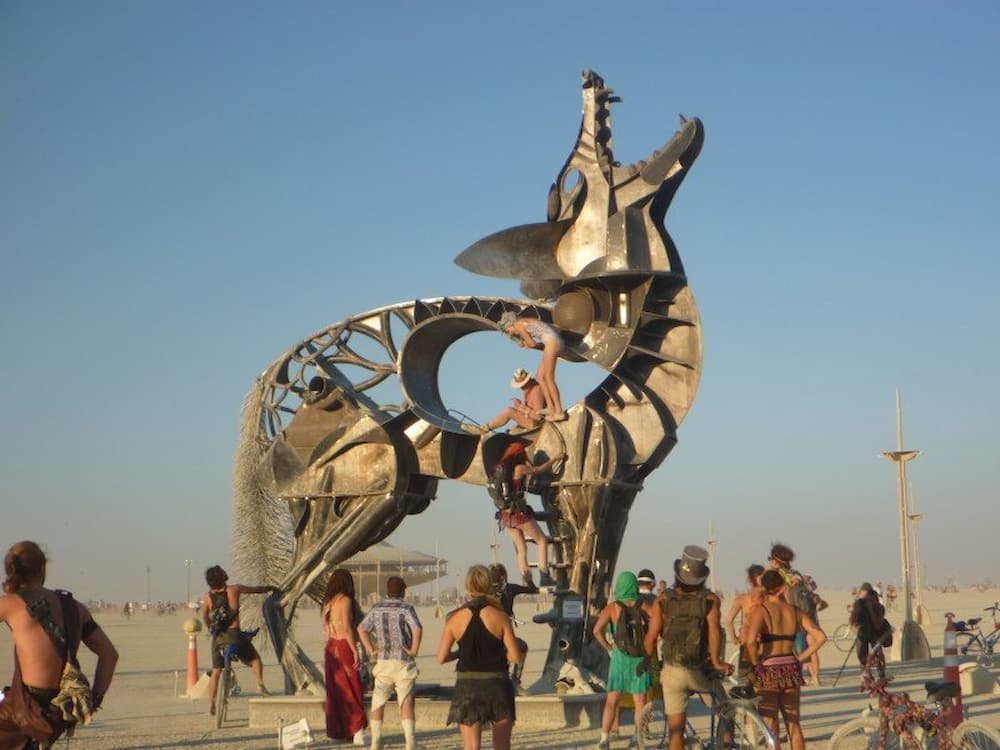
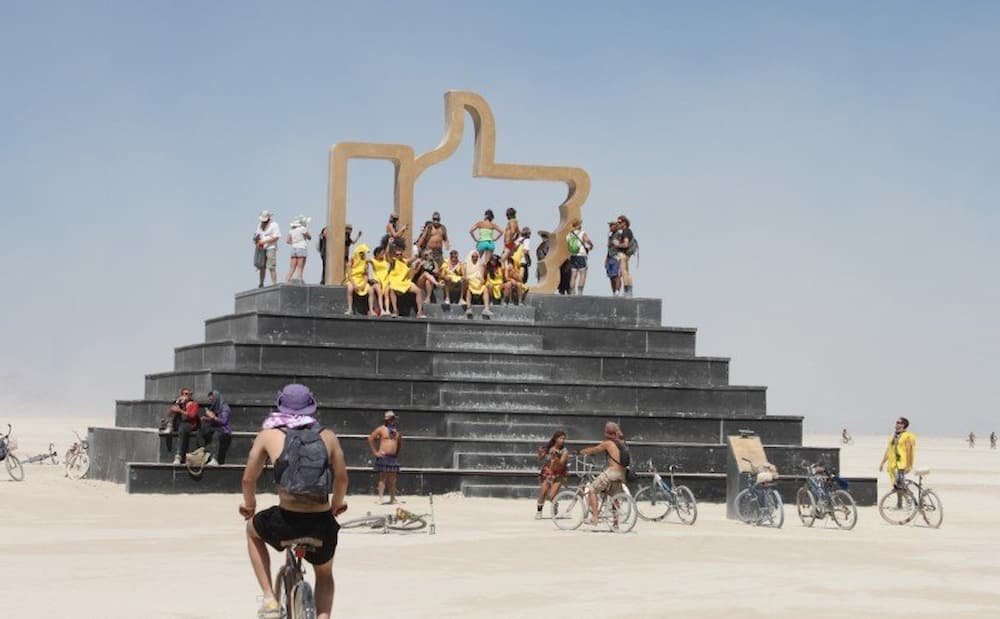


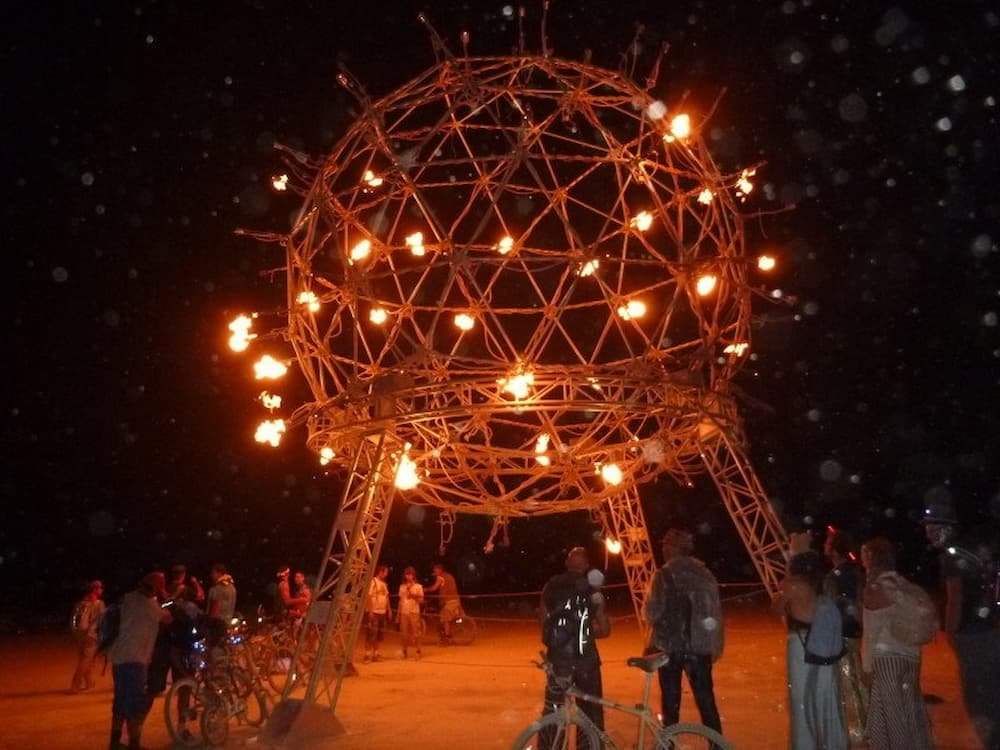


This magnificent piece was one of my favorites. It is titled “Truth is Beauty”.

Now that you have seen a selection of immovable art structures let’s take it to the next level. Imagine one of these crazy pieces of art – now incorporate a car, truck or bus so it can move throughout the city. Welcome to the world of art cars!
Not only do they look good but these moving Picassos often have pumping sound systems and the bigger ones can take a decent number of people. It is like your own nightclub on wheels.
Throughout the day you will hear the thump of a heavy bass as an art car comes rumbling through the streets or on the open playa. Just wave one down and ask for a ride to where you are going… you never know where you might end up.
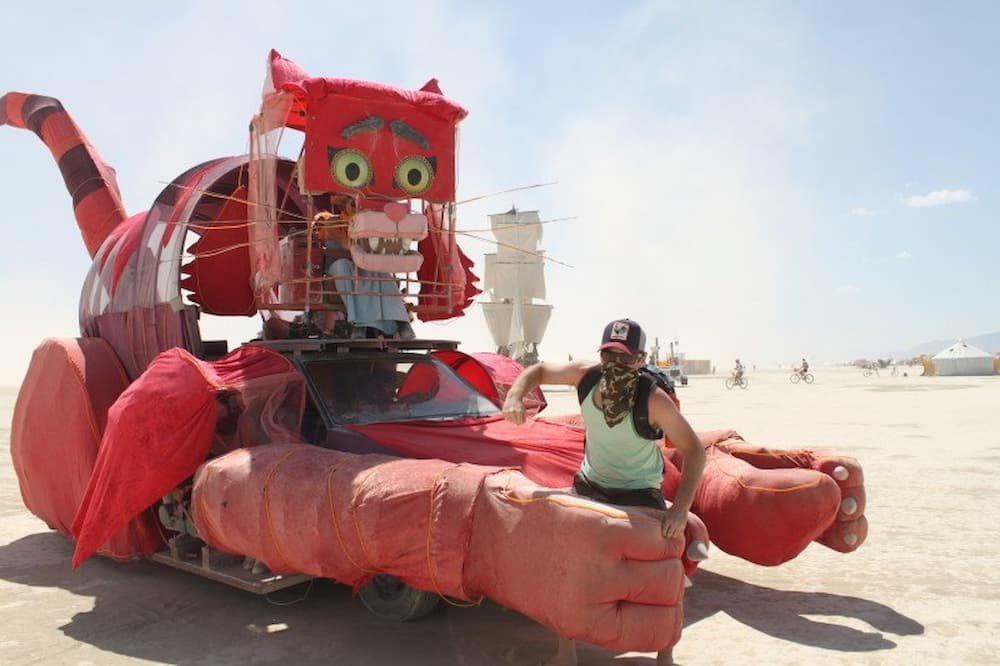


There was even a full-sized tall ship!
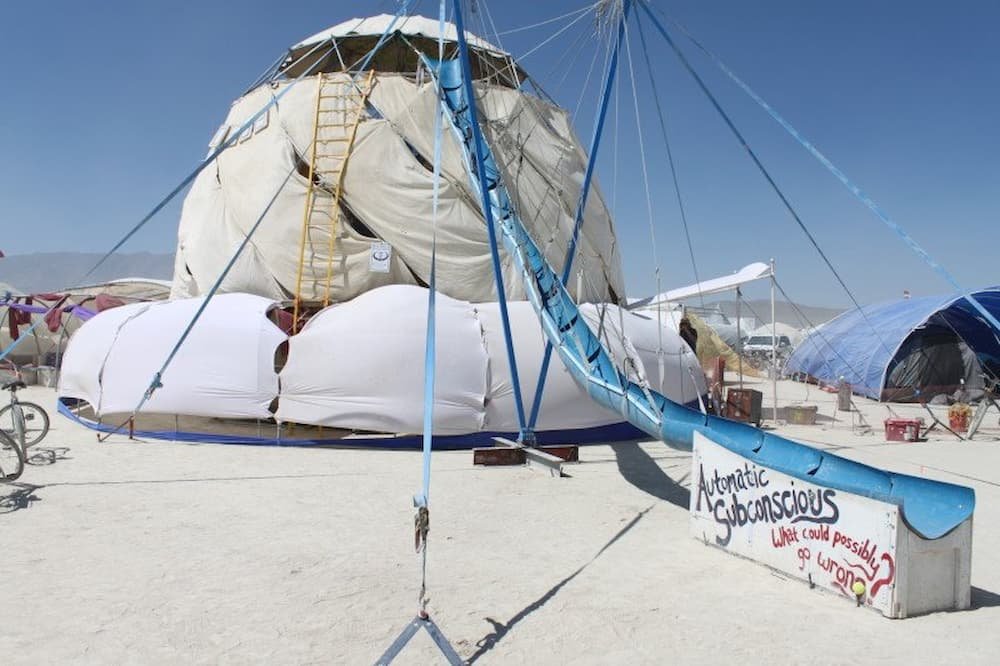
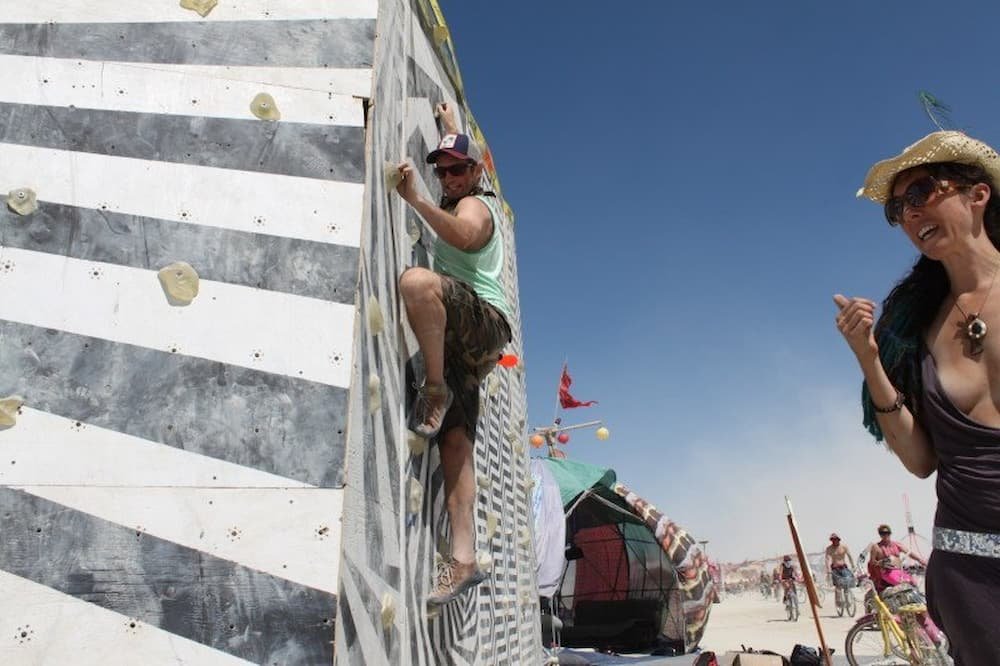
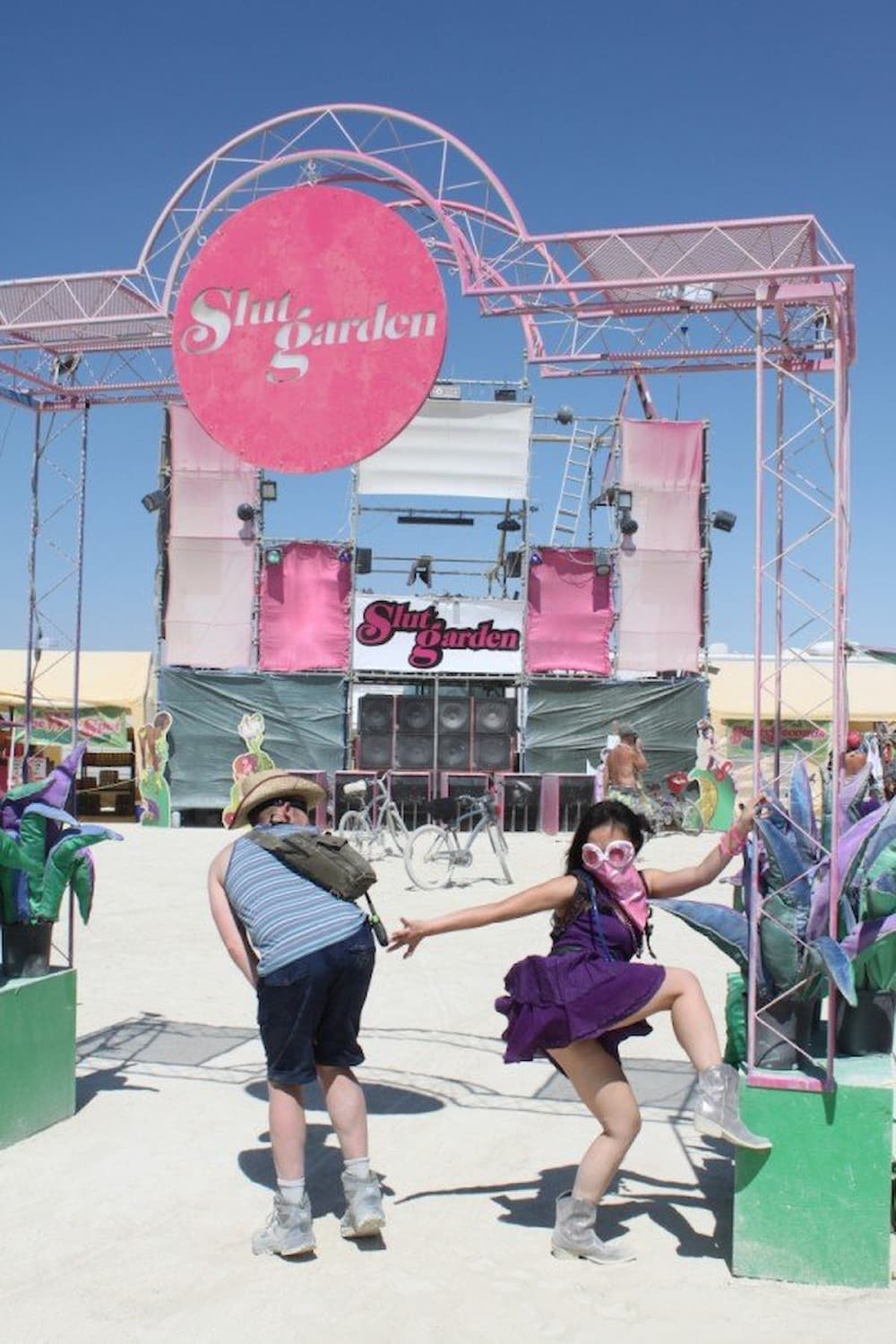
It is mind-blowing to see the imagination and effort that some people put into their theme camps. Clearly, the place to be is on the Esplanade – front and center. Most of the major theme camps seemed to revolve around a musical or clubbing aspect with some quirkiness thrown in for good measure.
Some of my favorite camps were the ones that provided a decent amount of interactivity. You could get a snow cone, or how about a massage and your hair washed? There was no limit to the creativity and thoughtfulness that went into making things just perfect for everyone.
Got a flat tire? No problem – there’s a camp that will help fix your bike. I know this because Lisette got a puncture and we had to find a way to fix it.


Well, it looks like we are going to need a Part 3 in this series.
Just in case you missed it, here is the link to Part 1 – Burning Man – From a First-Timer’s Perspective
UPDATE: Here is the link to Part 3 – Burning Man – A Party on the Playa
Again all questions and comments are welcome.
