WE ARE BACK…. back to the “default world” as most Burners would put it. That’s right, we managed to conquer our first Burning Man and boy did it exceed all expectations.
In this post I hope to outline some of my experiences, along with some commentary and advice to follow up from my earlier assumptions (which you can read here – Preparing For My First Burning Man).
Just in case you don’t know my style of writing – I’m a big fan of breaking things up into sections. I find it easier to write and hopefully easier for you to skim and find that important piece of information you might be looking for.
I have to say that this was the most researched week-long trip that I have ever been on and my expectations were extremely high based on what I had seen and read. Normally this would be a very dangerous situation, surely setting myself up for disappointment but this is Burning Man and even still my mind was TOTALLY BLOWN!!!
So without further adieu here we go.
Not having a car in San Francisco is nothing out of the ordinary. Just take a ride on the No. 38 MUNI and you will see what I mean…. people crammed into every nook and cranny, fighting for breath below a stinky armpit. That being said, I very rarely travel across to the East Bay so my knowledge is pretty limited on how to get around there.
It just so happens that the RV we rented was located in Dublin which is a good hour BART ride into unknown territory.
A short walk from the station to the car yard then a loooong wait to get our vehicle. Be prepared to wait for up to three or four hours while they prepare your paperwork and make sure the RV is ready to hit the road. Thankfully the staff are quite well prepared for the Burning Man influx and, although the wait was long, we had a comfortable waiting area with free coffee and plenty of fellow burners to chat with.
Once the RV was ready to go we had a quick briefing from one of the staff. They outlined everything we needed to know like how to use the generator, storage options, refueling, toilet and shower.
TIP: We had a friend from Australia traveling with us and got him to book the RV using the international site. We ended up saving close to 50% because they charge a higher rental fee to the local market.
I might even consider outlining a breakdown of our costs in another post if that is something of interest to people. Just let me know in the comments.

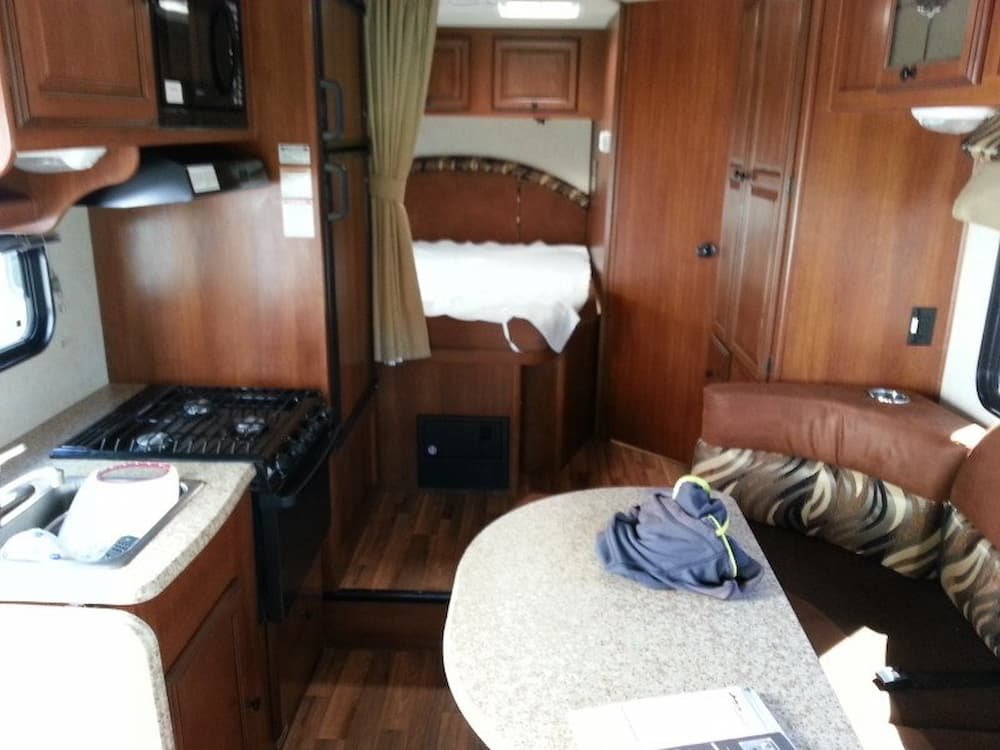


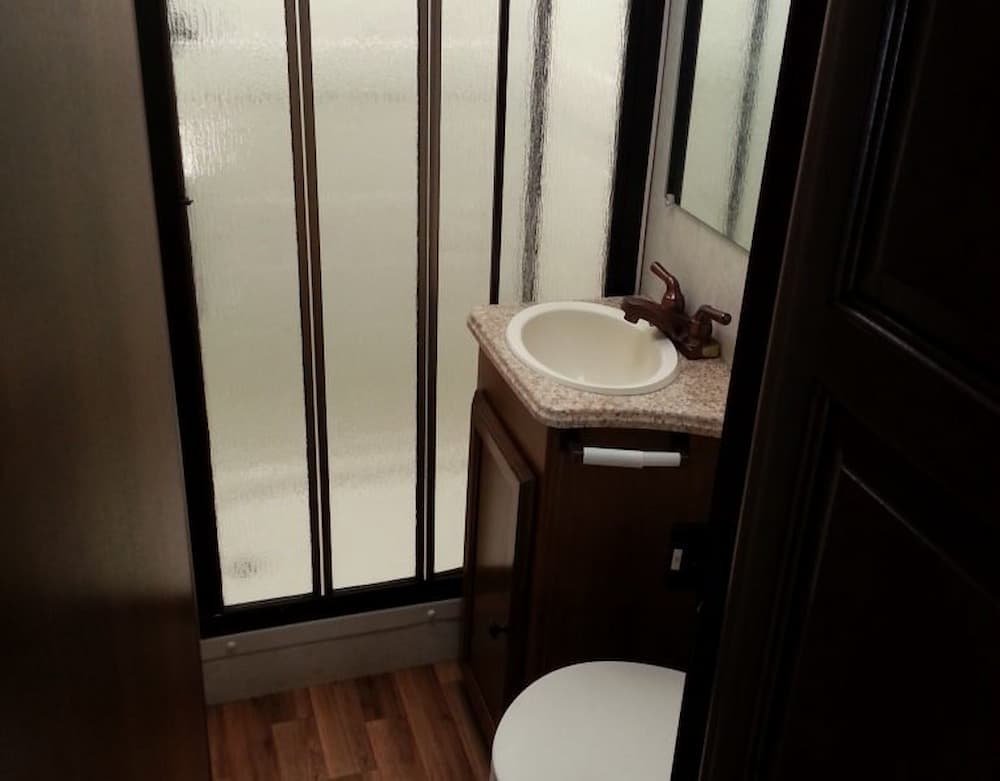

In my previous post, I briefly touched on what to pack for the BURN outlining a fully comprehensive packing list that has been put together by other veteran burners. I would like to add my thoughts on what to take for food. Please bear in mind this is based on the fact that we had an RV with a complete kitchen including a fridge/ freezer, stovetop, and microwave oven.
Considering that there is so much to see and do on the playa I figured that it would be a good idea to prepare a selection of meals before leaving. We decided on three different meals:
1. Pumpkin & Chicken Curry with Rice
2. Spaghetti Bolognese
3. Vegetable Stir Fry
Ryan and I spent one afternoon cooking up a storm as you can see below. We purchased some plastic tupperware and individually packed all of our main meals for the week, then froze them. This simple prep turned out to be one of the best moves ever….. if you have ever tried to cook while hungover then you will appreciate what I mean. The microwave was our best friend in the RV.

It is a good idea to pack some healthy options. For breakfast, we went for muesli and fruit with milk – simple to make, simple to pack.
Another suggestion is to take plenty of snacks. Snacks are great to share among your neighbors and other burners you invite into your camp. We decided on a selection of junk and healthy:
1. Celery & Dip
2. Corn Chips & Salsa
3. Chocolates (Mini Milky Way)
4. Trail Mix
5. Macaroons
In the Burning Man Survival Guide, they say that you should take at least 1.5 gallons (5-6L) of water per person a day. This may sound like a lot of water but let me assure you water is the most important item you will pack. The combination of hot dry air, dust, and exercise will dehydrate you like nothing else so make sure you always have liquids with you on the playa.
I am not a huge water drinker so decided to spice things up a bit by taking a selection of Powerades…… waaaay too many it turned out. So much so that I don’t think I could even look at another Powerade for months.
As a side note – A camelbak is a great way to keep a decent amount of water with you at all times while acting as storage also.
The drive from San Francisco is reasonably straightforward, or so I thought. We made the push to Reno on the first day deciding to have a rest there and make a final push for Black Rock City in the morning.

Reno is the perfect stopover if you are traveling from most places in California. It leaves a drive of approximately four hours to the turn-off and has enough Vegas-like cheese to put a smile on your dial.
After finding a dodgy parking spot on the side of the road we ventured into the Circus Circus Casino for a few mojitos.

Let’s just say that the drinks were strong….very strong. Lisette, being the lightweight that she is, was entertaining after her first. Not a bad night when the drinks are only $3.75.
That night we slept in the RV on the side of the road – bad idea. The road was cambered which meant that Lisette and I ended up in a pile on the curb side of the bed in the morning. Nothing a strong coffee couldn’t fix though.
We arrived at the turn-off around lunchtime and to our amazement, the line was almost non-existent. They have set up a lane system to ease the processing of more than 50,000 people to the city and we had our choice of any lane.
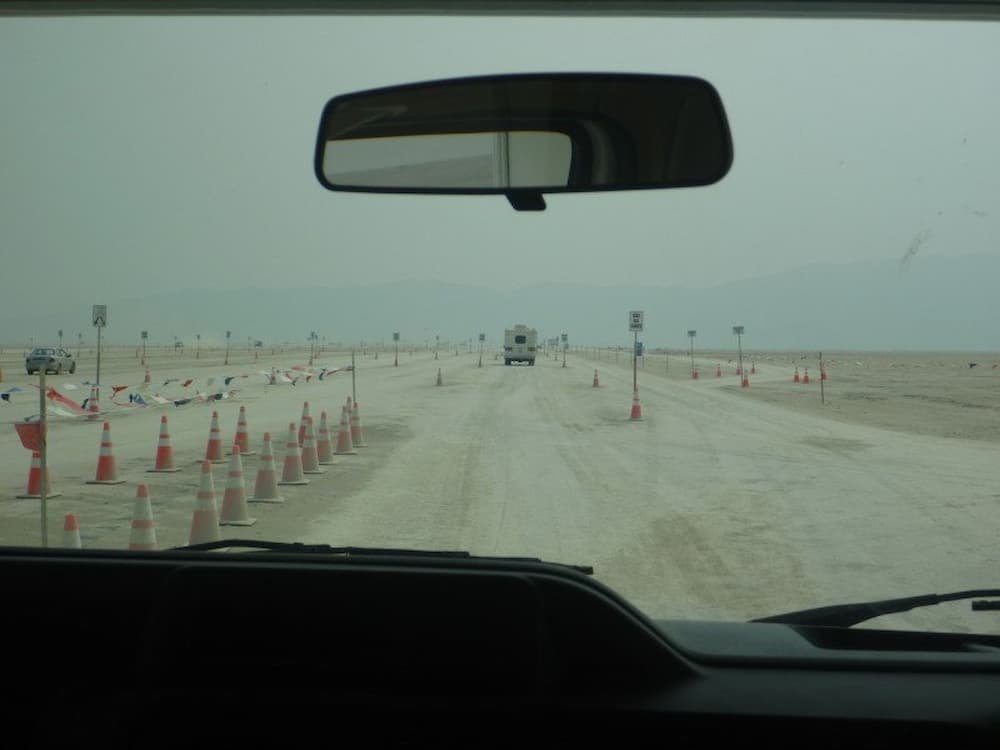
Once on the dirt, we switched to 95.1 on the radio to get all the important information regarding processing into the city. If you chose to pick up your tickets at Will Call then you have a slight detour before arriving at the first checkpoint. This is where the volunteers jump onboard and loosely check your vehicle for contraband and more importantly stowaways (don’t let this stress you as they are not law enforcement and also turned out to be some of the most friendly people).
A short drive later and you arrive at the entrance to the city where you will be met by the ‘Greeters’. These friendly (mostly naked) folk are there to greet new arrivals and can be heard shouting “Welcome Home”. They handed us a thick book that seemed to cover every event for the week.
If you are a first-timer (virgin burner) like we were you get to hit the gong.
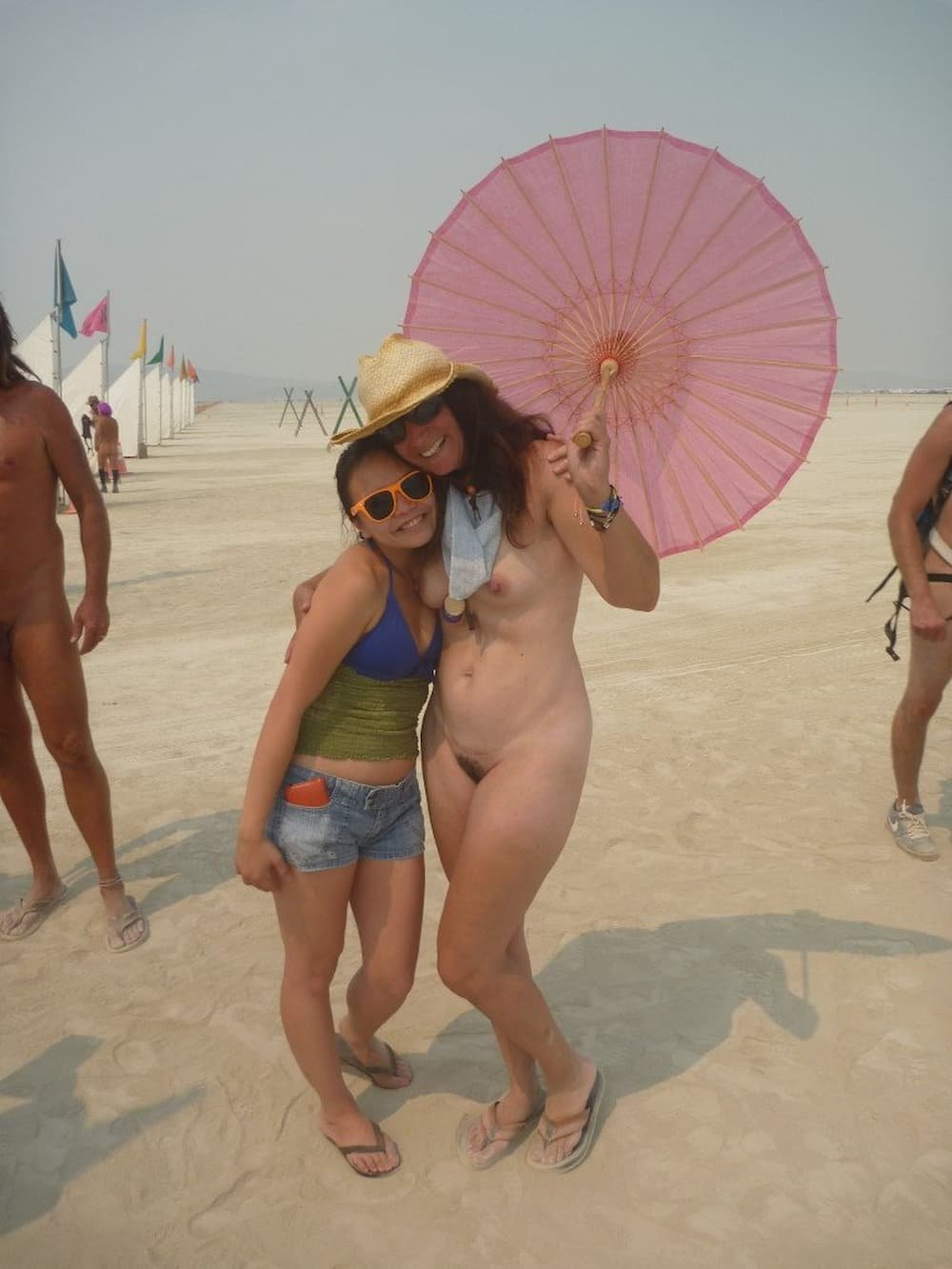

Once you are in the city and have found a spot you need to set up your camp. Since we had an RV we were pretty sorted but I’m sure you can imagine that for some people with tents etc. the fun is just beginning.
There are a few considerations that you need to think about when setting up your camp.
This is very very important for two reasons.
1. The ground is very brittle with a thin crusty layer so make sure you use rebar or at least multiple anchor points.
2. The wind can gust up to 70 mph (112 kph)
During the day the temperature can get close to 100° F (37° C) so you will want to have some shelter from the sun’s rays. Preferably a well-ventilated area.
It is a good idea to meet and greet the people adjacent to your campsite before setting up camp. This will set things off on the right foot establishing good communication and respect from the start…. not to mention you get to make some new friends.

This one is not only to make your camp look pretty but also as a safety precaution. Remember that at night it is very easy for someone to wander into your camp and trip over a guide line or metal peg in the ground if it is too dark.
With a ‘leave no trace’ philosophy you want to ensure that you set up a garbage policy in your camp. Everyone should know where to discard their rubbish and this needs to be enforced.

Black Rock City is not your typical city, you can’t just text your friends to arrange a meeting place if you get split up. While there have been huge advances in the infrastructure over the last few years it is still a place you can easily get lost.
There is no cell phone signal but unbelievably there were a few places in the city where you could connect to wifi. Apparently, some camps had set up a hot spot. Needless to say, the coverage was very patchy and you needed to be within a couple of blocks to connect.
If you don’t make very clear instructions with your friends on where and when to meet you will likely miss each other. The best thing to do when you arrive is to register your camp and self at the Playa Information. There are a number of computer terminals set up at Center Camp and you can leave a message for your friends or check messages others may have left for you.
While this works well in theory, in practice it is a different story as I found out. I left a number of messages for a couple of friends because I didn’t know where they were camped but unfortunately, they never checked them.
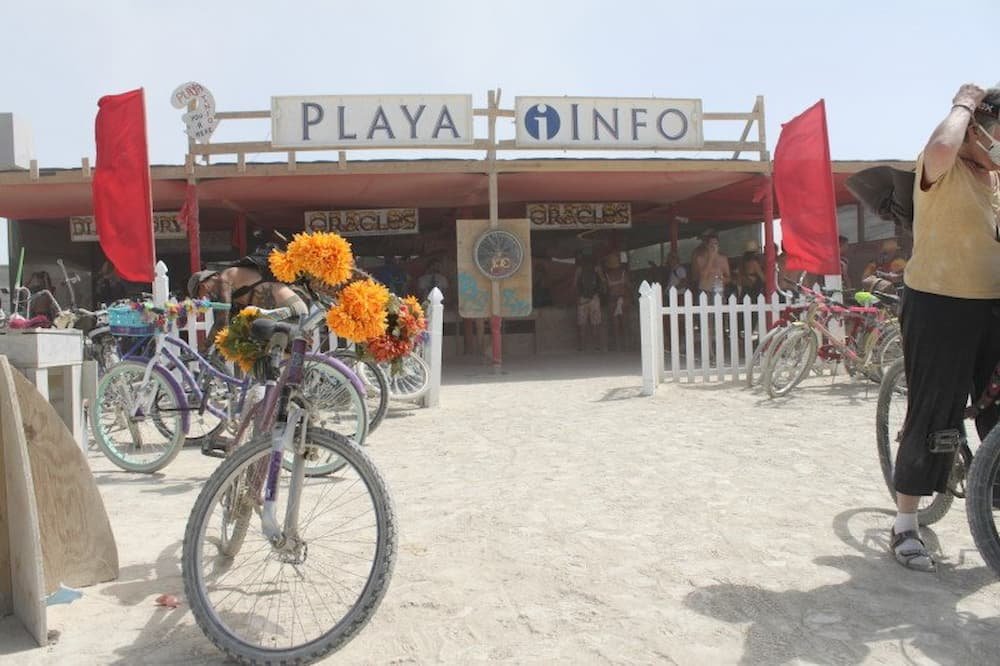
We thought that we came prepared to communicate by purchasing three Motorola Walkie-Talkies……we were wrong. First issue was quality or lack thereof. While in the deep playa the winds can get pretty fierce making it very difficult to hear the person at the other end. Second issue was competition – with only 22 channels to choose from we were constantly competing with other people for air time.
So my suggestions would be these:
– Make sure your friends know how you will communicate with them, whether this be at the information or on a sign.
– Organize a group meeting point to be used if anyone goes missing.
Ok I think it is probably best to finish Part 1 of this series here. I will be writing Part 2 (and possibly Part 3) over the next few days and will place a link below when they are up.
UPDATE: Here is the link to Part 2: Burning Man – Art, Theme Camps and More
All questions and comments are welcome.
My fascination with festivals has seen me travel to some amazing places around the world. Last year I was fortunate enough to tick off one of the largest food fights in the world – La Tomatina in Buñol, Spain. While this took some preparation it pales in comparison to what is required for our upcoming adventure in just over a week.
A week-long festival in the middle of the desert you say – sounds interesting enough to grab your attention doesn’t it? Well, let me tell you this is no ordinary festival… this is Burning Man.
Since moving to San Francisco a little under two years ago, Lisette and I have wanted to make the trip to Black Rock City to see what all the fuss is about with this thing called Burning Man (BM). When we first arrived here in 2011, we met up with some people who had just come back from their first burn while out for a drink one night. You could literally feel their excitement of what they had just experienced from the moment they started talking to us. They went on to describe this “life-changing” event and how we MUST go.
Well, here we are, one week away from what can only be described as the most intense seven days of our lives, dedicated to community, art, self-expression, and self-reliance.
Before I start I want to be very clear about one thing – I AM NO EXPERT! That’s right, this is in fact our virgin burn so please take this post (and any that follow) as my opinions and experiences only. My reasons for writing this are purely to outline what one might expect and to pass on the resources that I used. Believe me when I say there are a million articles out there so do your own research in addition to what I provide.
Ok so with that out of the way let’s get started. The idea below was to divide the preparation into stages to make it easier to follow. It worked for me so let's hope it works for you too.
Pretty simple philosophy here – if you don’t have a ticket well then you ain’t going are you?
How many of you have waited in line for hours/days to secure a ticket to see your favorite band’s concert? Nowadays the line has been replaced with sitting in front of your computer, vigorously pressing the refresh button while praying to the interweb gods that the server doesn’t crash. This mad ‘bum rush’ for tickets often occurs at the most inconvenient of times too.
Well, I’m sorry to tell you but this is the dance we do for BM also…… here is the link to purchase tickets.
As you probably already know, tickets sell out so I wanted to make sure I registered nice and early (back in December 2012). The initial release of tickets was priced at a whopping $650 each. These were marketed as fully transferrable, first-come, first-served tickets…… I couldn’t help but draw parallels with the airline industry.
This initial Holiday Sale ran from the 20th of December 2012, almost two months prior to the Individual Sale release. My guess is that this was probably targeted toward people who were unable to secure a ticket last year.
We decided to wait for the main release of tickets which went live at 12pm (PST) on the 13th of February. These tickets were priced considerably lower at $380 each. After coordinating with friends, who were also going, we jumped online and played the screen refresh game for over two hours before a friend managed to secure them on our behalf. Excited much!
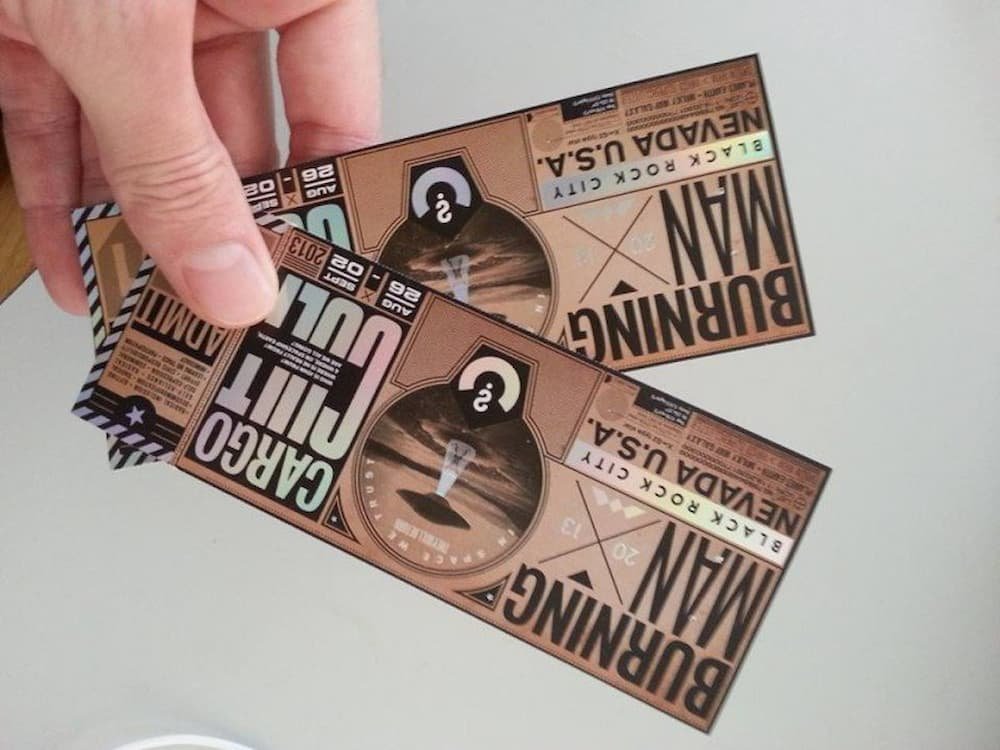
This was the schedule for the different ticket types for this year’s festival:
Registration: 14th December 2012 – 19th December 2012
Sale: 20th December – …
– 3,000 tickets available at $650 each, plus applicable fees.
– Tickets limited to four (4) per person
Registration: Based upon past history, Burning Man targeted specific groups within the community for participation in the Directed Group Sale.
Sale: 30th January 2013
– 10,000 tickets available at $380 each, plus applicable fees.
– Tickets limited to two (2) per person.
Registration: 4th January 2013
Sale: 10th January 2013 until sold out
– 4,000 tickets available at $190 each. These tickets are reserved for participants on a limited income who cannot otherwise afford a regular-priced ticket.
– Tickets are limited to one (1) per person.
Registration: 6th February 2013 – 10th February 2013
Sale: 13th February 2013 until sold out
– 40,000 tickets available at $380 each, plus applicable fees.
– Limited to two (2) per person
Registration: 2nd August 2013 – 5th August 2013
Sale: 7th August 2013 until sold out
– 4000 tickets available at $380 each, plus applicable fees.
– Limited to two (2) per person
The Secure Ticket Exchange Program (STEP) is an online system that facilitates the safe resale of tickets that have been purchased directly from Burning Man. It’s designed to provide a hassle-free, secure way of buying and selling tickets while avoiding scammers, counterfeits and scalpers.
This program was introduced in conjunction with limiting the number of tickets each individual could purchase to try and stop people from buying up big and selling on eBay or other platforms.
Ask anyone who has already been to BM and they will all tell you that the 10 Burner Principles is the one thing that you MUST reference before you even consider attending.
With that knowledge, I guess it is my social responsibility to make sure I include them in this post – so here they are:
Anyone may be a part of Burning Man. We welcome and respect the stranger. No prerequisites exist for participation in our community.

Burning Man is devoted to acts of gift-giving. The value of a gift is unconditional. Gifting does not contemplate a return or an exchange for something of equal value.

In order to preserve the spirit of gifting, our community seeks to create social environments that are unmediated by commercial sponsorships, transactions, or advertising. We stand ready to protect our culture from such exploitation. We resist the substitution of consumption for participatory experience.
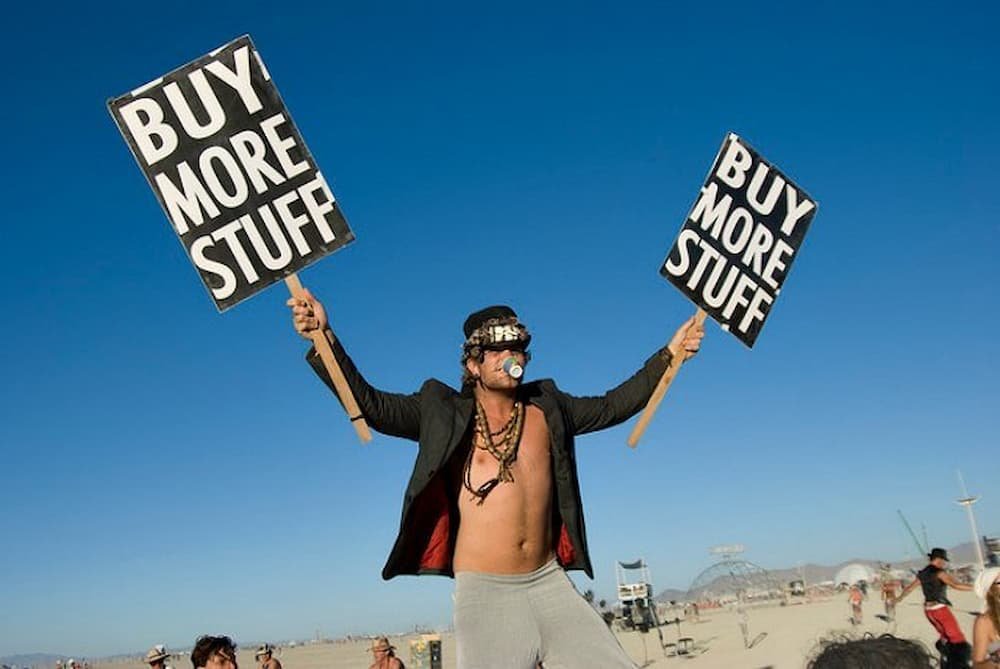
Burning Man encourages the individual to discover, exercise and rely on his or her inner resources.

Radical self-expression arises from the unique gifts of the individual. No one other than the individual or a collaborating group can determine its content. It is offered as a gift to others. In this spirit, the giver should respect the rights and liberties of the recipient.

Our community values creative cooperation and collaboration. We strive to produce, promote, and protect social networks, public spaces, works of art, and methods of communication that support such interaction.

We value civil society. Community members who organize events should assume responsibility for public welfare and endeavor to communicate civic responsibilities to participants. They must also assume responsibility for conducting events in accordance with local, state and federal laws.

Our community respects the environment. We are committed to leaving no physical trace of our activities wherever we gather. We clean up after ourselves and endeavor, whenever possible, to leave such places in a better state than when we found them.

Our community is committed to a radically participatory ethic. We believe that transformative change, whether in the individual or in society, can occur only through the medium of deeply personal participation. We achieve being through doing. Everyone is invited to work. Everyone is invited to play. We make the world real through actions that open the heart.

Immediate experience is, in many ways, the most important touchstone of value in our culture. We seek to overcome barriers that stand between us and a recognition of our inner selves, the reality of those around us, participation in society, and contact with a natural world exceeding human powers. No idea can substitute for this experience.

If you read some of the forums you will see that there is an ongoing debate from the old school burners about people arriving in RVs. I won’t go as far to say that they are hated but let's just say they are not so welcome. Apparently, they create a walled community that is both uninviting and ugly….or something like that.
I am a big fan of camping and happy to pitch a tent pretty much anywhere but we decided to go the easy route for our first time and hire an RV. The fact that we don’t own a car (or a tent for that matter) made the decision a little easier but really it came down to a combination of comfort and convenience.
Being able to pack everything up in the van and just rock up to a campsite was very appealing. As we have three in our group, it was nice to have something a little larger too – something with a shower was the ultimate winner.
As a couple of budding DJs, we also have a sound system that we will be taking with us. The RV has a generator so power is much more accessible and we are hoping that it will also provide an important windbreak during dust storms…… fingers crossed.
Clearly, there is a price to be paid when going with this option. It works out that we will be spending about $2000 USD just to have the comforts of home. If you are more budget-conscious then I would recommend going with the tent option.
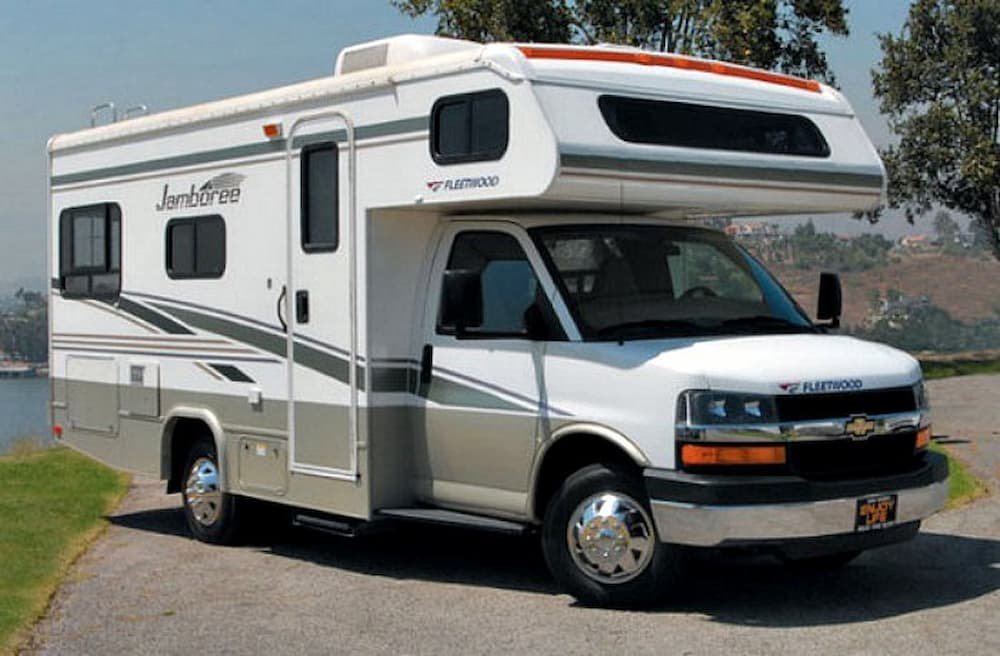
Below is a picture of the RV that we will be taking.
Another big decision, especially for your first burn, is whether to join a theme camp or go it solo. Before choosing a side it is always best to weigh up the options to find the choice that suits you.
Joining a theme camp has the benefit of strength in numbers. Whether you are in a camp with friends or you are joining an existing camp you need to know what you are in for. Ask yourself this question?
Could you see yourself living in a close, confined space with these people?
Time will tell as to whether we made the right decision – if there is such a thing. I feel that we are going to have an incredibly collaborative experience regardless of the fact that we have chosen not to join a theme camp. I guess that all comes down to how open and welcoming we make the area around our camp.
Surely this is the most stressful part of any first-timers experience, I know it has been for me.
This packing list compiled by Stitch is possibly the most comprehensive that I managed to find. To quote “…it is compiled from multiple Burner’s lists accumulated over the past 17 years. What one person needs another does not, so all of this is included so you can make your own decision about what to bring & cross out what you don’t. The food and clothing section is fairly minimal because everyone has different tastes”.
Here is another one by Ben Guild which outlines what he took on his first burn. You can clearly see the differences.
Rather than posting my own list here in this post, I have decided to do a follow-up article after I get back. In this article, I will go into more detail about what I specifically packed, what I really used, what I wish I had taken, what I could have left off, and what got wrecked.

Something essential that you must not forget is a bike. I picked this funky little sucker up at Walmart for under $100.

An aspect that is rarely considered is the emotional impact that BM will have on you, not only as a newbie but even a seasoned veteran.
Not too long ago I reached out to Chip Conley, the founder and former CEO of Joie de Vivre hotels and festival fanatic. As a matter of fact, Chip is on the board of the Burning Man Project and recently launched his latest project Fest300.com, with the aim of creating a community of festival lovers.
As a seasoned burner, with seven burns under his belt, Chip realized that there wasn’t really a guide on how to prepare emotionally….so he wrote one and I strongly suggest that you read it – Emotional Survival Guide to Burning Man.
Here are some of my favorite excerpts from the article:
“Islands are more intense……”
“Island fever’, the feeling of being stuck somewhere without an ability to escape, is something you’ve probably experienced if you’ve spent any time on an island. Whether Balinese or Hawaiian, islands can bring forth magnified emotions and increased volatility alongside (sometimes) unpredictable volcanoes. Burning Man is a desert island.”
“Emotions are contagious, especially in the Petri dish of Burning Man. Psychological studies show that our reference group has a big impact on our perception of our wants and our needs. This is one of the values in hanging out with people different than you. They help to modify the narrative in our heads. In the context of Black Rock City, your camping mates will have a significant influence on your experience…or even your perceived experience of your experience. So, choose your neighbors wisely.”
“Cruising around solo is a good thing. It allows you to meet people you wouldn’t have met otherwise.”
I want to clarify that BM is more than just a festival, it is a way of life. There are many reasons why people keep coming back year after year and it would be impossible to list every reason in this post. For me personally, it will be a combination of personal exploration,
For the majority of people, their initial impression of BM is through a photo they have seen from one of the incredible art installations on the playa. No matter who you are, everyone can appreciate the work and creativity that has gone into making these grandiose structures.
Personally, I cannot wait to be pedaling my bike from piece to piece, carefree to explore the imagination of the artists.
The BM site releases an honorarium guide to the art each year, along with a comprehensive audio tour. Here are the links for each below:
Download the .zip file for the Audio Tour


Let me start by saying that Burning Man is NOT A MUSIC FESTIVAL like Coachella etc. No bands are booked to play there. There is no line-up. There is music, but the performers pay their own way. Most of the music is electronic and there are usually many famous DJs.
If you are lucky enough to know when are where they are playing you may get to see them spin ….for free. The key is knowing who and where.
One of the best resources available to answer this question is the Rock Star Librarian. They have posted what can only be described as the most comprehensive guide to music on the playa. You can check out this year’s guide here – 2013 RSL Music Guide.
I am a huge Deep House music lover so this year I am looking forward to seeing: Waifs and Strays, Funkagenda, Michael Woods, Thugfucker and Philipp from M.A.N.D.Y. to name just a handful.
Well, there you have it… that’s all I have for this post – I guess I can’t really tell you too much more until I have had a chance to experience it for myself. It is now less than one week until we get the flock out of here, bound for our first burn. Yippppeeeeeee!
Once I get back (after sufficient recovery time), I will start working on a follow-up post that will describe my entire experience including the following topics and many more that I haven’t even thought of yet:
Did you know that Guinea pigs were originally domesticated for their meat in the Andes? For many years, these cute little critters were cared for and consumed at ceremonial meals by the indigenous people of the Andean highlands. Nowadays it is commonplace to see street vendors selling “Cuy” (typically the barbecued variety) which has become a major part of the diet in Peru, Bolivia, and some parts of Ecuador and Colombia.
When you consider the following it is easy to understand why the guinea pig has become a delicacy throughout many parts of South America:

So I hear you asking… what does it taste like? Well as with many types of meat it has a ‘chicken-like’ flavor but due to its gamey nature is probably closer to rabbit.
The guinea pig also plays an important role in both religion and culture for Peruvians. The religious celebration known as Jaca Tsariy (meaning – collecting the cuys) is a major festival in many villages across eastern Peru and is even celebrated in smaller ceremonies throughout Lima. During the festivities, locals will donate their guinea pigs to a Sirvinti or they may be brought to a communal area to be released in a mock bullfight.
Peruvians consume an estimated 65 million guinea pigs each year and the animal is so entrenched in the culture that one famous painting of the Last Supper in the main cathedral in Cusco shows Christ and the twelve disciples dining on guinea pig.
In central Ecuador, guinea pigs are used in the celebrations for the feast of Corpus Christi as part of the Ensayo, which is a community meal, and the Octava, where castillos (greased poles) are erected with prizes tied to the crossbars, from which several guinea pigs may be hung.

Probably the most bizarre festival involving guinea pigs can be found in the Peruvian town of Churin. It involves dressing guinea pigs up in elaborate costumes for a competition.

A few days ago the winners of the New7Wonders of Nature were announced and I’m sure more than a few people were surprised by the results. Considering some of the ‘big names’ that made the final 28 it was very interesting to see how influential the public vote was in determining the winners.
It is pretty clear to me that there has been some serious campaigning done by the tourism boards of some of the lesser-known wonders in order to gain a place on the list, unfortunately at the expense of what I will call ‘quality control’.
Here is the sequence of events that led to a decision being made:
So to give you a little background here is the list of 28 finalists and we will discuss the winners shortly.
Bolivia, Brazil, Colombia, Ecuador, French Guiana, Guyana, Peru, Suriname, Venezuela

Venezuela

Canada

Germany

United Arab Emirates

Ireland

Israel, Jordan, Palestine

Puerto Rico
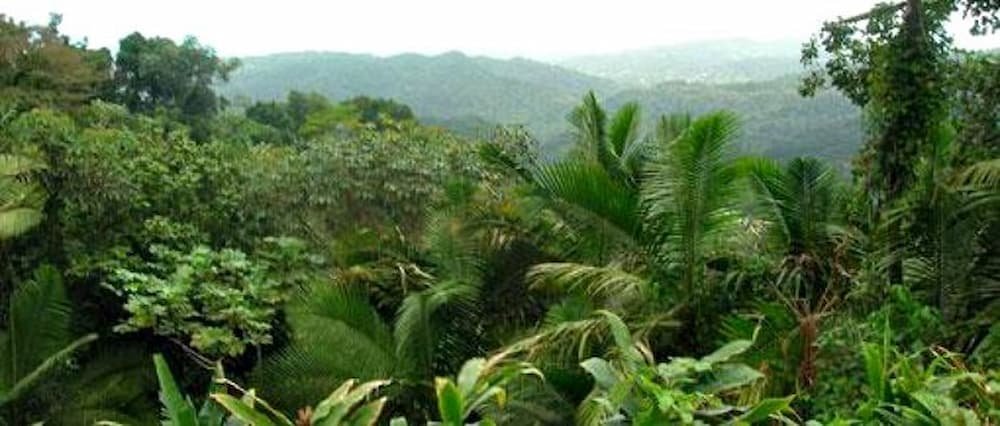
Ecuador

United States

Australia

Vietnam

Argentina, Brazil

Lebanon

South Korea

Tanzania

Indonesia

Maldives

Poland
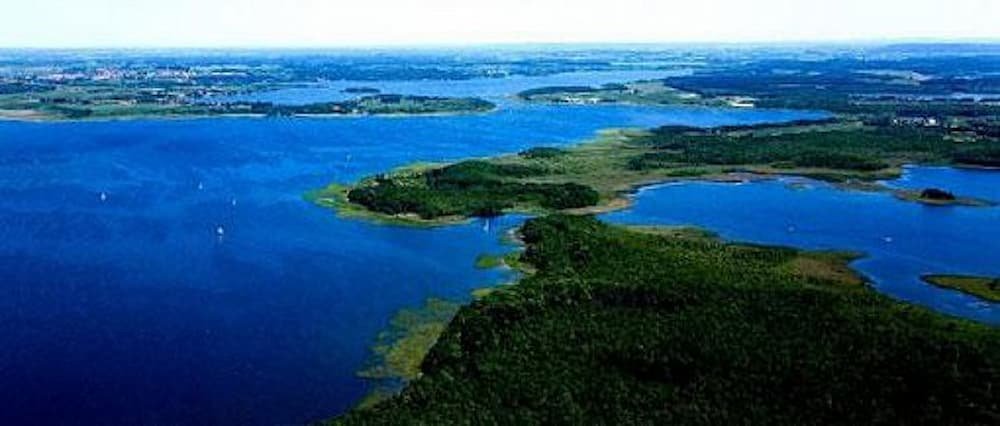
Italy, Switzerland

New Zealand

Azerbaijan

Philippines

Bangladesh, India
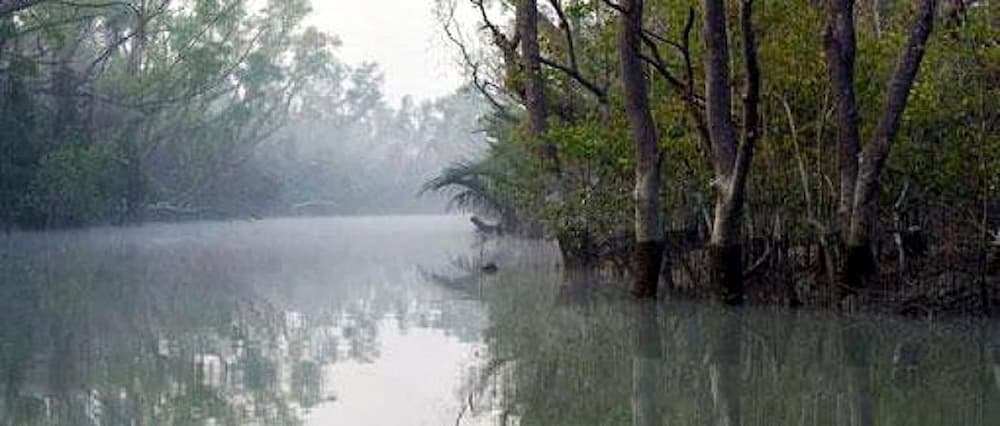
South Africa

Australia

Italy

Chinese Taipei

Ok so from this esteemed list of natural wonders the following seven received the most votes by you and were announced the New7Wonders of Nature.
1. Amazon
2. Halong Bay
3. Iguazu Falls
4. Jeju Island
5. Komodo Island
6. Puerto Princessa Underground River
7. Table Mountain
Is it just me or does this list seem a little stacked? Firstly more than 50% (4 out of 7) of the winners are from the same continent – Asia. Secondly, there are only 3 continents represented – Asia, South America, and Africa. Finally, the vast majority of the winners are from developing countries.
Why is this important to the voting? Well, in my opinion, there are 2 major factors – 1. Government backing and funding 2. National pride
I am not here to say that these wonders shouldn’t be on the list but they definitely wouldn’t be on my own personal list which would look something like this: Amazon (South America), Great Barrier Reef (Australia), Maasai Mara National Reserve (Africa), Grand Canyon (USA), Dead Sea (Israel), Antarctica, Mount Everest (Nepal)
Now it’s time to have your say. Tell us what wonders would be on YOUR list?
Image credits: New7Wonders
I dream of traveling the world – experiencing rich cultures and learning new things. Walking past innately sculptured ancient architecture, smelling their local dishes,v and taking a leap of faith by embracing their traditions.
You’ll never know what realization you will get until you start your journey. I decided to go back to Japan after visiting Tokyo two years ago. This time, I decided to lose myself in the old streets of Kansai.
The cultural charm of the place envelopes you wherever you go. So just brace yourself, and trust your gut – take a big gulp and prep yourself up to have a one-of-a-kind adventure because Kansai nurses a number of World Heritage Sites – each with its own story.
The Kinkaku-Ji (Rokuon-Ji) Temple which is the villa of Kintsune Saionji back in 1220, also known as the Golden Pavillion will surprise you with its astounding beauty. The crystal-like water together with a blast of sunlight creates a wonderful reflection. The rich green garden path around the area is perfect for snapping away and capturing the moment. It can be encapsulated by the word Zen – as they say, simplicity is key.
I was lucky to have visited Kyoto during a busy week. There was a large student population celebrating the Intercollegiate Festa featuring a music competition, fashion exhibition, parades, and a food expo with a smorgasbord of delicacies from all over the world. I tried and tasted treats made from scratch by the kids.


The event also featured traditional dances with a modern twist prepared by students. The fierce movement captures the quintessential Kansai mixed with the youthful glow of the performers keeping the audience glued to their seats.
Not to mention its movie appeal, as it was the setting for one of the scenes in Memoirs of a Geisha.
Another must-see is the Fushimi Inari Shrine. It houses thousands of never-ending toriis – a sight to behold. The complex is composed of five shrines spread out over the area.


My favorite part of the whole trip was exploring Sanjusangendo which means Hall with 33 bays. Its exhibit ground will astound you with its vast collection of National treasures – 1,001 Kannon statues together with 28 guardian deities.
In search of the perfect torii, I around the nature trail of Nara. Deers stroll along with you as the cool breeze brushes your face. Hours of walking will surely take their toll – but worry not, there are food stops along the way. I urge you to reward yourself with a Green tea ice cream! It’s worth it!

I encourage travelers to find the perfect charm in Kansai. There are a lot of temples selling a little bit of luck for every need – for expecting mothers, for health, to pass an exam, reach your goal, and, of course, for love. You may or may not believe in them but having one surely makes your trip worthwhile – it can just plainly be your souvenir or the perfect gift for your friends back home.
You can also write on wooden blocks and wish – or simply use them as memorabilia. Don’t worry about strictly following your itinerary – surprise yourself and travel to your heart’s content!

No one can visit this bite-sized country and not be changed by it. As the temple hub of the world, tourists are arriving fast and furious. Cambodia is a country that is firmly putting its past behind to embrace the 21st century. It is emerging as a vibrant, exciting tourist travel destination, offering an opportunity to step back into ancient history, get off the beaten track into a lush yet unpredictable rural countryside, and to immerse in a kind and charming culture.
Known as the Land of Smiles, Cambodia’s gentle culture is influenced by Theravada Buddhism practiced by the bulk of its population. Angkor Wat, the ancient temple at the heart of a sprawling, monumental complex of stone block structures in Angkor, is a testimony to the power of the Khmer kingdom, which peaked during the 11th century.
You can travel cheaply in Cambodia, sleep reasonably comfortably and eat well. Or you can live it up in the lap of luxury and dine in restaurants to rival the best in other Asian capitals.. It is pretty easy to fly in and out but not so from province to province. Major infrastructure connecting the dots on the map is still deficient and some roads flood. During the wet season, travel by boat on the country’s 150kms of waterways is the way to go. Landlines for telephones are still lacking but a cell phone is pretty cheap. Internet cafes have sprouted up like little mushrooms, and are starting to appear in outlying areas.
Unspoiled mountainous forests, ornate stone temples more than 1000 years old, idyllic islands and unspoiled beaches – these are the makings of a dream vacation. And it is, but some common sense will prevent headaches later. Medical insurance is not only prudent but also crucial; check that the coverage extends to emergency evacuations.
Charming as Cambodia is, its hospitals are not up to international standards and critical cases have to be evacuated to Bangkok or Singapore. Arm yourself adequately with the appropriate medication or be pre-armed with vaccinations especially if you are going off the beaten track. Remember that land mines are still a problem in unexplored areas.
Get your Cambodian visa sorted out before you leave. Unlike other visas, this visa type can be applied for online and will be sent to you by email.

Cambodia has a classic tropical monsoon climate. Temperatures range from 21 to 35°C, although they can exceed 40°C in the steamy month of April. There are two distinct seasons. The rainy months are from May to October when the southwest monsoons bring rains from the Gulf of Thailand and the Indian Ocean. It is hot and humid during these months and the heaviest rains kick in between September and October. Total annual rainfall ranges between 100-150cms, with as much as 130-190cms falling in the Tonle Sap and Mekong basins.
The dry season is from November to March when the northeast monsoon blows. Temperatures can fall to the low 20s in the cool months of December and January when there is little rainfall, low humidity, light breezes, and cool evenings. This is the peak tourist season for the temples and the beaches. Temperatures creep up in February with short ”mango” showers in the afternoon.
From March to May, the “mango” showers become more frequent and intense in the afternoon. River and lake levels are low and water travel can be difficult. Temperatures peak in April and in inland areas like Siem Reap, they average mid to upper 30ºs C with more intense sun and rising humidity.
Between June to August, the days are hot and wet, with the predictable afternoon and evening rains lasting for a few hours, providing some relief from the high humidity. Some consider this a desirable time to visit the Angkor temples as the moats and barays are full and the jungles lush and green. Rains are more frequent in the coastal areas and roads can get flooded.
The monsoon rains are still fast and furious in September and are completely over by the end of October. Temperatures hover around the 30ºs C but are not as stifling as in the hot months of April and May.
Carrying a stack of US dollar bills is necessary as that really is the currency of trade. Even the visa fees and departure taxes are paid in US dollars. The Cambodian currency, the riel, is relatively stable to the US dollar so the tourist does not have to worry about a rapidly inflating local currency.
Shopping is fun and there is a reasonable range of antiques. Just remember you cannot export pre-Angkor and Angkorian antiques as that is considered looting. However, local creativity is well at work here. In a revival of ancient techniques for stone sculpture, wood carvings and ceramics, you can now buy a beautifully reproduced Buddha head or stone carving, or a bust of the Angkor kingdom’s greatest king. Be tempted by the silver, but also be vigilant as to how pure it is, and whether it is really silver.

Support the local artists and artisans. Many of them would be jobless but for these vocational skills picked up at dedicated training centers. Shop Cambodian should be the mantra, as the tourist dollar really goes a very long way. Bargaining is a part of life but bear in mind that many of these people live on less than US$0.50 a day. Be part of the sport but be gentle.
For a mix of Khmer culture outside of ancient ruins and the ubiquitous karaoke bar, a budding art scene is complemented by a fast-growing number of art galleries. Attempts to fuse the traditional with the street culture are giving rise to interesting music and rock operas.
There is magic in Cambodia and as a tourist, you want to travel responsibly and make sure that there is more of the country to re-visit. Tipping is not part of their culture but the extra money is appreciated; good etiquette is probably just as well appreciated. Learning a few words of Cambodian might be useful in getting better prices at the stores. Relax and enjoy the ride through a magical country.
Cambodia is generally a safe and friendly country, with the usual exception for large cities late at night, particularly, and unobserved luggage or wallets. Bag snatching, even from those on bicycles and motorcycles, is a problem in Phnom Penh. Be discreet with your possessions, especially cash and cameras, and as always, take extra care in all poorly lit or more remote areas.
Intending visitors should be aware that the rule of law in Cambodia is inconsistently applied. Crimes usually require bribes to be investigated, and if perpetrators are wealthy or connected to the government they will often be untouchable by police and courts. You should also be aware that the courts are corrupt, so contracts are hard to enforce without some political leverage. All this being said, the violent crime rate is fairly low, the police are generally friendly and non-threatening, and those with common sense have little to fear.
Unfortunately, Cambodia has gained some notoriety as a destination for pedophiles, but under Cambodian law, the penalty for sex with minors can be up to 30 years in prison, and such tourists may be prosecuted by their home countries as well.
Cambodia suffers from a legacy of millions of land mines left during the war years. However, to tourists, land mines present a minimal to nonexistent threat, as most areas near touristed areas have been thoroughly de-mined. Many tourists mistake electric or sewage warning signs along national highways for land mine signs. HALO Trust, a leading mine removal organization in Cambodia asserts that you would have to drive through the jungle for at least an hour north of Angkor Wat to come across any mines. The threat is to locals in extremely rural areas who rely on subsistence agriculture for their livelihoods.

All that said, in remote areas such as Preah Vihear (near the border) and Pailin (a former Khmer Rouge stronghold), exercise caution: ask for local advice and heed warning signs, red paint, and red rope, which may indicate mined areas. Do not venture beyond well-established roads and paths.
The sprawling megalithic complex of Angkor is no longer Asia’s best-kept secret. Hidden for centuries by jungles, Cambodia’s ancient treasures and far-flung temples are at last emerging. More and more visitors are being lured to explore these mysterious temples and the rich and proud civilization that lived in them.

Angkor Thom, which is Khmer for “Great City” is a fortified city that might have supported one million people in the surrounding region at its height. Built by Angkor’s greatest king, Jayavarman VII, it is laid out in a near-perfect square, which runs north-south and east-west.

The Bayon sits in the exact center of the walled Angkor Thom city, and with its 216 enigmatic stone faces, is as much an icon of the Angkor kingdom in its heyday as Angkor Wat itself.
One of the most popular sites in Angkor, atmospheric Ta Phrom, the Tomb Raider temple, remains very much in the grip of the jungle. Tropical roots as wide as tree trunks split the massive temple stones or grow on top of the temple ramparts. In recent years, underbrush has been cleared and fallen blocks organized into piles.

Phnom Kulen is the holiest mountain in Cambodia. It was here in 802 AD that King Jayavarman declared himself the god-king and broke away from the Java kingdom. This is the birthplace of the Angkor kingdom and modern Cambodia.
This is where it happens at night when the street is blocked to motor traffic, tables are set up on the curbside and the music is cranked several decibels higher. Pub Street is a block away from the Old Market and is lined on both sides with restaurants, offering vast choices of Khmer and international food, and numerous pubs which attract the crowds with their happy hour deals starting around 5 pm.
Psar Chas or the Old Market is a must on every itinerary. Located at the south end of the old French Quarter, it springs to life in the early morning and stays open till dusk.
A 10-minute walk from Psar Chas, the Angkor Night Market tourists a chance to shop at the end of the day. Officially opened in early 2007, it is located at the back of Sivatha Road and has expanded from an original 100 stalls to 170 with a planned maximum capacity of 250 outlets.
Check out what life was like during the Khmer Rouge regime. Here you can see the effects of the millions of land mines that were distributed around the country and meet locals who have lost limbs and loved ones.
The Museum of Genocide speaks of Cambodia’s horridly painful past. Stark exhibits include metal bunks in narrow cells plastered with black and white photos of every prisoner – men, women and children- who were captured. The buildings remain as found, with windows barred with iron and barbed wire, and electric barbed wire around the perimeter.

This was the execution grounds for the Khmer Rouge, who are believed to have brought the prisoners out from S-21 in Phnom Penh. Total numbers killed here vary between 17,000- 20,000 men, women, and children, many of them found bludgeoned to death to save the cost of a bullet.

The Silver Pagoda is also known as the Temple of the Emerald Buddha. Its floors are covered with 5,000 gleaming silver tiles, weighing more than 5 tonnes.
A grand red sandstone building designed along classical “colonial Khmer” lines, the National Museum is home to an incomparable collection of Khmer sculpture, pottery and bronzes, ceramics, textiles, and glass, some centuries old.
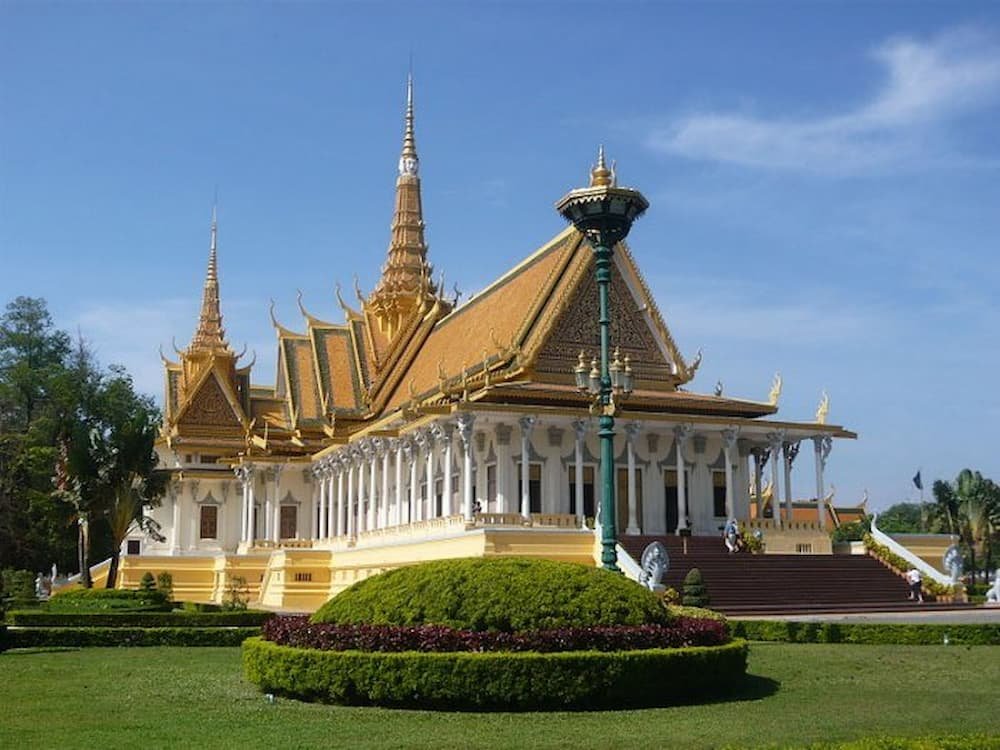
Distinguished by its classical Khmer architecture, elaborate gilding, rooftop spires, and golden temple nagas, the Royal Palace is the jewel in the crown for the Cambodians and an oasis of peace in the center of busy Phnom Penh.
Set on top of a 27m artificial hill, Wat Phnom is Phnom Penh’s tallest temple and the center of activity during Pchum Ben, the Festival of the Dead. Legend has it that Madam Penh built the temple in 1373 to house six Buddha statues that were washed up by the Mekong River.
The Independence Monument (Vimean Ekareach) in Phnom Penh stands in the center of the city at a busy roundabout where Norodom and Sihanouk Boulevards intersect. Built in 1958 following the country’s independence from France in 1953, it is a towering lotus-shaped structure modeled on the central tower of Angkor Wat.
Phnom Penh’s lively markets are loud, colorful, crowded and a must on any itinerary. The major ones, Psar Thmei and Psar Tuol Tom Pong are nicely laid out and offer huge choices and money changers who will swap foreign currencies in exchange for loads of Cambodian riels. Here you can sample delicacies such as deep-fried tarantula.

Relax on Sihanoukville beach boasting exquisite white sands and crystal blue waters or alternately take a short trip cycling to Ream Maritime National Park with its untouched mangrove forests, offshore coral reefs, and fishing villages.
This is a great place for snorkeling and scuba diving with the main dive location being at Koh Rong Samloem Island some 20 km offshore.

The Mekong River is a beautiful, mystic river, and an important means of transport in the region. It is rich in natural, cultural, and historical resources that provide enormous potential to explore.
Explore this mighty river by fast boat or river cruise and get a glimpse into the agrarian life of the vibrant life along the river. See the smiles of children as you drift by them playing along the shore (make sure you give them a friendly wave). Sunset along the Mekong is an incredible sight that is not to be missed.

The small town of Kratie lies on the banks of the Mekong River in the northeast of Cambodia. It is famous for the unusual-looking Irrawaddy dolphins that frequent its waters. These rare creatures have been slowly reducing their numbers due to tourism in the area and recent reports estimate that there are only between 60-90 dolphins left in the area.

The Tonle Sap is a combined lake and river system in Cambodia that is also the largest body of water in South East Asia. The Tonle Sap is also home to many ethnic Vietnamese who have emigrated to Cambodia over the last 50 to 100 years, often to the consternation of the native Cambodian population.
Despite the local ethnic tensions the Vietnamese Floating Village on the Tonle Sap in Siem Reap has become one of the area's more popular attractions with tourists touring the area on boats For three days each year the Tonle Sap in Phnom Penh is home to Cambodia’s most famous sporting event.
The Water Festival is held to celebrate the reversal of the waters back into the Mekong and normally takes place in October or November. Millions of people travel from the provinces to Phnom Penh so they can participate in and watch the boat racing. Teams from every province and many villages compete against each other in canoe-style boats that they make themselves and decorate to represent their homeland.
This is the heart of Southeast Asia, with everything the region has to offer packed into one bite-sized country. If you were only planning to spend a week in Cambodia, it’s time to think again.

San Francisco is one of the best (and worst) cities in the world to cycle around. The landscape can vary from extremely steep hills (where you often need to get off your bike and walk) to negotiating electric buses and cable cars to the most friendly, flat bike paths. The climate is another factor that needs to be taken into account as it can change very quickly from blue skies and sunshine to a near-complete fog ‘whiteout’ and a temperature change of 10-15 degrees F.

If you are planning a visit to San Francisco then I would strongly recommend either taking a bike tour or renting a bike for the day. There is a multitude of choices when it comes to hiring a bike in San Francisco but I advise going with one of the more established companies like Bike and Roll. They have locations right across the United States including New York, Washington DC, Chicago, and Miami with a huge offering of bikes to choose from that are all maintained to a very high standard.
We wandered down to their flagship location near Fisherman’s Wharf and chatted to the manager about planning a cool route around the bay. His enthusiasm and knowledge made me feel at ease and we had soon plotted out where to go. The bike hire ranges from about $28 USD a day upwards but if you are strapped for time you can also hire for a couple of hours.
When you hire a bike you are also given a city map with simple instructions on how to navigate your way around, highlighting all the local tourist hot spots. You also get a lock, a bottle of water and the option of a helmet. I suggest that you take the offer of the helmet even though it is not a legal requirement like in other parts of the world….you just never know.

After a quick rundown from one of the friendly bike mechanics we jumped on our hybrid bikes and set off down the road on our little adventure. The traffic along the waterfront was a little intimidating for Lisette at first but she soon realized that we were not in Asia and cars do give way to bikes and pedestrians.
Along the waterfront at Fisherman’s Wharf, there are plenty of seafood restaurants and touristy shops but we were surprised at the number of antique shops. Not quite sure why such a tourist-packed area would cater to this niche but hey it was interesting to see. Our first stop was Ghirardelli Square, home of the famous chocolatier. This place was great and we tasted a few samples before getting back on the road.
From here we rode along the dedicated bike track which would take us all the way along the waterfront past Fort Mason and the Marina to our next stop the Exploratorium. We decided not to venture inside the science museum at this time but had a look around the beautifully kept gardens and massive dome.

After a short time wandering around the grounds we made our way back to the bike track along the waterfront headed north-west towards the Golden Gate Bridge. Our next pit stop was at the Warming Hut Cafe which has a small picnic area. It seemed like a lot of bike riders had the same idea as us because the shop was pretty busy. While we ate our lunch I tried to snap a few pics of the bridge but the fog had really started to roll in which was a little unfortunate (though extremely common).
Fort Point is located right beneath the southern end of the bridge and has a selection of cannons and other memorabilia. We walked about the fort very briskly as the wind had picked up and was icy cold.

It’s a short backtrack before we climb a small hill to make our way onto the Golden Gate bridge. There is a small lookout at the top but the fog really made it quite difficult to take a good shot on this occasion. You will need a little patience to negotiate your way through the crowds of tourists and make sure to keep an eye out while you ride across the bridge. It’s incredible how many people are oblivious to their surroundings and take up the whole shared walkway in their excitement to take a happy snap.
As I mentioned earlier the weather is pretty odd here in San Francisco and on the other side of the bridge, we were greeted with blue skies and sunshine for our downhill glide into the town of Sausalito. Considering how close we still were to the city it felt like we were a world away in a small coastal village. Sausalito is lined with cafes and restaurants and has a holiday feel to it. The riding is flat and there are plenty of cool things to look at.
Most people take the ferry back to San Francisco from Sausalito but we decided to make the longer trek to Tiburon and catch the ferry back from there. This allowed us to ride through the wetlands area of Bothin Marsh Preserve along a series of trails and boardwalks. You will see a variety of birdlife and make sure to check out the houses that have been built on the water.

You really feel like you are miles away from everything and the fresh air makes the extra riding all worthwhile. We rode through the backstreets of Strawberry which is a ritzy suburb in Richardson Bay. Some of the houses looked like they belonged in Hollywood and it was common to see a Ferrari in the driveway.
The roads were nice and quiet all the way until our approach to Tiburon but even on this last stretch, there is a dedicated bike path so it’s easy going.
We had to wait about 15 minutes before the ferry docked but the process was nice and smooth and they guided us to the front of the ferry where there were racks for our bikes. It cost us $10.50 USD for the one-way crossing which is quite reasonable. The crossing was very relaxing, so relaxing in fact that Lisette fell asleep.
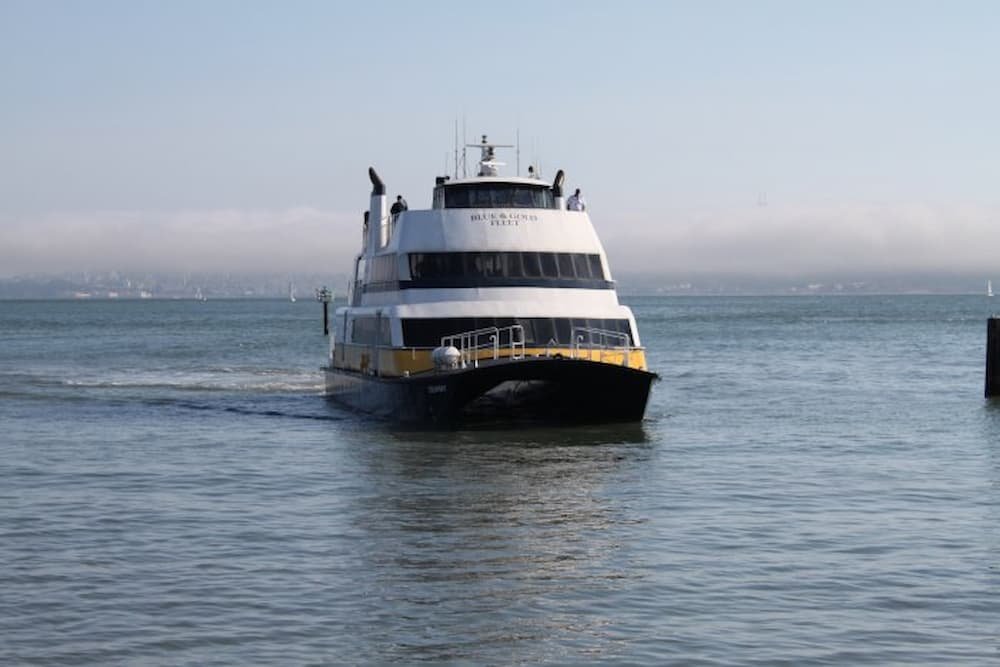
The ferry arrived at the main ferry terminal which is located next to Pier One so we still had a short ride back to our starting point. Along the way, we rode past Pier 39 which has a lot of cool things to do and see (though we decided not to hang around and come back another day).
Riding along the Embarcadero you need to look out for lots of traffic as buses, trolleys, cars, and bikes all share the road. Also, be careful not to let your front wheel fall into one of the trolley tracks as this can easily throw you off your bike.
Our last point of call was the world’s most crooked street. This one-block section of Lombard Street is situated on a steep incline and contains a number of switchback turns. To be honest, although this is a beautiful neighborhood I would hate to live here as it is a tourist mecca. Both the top and bottom of the street is always packed with tourists taking photos.


We dropped the bikes off back at the Bike and Roll shop after about 4 hours in the saddle but it was totally worth it. We would like to thank the guys at Bike and Roll for looking after us and if you are considering coming to San Francisco we recommend hiring your bike from them.

A couple of days after our white water rafting expedition, we were making our way back to Ubud to go cycling. We went further north of Ubud this time, starting from Mount Batur and going on a mainly downhill cycle for 20.5 kilometers.

Our starting point was in a little restaurant perched high on a hill overlooking Mount Batur. While we sipped on hot tea and coffee and nibbled on fresh tropical fruit and little cakes, we were treated to spectacular views of Mount Batur, the second largest volcano in Bali, although still about half the height of the largest volcano, Mount Agung. Batur is an active volcano, with the last explosion during the 1960s. Today, the volcano looked pretty awake, with what resembled a stream of black liquid casting a shadow on its left side and creating a haze of smoke at its peak. To the right of the volcano sits Lake Batur, which has fishing ponds by the shore (the primary industry still is in agriculture and farming).
We met our guide, Sichan, as well as a Japanese couple and their son who was also going to be on our tour. We were fitted with bikes, and helmets and given cycling gloves (you could keep the latter) for the journey ahead.

Like our white water trip, the most challenging part of the cycle was the first stage, with the road being quite bumpy and gravelly. This didn’t last for too long though as we stopped alongside a bamboo forest, touched cacao and coffee bean trees, and also inhaled the scent of the beautiful frangipanis littered along the road.

Next stop was a line of rice paddies, which grow different varieties of white rice (as opposed to black sticky rice, glutinous rice or even red rice). We also stumbled upon a Balinese Hindu temple (a private temple apparently, not just anyone can enter), as well as hung about a traditional Balinese house. At the front of the house, a government sign marks the number of males and females living in the dwelling. The house we visited was huge, with a farm (it’s tradition to keep one to two pigs and possibly other animals such as chickens – this house even owned rabbits), rooms for the older generations (usually the parent’s family lives in the same household), as well as specific areas for preparing food and keeping the deceased before cremation.
In Bali, prior to refrigeration, it was usual to cook one meal at the beginning of the day and then eat the same dish for breakfast, lunch, and dinner. We also saw an elderly lady languidly putting together a dozen or so Hindu offerings, delicately putting frangipani petals in each individual straw-woven basket.

The last leg of the ride was through the town’s streets – it can get rather busy but it’s not scary, as most cars will weave and even let you through first (ah, the benefits of being an incompetent tourist). Here, you can see people going about their own business – schoolchildren casually pedaling on their pushbikes, women juggling their babies and fresh produce, as well as men sitting outside stores patiently awaiting their next customers.
Again, similar to the white water rafting trip, we were welcomed at the end of the cycle with an Indonesian buffet – scrumptious satay, curries, fried noodles, rice, and fresh fruit and desserts awaited our growling bellies.

I’m not a confident cyclist, so I did wind up with a rather sore bottom at the end of the trip, thanks to failing to stand up on my seat to give my butt some seat relief. Confident cyclists however will find the downhill ride very easy, but there are more challenging and longer cycles available. My final tip? Even if it’s overcast, wear a shirt rather than a singlet. I wore a singlet and had my bag strapped across one of my shoulders – even though I had put on sunscreen and it wasn’t a stinking hot day, I managed to get sunburnt, leaving a bag strap mark clearly lining my right shoulder. It’s now tanned and has left me with a definite white line that I won’t be getting rid of in the next few months!
I would like to say thanks again to Sobek for looking after us on this tour. We had a great experience and would definitely recommend Sobek as the company of choice to experience Bali on wheels.
It’s hot in Bali. Scorching, in fact. Year-round, temperatures hover between 28-33 degrees celsius. So, you have three options. First, follow the crowds and flock to the beach for surfing, swimming, sunbathing, and selling (well, you get approached a lot by people trying to sell you everything from pineapples to beach mats – like how I managed to get all the verbs start with ‘s’?).
Second, you can chill by the hotel and laze by the pool, presuming that you have one. And third? Arguably the most fun of the three is to spend the day at Waterbom Park in Kuta.

Bali Waterbom has more than 17 waterslides and leisure facilities, ranging from the placid to the scream-worthy. Open from 9 am to 6 pm year-round, the park sits upon 3.8 hectares surrounded by tropical Balinese gardens and prides itself not only on building rides that are maintained to strict international standards but also on its ongoing commitment to environmentally sustainable operations.

Showing up on yet another fine day in Bali, Michael and I arrive just before lunchtime amid a sea of people queuing up to spend the day splashing about.
Admission is US$26 (US$16 for children under 12), which doesn’t include locker hire, towel hire, food and drink, or some of the additional rides (these are a water blaster game, a euro bungy and a 10-meter high rock climbing wall).
Rather than carrying around your cash and or credit card though, visitors wear a waterproof wristband that can be topped up with cash. When making a payment, this is simply scanned by staff. To check your balance, multiple barcode scanners are available, and any unused funds are refunded at the end of your stay. Meanwhile, there are obviously no paper maps in sight – the park is well signposted though and it’s easy to find your way around.

Stripping down to our swimwear, Michael and I first checked out the “Lazy River”, grabbing a bright orange floatable “donut” and making our way downstream. We didn’t float down for long though – the screams of people making their way down waterslides were too enticing.
Most of the slides are in the same little tower – check out “Smashdown” for an eight-story slide at a 60-degree angle, reaching speeds of up to 70 kilometers per hour. Then get on those floating donuts for a winding slide down the “Macaroni”. Or go head-to-head with a friend on your stomach down a specially made sled to see who gets to the finish first in the “Boogie Ride”.

For more thrills, the “Boomerang” on the other end of the park gets the heart pumping, as you twist down a sheer 20-meter drop before being swept back up again. But the park’s claim to fame is the newest ride, “Climax” – so freaky that peoples’ legs have buckled at the top and they’ve actually turned around and walked all the way back down the tower, while grown men have been heard to squeal as they zoom down, shocking and cracking up witnesses.
With height and weight requirements as well it’s not for everyone – you stand in a small chamber 19 meters above the ground, as the door is shut (and locked) on you. Then a woman’s voice counts down…3…2…1… before the trapdoor opens up beneath you and you are sucked down a near-vertical dip, then up and around before finally sliding to a mighty splashing stop at the bottom.
At 2.5 G-force speed the ride is over soon enough, but not before you skip a heartbeat or two – I screamed the first time but it was well worth a second (and even third) go! For guys that have metal anywhere on their board shorts (e.g. zippers, pockets, etc), they will need to turn their shorts inside out (Michael had to), while girls – watch your bikini tops and bottoms when you get to the end!
For those not keen on rides, there are plenty of places to wade, sunbathe and just relax in the sun – even VIP-designated areas to laze about, sunken pool bars, and massage parlors.
The only downside? Walking around in our swimming suits all day meant that we had no pockets – and nowhere to put our locker key. While the key is on a band, this isn’t adjustable and Michael did drop it somewhere in the theme park, which meant 20 minutes of fruitless searching at the end of the day. Fortunately, someone stumbled upon the key and handed it in to lost property, saving us from having to pay for a replacement. But after a day of sun and water fun, how trivial does this sound?
Do you love the water – but don’t want to lie on the beach or splash around all day? For the more adventurous traveler to Bali, white water rafting is right up your stream.
There are a number of companies that offer white water rafting packages, however, all go down the same river (at varying points). We chose Sobek, which provided a grade three rafting experience that lasts around 2.5 hours and includes a buffet Indonesian lunch afterward.
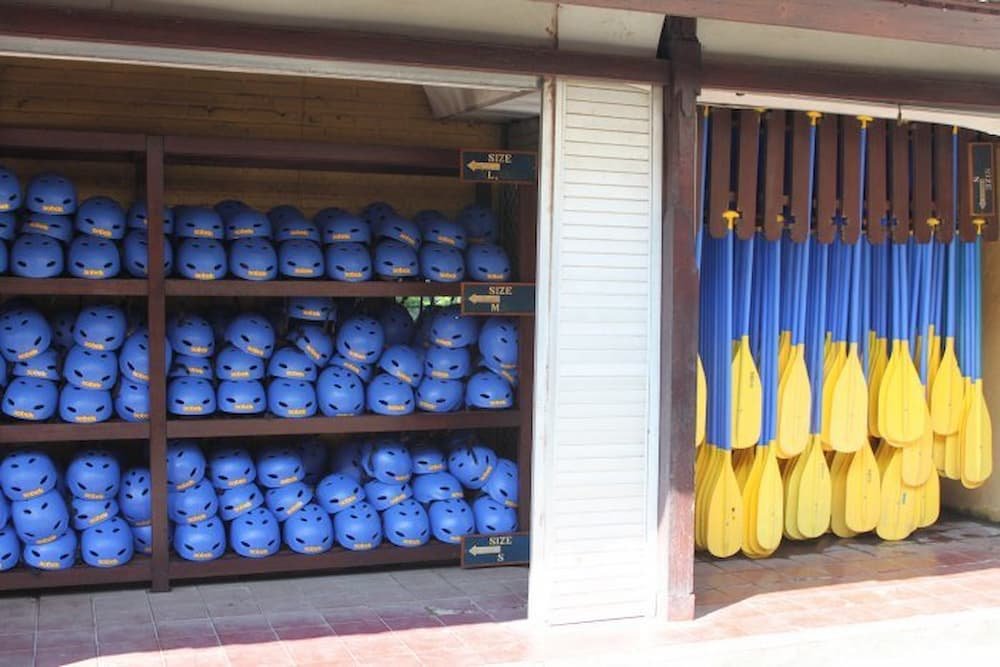
We were staying in Kuta, so a car picked us up from our hotel, driving over an hour and a half or so to Ubud. Here, we quickly put on our lifejackets and helmets, packed all of our valuables into waterproof bags, got into teams, and chose our oars. Getting to the river below is a mini trek in itself – there were 543 steps leading all the way down.
Our guide, Rocky, was hilarious and good-natured. He would sometimes slap the oar on the river surface, making us jump, or dribble cold water down our necks. When we’d jump and squeal he’d yell, “Anaconda!”. The guides looked like they really enjoyed their jobs – they'd paddle past each other, encouraging us to race the other tourists, or we’d get into water fights, flicking the oars towards each other. Needless to say, even though nobody fell into the water, you are guaranteed to get wet.
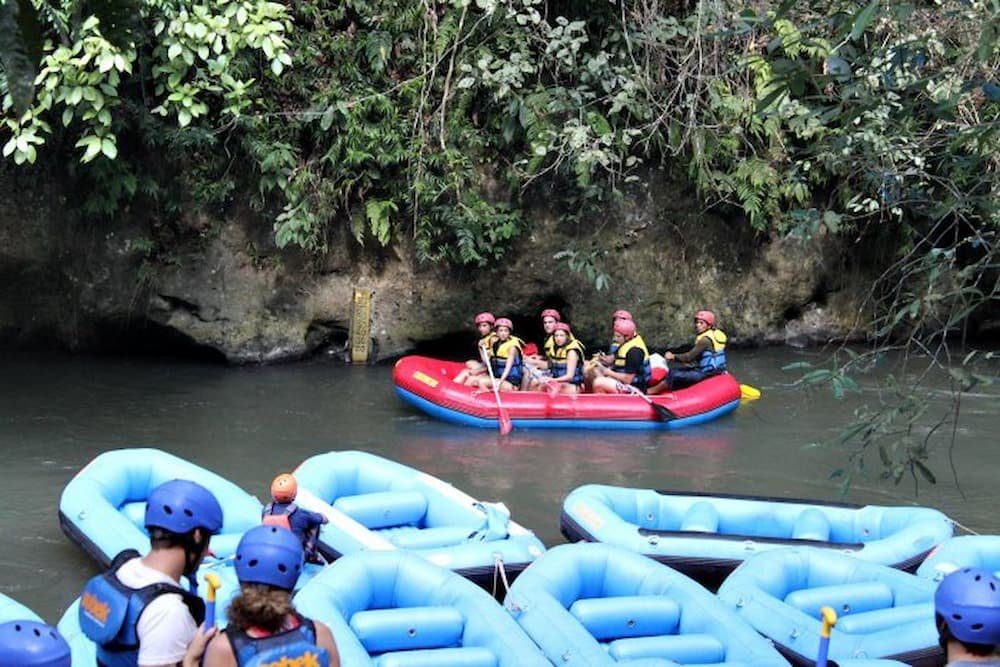
The rapids were not particularly challenging, and the guides are very good in directing us to paddle forwards and backward when we need to. We did manage to get stuck on one of the rapids which meant that Rocky had to jump out and drag us over the rocks, however other than that the rapids are quite easy and are suitable for ages young and old.
We saw monitor lizards almost camouflaged on the banks of the river, were amazed by beautiful, moss-encrusted rock carvings (they looked ancient but were disappointed to hear that they were only about 15 years old) and were drenched under gushing waterfalls (well, Rocky made us go underneath it).

At the end of the tour, Michael jumped into the water, which was freezing as it was in the shade. Drenched, we made our way to our well-deserved buffet lunch that included fish satay, mie goreng, curry chicken, rice, and fried soybeans, followed up with fresh fruits and sticky rice sweets.
Incredibly, we still had the energy to return back up to where we started, to change, and also, in true tourist form, check out the professional photos of you rafting and potentially purchase it.

Sobek is one of many major adventure tour companies operating in Bali, but there are many other companies that offer white water rafting. When choosing a company, be sure that they are accredited to ensure that they have the proper safety and insurance regulations in place.
Sobek is accredited and has won a number of tourism awards as well.
If you enjoyed this article and would like to find out more about the best places to go, check out our Wanderlist - Best Places to go Whitewater Rafting.
