It is a well-known fact that you should never mess with the folks at airport security. Since 9/11 you can’t get away with the slightest joke, just take a look around any airline check-in and you are sure to find a stern sounding sign advising not to poke fun about carrying weapons or drugs and the like.
There have been many cases where some idiot made a stupid joke only to be pulled to the side for a thorough bag and body search or worse yet denied boarding. Well, yesterday the stakes were raised when a passenger onboard a flight sneezed, then said “Sorry, I just came from Africa.”
With the recent death of a man in Texas that had contracted the Ebola virus in Africa tension levels are at an extreme in the US and any threat, no matter how stupid, is being taken seriously. So, while it came as no surprise when the US Airways flight was stopped on the runway what happened next was like something out of the movies.
Ambulances rushed toward the plane on the tarmac and men wearing blue Haz-mat suits boarded the flight. Thankfully the flight attendant did a great job in diffusing the situation onboard by making an announcement to the passengers and playing down the ridiculousness that was about to happen, humiliating the passenger who had caused it in the process.
Check out the video below to see how it all went down. Skip to 0:30 for the flight attendant announcement and the guy gets escorted off at about 7:20.
You can only imagine the hell this guy is going to face after being removed from the flight. Not only by officials but more so from any of the millions of people who have now watched his idiotic behavior on YouTube.
Sorta can’t help but think of this memorable scene in the animated movie Monsters Inc.
Have you ever seen someone ejected over a stupid comment?
If you’re anything like us, you end up leaving your Christmas shopping until the very last minute. Well, look no further, we have put together a list of the top 10 gifts that are sure to wow even the pickiest of travelers.
Best of all – the majority of our picks are under $100!

This wireless, fun-sized speaker is small enough to fit in your hand and loud enough to get the party started. Super lightweight and compact, toss it in your bag or backpack – or clip it onto a strap. G-POP rocks Bluetooth wireless (with a speakerphone too).

Unless you’ve been living under a rock you have no doubt seen any number of YouTube videos shot with one of these tiny cameras. The new Hero4 packs in all the best features to make it easy for you to capture those special travel memories.

Show off where you’ve traveled to while livening up your wall with this colorful world map. This fun world map poster lets you scratch off each of the countries you have visited making for an excellent conversation starter. Measuring 88.1cm x 52cm.

Now you can charge all your devices while you are traveling. This all-in-one adapter works in over 150 countries with 4 international (US/EU/UK/AU) plug adapters. An additional 2 USB ports will charge your smartphone, tablet, camera, or any other device. Simultaneously charge 3 devices using the one wall plug!

This ultra-lightweight daypack is the perfect addition to your travels. With comfortable, multi-point straps and enough room to store all your hiking or sightseeing gear, this is an excellent gift for any traveler.

Popular travel blogger Matt Kepnes (aka Nomadic Matt) shows you how to travel the world on the cheap. How to Travel the World on $50 a Day reveals Matt’s tips, tricks, and secrets to comfortable budget travel that you won’t find anywhere else.

This neat little compact camera packs an almighty punch with a 20.2-megapixel sensor and ultra-bright Carl Zeiss f/1.8 lens. Small enough to fit in your pocket giving you the freedom to take incredible pictures no matter how active your travel schedule is.

The Comfort Pal Travel Neck Pillow is one of the best travel pillows for the airplane, bus, train, or car. This luxury memory foam neck pillow includes a microfiber pillowcase & carry bag for easy storage in your pack when not in use.

This lightweight hammock is designed with durability in mind for the adventurous traveler or camper. It stuffs into the attached compression sack for ultimate portability. With a range of colors, you can’t go wrong.

The world’s largest capacity external battery pack and portable charger with dual USB ports with 12000mAh rechargeable battery power capacity. Small enough to fit easily into any bag or pocket. Provides instant power whenever you need to charge your mobile devices. Perfect for long flights, road trips, or whenever you are away from a power source.

Thinking of taking a spin down to Spain some time in the next year? Then this is for you! Busbud.com, the number one worldwide bus travel booking platform, is offering you and a friend of your choice the chance to win unlimited bus travel around Spain for one month.

Spain is one of those countries that is perfect for exploring overland. With a captivating history and cultural wonders at every turn, you are sure to be in awe on your month-long journey. Did we mention the food? Your taste buds will thank you for the explosion of flavors from dishes like paella.

To enter, simply provide your email address in the box below, and keep liking and sharing for more chances to win! And most importantly, don’t forget to answer the question at the end: What’s your favorite thing about traveling by bus? For inspiration, check out Busbud’s recommendation for the Ultimate Spain Bus Trip.
You have until 5 PM EDT on the 26th of October 2014 to enter.
Busbud makes bus travel easy. By connecting travelers to bus operators, Busbud makes it a breeze to search, compare and book city-to-city bus tickets, all around the world. Busbud.com and the free mobile application are the most comprehensive source of city-to-city bus schedules and tickets around the world, gathering schedules for over 10,463 cities in 89 countries, in 11 languages, and 21 currencies.
This leading worldwide bus travel booking website saves you the extra trip to the bus station. Find the right bus ticket online, in your own language and currency. Search, compare and book your bus tickets now on Busbud.com.
Buena suerte!
** Update** WOW Airlines ceased operations in 2019
With the cost of flights being such a large percentage of most people’s travel budget, we are constantly on the lookout for deals to save a few dollars. Well, as of this week, a relative newcomer to the world of low-cost airlines has been creating a buzz by announcing flights as low as $99 between the United States and Europe!

WOW Air is a small, low-cost carrier based in Iceland that is solely owned and founded by entrepreneur Skúli Mogensen (Richard Branson, eat your heart out). In October 2012 WOW Air took over the flight operations of local carrier Iceland Express and now flies to Iceland from a number of European cities.
This week, the airline’s U.S. site went live offering passengers the chance to fly across the Atlantic for under $100 (one way, including taxes). That’s less than what most of us are paying on other airlines for just the taxes.
Update: Unfortunately it seems that while the $99 deals have all been snapped up, you can still bag a bargain with current prices on the site ranging from around $146 flying from either Boston or Washington D.C. to Reykjavik.
While not quite in the realm of Ryanair’s fee structure, don’t expect any extras included in your fare. Along with checked luggage, WOW passengers will also be charged for carry-on bags if they are over 5kgs (11lbs). As with all other low-cost carriers, services like food, beverages and extra legroom are all add-ons.
The Running of the Bulls is a must-see for many tourists that involves running in front of six bulls and a number of steers that have been let loose, on a course through the streets of Pamplona. The running in Pamplona – Spain is the most famous running locally known as San Fermin, although there are other runnings held in towns and villages across Spain, Portugal, and in some cities in Mexico and southern France, during the summer. Unlike bullfights, which are performed by professionals, anyone may participate in an encierro.
According to the Spanish, the running first began in North-eastern Spain during the early 14th century. While transporting cattle in order to sell at the market, men would attempt to speed the process by hurrying their cattle using tactics of fear and excitement. After years of this practice, the transportation and hurrying began to turn into a competition, as young adults would attempt to race in front of the bulls and make it safely to their pens without being overtaken. When the popularity of this practice increased and was noticed more and more by the expanding population of Spanish cities, a tradition was created and stands to this day.

The celebration is dedicated to Pamplona’s very own Saint Fermin, who was killed one morning back in the 4th century by bulls that dragged him through the streets of the old town, reportedly after a few too many sangrias.
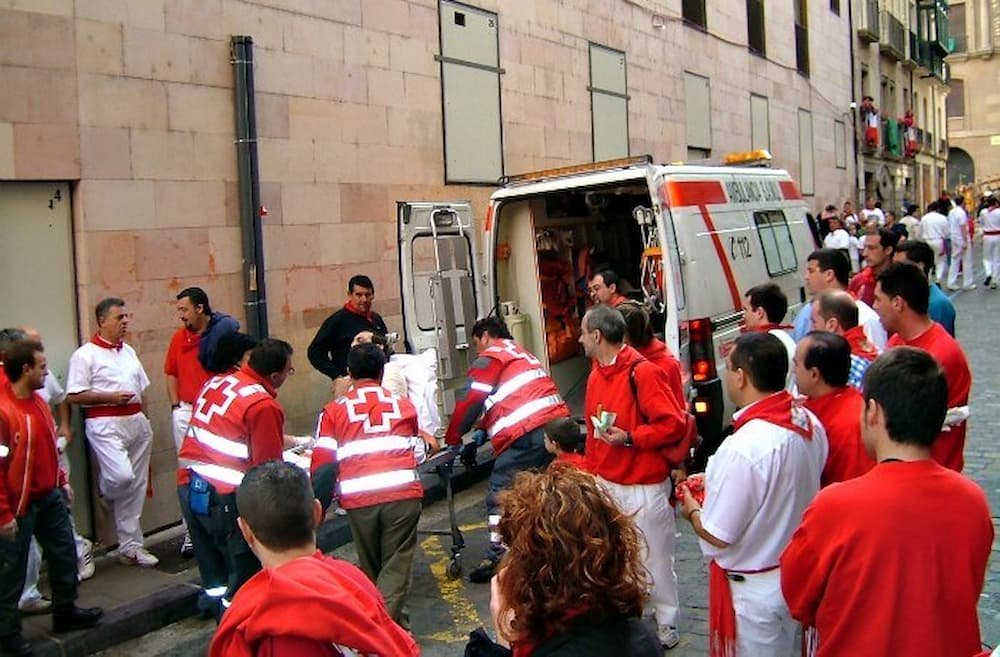
While the excitement and hype of this event draws thousands of tourists each year injuries are common and participants are often gored or trampled by the bulls, whose hooves grip poorly on the paved or cobbled street surfaces.

To enter you must be over eighteen and “get in” before 7:30 am. It is against the rules to run under the influence of alcohol, although most of the participants I see have rocked up after a massive night of partying and are clearly under the weather. Really the only other rule is that you mustn’t run in the opposite direction of the running (but seriously who would want to do that).
A double wooden fence is used along the course where the streets permit, while in other parts the buildings of the street act as barriers. The idea is that there is just enough room for a person to slide through but not enough for a bull. Some of the fences are permanent fixtures for the entire 9 days while others are mounted and dismounted every morning.

I have arrived the night before day 2 and already the town is buzzing with excitement. I have driven my car here from San Sebastian and find it extremely difficult to get a parking spot for the day so I can look for a place to stay…yea that’s right I didn’t book a room.
After searching all day for a bed unsuccessfully, I am forced to sleep in the car tonight. It’s a looooong night…..
When dawn finally breaks I am up and strolling through the streets. To my surprise, there are thousands of drunken people still wandering about from the night before… I wonder if they will make up a portion of the runners.

Having researched a little about the running I position myself nicely on top of a gate at the second turn. This turns out to be a great spot indeed! Before the runners can enter the course the officials hose down the streets to wash away the filth (a combination of alcohol and pee).
The anticipation builds as we draw closer to the start and I can see the nerves appearing on the faces of the runners as they jockey for position along the course in front of me. The first rocket is set off at 8 am to alert the runners that the corral gate is open. A second rocket signals that all six bulls and six steers have been released.
At first, the collective crowd slowly edges forward but it’s not too long before there are people sprinting past me and I catch a glimpse of the first of the six bulls. Along with the bulls, there are a number of steers, whose primary function is to keep the pack moving forward and prevent any of the bulls from turning. On this occasion, however, they fail and one of the bulls has turned and I watch as it lines up a young guy and pins him to the barrier. It’s one of those train crash moments where you can’t look away but his screams confirm his severe injuries.

After the event, I go and take a look at the carnage from the incident and you can see from the picture the two distinct gore holes where the bull has pinned the guy. There is also a lot of blood on the ground….. I decide at this moment not to run tomorrow.
Without a doubt, this is one festival not to be missed!
If you’ve made your way around the world with a backpack you’ll know how important it is to find the right gear to keep you comfortable. Brand names and looks mean nothing if the footwear is not the best possible fit for your feet. You can find orthotic insoles with Docpods.
A great backpack is a given. A comfortable pair of shoes is essential, but what about your socks? Is one of your most important pieces of equipment being misunderstood and underappreciated? Does the humble sock really deserve to be relegated to the bottom of your packing list?
Keeping your feet beautiful and happy should be your top priority if you plan on walking any serious distances while traveling. I’ve learned a lot about my feet over the years running ultra marathons, traveling, and working in the military. I once had a blister the size of my heel, and at times haven’t been able to walk because of the poor condition of my feet. By the time you’re having issues with your feet, it’s going to be too late. Your best line of defense is preparation.
My personal experience has led me to a number of conclusions about what is best for your feet. Here is a list of my top tips for keeping your feet looking beautiful and feeling happy while backpacking the world:
Start out light; train up in a steady manner until you are comfortable carrying all of your kit. Go out in all conditions so you know your personal limits; again, work up to the harshest environments and conditions, don’t start there and expect to enjoy yourself! Apply common sense and ask for advice. Hikers and backpackers are a community who loves to share and help each other.
Do not compromise on quality and comfort; the insole must fit and not allow your foot to move, blisters commonly occur in the heel region as a result. Research and test footwear before purchasing. Brand names and looks mean nothing if the footwear is not the best possible fit for your feet.
I have never found a shoe or boot that keeps all water out. I prefer to wear shoes and boots that have a high standard of drainage in-built. Better let it out as quickly as possible rather than trap it inside next to your foot.

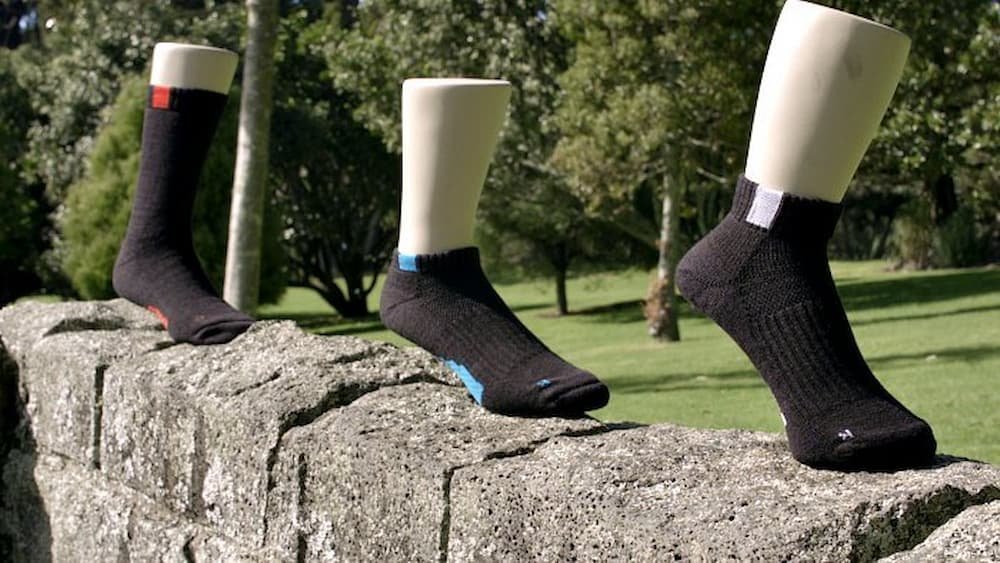
Socks that are specifically designed to fit your feet are the most appropriate. Find socks that compliment your feet and the footwear that you have purchased; there is no point in spending good money on great footwear to compromise them with poor quality, ill-fitting socks. Cotton is not appropriate for anyone considering a long backpacking adventure. I use a Merino Wool, Coolmax, and Bamboo blend.
Have multiple pairs and change them regularly, particularly if they get wet or you are in a hot environment. Keep your socks clean, dry, and free of dirt.
If you wear boots, break them in before you leave on your journey. There is no better way to ensure blisters than to walk for hours in shoes you have just bought. Wear your shoes indoors over a few days (without walking too much) and let the heat of your feet shape and soften the shoe material. Not only will they fit better but your feet will thank you for it in the long run.
Make sure your toenails are trimmed and filed. Keep your feet clean and dry, take your shoes off and air them regularly. Avoid letting calluses form. You can develop blisters under a callus, which become very hard to treat. Reduce (but don’t eliminate) calluses.

Know how to apply preventative tape to your feet and toes. Tape hotspots and know how to deal with blisters if they occur. If you do tape your toes and feet remember to roll your socks on and off to avoid rolling the edges of the tape.
Learn how to prevent and treat blisters, there are numerous articles and no end of good advice on this subject. If you are doing the hard yards find out and use blister patches, taping techniques, and a favorite of mine Hikers Wool or Sports Wool which you use to wrap your toes.
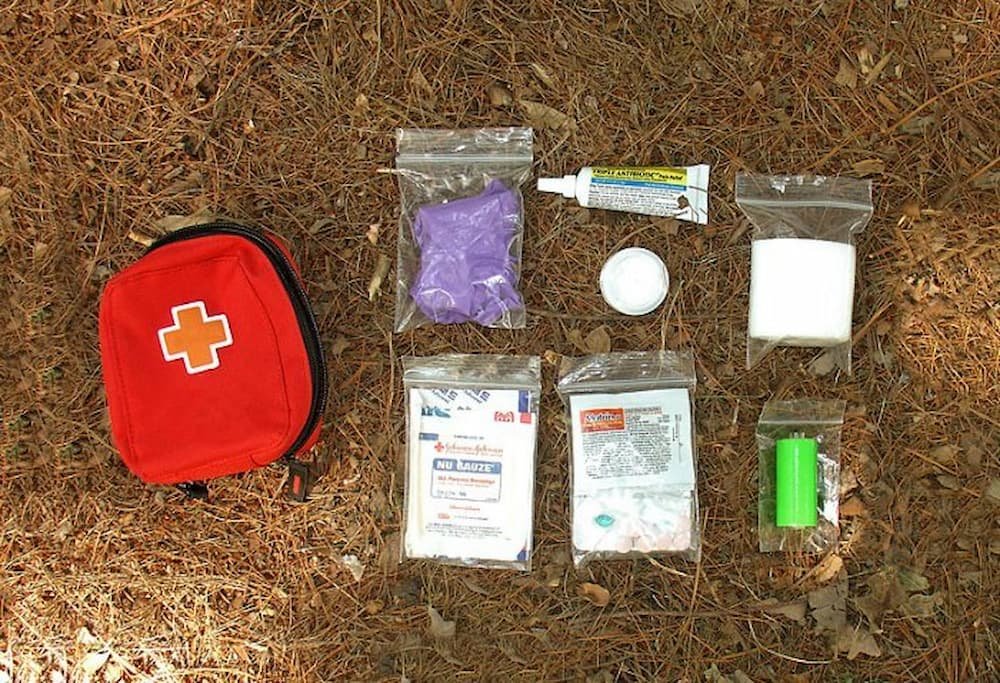
Carry a first aid kit that has appropriate foot care included. When I travel I always bring a nail file, clippers, and strapping tape just in case I can feel my feet begin to rub.
Remember to treat your feet with the respect they deserve. You won’t realize how important they are until it’s too late!
Travel is an eye-opening experience, often providing a window into some of the challenges that are faced around the world. Most westerners can tell you about the first time they visited a developing country – the different sights, sounds, smells and tastes are often a shock to the senses creating a vivid memory that will stay with them forever.
Unfortunately for some, these memories can be overshadowed by circumstances they might be unaccustomed to on a day-to-day basis – Corruption. While no country is exempt from the hands of corruption, there are places in this world where corruption has become so normal that it is just a part of daily life.
Rigged elections, bribery, money laundering, poor health care and limited funds for education are just part of the problem. When combined this leads to widespread misuse of public funding and a general mistrust in the public sector. Corruption halts economic development and undermines the justice system.

Transparency International has just released their Corruption Perceptions Index for 2014 which rates 175 countries (based on how corrupt their public sector is) out of a possible score of 100.
Corruption is a widespread issue in all countries. “A poor score is likely a sign of widespread bribery, lack of punishment for corruption, and public institutions that don’t respond to citizens’ needs” states the website.
The disturbing news is that not one single country received a perfect score and even worse, more than two-thirds received a score below 50.
It probably doesn’t come as much of a surprise to read that Somalia and North Korea share the title of ‘Most Corrupt Country’ for the third year in a row with a score of only 8 points.
1. North Korea/Somalia (tied score)
3. Sudan
4. Afghanistan
5. South Sudan
6. Iraq
7. Turkmenistan
8. Uzbekistan/Libya (tied score)
10. Eritrea
1. Denmark
2. New Zealand
3. Finland
4. Sweden
5. Norway/Switzerland (tied score)
7. Singapore
8. Netherlands
9. Luxembourg
10. Canada

After a two-year hiatus, I will add another country to my list of visited destinations at the end of this year. That’s right we are off to the Bahamas over the Christmas and New Year break and I couldn’t be happier.
Lisette and I had been throwing around a few ideas over the last couple of months on where would be best to go and finally decided on the tropical paradise that is the Bahamas.
1. Costa Rica – For an eco-friendly trip and to catch the San Jose Carnival
2. Miami – For the beaches and the amazing New Year's Eve Parties
3. Oaxaca – For the culture and Night of the Radishes Festival
4. Jamaica – For an all-inclusive resort and relaxation (no festival)
5. The Bahamas – For the beaches, diving, food, culture, and the Junkanoo Festival
The Bahamas came out on top since I was able to pick up some reasonably priced flights with United Air and managed to score a great deal on accommodation. Ended up splitting the time between Freeport on the island of Grand Bahama and Nassau on the island of New Providence.
Now all we have to do is wait a few months to enjoy these gorgeous white sandy beaches while sipping on a colorful cocktail with a miniature umbrella in it. Hopefully we get to check out a beach like the one below:

One of the activities we always like to throw in whenever we travel to a tropical island is scuba diving. Lisette has completed her PADI certification and has dived the Great Barrier Reef, Borneo, the Philippines, and Bali to name a few.
Me on the other hand, well I struggle with claustrophobia which limits my diving ability. Will have to see how I go when we arrive since my previous attempt off Boracay didn’t go so well.
Another exciting consideration is booking a Bahamas fishing charter to add a thrill to this island adventure.

What we are both really excited about is the Junkanoo Festival on both Boxing Day and New Year's Day. This carnival-like parade through the streets happens throughout the country on each of the islands with the largest parade being in Nassau.
The origin of the word “Junkanoo” is rather obscure. Some people believe it comes from the French “L’inconnu” which means “the unknown,” in reference to the masks worn by the paraders. Junkanoo may have West African origins, as the costumes and conduct of the masqueraders bear similarities with the Yoruba Egungun festivals.
It is believed that this festival began during the 16th and 17th centuries. The slaves in The Bahamas were given a special holiday around Christmas time when they would be able to leave the plantations to be with their family and celebrate the holidays with African dance, music, and costumes.

Traveling to faraway destinations can be a daunting experience for any traveler – and this unnerving feeling is magnified in the case of a first-time traveler going on an adventure solo.
But before you reassess your travel plans, it’s important to remember that these feelings are totally normal. Why? It’s because people tend to be creatures of habit and traveling is one of the best examples of an activity that forces you to be out of your comfort zone. There are going to be times that you get lost and overwhelmed with culture shock, days when you feel homesick or lonely, and moments when you wonder… Why the heck did I decide to do this?
While some people may find it easy to strike up a conversation with a complete stranger, it’s not always easy to do, especially in a foreign setting. The good news is that you’re not the first – and certainly not the last – person who will feel this way. Everywhere you go you’re going to meet people traveling alone, and funnily enough, they’re just like you. They’re also looking for new friends, new experiences, and new adventures. That’s why travelers generally get along so well – because they understand each other. We’re all away from home. We all miss our friends and family. We all have no one to hang out with. But now we do.
Here are a few quick tips on how to get a conversation started while traveling:
Whether it’s the long plane from Australia to South East Asia, a jolty bus ride through South America, or stuck waiting in transit in Europe, there’s an opportunity to look around and chat to fellow travelers. All you need to do is strike up a conversation and see where it goes. An initial question about the bus timetable, recommendations on what to do in a particular city or jokes about travel delays are a quick way to break the ice and get to know other people better.

Hostels are perfect for travelers on a budget – they are inexpensive and located in most cities around the world. They are also the best type of accommodation to meet and talk to other travelers, particularly as some dorm rooms can accommodate up to 20 beds. It’d be harder not to chat with someone in this environment. While some people may see the lack of privacy as a downside, if you do your research you can find hostels that have smaller rooms – some hostels even have rooms with only two beds.
If you’re intimidated to say hi to your fellow hostel compadres, just ask them a few basic questions about whether the hostel does laundry, what the Wi-Fi password is, where a good shop is to get some food to make breakfast, etc. From there, it’s a natural progression to ask about the person – their name, where they’re from, where they’ve traveled and where they’re going next. Hostels also have a lot of great places to chill out – you could easily take the conversation further in one of the common rooms or at a nearby bar or pub that evening.

Another great way to start chatting with someone is by asking about a particular item – or showing one off. When meeting like-minded travelers, one of the top questions is about one’s home country – where you’re from, whether that person has been there or plans to go there, what interesting sights and activities can be done in your hometown.
Flag patches, or country badges as some people call them, are a simple, cheap, and effective way to indicate to others where you’re from or even all the countries that you have been to. Backpackflags offer flags that are the same size (6.5 x 4cm) and are made of polyester. They can be safely washed in a washing machine and sewn onto your backpack, bag, jacket, or clothing (check out the instructions here).

An extra bonus is that it makes your items easy to identify (especially after that 24-hour bus ride where you barely had any sleep and also were nursing a hangover), and also is a great memento of all the countries you’ve traveled to.
If you’re still biting your nails at the thought of taking the plunge to talk to someone, just consider – what do you have to lose? A simple smile and hello can go a long way. While not everyone you speak to will become your friend, striking up a conversation is definitely a much better alternative to being solo for your entire amazing travel adventure.
Now it’s your turn. What methods do you use to initiate conversations and make new friends on the road?
Disclaimer: This article was kindly sponsored by Backpackflags.com, a product we now happily use. All views presented above are from our Backpacker Travel contributor.
One of the most unusual festivals in Japan is the naked festival (Hadaka Matsuri). Okay, so the participants aren’t completed nude, but picture this: tens of thousands of Japanese men with little more than a white loincloth (G-string or thong style) draped around their erm, loins, running crazily through the streets of the city to the main temple. The aim: trying to touch yet another naked guy who has been shaved of all body hair a few days before. To top it all off, this event takes place in February, one of the coldest winter months in Japan.
Before you think that this is some sort of bizarre and freaky version of the Full Monty, the festival has its origins in an attempt to dispel the plague and ward off evil spirits. Today, to cleanse themselves from such evil, one man – called the shin-otoko (literally “god man”) is chosen to take on the ills of the community. In preparation for what is considered to be a great honor, the god man must undergo fairly intense purification rites in the days leading to the event.
On the big day, teams of (rather drunk) thong-clad men lug a bamboo pole and continually shout “Wasshoi! Wasshoi!” as they snake their way through the streets to the temple. It’s quite a sight to see so many scantily clad men stumbling around in freezing temperatures, particularly in contrast to the layers of clothing worn by everyone else.

Once the men arrive at the temple, there is a fair wait until the shin-otoko arrives. The anticipation and frenzy build in the temple, however, as more and more teams of men arrive. As a spectator, it’s just as crowded trying to see what’s happening in the temple compound, but you can make out special bodyguards splashing icy water on the naked mass of men as the shin-otoko comes closer and as the crowd furiously fights and push to touch him.
As part of the festivities, at midnight, the lights are turned off and the temple priests hurl a couple of sacred wands (shingi) into the darkness. The men who catch these sticks apparently receive a year’s worth of good luck. Who wouldn’t want that?
The festival is held in various cities throughout Japan, however, the most famous is in Okayama prefecture, in western Japan (next to the Hiroshima region). It costs about 5,000 yen to get a good seat in the temple compound if you’re keen to be a spectator. Wasshoi!
