“Bye-bye Delhi, welcome Agra!” These were the words our driver, Belwant said as we drove out of New Delhi and crossed into the state of Haryana en route to Agra.
But before we said goodbye to the capital we had a couple of final tourist stops – first was Red Fort, which we couldn’t visit the day before as it is closed on Mondays. Commissioned by Shah Jahan in 1639, the fort took nine years to build and served as the capital of the Mughals until 1857, when the last emperor was dethroned and exiled by the British Government. Today the UNESCO World Heritage site is a popular tourist attraction to check out the sprawling buildings and incredible mix of marble, sandstone and precious laid stones that make up the fort.

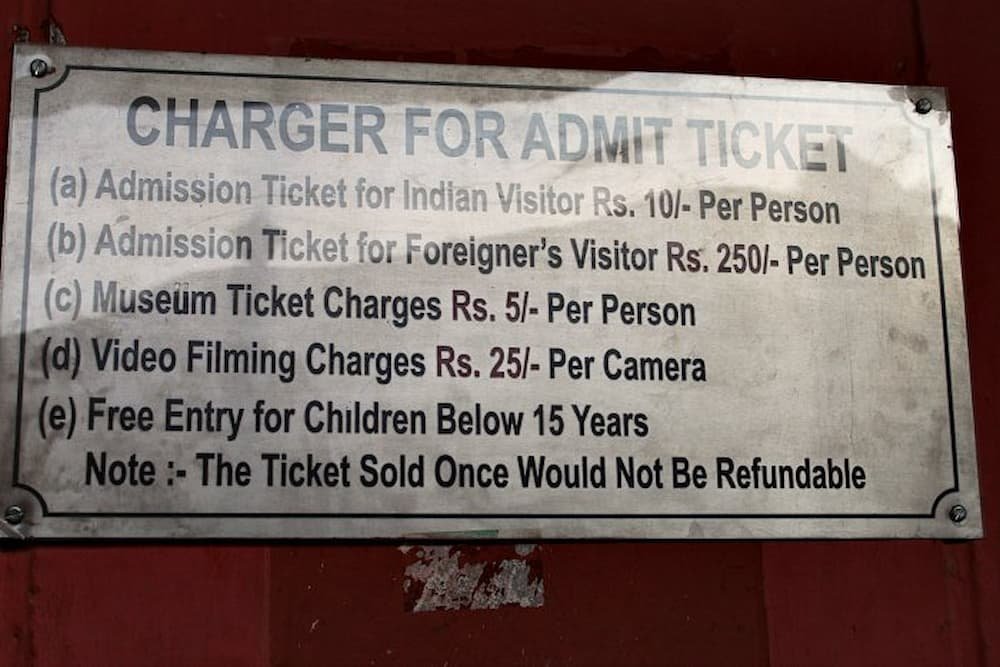
Despite it being only 8.30 am, it was already incredibly smoggy around the fort, but fortunately, barely any tourists were in sight. Paying the foreigner’s entrance fee of 250 rupees (compared to an Indian’s 10 rupees), we entered via Lahore Gate (so-called because it faces the Pakistani city) and walked past scores of shops, which were all closed as we were there quite early.
Strolling past, we saw glimpses of Mughal architecture in its former glory – the royal bath, a pearl-colored mosque inlaid with semi-precious stones including emeralds and rubies, as well as a number of intricate royal apartments with eagle-eye views of the gardens below.
While we were walking, we managed to catch the attention of a couple of Indian men, who were less interested in looking at the fort and more keen on following us around. As we kept walking inside the complex, we walked past about six more men sitting around and chatting, who then decided to join the pair of other men in stalking us by a safe distance.
Fortunately, Mike and I managed to shake them off when I went to the bathroom (they couldn’t be bothered waiting around for me to come out) – not sure what their motives were but I was happy not to find out.
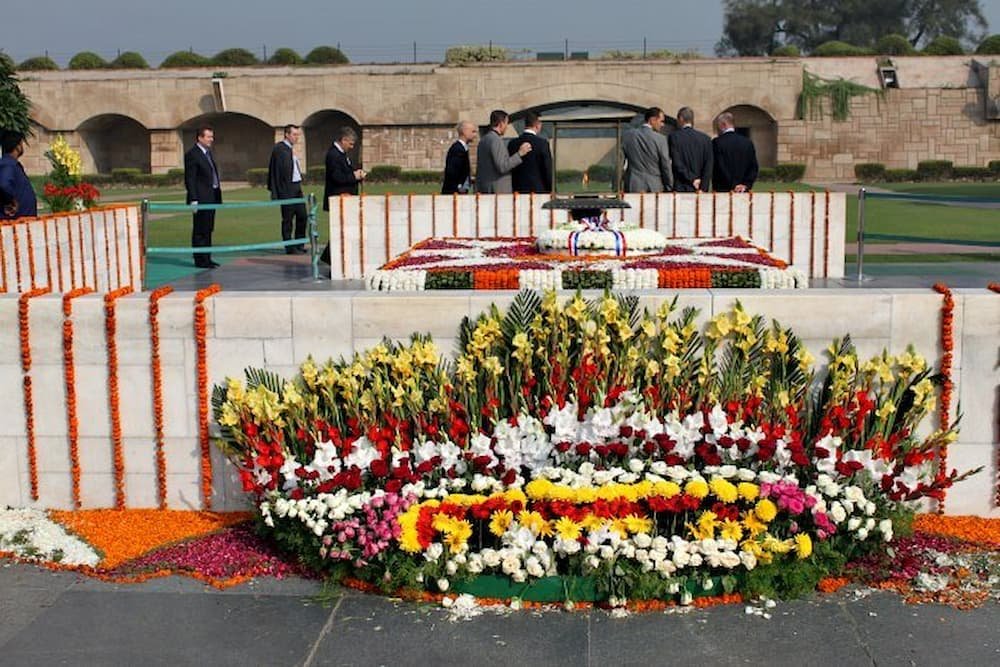
Last stop in Delhi was Mahatma Gandhi’s tomb, which we had missed out on seeing the day before thanks to US President Obama and his entourage checking it out. Taking our shoes off, Gandhi’s tomb was in the center of a simple garden. The black marble tomb was completely covered by floral garlands except for the one inscription “He Ram” in Hindi – meaning “Oh God”, his final words before he died.
From here started the five-and-a-half-hour drive to Agra, which crossed two state borders – Haryana and Uttar Pradesh. While we were surprised not to see many cows wandering the streets in Delhi, once we arrived in Haryana it was cow central everywhere – cars also swerved past dozens of goats, monkeys, water buffaloes, and even camels! The yellow/green painted tuk-tuks in Delhi evolved to tuk-tuks teeming with a minimum of 12 people (at least nine crammed inside, with a few hanging on behind), and we also drove past buses packed to the brim with passengers riding on the roof and bustling markets peddling everything from fruit and vegetables, clothes and everything else in between. The abject poverty here was more apparent than in Delhi – we noted little mud huts not much bigger than dog kennels to house families, women tilling the fields under the scorching midday sun in their bright-colored saris, and children using all the strength in their arms to pump wells for drinking and bathing water.
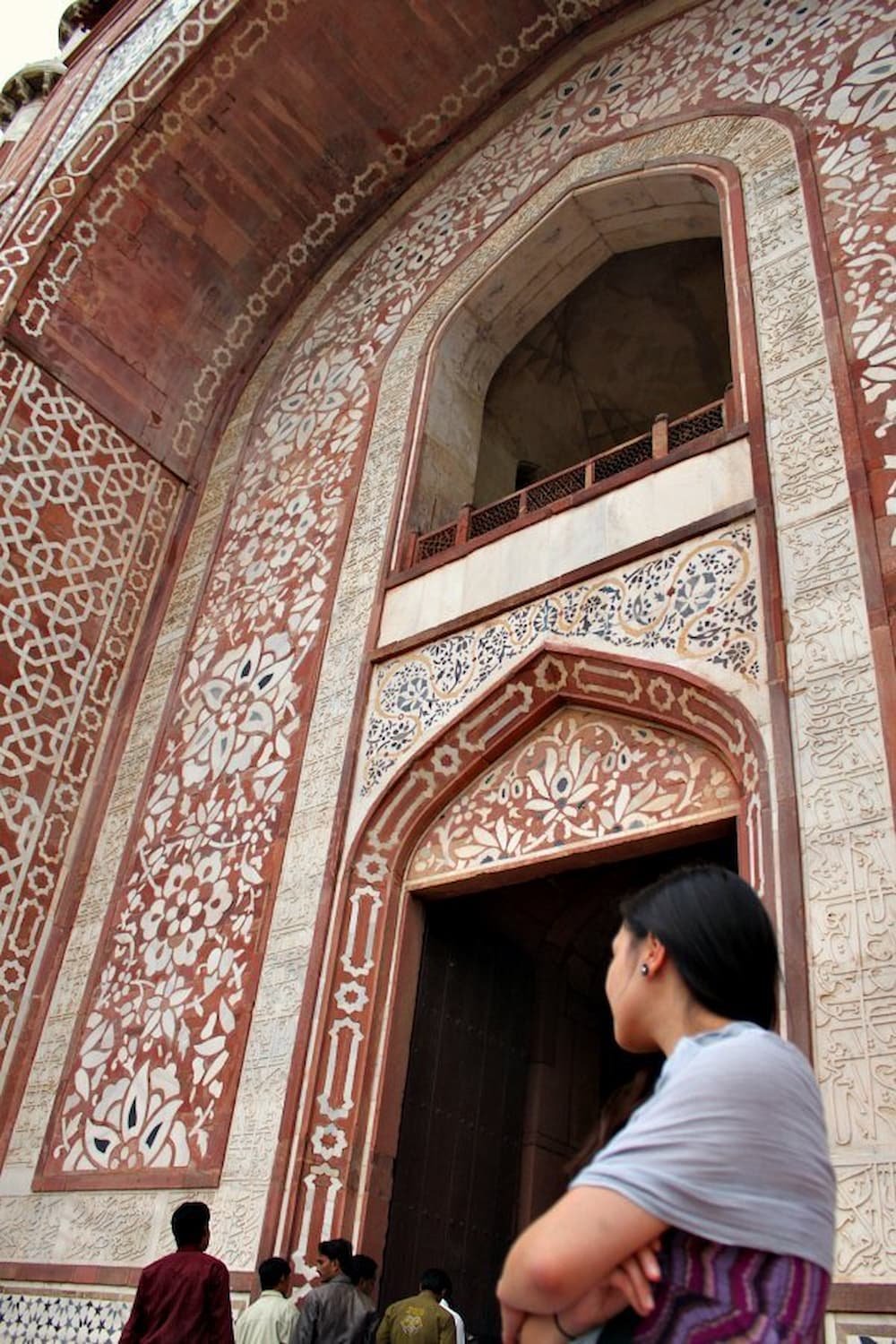
First stop in Agra was Akbar’s tomb, where we were met by our local guide. Known as Akbar the Great, this Mughal emperor not only respected all religions, he influenced much of the art and culture across the country. Dozens of deer loiter in the gardens inside, while the building at the entrance coincidentally looks like there’s a massive letter “A” in the middle.
Other interesting features of the building that houses Akbar’s tomb include the white domes that surround it – if you and someone else stand on diametrically opposing corners and face the wall, you can actually have a conversation as the sound travels up the slopes of the dome (the dark stains on the white marble are evidence that thousands of people have tried). If you stand in the center of the dome, you will find that any sound you make is magnified as again, the sound travels up the structure.

Our next destination was Agra Fort, on the banks of the Yamuna River. The most important fort in India, the fort housed many great Mughal emperors and is a maze of red sandstone buildings, with some that have clear views across the river of the Taj Mahal.
Sadly, Shah Jahan (who built the Taj Mahal for his wife), was forced to live out the last eight years of his life under house arrest in one of the rooms by his son, never being allowed to enter the Taj again but simply look across the river at his grand creation.

Deciding to skip a visit to the Taj Mahal until early the next morning (the optimal time to see it), we retreated to our hotel, the Clark Shiraz. Very fancy and we had a room facing the Taj (unfortunately it was either too dark or to hazy to get a good view), but our food choice that night wasn’t great – I was starving and my chicken was under-cooked, which put Mike and I off our appetites!

The next morning we were in the lobby around 6.30 am to make our way to the Taj Mahal, one of the most beautiful and romantic buildings in the world. A thick blanket of haze was around that morning, which made me think that we weren’t going to get a good view, but surprisingly by the time we walked in we were greeted by a gorgeous day as the haze cleared up and made way for the sun to shine through.

The marble changes color as the day progresses – it almost looked glittery gold at sunrise. Completely symmetrical and apparently earthquake-proof, the Taj is also flanked by two identical sandstone temples from which shimmer semi-precious stones.
The Taj looks all white from far away but when you come closer you see that it has these stones inlaid in them as well – including emeralds, rubies, malachites, and carnelians (which glow under a flashlight).
The way of doing the inlay work is a traditional still practiced today – and after our visit to Agra, we visited a store that not only showed people filing the stones to precisely fit the marble but also shelves filled with bowls, plates, tables, elephants and other marble works.

Our final stop in Agra – Fatehpur Sikri, created by Akbar the Great. Again, evidence of his respect for all religions was clear in the architecture, which had a mix of Christian, Hindu, and Islamic features. Akbar had a harem of 800 women living here at one point – although now the surroundings are pretty much a ghost town.
The craziest thing we saw there though? A guy who sought money from tourists by jumping regularly into a pool of lime green, moldy water. He definitely deserved a tip!
Bye by Agra – welcome Ranthambore!
After what seemed like an eternity of flights from Sandakan to Kuala Lumpur and from Kuala Lumpur to New Delhi, we stumbled out of the sterile New Delhi airport that welcomed thousands of visitors arriving for last month’s Commonwealth Games to be greeted by the contrasting smog, humidity and queues of distinctive black, green and yellow painted Ambassador taxis anticipating their next load of customers.
We were met by a representative of Adventure World, the company that we had booked our tours with for our stay in India. They then drove us to our hotel and we were as excited as a dog with a bone watching the scenes of Delhi unravel as we passed by – everything from tuk-tuks crammed with a dozen passengers or so on their way home, people jostling for their share of the road as they rode their bikes alongside the freeway (minus any helmet, reflectors or any safety gear of course) and men having impromptu meetings on the highway median strip as the traffic whizzed by within an inch from where they stood.

Arriving at Bajaj Guest House, our accommodation for the next two nights, we were welcomed with presents of silk scarves, (fake) single roses, and red bindi on our foreheads. Definitely recommend staying here if you’re on the hunt for a guest house – the staff were warm and our room was massive – particularly the floor-to-ceiling marble bathroom with a walk-in shower.
While a sign on the back of our door said that tipping wasn’t compulsory, we soon learned that pretty much everyone who provides a service for you – whether that be the bellboy in your hotel, the man who minds your slippers as you slide them off to go into a place of worship, or the sari-clad lady passing you squares of toilet paper outside the public restrooms expects it.
If you are visiting India and want a comfortable stay, check out Treebo hotels in Delhi as they are well-rated for their hospitality.
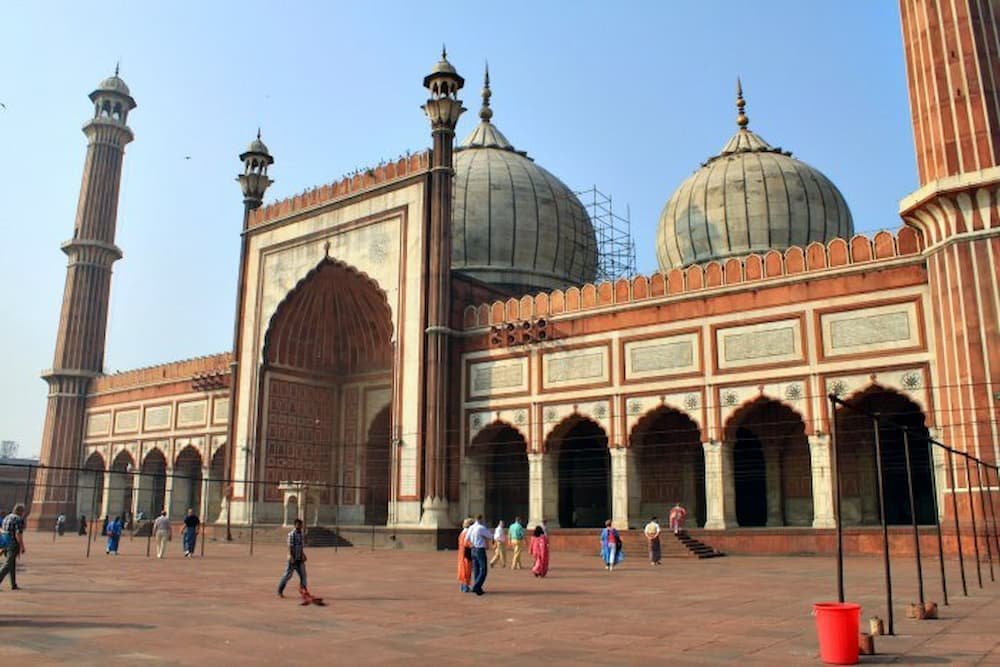

The hospitality continued the next morning with our breakfast of plain omelet, Indian-style spring rolls (crepes stuffed with various vegetables and spices), and vegetable macaroni (again, sauteed in more spices), before we headed downstairs to be met by our tour guide, Jhyoti and our driver for the start of our tour, which started at Jami Masjid, situated in Old Delhi and one of the largest mosques in India. Not only do you need to take your shoes off to enter the mosque, if your arms or legs are exposed at all you are provided with a long robe to wrap around you.
Built in 1656 by over 5,000 men, the massive 300-foot courtyard accommodates up to 25,000 devoted Muslims for prayer. Amidst the courtyard lies a large pool of water for washing, while two minarets frame the great central arch. We decide to test our legs and scale the dark, narrow, and dizzying stairs of the southern minaret that leads to some spectacular views of the city.
Perched at the top were five men from the state of Uttar Pradesh who enthusiastically accommodated us to seats in the already cramped minaret, raved about their love for cricket (the sport) and practically jumped for joy when we suggested taking a photo of them.

Saying goodbye to our newfound friends, the next stop was a rickshaw ride that snaked through the tapering streets of Old Delhi. Here, we uncovered tiny standing-room-only stores selling leis from the Diwali festivities that finished two days before, fried samosas sizzling that were being gobbled up by several men surrounding the store, as well as carts overflowing with bananas, lemons, and other fruits and vegetables.
The lanes were so narrow in parts that it was possible for the neighbors across the road from each other to shake hands, while the electrical wiring was so convoluted that any Western electrician who saw it would suffer their own convulsions. Everywhere we looked there was a story unfolding – whether it was the men reclining against their row of rickshaws, the lady wearing the beautiful yellow and red embroidered sari sweeping the street between a couple of mulling cows or even the scores of eagles flying overhead, ready to possibly pick on the remains of the ashes of those cremated down the Yamuna River.
Yet among the colors and craziness, poverty was more than apparent – including passing a neighborhood stockpiled with every car part you can imagine – and where you went to buy back your stolen parts from the night before!
Next stop was the inspiration for the Taj Mahal, the lesser-known Humayun’s Tomb, built in the 16th century. Known as the “red Taj Mahal”, it is made out of 34 shades of white marble and was commissioned by his wife, who was scandalously in love with her jeweler. Wanting to make a tomb for her lover as well but not wanting to draw attention to her affair, she constructed many other tombs across the sprawling complex. Wanting to be buried in a separate tomb upon her death, this wish was not granted by the people, who wound up placing her by her husband’s side.

On route to Qutb Minar (also spelled Qutab or Qutub), we were stuck in a massive traffic jam thanks to US President Obama being in town. As traffic ground to a halt, bikes, and motorbikes were unperturbed, deciding to use the sidewalk to whiz past us.
Finally arriving at our destination, we discover that due to not having enough money to create his own place of worship, the Muslim ruler decided to hijack the site of an old Hindu temple to convert it to an Islamic one. Besides checking out an interesting and intricate example of Indo-Islamic architecture, the site features one of the great metal mysteries of all time – an iron pillar from around the fourth century BC that apparently nobody had the technical know-how to build until 22 centuries later.
According to legend, anyone who can put their arms around this solid, 24-foot pillar will have his or her wish granted (although there’s now a fence around it to stop you from trying). Amazingly, the pillar has never rusted – adding to the enigma behind it.

I manage to catch the eye of a gaggle of schoolboys while Mike and I take a photo together – seconds later, we’re surrounded by a dozen wanting to take photos with me! I wonder who I was mistaken for. Pushing past my admirers (cough), I later see a sign for “Paras Chemist” and learn that my surname in Hindi is the most sacred stone atop a snake’s head. There’s also “Paras Milk” (the first “bactofied” milk in India) and “Paras International Hotel” in Delhi. Indeed!
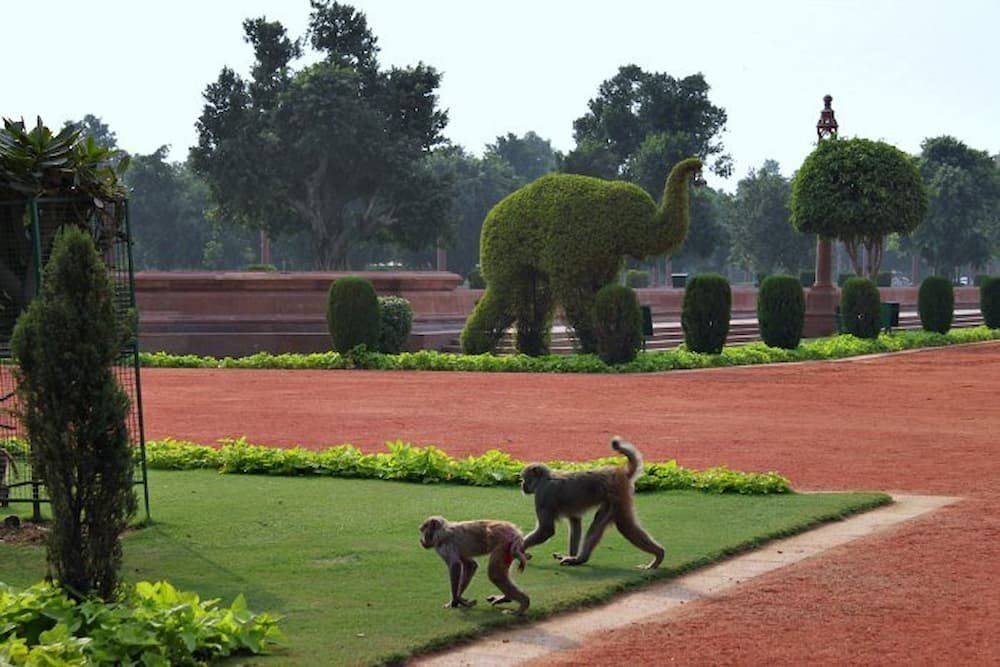
Last stop was Rashtrapati Bhavan – the President of India’s official residence where you can only take photos through the gates. In typical Indian style, while India’s parliament neighborhood is immaculate, the gardens are not complete with elephant-shaped bonsai and of course, a couple of resident monkeys running through.
Culture-crammed, we wind our day with a delicious Indian meal of roti, naan, chicken tikka and keema curry, washed down with mango juice. Too stuffed for a full-blown dinner, we skip dinner and hunt down a sweet store, Bikanervala, which hits the spot with crumbly and milky squares of heaven. We recommend the kalakand – yum!

An island with pristine waters, so crystal clear that you can’t tell where the sky stops and the ocean begins. A marine protected area, with schools of fish, harmless reef sharks, rays, and clusters of coral visible from the shore. Spending the entire day relaxing outside your wooden chalet, either on a hammock, deck chair or on a towel atop the soft, souffle-like white sand.
Sound like paradise? It is – and Mike and I spent three glorious days swimming, snorkeling, scuba diving or simply strolling around the jewel-like tiny island of Lankayan, a couple of hours’ boat ride away from Sandakan, on mainland Malaysian Borneo.

Declared to be part of an immense Marine Protected Area, Lankayan Island is situated within the Sea Turtle Corridor which means that it is a perfect spot to watch turtles nesting or see new hatchlings of baby turtles sent out to the ocean.

We arrived in the morning to be greeted by the staff who work on the island. After gaping at our beautiful surroundings as we ambled down the jetty, we walked into the dining area where we were told that there are three main activities on the island – snorkeling/scuba diving, kayaking, and checking out the turtles.
With the turtles, it is really a case of good luck and timing – if you are keen to see either nesting or hatchlings, you can put a placard on your front door so that they can call you that night. Unfortunately, we didn’t see this, but you can check out where the eggs are in a couple of little pens, as well as see more about these creatures in a little conservation museum on the island.

The island is so minuscule that it takes just 30 minutes to walk around the whole perimeter. All meals are provided for – breakfast, lunch, afternoon tea, and dinner. The food was absolutely delicious – buffet, all-you-can-eat dishes that are a mix of Malay and Western cuisine.
One day you could be munching on lyonnaise potatoes, roast lamb, and stir-fried spicy prawns, the next day could be a mix of pizza, potato fries, and sauteed squid. All this could be washed down with wine, beer and topped off with slices of fresh tropical fruits including pineapple, papaya, and red or yellow watermelon.


Our first day was spent exploring and relaxing around the island and in our chalet – there are apparently 24 chalets (although we were given the ‘secret’ number 25). The chalets were huge inside – made out of wood, each had high ceilings and a comfortable bed (or beds) with a mosquito net draped above it (trust me, you’ll need more than a net though to keep the mosquitoes at bay each night – wearing repellent and spraying your surroundings are a must).
With Mike losing his sunglasses in Sandakan and the sun’s rays blinding us, I managed to borrow a pair from a staff’s husband (interestingly, all staff except the diving crew are Filipino, leading to me dusting off my Tagalog skills).


Lankayan is fast becoming a popular destination for diving, with wrecks and amazing sea life just minutes away from the shore. I went on a couple of dives and managed to see a massive leopard shark lying on the ocean floor, a jewfish poking its head out of its hiding spot, a couple of rays wandering around, as well as scores of different types and sizes of coral.
You can hire all the diving and snorkeling gear on the island – each dive amounts to US$30 including all gear hire (snorkel, wetsuit, flippers, regulator, air).

While we woke up to an overcast day on Day 2, the sun was quick to poke out by mid-morning, allowing us to have yet another lazy day swimming, sunbathing, and being fed to our heart’s content. Too hot? Walk a meter and have a dip in the ocean. Too cold? Go back to your deck chair and warm yourself up under the sun.
The schools of fish were amazing – they swam right at the water’s edge, where we had box seat views to these being attacked by either bigger schools of fish, whale sharks or capitalizing birds. The fish jumped right out of the water when this happen, with many flip-flopping on the sand until they were captured again by the next wave.
Our last day was spent snorkeling – unfortunately, I hadn’t sealed my waterproof casing for my camera properly and it was completed damaged once I got into the ocean. Secondly, I totally underestimated the depth of the water – not wearing flippers and kicking a bit too wildly, I wind up puncturing my left foot with some coral.
You know it’s a good wound when the diving crew thinks it looks like a jellyfish attack and when you say it’s coral instead, they cringe, wince and make a “ooh…” sound! Otherwise, the experience was amazing – Mike and I spotted more reef sharks, rays, a moral eel, and of course some more breathtaking coral.

If you’re up for some rest and relaxation in an exclusive tropical paradise, this is certainly it!
Here is an outline of our recent trip to Malaysia and some of the fun experiences that we had on the mainland and Borneo, including some up-close encounters with the local wildlife.
The Air Asia flights land at the KL low-cost carrier terminal about an hour’s drive away from the city center, so we had an amazing eagle eye view when landing of millions of palm trees stretching out as far as the eye could see. If we didn’t feel like we were on holiday before, the humidity, heat, and environment definitely made us feel like we had started our trip (and were sweat monkeys in desperate need of a toothbrush and shower).
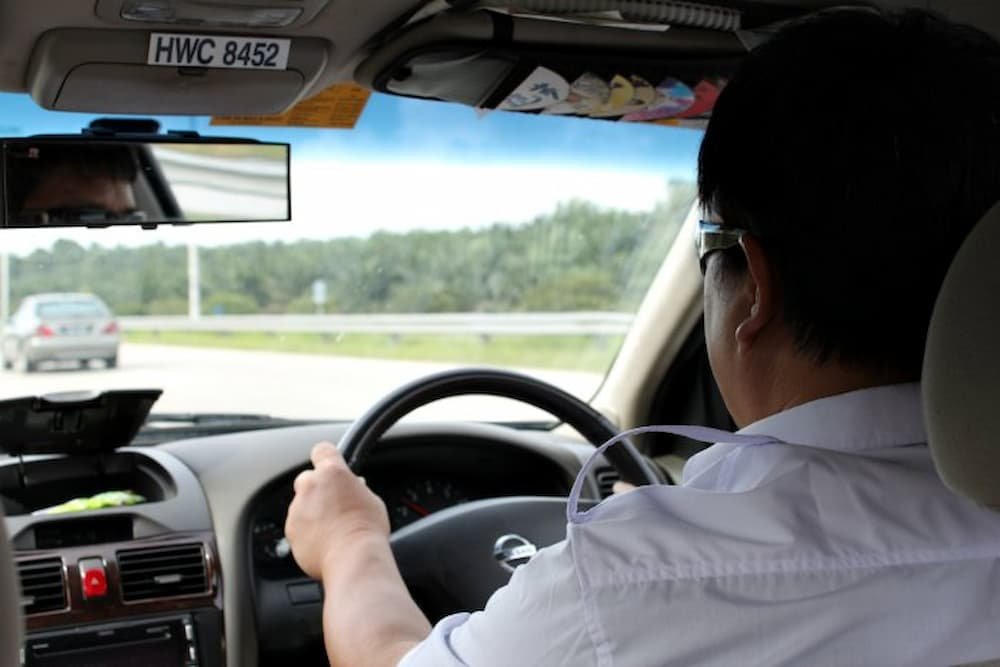
Not having enough patience to wait for a train to the city center (that cost RM12.50, about US$4), we forked out the RM102 (about US$35) for a taxi that took us straight to the hotel. Not only did we have full air-conditioning the whole way, we were treated to our own private Asian rave – complete with high-pitched singing and ’80s style keyboard synthesizers – we couldn’t help but get into the ‘music’ in the backseat.

After freshening up we then walked for about half an hour down to Bukit Bintang, known for its restaurants, shopping malls, and nightlife to eat nasi lemak (rice, peanuts, dried anchovies, sweet chili with satay chicken on the side, served upon a banana leaf). Lisette loved it so much that she’s eaten it three times (the flight, dinner and breakfast the next day).
Stuffed, we walked around the shopping areas (Mike, the obvious tourist being accosted by every street vendor for massages, dinners and other knick-knacks) before wandering back home to take the even more gratuitous tourist pics (on a tripod, no less) of the Petronas Twin Towers across from our hotel. Our tip? While we walked the first time around, the light rail system will save you from the humidity and won’t make much of a dent in your hip pocket – it costs RM1.20 (about 40c US) for a one-way trip.
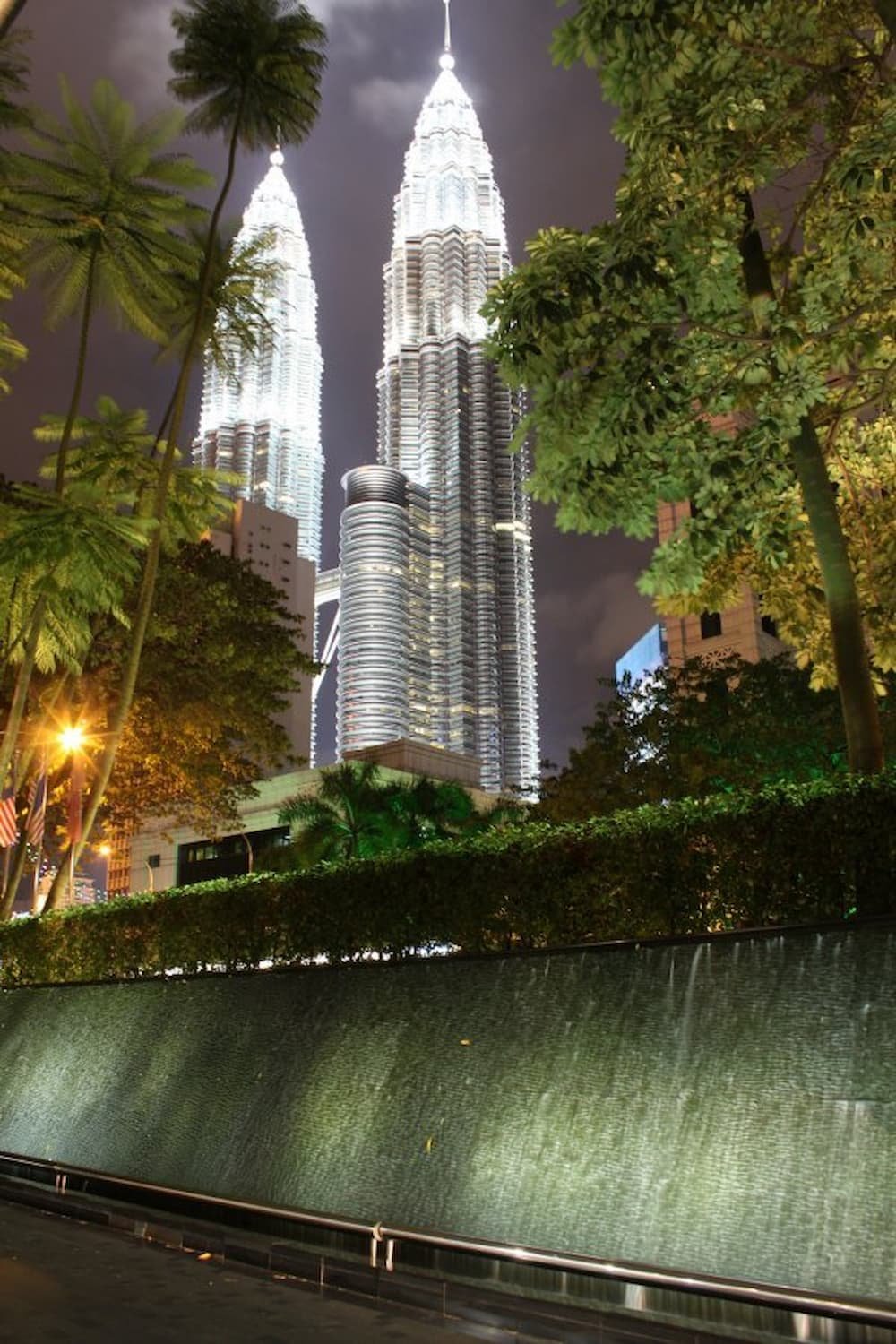
Our day started by wandering over to the Petronas twin towers, which were not far from our hotel. However, we were dismayed to find out that the sky tower and observatory deck is closed on Mondays – and today was our last day before going to Sandakan, so we would have to miss out.
The towers are filled with offices with the bottom four or so floors filled with expensive, up-market shops such as Tiffany’s, Chanel, Prada, Gucci etc. Clad in shorts, flip-flops, and t-shirts, we obviously weren’t the target audience so we decided to take the train to Chinatown to check out shops that were more appropriate to our price range (and yes you can bargain here as well). Here, the markets are the place to buy cheap (and fake brand name) clothing, bags, shoes, toys… and DVDs. While you won’t spot a counterfeit DVD store in sight, foreigners are often approached by people trying to peddle the latest movies in hushed tones, trying to usher you to the back streets to check out their wares.

Mike had a craving for McDonalds – while I don’t eat at the Golden Arches when I’m at home, it is interesting to see how the food giant tailors its menus in each country. The special here – a spicy chicken burger and a black pepper spicy chicken to cater to the Malaysian palate. The patty is deep-fried (different from our grilled burgers back home) and our verdict was that it was the toughest chicken patty we had ever tasted – I think it had been cooked five times before it reached our lips, it was that tough!
Have you ever bumped into someone on your travels that you know, which makes you realize how small the world truly is? Going back to Petronas mall en route to our hotel, I bumped into a friend who studied at the same university as me – she is Malaysian and had gone back to her home country after finishing her studies in Australia three years ago. Stranger things have happened!
We left Kuala Lumpur that afternoon to catch an Air Asia flight to Sandakan, a town in Sabah, Malaysian Borneo. Arriving around 9 pm on one of the last flights of the day, we were greeted with pouring rain and no hotel pick up (even though this had been prearranged direct with our hotel – the 2Inn1 Hotel). Even more frustratingly, once we did manage to get a cab to the place, the hotel said that they were full (we had confirmed our reservation previously three times) and the bellboy kept the taxi driver and my luggage hostage at the front door! Luckily, reception managed to find us a room in the end – though to top it all off, our next-door neighbor seemed to have a serious whooping cough problem, keeping us awake all night.
Sandakan was ours to explore the next day – we had the morning free so wandered into the city center, which does not have much in the way of tourist attractions. There are lots of shops, kedai kopi (literally coffee shops, these are cheap eats where you can have noodles, soup, fried chicken and other meals for less than $2-3 per person).
Given that there’s not much to see in town, we were pretty much the only foreigners in sight. That’s not to say that there isn’t anything to see – compared to Kota Kinabalu on the other side of Sabah, Sandakan is a bit off the beaten track when it comes to tourists but is fast growing in popularity as it offers some similar attractions.


We organized a local driver to take us to visit the major landmarks. His name was Lawrence and the first place on our agenda was seeing the proboscis monkeys, native to Borneo and having distinctive long noses and fat bellies.
The sanctuary in Sandakan, called Labuk Park, houses dozens of these curious creatures and is jammed packed with other native wildlife, including silver leaf monkeys, otters, goannas, lizards, eagles, hornbills and other birds.
While you can’t really get close to a proboscis monkey (they tend to shy away), the silver leaf monkey, hornbill, and otter weren’t so timid – you could pretty much touch them. There are regular feeding times for the monkeys each day, which allows you to stick around and enjoy seeing the monkeys climb, eat, play, and nurture.


The next attraction was the orangutans (in Malay this means “man of the forest”), adorable primates that have over 95% of the same traits as humans. Sepilok Rainforest in Sandakan is one of five sanctuaries created to help save these endangered animals in the world – the others are either in Indonesian or Malaysian Borneo.
In Sepilok, over 2,000 semi-wild orangutans live in the forest. We were fortunate to not only see them in the feeding platform crammed with tourists but to see several (including two mothers carrying their babies) lumbering or swinging alongside us as we wandered along. We definitely recommend checking out both of these sanctuaries and seeing these guys.


Other attractions we visited included the Australian Memorial Site from World War II (only six survived from the hundreds of British and Australian soldiers fighting against the Japanese), Pu Jih Shih temple (a Chinese Buddhist temple built high atop a hill, which provides an eagle eye’s view of the city) and the English tea house (previously where British high ranking officers were stationed, it is now a restaurant and venue to have high tea during a game of croquet).
Lawrence was keen to please us and we ended our day at a local restaurant of his choice called the Modern Curry House where we were more than happy to shout him to dinner. The food was incredible and we finally got back to our hotel with our very full bellies and collapsed in our room.
Our hotel also offered spa treatments, so we chilled out at the end of the day with a full body massage. Arriving there, I realized that massages here seem to be a male-only domain – the women were all getting foot massages only and tittered at me when I walked past. Self-consciously shuffling past, I was provided with only boxer shorts initially but the staff managed to find me a robe to wrap around me and I had to get undressed in an empty room as there were no change rooms to speak of. Being ushered into a sauna first, Mike and I were dehydrated prunes had we not decided to walk out (nobody came to get us).
Next, we were ushered into a cafe to have unlimited snacks/drinks (again, something that is unusual for a massage) and then to the massage room. “You want a Thai massage?” my masseuse asked. “No, I want an aromatherapy massage,” I responded. “You want a Thai massage?” she repeated. “Oh…. okay,” I said.
While the massage experience was lost in translation, after an hour of kneading, pinching and contortions, we emerged relaxed, only to return to our hotel room to hear our incredibly loud whooping cough neighbor, who kept up the coughs, gags, and splutters until 2 am. Ah…. at least we are headed to Lankayan Island tomorrow….
Here is a video from Sepilok.
What is Il Palio (The Palio)? Held annually on 2 July and 16 August to honor the Assumption of the Virgin Mary into heaven, the first official race happened in 1656 with the Siena ‘contrade’, or districts, vying aggressively for their horse to win.
There are now 17 districts in Siena, each with its own headquarters, mascot, banners and colors. Each have a different animal representing them – including a giraffe, dolphin, owl, hedgehog, unicorn and snail. Rivalry between each contrada is extremely fierce, bubbling among the Sienese until the big race day.
After wandering around Florence, I catch a bus on a scorching hot August morning, for my 1.5 hour trip to Siena. I am so glad that I had asked how to get there in Florence, as back home the travel agent had said to book a train to Siena – but the actual town center is *nowhere* near the train station. If I had listened, I would have been stranded, with not a taxi in sight (it was a public holiday), walking for a couple of hours in the blistering heat, cursing the travel agent the whole way.
I check in to Hotel La Toscana, which is pretty much the only accommodation I found a month before. Oh my goodness, did they just give the star rating to the lobby, or did the hotel pay for the extra stars? The sign out the front says that it is three stars but I’ve stayed in two star or one star hotels in Italy that are better than this by leaps and bounds. Being the middle of summer, there is no air conditioning (only a dingy fan in the corner provides any coolness), the shower has seen better days, there’s the smell of mothballs in the cupboard and there are suspicious yellow stains on the walls.

Clutching my Siena map which I bought for the not-so-cheap price of 5.50 euros, it’s actually useful although after a day the town is pretty straightforward to navigate around. There are churches “everywhere” in the city, although wearing a singlet and shorts I wasn’t comfortable just walking into a place of worship with my legs and arms bare.
The evening before Il Palio, each contrade are setting up long tables in their respective districts for dinner that evening, with flags hanging off buildings that splash the town’s roofs with even more colors. I meet three randoms from Sardinia who are there for the festival, however unfortunately their English is worse than my Italian. I make the mistake of thinking that ‘caldo’ means cold when it means hot – they probably thought that I was strange, thinking that it was a cool day while sweat poured out of every pore of my body!

Il Campo, nicknamed the “bathroom sink” (thanks to its shape) is where the main event takes place. The best place to watch the next day is on the incline of the “sink”, towards the fringes. You can pay a fortune otherwise to get a bench seat on the perimeters of the arena – if you are prepared to fork out 200-300 euro for the pleasure. For me to get the best view, I arrived at 1.30pm to score my vantage point. An hour later a truck drives along the ring, which is filled with water. The truck sprays the ground (and mercifully us) to soften the ground pre-race.

The procession finally begins at 5pm, which showcases all 17 horses from each contrada. Each has a drummer first, two boys with their contrada’s flags who do a spectacular twirling and flag waving display, a man in full armor and then the jockeys and their horses. I am impressed by the colors of the costumes and the fact that they are wearing heavy medieval kit in the heat, while I sweat just standing in the sun.
The detail is amazing – each costume is completely different, including the hairstyles on the contrada (some have curly, some straight bobs, some with a fringe etc). There is also a man in the Duomo tower who rings the bell by hand nonstop throughout the whole procession, which goes on for about two hours. I feel like I’ve been transported to another century.

By 7pm Il Campo is completely packed and despite this, the entire crowd goes deathly silent as the order of how the 10 competing horses (there are 10 for the two annual races, which means that some contrada compete twice) will line up once the race starts. It’s then that the fierce rivalry becomes apparent, with die-hard fans screaming profanities at the other horses. I see a girl in the stands scream until she’s practically hysterical, her face tomato red and looking like she’ll burst into tears.
Finally, after three false starts (apparently this can go on for hours as it’s virtually impossible to keep the horses still), the race kicks off an hour and a half later. As the horses whizz by everyone goes ballistic – but it’s over in less than a minute. Once it is, everyone jumps the fence and rushes onto the track, screeching and cheering. Partying continues throughout the night and early morning, as people from the winning contrada march the streets, beating drums, blowing whistles, waving banners and (not sure why), sucking on baby dummies.

While it’s absolutely boiling during the day, by nightfall the weather is surprisingly pleasant – there’s a nice breeze and kids are running around with discuses, launching them into the sky. People are dressed to the nines and there’s a great party vibe. Feeling pretty under-dressed, I can’t help but laugh at three Italian guys and their attempts to pick up a couple of English girls with little success, with lines like they speak “poco poco Inglese”.
In Siena be sure to check out the Duomo, which is spectacular with numerous paintings, frescoes and sculptures inside. If you have time, climb to the top – only one person can fit round the staircase (it’s an interesting case of bump and grind time when you confront someone walking in the opposite direction), but the views from the top of Siena’s famed red roofs once you scale the 131 stairs are delightful.

The Museo dell Opera Metropolitana is just as interesting, with the original apostles from the Duomo lined up towards the altar, as well as various frescoes and paintings from Sienese artists. Meanwhile, Piazza San Domenico has a great view of the other buildings and their red bricks just outside the city center.
Siena is also home to the world’s oldest bank (since 1472) and the delicious panforte. What’s not to love?
You may have heard of the “Running of the Bulls” festival in Pamplona and “La Tomatina” (tomato throwing festival) in Bunol. The last celebration to complete the holy trinity of wacky festivals in Spain is “El Colacho”, or more commonly known as the baby jumping festival.
Held in June each year in Castrillo de Murcia, a city – near Burgos in northern Spain, the festival sees a bunch of men dressed in bright yellow and red garb, jumping over babies lying on mattresses in the middle of the street. Before you wonder why child services haven’t been notified, the devil’s jump has been celebrated in the city since 1620. It has religious origins, with the aim of ridding the town of the devil and his companions.
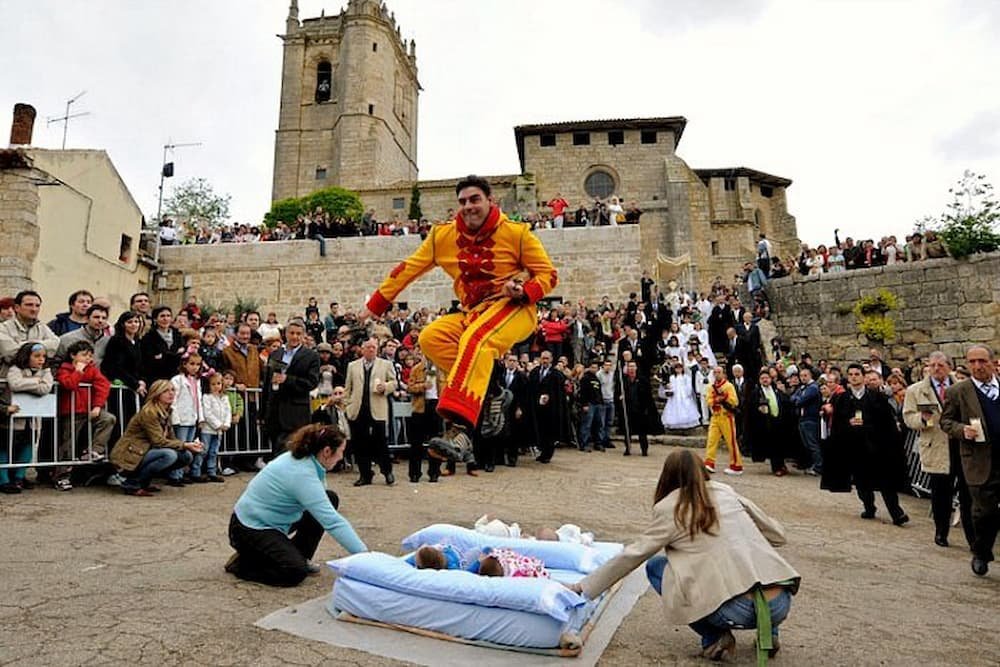
Today, the baby jumping festival is part of the city’s Catholic Corpus Christi celebration, organized by members of the brotherhood of the Santisimo Sacramento de Minerva. These guys are busy on the big day – not only do they have to jump, run and prepare mass – they also have the privileged job of terrorizing everyone with whips throughout the day. The day starts innocently enough – the streets are lined with flags and flowers, a mass celebration is conducted as well a procession to and from the church. Members of the brotherhood then dress as either El Colacho or El Atabalero – the devil and his companion.
Now it’s ready for the leap of faith – the babies are placed on a row of mattresses that leads to the church. All infants are less than a year old, with four to seven babies per mattress. Several men then get to practice their hurdles skills. Jumping and running, the idea is that once they jump over all the babies, evil will be run out of town.
Looking at these guys leaping over babies can be fairly cringeworthy – I can’t help but wonder whether if, over the centuries, any of the leaping lucifers has inadvertently landed on an infant. I’m not sure if anyone I know would be so willing to lay their kids on the line (or mattress). This is one festival that ends with sighs (and gurgles) of relief.
