Ok, so the title might have been a little deceiving but let’s find out if you fit the bill.
We’ve all had that experience of feeling like the complete outsider in a new city. Wandering from one tourist trap to another, you end up spending more time in line or at the gift shop than exploring the area. As you trudge between guidebook recommendations, you often get a surface-level view of your destination but never really get to dive into the local culture.
So wouldn’t it be great if you could step off the beaten tourist track and meet locals who are willing to take you around their cities, show you all the best spots, and share stories about their culture, traditions, and lives?
Well, now you can. There’s a new hospitality network called Tripping, where travelers like you can connect with local people. Members live in over 90 countries and they use Tripping to share travel tips, meet over cups of coffee and even open their homes to each other.

Not looking to go traveling anytime soon? No problem- as a local host, you can stay home and still feel like you are away. You might end up playing drinking games with some Australians, perhaps learn how to make Tom Yom Kung from some Thai travelers, or brush up on your French with a Parisian family. In an instant, your life will become more fun, more colorful and – best of all – you’ll have new friends to visit all around the world.
It’s a pretty simple process of registering your details on their website and you can choose whether you would like to host someone or not. Not a bad idea to just scroll through the community of trippers who are already using the service to read their comments and feedback.
Oh and by the way, Tripping is totally free. The founders believe that cultural exchange makes the world a better place and they’re committed to making Tripping the safest and best hospitality network on the planet.
So the question begs – Are you a Tripper?
To learn more, check out Tripping.com
We go through all the trouble of planning where to stay and what we are going to do each day on our trip so why is it that after all this effort we leave our health in the hands of the gods. Holiday illness is one of the main reasons why otherwise perfectly planned trips end up being a disappointment. And there’s no wonder – getting sick gets sucks, whether it is during your holiday or when you get home.
Here is a selection of the most common ailments you may encounter on your travels.
If you are planning on traveling to altitudes above 8000 ft then we recommend spending a day or so acclimatizing before doing any strenuous activity. Especially when traveling to countries such as Nepal, Bolivia, Ecuador, and Peru.
Altitude sickness is caused by a lack of oxygen or low air pressure and the common symptoms include headaches, fatigue, nausea, stomach upsets, and dizziness. If you experience any of these symptoms at altitude it is a good idea to rest up and stay put. Drink plenty of water and avoid alcohol to avoid getting dehydrated.
Doctors say that ear pain is one of the most common travel afflictions. Air pressure in the middle ear should be the same as that outside your body. The ear’s Eustachian tubes help keep it this way. On a plane, the pressure changes rapidly during take-offs and landings playing havoc with this.
So, the air pressure in the middle and outer ears becomes different – and eardrums are pulled towards the brain. In most cases, this is merely painful but in very rare instances eardrums perforate.
Swallowing helps many people while others find chewing gum or sucking sweets helpful. Some say taking decongestants prevents pain. Symptoms are worse if you have a blocked nose.
It’s one of the most common holiday illnesses a traveler could contract during their holiday. The cause of diarrhea while traveling is generally a bacterial infection due to poor hygiene.
When I travel I generally will take some Imodium with me, just in case I come down with a case of ‘the runs’. If you do happen to get diarrhea, make sure to drink plenty of water and replace your salts to avoid dehydration.

If you’re on an island holiday or a beach break it’s easy to get excited and enjoy the beautiful, scorching sun a little bit too much. Do not underestimate the power of the sun. Have a waterproof sunblock with you at all times. It is recommended to get a sunblock with at least 30 SPF (Sun Protection Factor). It is important to know that this actually means your skin will take 30 times longer to burn than with no protection.
If you’re traveling with children, be particularly careful not to expose them to too much sun. Little children should wear sunglasses, hats, and plenty of ‘maximum protection’ sunblock at all times. It’s best to use a sunblock that’s not waterproof on children, as they rub their faces a lot and could get it in their eyes, making it rather difficult to get out afterward. There are also specially designed swimsuits that block out UV rays.
Hepatitis causes serious damage to the liver, so it is not to be taken lightly. As a traveler, you are the most susceptible to Hepatitis A and Hepatitis B. There are other strains of Hepatitis, but when it comes to avoiding travel illness, Hepatitis A and Hepatitis B are the two you need to give a thought. Hepatitis vaccination is routinely performed in many countries – check with your local health center to see if you already have protection.
A vaccination to protect against Hep A consists of a single shot that you should take a few days before departing to your travel destination. A more complete Hepatitis vaccination that gives protection against Hep A and Hep B is also available but needs to be taken as a series of three shots over a six-month period.
Malaria is transmitted by mosquitoes. Mosquito bites are unpleasant on principle, therefore, the use of an insect repellent with DEET is highly recommended in any area prone to mosquitos. I also recommend buying inexpensive mosquito netting that can cover your bed and block those suckers from getting to you while you’re sleeping. You can buy one of those in a dollar store and they don’t take up much space in your backpack.

Malaria is no fun at all. It’s actually a dangerous disease that could lead to coma and death. There are pills a doctor can prescribe to you that you should consider taking before and during your travels if you are going to a destination that is prone to Malaria. Just be aware of the side effects of these pills which is commonly photosensitivity (your skin is more sensitive to the sun’s rays) and nausea.
Dengue Fever is another nasty disease caused by mosquitoes and more distressingly has no preventative measures. The best prevention is to avoid being bitten so use a high DEET repellent.
If you are going to mosquito areas avoid soaps or lotions with floral scents (no scents is best). Eating massive amounts of garlic and vitamin B also makes you less tasty.
If you’re taking a cruise or bus tour you may experience motion sickness. Good thing is that most cruise ships will have medical professionals on board and guess what they deal with most – Sea Sickness. If you are at all concerned about your tummy then it’s a good idea to get hold of some preventative medication before you set off.
I’ve heard of some people having good results sucking on ice…. Accu-Pressure wristbands that rub anti-nausea spots on people’s wrists sound like a much better solution, but those may not work for everyone. Over-the-counter antihistamines can help since the center of motion sickness in the middle ear. Ginger is great for motion sickness. Whether in the form of tea or just plain old ground it works. Chew on some ginger candy and prevent a plethora of tummy troubles.
Check out our complete guide on Motion Sickness.
Stress is a major cause of that run-down feeling which can make a person more susceptible to getting sick. You will no doubt encounter setbacks when you travel so it is important you don’t let them get to you. It is important to remember there are some things you have no control over.
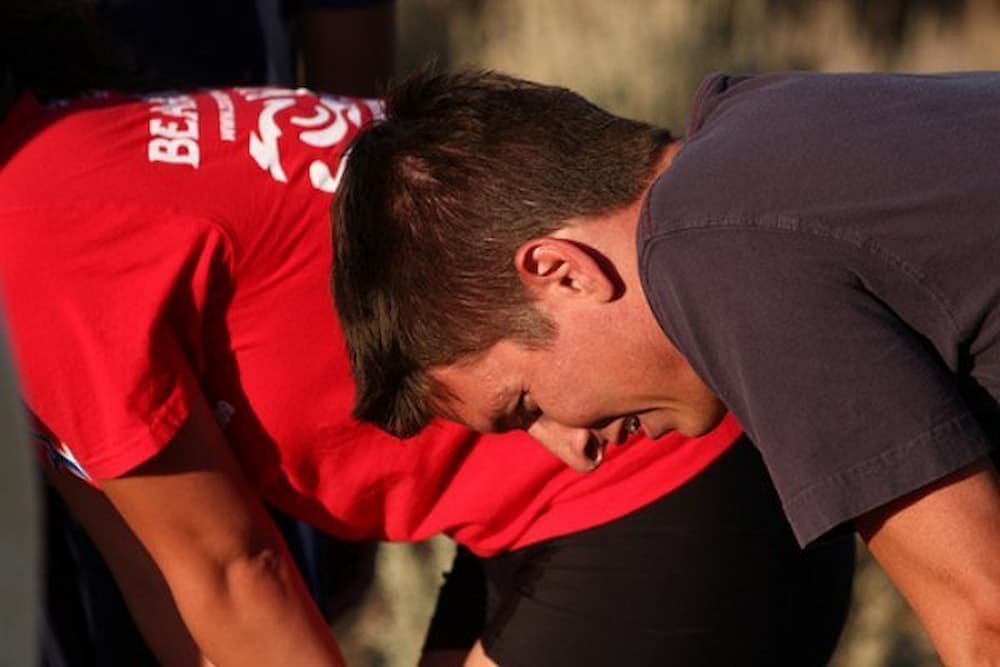
Don’t try to pack too much into your day. Trying to see too many sights, particularly in a hot climate, can lead to exhaustion. Aside from tiredness, symptoms include dizziness and confusion. Related hot-climate risks: painfully blistered feet and raw, itchy groins. (For the latter, over-the-counter anti-fungal creams are available in most countries).
Get Rest: Much like stress, exhaustion can also help make you more susceptible to the airborne germs that multiply during the colder months of the year. Make sure to get 6-8 hours of sleep nightly to help fend off any germs that may be attempting to bring down your immunity.
For long air trips, doctors often recommend wearing compression socks. They’re long (to just below the knee) and apply light pressure to the legs – where DVT most often occurs – to encourage blood to move more efficiently through the limbs.
Though it’s relatively rare, higher-risk individuals (people who’ve recently had surgery, for example) should ask doctors whether taking a prescribed blood thinner (anticoagulant) is warranted.
I can’t begin to tell you the importance of this but when going on holiday, make sure you pack enough of your own prescribed medication. Make sure you have a full supply and it might even be worth carrying extra. Don’t assume you will find a pharmacy with the medication you need at your destination. That goes in particular if you’re traveling overseas. It’s often extremely difficult to find the medications you need at a dose you need in foreign countries. Even if you’re traveling to a country similar to your home country (for example Australian traveling to New Zealand), pack enough of your own medication.
It’s a good idea to have your doctor write a list of your medication for you to take. In some countries, the prescription drugs you take might be illegal. Avoid the hassle and pack your medication in your hand luggage and declare it to immigration.
Consult your local Travel Health Clinic and ask for advice on the requirements for where you’re traveling. They will have up-to-date information on the location and will inform you of necessary or suggested vaccinations and whatever other precautions you should be aware of.
Illnesses that require vaccinations include Typhoid Fever, Influenza, Hepatitis A and B, Varicella, Japanese Encephalitis, Meningococcal Meningitis, Rabies, and Yellow Fever.
If you’re an Australian, go to the Travelvax website for a clinic near you.
This is likely an exercise in preaching to the choir but let's face it; the traveling public desperately needs a lesson in common courtesy. There is something about flying that can turn ordinary people into inconsiderate passengers.
Here is a shortlist of types of offenders, along with some tips to respectfully alleviate the problem, where available. The following list is mostly in jest and it is understood that people sometimes behave in an inconsiderate manner unknowingly or accidentally.
This person reclines the seat, especially when done abruptly and without regard to the body position of others in the aft direction. A tip that was given on another website devoted to airline travel prescribes opening the air gasper (air vent) and putting it in the full forward position. In this position, air will be blowing directly on the head of the person in the seat immediately forward when their seat is reclined.

Using the armrest isn’t a faux pas, but sticking extremities into the seat space adjacent is. That is exactly what this person does.
Watch for these passengers when they are removing their carry-ons from overhead bins directly above to avoid a concussion. They seem to have no concern for the people around them, are generally not very strong, and oftentimes try to remove very heavy bags…. the worst combination possible.
If you see this scenario about to occur, offer a helping hand.
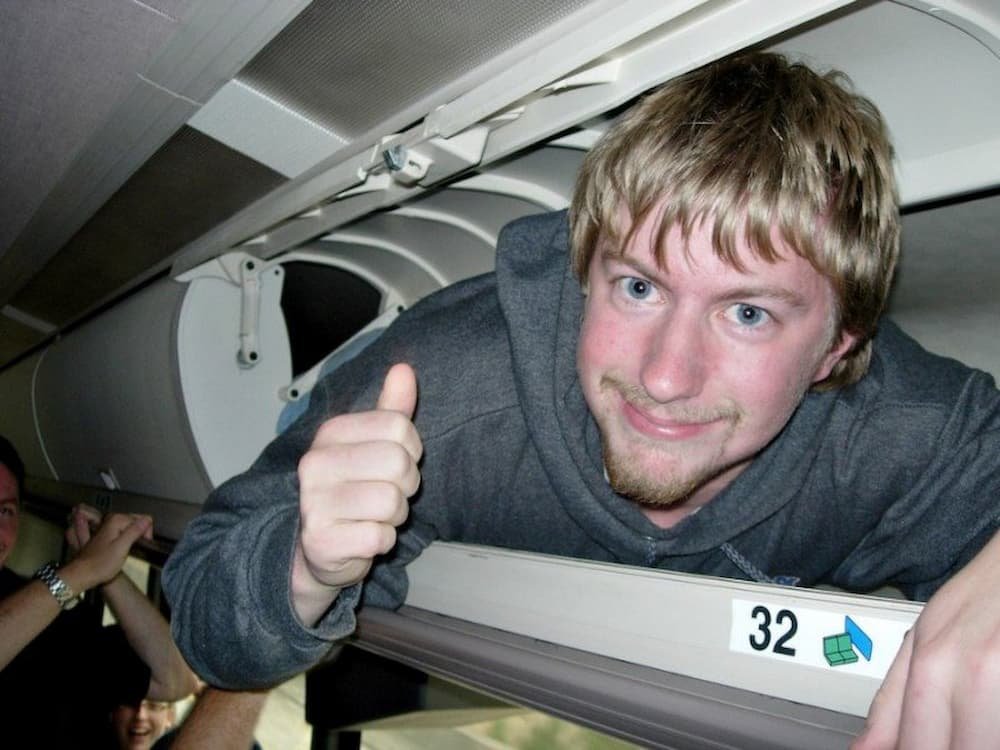
Flying on airplanes is not the time to pull out the toenail clippers or any other type of grooming for that matter. No one wants your clippings, dead skin, hair, etc on them so keep your grooming habits to yourself.

Gate Hoarders are passengers who, when the announcement for pre-boarding and first-class begins, crowd the boarding door and are a hindrance to the proper order of boarding passengers. Things will move a lot smoother if you stick to your designated boarding group – the plane isn’t leaving without you!
Although inherently not a gaffe, when the person next to you doesn’t take the hint that you are not in a talking mood and would prefer to sleep it can become a problem. If this happens, politely mention that you enjoyed the chat and would love to continue the conversation after you have had some shuteye.
Shoes come off and bare or socked feet are propped up. Let the relaxing begin! This person is often a combination of Lateral and Horizontal Space Monopolizers. An airplane is not your lounge room so please be respectful of the people sitting around you.

When travel plans are awry, everyone within earshot (and beyond) is going to hear about it.
This passenger lacks earphones and plays movies and music for an unwitting crowd on their portable device.
Sure, everyone wants to be in a good position to retrieve their luggage from the baggage claim but these people stake their claim at the front of the crowd and seem to make it their mission to stop anyone else from picking up their bags.

Airplane engines are loud enough to mask the sound of passing wind…..this does not give you free rein to let it rip throughout the flight.

Kids will be kids there is no doubting that, and as much as we hate to have a screaming child nearby it is generally an unavoidable situation. The Dis’owner parents are a whole new breed though, letting their children run amuck without any concern for the people around them. It is sometimes difficult to know if they are in fact the parents.

There is a simple rule when boarding (or exiting the plane) – Find your seat as swiftly as possible, place your gear in the overhead locker then take your seat. This is not the time to hang out and chat with your friends in the aisle forcing the people around you to wait. TheAisle Hog can also be found seated during the flight with their legs blocking the aisle, similar to the Lateral Space Monopolizer.
We all want to try and save a few dollars by packing light and taking carry-on luggage only. Unfortunately, these people have no concept of what will fit in the overhead bin (nor do they seem to care). You will recognize them as they make their way down the aisle, dragging their bag which is bashing into seats left and right.

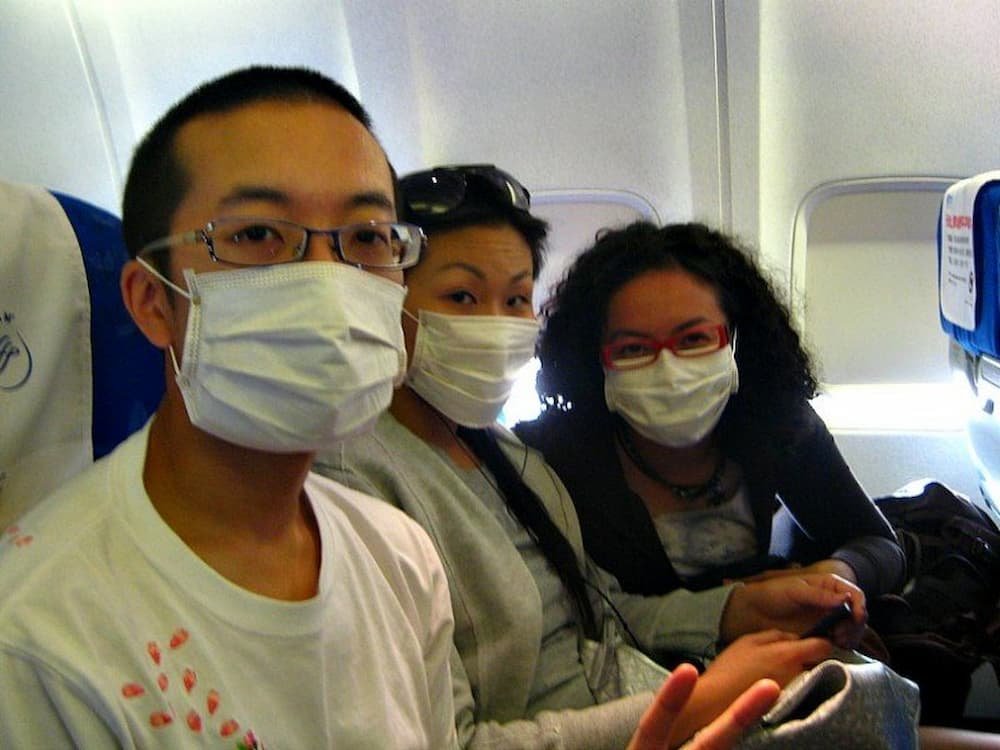
Yes, there are times when it is unavoidable and we happen to be sick when flying…..no one’s denying that but seriously show a little decency and cover your mouth when you sneeze or cough, and if possible wear a mask.
This person seems to make it their mission to create the biggest barrier possible for you to get by. Sleeping with your head on the tray table might be comfortable for you but it creates a Ninja Warrior course for those trying to get by. The Obstacle often leaves their tray table down for extended periods of time before and after meal service.
The Stinker boards the flight with major B.O. To avoid this, pack a small deodorant in your carry-on and apply it regularly. Of course, showering before you arrive at the airport is a no-brainer too… but sometimes we are forced to sprint between gates to make our next flight and a little sweat is unavoidable.
No explanation really needed for this one. This passenger feels the need to exploit the free bar by downing as many drinks as humanly possible.

Pushing up off the back of the chair in front of you is not on. To avoid this, simply ask the person next to you if they can stand up, or use the handrest to prop yourself rather than annoying the person seated in front.
You are entrenched in your book, magazine, tablet, or other media device and have a feeling that someone is watching over you…. this is the Eavesdropper at work. It is not cool to invade someone’s privacy by reading over their shoulder at any time. The worst offenders can’t help but look over and watch the movie that you have selected in the in-flight entertainment.

It is important to note that we have tried to outline situations that can easily be fixed rather than legitimate issues that often get discussed (eg. overweight passengers). That being said are there any types of airline passengers you would want to avoid that we may have missed?
Airline crews have their own inscrutable patois that can be difficult to decipher by outsiders. Below is a list of common terms one might hear while eavesdropping on an inter-crew confab or listening to a passenger announcement (but who does that these days?).

A pilot or flight attendant who is traveling in a passenger seat and on company aircraft to a work assignment.
A crew member that spends zero time with their confreres on layovers. When they arrive at the hotel, the door is promptly slammed and the deadbolt secured.
An Air Traffic Control (ATC) assigned departure time to allow ATC to fit an aircraft into the flow of inbound traffic at busy airports, such as Boston-Logan or Philadelphia International Airport. This time is often a shorter delay of less than 10-20 minutes, but not always.
Is an ATC delay program that results in holding aircraft at the departure airport. These programs are often a result of inclement weather, such as high winds, thunderstorms, or low clouds & visibility.
Any airport that is not a major hub for the airline. Outstations are typically small, sleepy airports, but not always.
Is an airline route structure and schedule system based on having major hubs connect to smaller airport outstations. Once aircraft are at the outstation, they fly right back to the hub. The hub and spoke moniker is derived from the wheel-like appearance the structure takes when viewed on a map. An implication of this system is that it invariably results in the traveler having to traverse through a major hub on two separate flights to get to the destination. An example of this would be AGS (Augusta, GA) to ATL (Atlanta) to ERW (Newark), Atlanta being the large airline’s hub (Can you guess which one?).
Antithetical to the Hub-and-Spoke system. As the name implies, the point-to-point method of airline schedules is where an airline aircraft may not travel at all through a hub over the course of multiple days or multiple flights.
Is an acronym for “Minimum Equipment List”. When a pilot says an item is “on MEL”, that means that a particular aircraft appliance is broken but is not needed for safe flight. Examples include the coffee maker, an “in triplicate” redundant system such as an electrical generator, and countless other items.
A racetrack-shaped ground track that an aircraft follows when directed by Air Traffic Control (ATC). It is often the result of a ground stop at the destination airport and can result in a diversion if the aircraft doesn’t have enough fuel to hold for the ATC assigned holding time.
A minimum fuel quantity that, when reached, necessitates a diversion to a secondary airport called an “Alternate” airport. It is often the result of a protracted holding pattern.
Steerage passengers who, when the announcement for pre-boarding and first-class begins, crowd the boarding door and are a hindrance to the proper order of enplaning passengers. Gate hoarding is a serious faux pas and thoughtful, experienced travelers often hold these passengers in contempt.
(Also called the “Second-in-Command or colloquially, the “Copilot”)
Is a fully qualified pilot that occupies the right seat in an aircraft and shares in the duties and operation of flying. They are fully qualified so avoid asking when they will become a “real pilot”.
Although both pilots perform similar duties, the Captain is the final authority as to how the aircraft will be flown, such as in an emergency or a situation where the two pilots disagree. As a result of holding “command authority”, the Captain will ultimately be responsible for the attendant ignominious shame or Sully Sullenberger-esque glory after an aircraft accident or incident.
Is a delay time that where the crew can expect an update on the delay program from Air Traffic Control (ATC). Once reached, there will either be an extension of the EFC or the aircraft will be released for departure.
Usually, this terminology is heard from the flight deck crew and describes an area of thunderstorms. Thunderstorms are given a wide berth and are not to be trifled with.
An aircraft position of approximately 10-20 minutes from landing at the destination airport and at an altitude of approximately 18,000 feet.
“Timing Out” is the result of crews reaching the FAA's maximum permissible duty time for the day. Reaching maximum times are the result of unforeseen circumstances, such as inclement weather delays. The Federal Aviation Administration sets the maximum and takes violations very seriously. Consequently, airline crews are very careful to adhere to these limits, knowing that their career, license, and livelihood are on the line if non-compliance is discovered.
A consequence of delays the day prior, where the crew flew well beyond the planned schedule and needs a minimum quantity of rest before duty.
Is a paved aircraft parking area on the airport surface, not directly controlled by Air Traffic Control (ATC).
Passengers that have not been assigned a seat and will not be assigned a seat until all passengers with a confirmed assigned seat on the flight have boarded.
A passenger that is traveling on airline passes that are provided to airline employees as well as their friends and family. These tickets are on a “space available” or “standby” basis, meaning that there must be an empty seat. A Non-Rev has a lower seating priority than a paying passenger.
An airline that had established routes before route liberalization as a result of the Airline Deregulation Act of 1978. In other words, legacy airlines have a long-standing pedigree. Legacy airlines often have separate classes of service and larger route structures. Examples include Delta Air Lines and Alaska Airlines.
IROP simply means that the airline schedules did not go according to the plan, which is typically a result of weather and subsequent delays or cancellations. Irregular operations result in cancellations and crew rescheduling to perform different flights than planned.
A flight without passengers for the purpose of flying a broken but airworthy plane to a maintenance base.
A flight without passengers to move an aircraft into position for scheduled service.
A carrier that came into being after the Airline Deregulation Act of 1978. These carriers often have lower levels of service than the Legacy carriers. Examples include Southwest Airlines and Allegiant Airlines.
An agreement between two airlines that cover gaps in route structure. For example, buying a codeshare ticket on United from San Francisco to Dubai may require a plane change in JFK, where the passenger would deplane a United aircraft to fly an Emirates aircraft to Dubai since United does not service Dubai. This is a codeshare, albeit a make-believe one.
The unit measure of distance used in aircraft navigation that is 1.15 times greater than the statute mile.
Altitudes of 18,000 feet and above are referred to as Flight Levels or FL for short. For example, for 18,000 feet a pilot may refer to that altitude as “Flight Level One-Eight-Zero”.
Luggage that is checked at the gate, due to the overhead bins filling up. It may either be checked to the next gate or checked to baggage claim at the final destination, depending upon the airline and airplane.
An airline that, at least at its inception, was utilized to fly passengers from smaller, less traveled airports to the major hubs for major airlines. Regional airlines are exclusively lower-cost contractors who fly for the mainline carriers and have mainline liveries on their aircraft. Examples include Republic Airlines, Piedmont, American Eagle, and ExpressJet.
Is the air carrier that provides a higher level of service on bigger aircraft to further destinations. For example, Delta Airlines and American Airlines.
A phase of flight approximately 5 nautical miles from the runway end where the aircraft is aligned with the runway for the purpose of landing.
Permission to perform some action by ATC. An example would be a landing clearance, which is the ATC means of telling the inbound aircraft it is permissible and safe to land on a particular runway.
Refers to place or time allotted to the crew at the hotel after their duty day is complete. Often called a “layover” or “RON”.
Refers to the airport where an airplane is going to rest for the night. It can also refer to the crew overnight or layover.
Sometimes also called the “Hard Stand”, it is a slab of pavement where aircraft can be parked, but it is not considered a designated parking spot. It is a location where aircraft may go to wait for their assigned parking gate, which may be occupied. If an aircraft has a maintenance issue, it may be parked at remote parking so that a gate area may be freed for the next arriving/departing aircraft.
Preplanned routes in busy airspace that allow for the orderly flow of traffic into a country's busiest airports. Delays occur if one of these corridors gets closed, as they often do when a thunderstorm develops over them.
Occurs when a passenger is removed from an assigned seat and placed on a later flight. This occurs when the airline manages to sell more tickets than there are seats on the airplane.
A condition in which the airline has managed to sell more tickets than the capacity of the airplane.
It is fairly common that when a Captain makes an announcement, she/he assumes a minimum level of knowledge about airline operations. Because of this, it is easy to get bogged down with the jargon, which can lead to increased anxiety in the excitable passenger. Knowledge of the above terminology will go a long way in aiding to understand airlines and their operations, as well as maintaining a stoic understanding of the contretemps of delays and irregular operations.
Tailwinds!
Statistically, turbulence resulting in injury is a rare occurrence. In 2013, the FAA reported that there were 11 passenger injuries and 13 crew injuries from turbulence. With U.S. carriers servicing approximately 50 to 70 million passengers per month, the chances of turbulence causing injury are on par with snagging that 600 million dollar lottery ticket. This fact alone should be enough to assuage the nervous flier’s turbulence anxiety. If not, read on.

Turbulence is caused by sudden changes in wind speed and/or changes in wind direction. Changes in direction could be in the vertical, lateral, or a combination thereof. Since aircraft move within air-masses, sudden changes in wind speed or direction impart an influence on aircraft motion in the axes of flight (Pitch, Roll, and Yaw). This perturbation of the aircraft is dependent upon the wind velocity and rate of change (wind gradient).
Known in pilot parlance as “Wake Turbulence”, this type is a result of the wing design of modern aircraft. If not given a wide enough berth, it can cause controllability problems for aircraft, mostly on the takeoff and landing phases where airplanes are closer together. Wake turbulence, if visible to the naked eye, would appear as tornadic vortices emanating from aircraft wingtips. The FAA has done much research into wake turbulence.
Click here to see a demonstration.
This type of turbulence is caused by horizontal winds that come into contact with jutting ground features such as trees, buildings, and mountains. When the localized wind strikes surrounding impediments, it causes small, irregular, tumbling vortices called eddies. These eddies result in the sudden changes in wind speed and direction that perturb aircraft trajectory.

As an air mass is heated by insolation, (A fancy word to describe the solar radiation) air at the surface heats and rises. These rising pockets of air can cause sudden changes in aircraft position, which is felt through the sensation of turbulence.

Shear turbulence is a result of adjacent air masses with differing winds over a horizontal or vertical distance. To remember this type of turbulence, think of garden shears. There are two different surfaces that meet when the garden shears are in motion. In shear turbulence where two air masses meet, there will be intermixing of the two, and eddy currents will form. The eddies will cause erratic changes in aircraft motion that will be perceptible from within the aircraft. This type of turbulence is common with frontal weather, jet-stream boundaries, and thunderstorms.

Turbulence can be very difficult to forecast and thus predict in aircraft operations, especially when it is turbulence of the clear air variety. Clear Air Turbulence (CAT) is turbulence that has no visible evidence of its existence. Because of the fickle nature of the atmosphere, the pilots can be as surprised as the passengers with a close encounter of severe turbulence. For this reason, heed crew member admonitions to keep your seat belts fastened when seated.
Fortunately, pilots are able to easily predict turbulence when particular weather conditions are present. Extant are certain cloud developments, such as cumulonimbus (thunderstorms) and building cumulus clouds, which indicate a very high likelihood of uncomfortable & dangerous turbulence. Pilots avoid these clouds judiciously and with zeal. As a final note and an aside, take a look at the Flight Crew. Do they look nervous? If not, then there is a very high likelihood that the aircraft will return to terra firma in the same condition that it left in.
Learning to fly heavier-than-air powered craft is undoubtedly a prodigiously rewarding life experience. It affords a sense of absolute freedom, control in three dimensions, and the stunning cockpit vistas are otherworldly. There’s no other feeling quite like owning mastery over a complex machine, flying through the ever-changing panoply of weather and airspace, and setting the main landing gear down effortlessly at the destination airport. What’s more is the act of sharing the flying experience with others can be a source of great satisfaction.
Common questions surrounding the expansive subject typically concern certification requirements, flight schools, costs, and length of training. It’s easy to get lost in minutiae when discussing flight training due to its expansive nature. This editorial is intended to introduce some of the very basics to those who have not given training much thought.

An introductory flight is a short flight with an instructor pilot, whereby prospective students can experience aircraft operations and ask questions about training. These flights consist of about ½ hour to 1 hour of flight time with an instructor in an airplane and, depending on your level of comfort, may be hands-on.
Many instructor pilots allow prospective students to manipulate the controls during the introductory flight, sans the complex operations of takeoff and landing. Fortunately, most aircraft have two separate sets of controls and the instructor is able to manipulate them, if necessary to correct minor errors in flight path. Have no fear! Instructors are highly trained professionals and will not allow an error to be made that would either cause a scare or put the aircraft in jeopardy.
In large metropolitan areas like Chicago or Philadelphia, it is commonplace for one or more flight schools to run promotions on the likes of Groupon or Travelzoo. If unfamiliar with either, both websites provide access to an array of deals for local products & services all over the country. Expect to spend anywhere from about $50-$250 on the introductory flight, with the rate mostly dependent on aircraft type and flight school location. As a caveat, many flight schools put an expiry date on the use of these coupons, so be mindful of the date if you decide to purchase from either website.
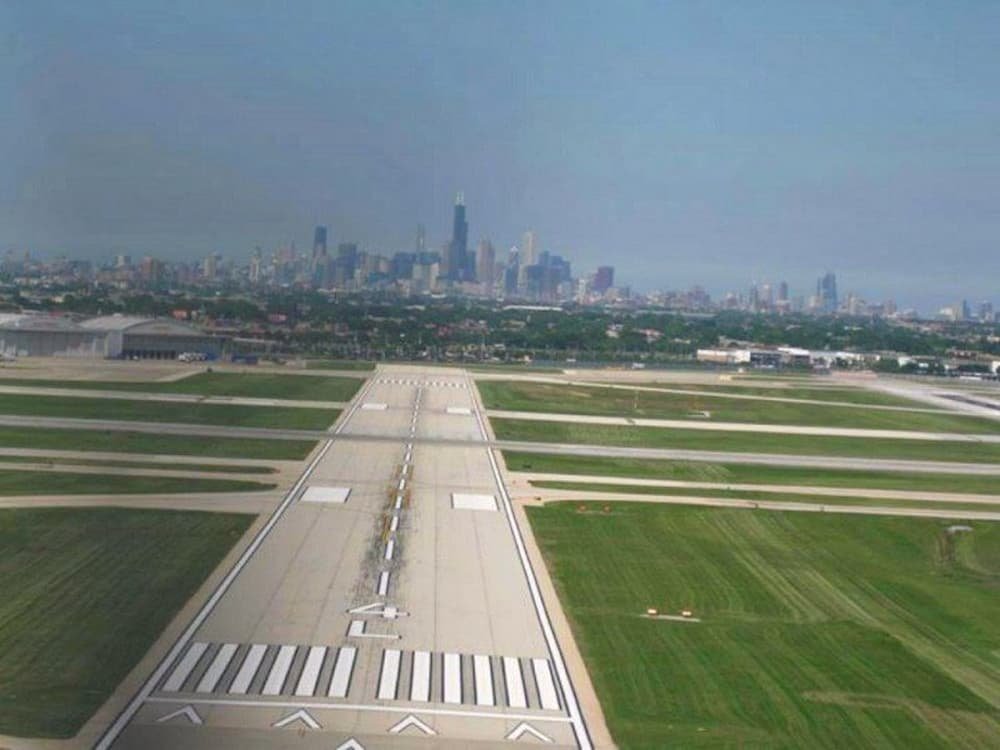
There are flight schools interspersed all over the United States. It is highly likely that almost everyone in the contiguous United States lives within an hour of an airport that contains a flight school. In large metropolitan areas, there is a high likelihood that a smorgasbord of flight schools exists to choose from. Unfortunately, flight training is sparse or cost-limited outside of the United States. This is the result of expensive insurance and fuel. Moreover, user fees are collected on each landing or use of navigational facilities. In fact, many trainee pilots travel to the United States to earn certifications. For example, Lufthansa Airlines sends their pilot cadets to Arizona for ab initio training.
There are medical requirements for certification, which widely vary depending on the certificate pursued. Before receiving the Private Pilot certification, at least a FAA 3rd Class Medical is required. It is important to note that the Sport Pilot and Recreational Pilot can “self-certify” medical airworthiness. Self-certify means that, if the pilot has a valid driver's license, no medical exam is needed and the pilot makes the determination if medically fit to fly. This is not recommended. There exists a litany of latent adverse medical conditions that could affect flight safety.
The 3rd Class Medical is much like a standard physical examination covering, in part, health history, blood pressure, urinalysis, hearing, and vision. Although not required, it is highly advisable to get a medical certificate before training. There have been a number of student pilots who insisted on starting training without a medical certificate and, after spending a large sum on flight training, found that there was a medical condition that was disqualifying. Medical Certification is a somewhat complex legal thicket, as is most aspects of aviating. Learn more about FAA Medicals here.
There are 4 certifications that new pilots work towards, but this is by no means an exhaustive list of the obtainable licenses:
This certificate requires no training to obtain. It is a certificate that, when endorsed by an instructor pilot, allows solo flight in aircraft before full certification is obtained. There will be restrictions on student pilot solo operations, which are determined by the Federal Aviation Administration and by the Flight Instructor performing the training.
An individual who is authorized to fly only Light-Sport Aircraft
A certification that allows operation of aircraft of up to 180 horsepower and 4 seats, in daytime and for pleasure only.
Allows the highest level of privilege and flexibility. There are no limits on the number of passengers you can carry, airspace traversed, and horsepower or aircraft class (class means single-engine, multi-engine, landplane, and/or seaplane). To fly more complex aircraft may require a trifle more training. Moreover, the private pilot is trained to a superlative degree compared to the aforementioned certificates. I highly recommend obtaining the PPL (Private Pilot License) over the others.
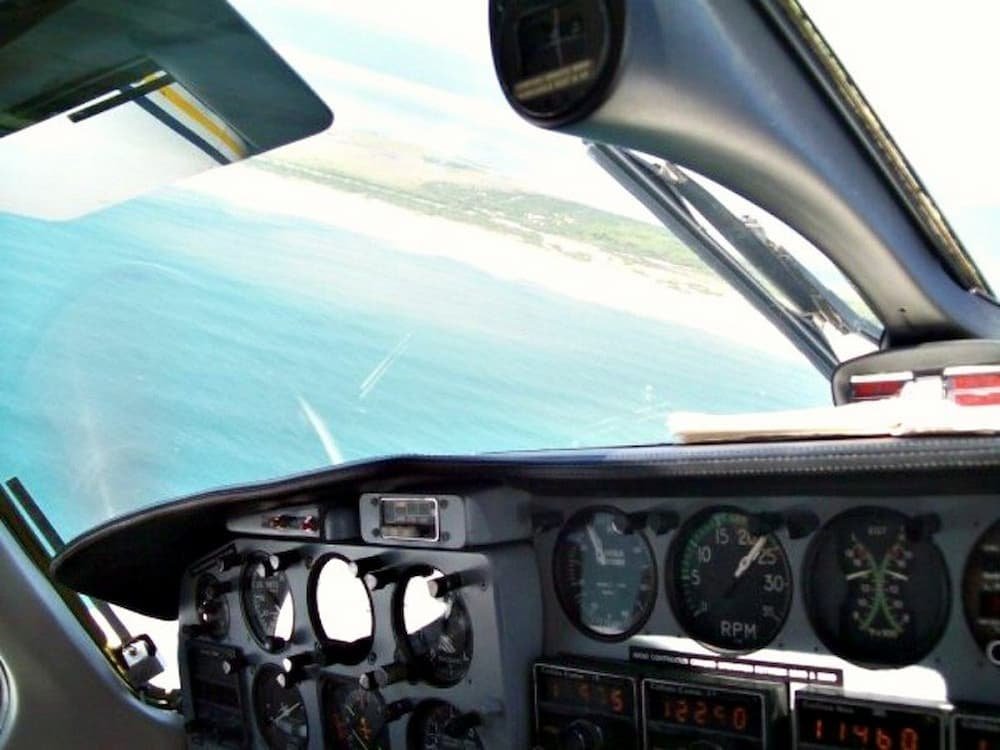
Flight Instructor matching is extremely important and you want to be sure that a candidate ultimately chosen is a good personality match. It is desirable to find someone who makes you feel safe and comfortable, has excellent communications skills, and who will foster a robust learning environment.
Some common considerations to contemplate when choosing an instructor are:
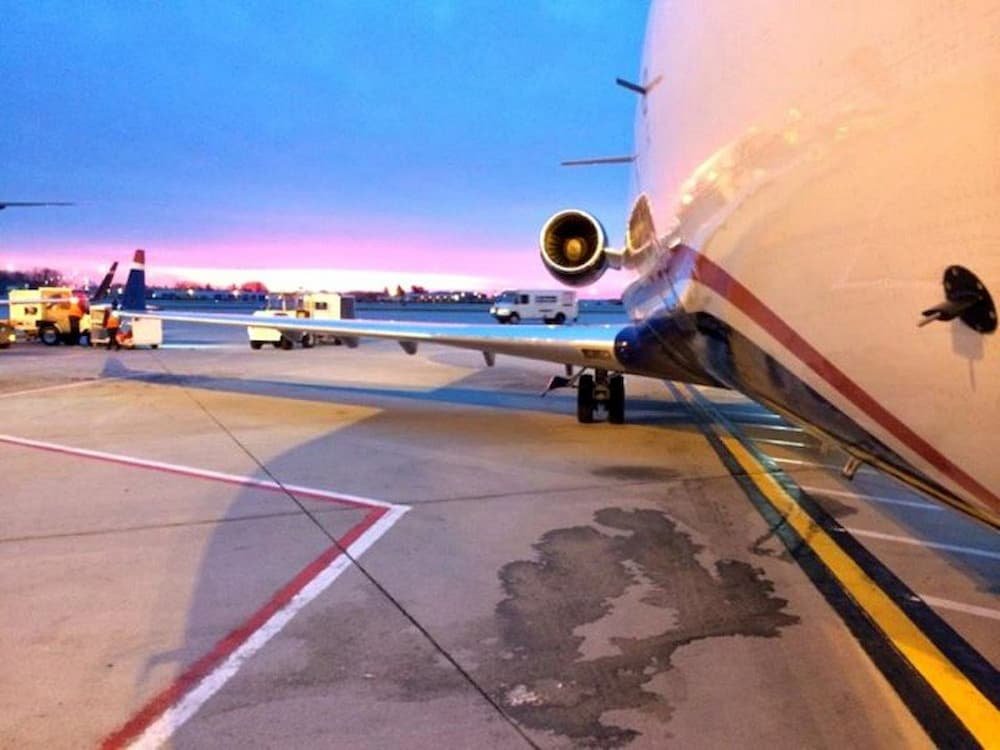
It may be worth it to fly the first few lessons with different instructors to discover the style of teaching most comfortable. This may cost extra, but it beats flying with an incompatible instructor and having to switch mid-training, which will end up costing more.
The flight-training environment can be stressful and it necessitates the instructor and student is on the same page. I firmly believe that personality matching is an important aspect of success and worth the time to mull over before the initiation of training.
For more detailed information on pilot medicals and certification see the following links:
The Federal Aviation Administration has developed many training tools since its inception. Downloadable free copies of FAA pilot training books are provided in PDF format on FAA.gov. Below are links to some of the books that are needed to learn to fly (If the link gets broken, search the hyperlinked term in your browser to find the PDF):
Aviating is an elite and exclusive club, with pilots comprising approximately 0.0021% of the population of the United States. Pilot training is a worthwhile journey and a watershed event that will challenge both intellectually and spiritually. Although the training can be an end in itself, the fruits of training will afford a lifelong journey of discovery and new means by which to explore the world.
Blue Skies and Tailwinds
Today, GoPro announced the latest edition of their popular cameras with the release of the Hero4 series. If you thought these cameras already packed a punch just wait until you take a peek at this new edition.
The company released three new cameras: The HERO4, with two levels of awesomeness called Black and Silver and a new budget-friendly option aptly named the HERO.

The HERO4 Black is the flagship of the bunch, delivering the next level of GoPro image quality, versatility and performance for professional photographers, videographers and action sports junkies.

The HERO4 Silver sets the new standard for ease-of-use with first built-in touch display. That’s right, no longer will you need to purchase the LCD Touch BacPac™ as it comes built-in with this model.
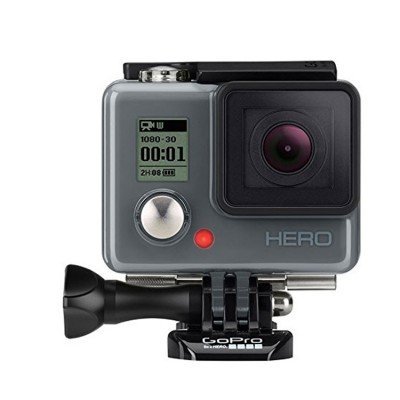
If you are looking for the perfect entry-level GoPro, look no further than the new HERO. This no-frills version still comes packed with enough features for the novice yet at the most affordable pricing ever.
Designed with simplicity in mind and built directly into a rugged, waterproof housing, HERO captures high-quality 1080p video at 30fps and 720p video at 60fps.
HERO captures the same eye-popping footage that’s made GoPro one of the best-selling cameras in the world at a retail price of just $129.99 USD firmly positioning it as the affordable option.
If that’s not enough to get your adrenaline pumping you might want to watch their latest promo video below!
Our intrepid explorers Mike and Alex were on a bike tour in a rough part of Buenos Aires during their recent trip to South America when a thief on a motorbike attempted to steal Alex’s expensive camera gear at gunpoint.
The entire incident was caught on the GoPro camera mounted on his forehead. The video has since gone viral with over 5 million views in the first 48 hours and media coverage worldwide. Not quite the exposure that the boys were looking for but a great way to take a bad situation and make it positive.
Situations like this happen all over the world but a little common sense goes a long way to ensuring your safety.
1. Make sure you don’t advertise that you are carrying expensive equipment. A lesson that can be used in everyday life and not just travel.
2. Always take out travel insurance and give the assailant what they want. Your life is far more valuable than any material good.
3. Learn some very basic phrases if you don’t speak the local language. While Alex may not have been able to understand what the assailant was saying, a basic phrase like “I’m sorry I don’t speak (insert language)” would have been helpful.
When planning a trip most backpackers spend hours and hours scouring the internet in search of any deal that can save them a few bucks. All this effort yet the moment the step onto foreign soil they spend unnecessary money, wasting cash in ways that are easily avoidable.
Today we want to help you stop the bleeding from your wallet and show you how you can save some hard earned money by simply not spending it in the first place. We have compiled a list of ten common expenses that you can easily avoid.
According to the U.S. Bureau of Transportation Statistics, the top 15 U.S. airlines pocketed over $3.35 billion in checked bag fees in 2013. That is an insane amount of money that we are just throwing down the drain. There is no real reason for most people to be checking luggage these days. Before you travel, take a look on the airline’s website and see what their weight restrictions are, then pack smart in your carry-on and you should never have to worry about these fees again.
If for some reason you do need to check your bag, do some research. Many airlines allow 1 free checked bag, especially if you are a member of their frequent flyer program. If you are moving overseas you can often save some money on airline fees by shipping stuff over.
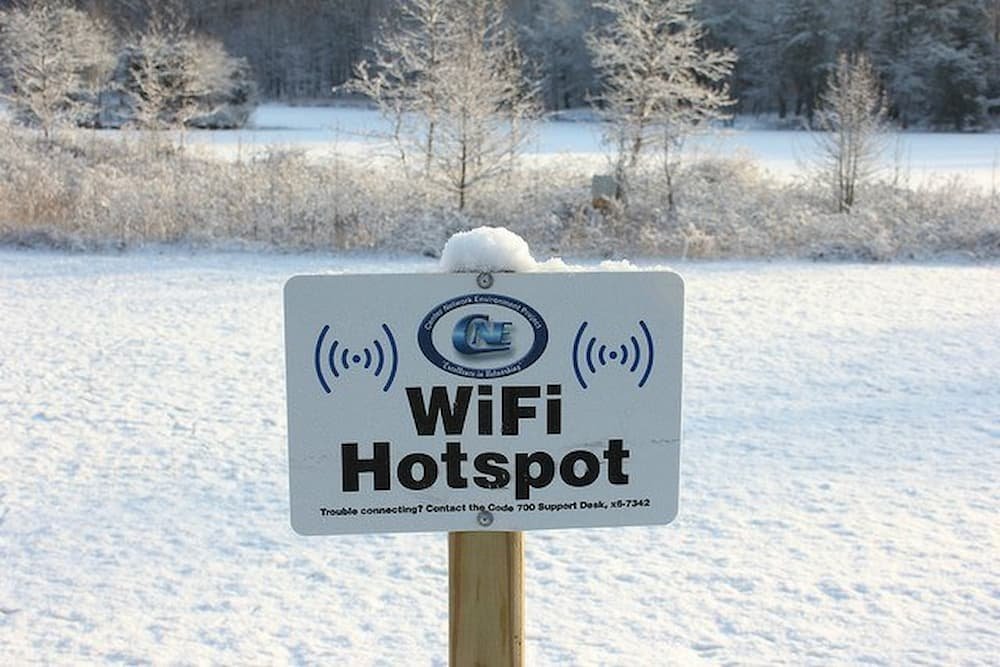
Unless you are traveling to the far reaches of the earth you should be able to find a free WiFi hotspot. First point of call should be your hotel or hostel, simply ask at reception for the password. If they don’t give you free access try the local library as most will offer up a connection these days.
Otherwise head for the local food court, cafe or fast food joint. McDonalds is one of the easiest places to surf the web in the comfort of a nice booth.

Yes, we agree that reading a good book is a great way to pass the time when you are traveling but buying a guide like Lonely Planet is something you simply don’t need to do anymore. In this modern day and age you can hold 10,000 songs on a device not much bigger than a credit card. You can also hold thousands of travel guides or books on a tablet. There are tons of travel sites that allow you to download free destination guides and even more apps on offer. Simply pick your favorites and away you go.
If you really love the old-school feel of a book, visit a local library. Many hostels will have their own small selection of books that you can use. Just remember to leave it for the next person.
Looking for something great to read next? Check out the 52 Best Books for Travelers.

In the spur of the moment we all make some questionable purchases. While it may seem like a great idea at the time, no one really wants that snow globe or tacky keyring. If you must, send a postcard with a nice note. Your friends and family will appreciate the effort and thought that went into it.

It is important to know that some hostels will charge you for bedding like sheet covers and also for a towel. To avoid the cost, pack your own! A simple bedsheet and a small microfibre towel will not take up much room in your pack but it could save you from those unwanted extra fees.

With the advances made in WiFi call quality, there is no real need to pay for that call home. Services such as Skype, Viber, and Google Hangouts are a great way to communicate with your friends and family while you’re away. Just make sure you set it up on their computer before you leave and give them clear instructions on how to use it.

Are you serious? Low-cost airlines such as Ryanair charge £2 per person per flight. On a return flight, the money you save could pay for an extra meal, or even a bed in many cities. Unless you have priority pass credit cards, which include priority boarding for free, it's usually not worth paying extra for this service.
The plane isn’t going to leave you at the airport if you are the last person to board the flight. The only people who really NEED to be boarded first are families with children, the elderly, or the disabled. If you fit one of these categories you don’t need to pay for priority boarding anyway.

If you know that you have to pay for the food on your flight pack your own. Not only will you have control of the food you get to eat but you can eat whenever suits you and you save some money. Win-Win-Win!
It is probably not a bad idea to avoid airline food anyway as it usually is very high in sodium which will dehydrate your body. Read more on our guide – Everything You Need to Survive a Long Flight.

While this one may seem strange to include, you would be surprised how many people will hastily pay for an umbrella during the wet season.
Our Tip: If it starts to rain, find the nearest bar and tell the bartender you think you left your black umbrella in the bar and can they check. The chances are pretty good that they have a black umbrella in their lost and found (think about it, when you have had a few drinks it is easy to forget your umbrella).
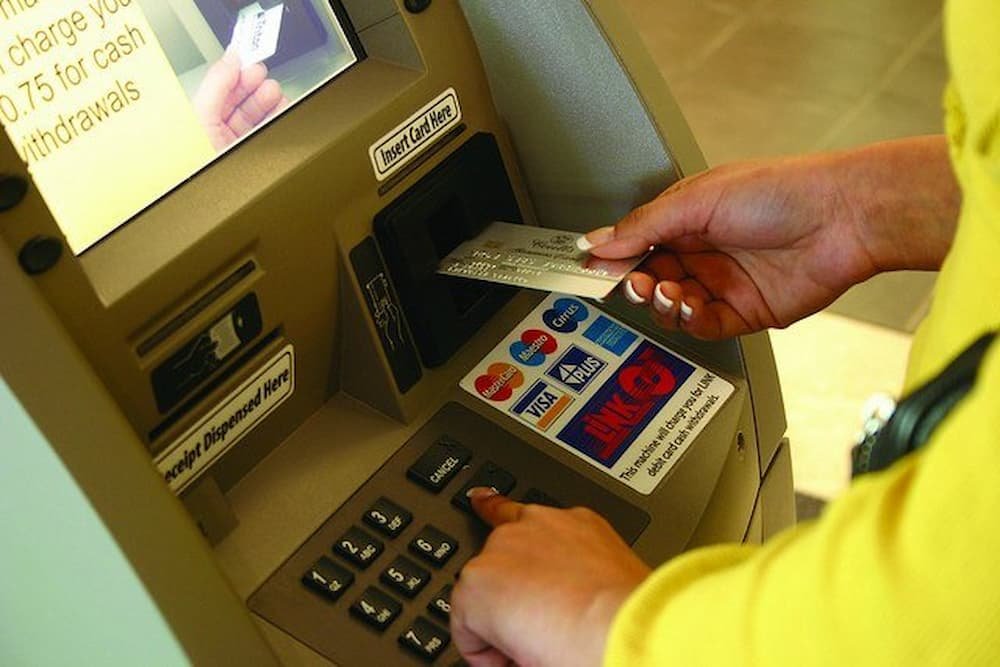
Unfortunately banks never seem to know when enough is enough. They seem to find new ways to gouge us at every opportunity. Don’t be surprised to find an extra fee or more added onto your statement when you return.
Most private ATM’s will charge you just for the privilege of using them. Go to Vegas and you could be up for as much as $5 each time you pull out cash.
So what do you do? Well, our first tip is to avoid private ATMs and where possible only take money out from your own bank. This is a challenge when traveling internationally and to remote areas so look for cards that waive any foreign transactions.
Now we could have included restrooms/toilets in our list but there are still many places in the world that do charge for the convenience of a clean toilet. We’re pretty sure that when the time comes you will pay that fee!
Have we missed any others? Tell us what things you won’t pay for in the comments section below.
A while ago on our Backpacker Travel Facebook page we asked you what you wanted more of. The overwhelming response was for more backpacking tips and pictures worldwide.
Each year thousands of travel lovers, like you, decide to backpack our way through various countries in search of excitement, adventure, and freedom. Twenty to thirty years ago, backpackers were predominantly white, middle-class young people, though this has now changed considerably.
Here’s our list of ways that you can backpack more sensibly, safely, and responsibly – to find a balance between having fun, returning home safely, and positively contributing to local communities so you have a better all-around backpacking experience.

If you’re backpacking with a group of your friends, take it in turns to be a designated “responsible” one, so when you’re out drinking in an unfamiliar place, someone is always on the lookout for trouble and makes sure everyone gets back to the hostel safely.
The best advice we can give is to use your common sense, but also make sure you don’t listen to all the horror stories you hear or you will never leave your hostel room.
Here are a few basic points of advice from the Foreign Office:
So easy to do in this day and age as most places have internet cafes or offer WiFi. Worst case, use a telephone.
You may think it’s hard to get away from the tourist trail if you're basing your trip on Lonely Plant or any of the other guide books but being prepared can help prevent you from getting in trouble. They can be vital for providing maps when you first get into cities, allowing you to be prepared before you arrive and aware of scams and no-go areas.
Seems pretty obvious, but especially true in South American cities apparently.
If you don’t have valuable possessions to worry about you’ll be able to relax and have a much better time.
Obviously don’t carry all your cash with you, we used a Nationwide Debit card as they're one of the few who don’t charge you for transactions abroad. We found traveler's cheques increasingly useless though they were of use in some of the more remote areas.
Do make sure you have some money though, if someone does try and mug you they may get pissed off if you have nothing to give them. We also suggest you carry a “dummy wallet” with small change and any additional kept in a money belt. There’s nothing more obvious than going to pay for a snack in a market and then sticking your hands down your pants flicking through wads of cash.
No one likes to lose possessions but it is important to remember these are only material things, nothing in your bag is worth risking your life for. Get insurance then it won't matter!
If someone asks simply play the dumb tourist card and say you can't remember!
By simply following these basic principles, you are already one step ahead of most travelers out there and well on your way to a worry-free journey.
For even more in-depth tips, check out our Backpacker 101 Guides.
