Traveling can be really expensive. But once you get bitten by the travel bug, you can’t seem to help yourself. Wanderlust takes over rationality as you embark on an adventure. However, you should not live like a pauper in order to save up for a trip.
Preparing for a trip should be a fun and exciting experience, money woes just dampen your excitement. So here are 10 tips to help you save (and make) money on your travels!
It may be impossible to check the price of every single airline flying to your destination. Instead of manually tracking 20 airlines individually, use Skyscanner or Kayak to find the cheapest flights! Learn more from our previous post – How to get a deal when booking.
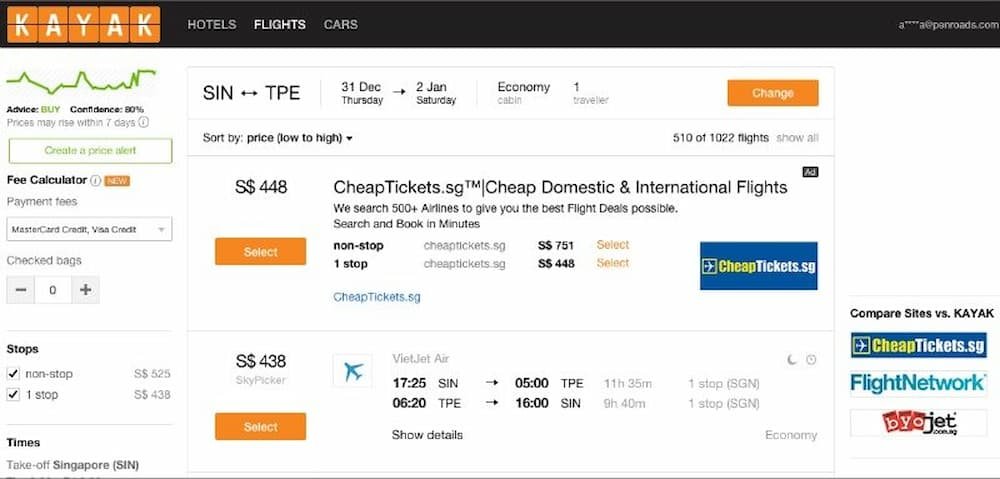
Sometimes it may be cheaper to book a flight to a city that is past your destination and get off at the transfer airport. Skiplagged, is a great site that searches for these types of fares. They even got sued by United Airlines because the airlines don’t want you using this method. This method can be difficult to find a fare that fits your itinerary since the system only works if your destination is a hub city of the airline you are flying and you have no checked baggage.

Some websites offer refunds if flight prices drop below the price that you purchased your ticket at. To track flight prices use websites such as Yapta to help keep track of ticket prices.
Unfortunately, this service is currently only available for a selection of North American-based airlines but it is worth noting.

Transport within a city can be really expensive. Buying a transport card could certainly help you save money in some major cities. For example, the London Oyster Card has a daily maximum cap so you won’t have to pay more after exceeding 6.40 Pounds. This is very beneficial if you plan on taking a bunch of trips in a single day.

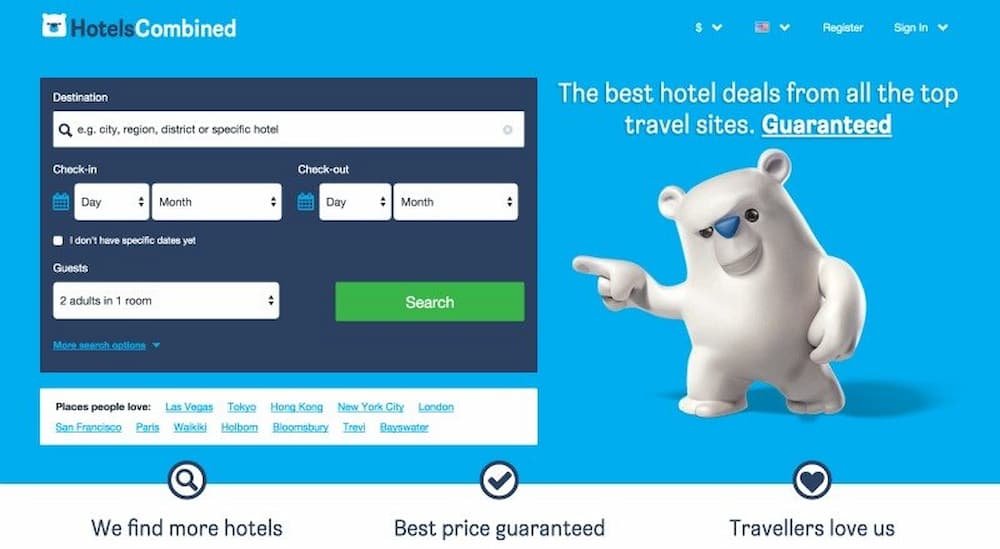
There are a number of sites that let you search for, and book a hotel room at a discounted rate (often as cheap as a hostel). Rooms can be sorted according to price, the number of stars, reviews, and a variety of other filters. It is so much simpler to compare and check room rates.
Backpacker Travel has partnered with one of the biggest and best hotel comparison sites – Hotelscombined.
If you are looking for a home away from home, Airbnb is definitely the place to be. Why not book an entire holiday villa while traveling to Bali with your buddies on a surfing trip? It is so much cheaper compared to booking multiple hotel rooms. In addition, you have all the amenities you need such as a kitchen, multiple showers and in some cases, a pool.
Bonus: If you haven’t used Airbnb before, Backpacker Travel are giving you a $20 credit to use on your first booking. Claim your credit here.

Try your hand at working on a farm or just by helping locals who need a hand. Many sites offer accommodation and possibly board as well in return for work. The most popular ones include WWOOF, HelpX, and Workaway. The duration and the benefits of each job depending on the Host. Some hosts offer accommodation and activities after long working hours while others offer a meal for shorter working hours.

Use your skills to support your travels! Work some of those creative juices and earn some extra cash while doing it. Sites like Freelancer, UpWork, and Fiverr. A day of work in exchange for a week of fun and adventure? Where do I sign up!

Use a website such as StudentUniverse or STA Travel to find discounted flights. Membership is generally free and really simple. All you need to do is to verify that you are a current student (or faculty member), but these tickets save you on average $100. It’s great if you are planning to travel while on an exchange program or during summer breaks.

As we grow older or busier with our lives it is hard to pack up and leave for an adventure. Schedules clash. Destinations don’t match up. Why not join Penroads and make a new friend to travel the world with? Having a travel buddy could bring double the protection and savings. You can easily share fuel costs if you are road tripping or food cost when cooking at the hostel.

Traveling doesn’t have to be expensive. There are loads of tips and hacks that can help you save money while you travel, but sometimes the information can be a little overwhelming.
That’s why the team at Penroads decided to make an ebook filled with all the different hacks that will help you travel cheaply for a more meaningful experience. The ebook is completely free! Feel free to share it with your family and friends if you think that it is useful.
“Honey I’m just off to the loo”…..It’s one of those things that we all do, it’s unavoidable, we use the toilet right. Well on our travels around the world we have seen more than our fair share of toilets and heard them called by many different names.
Today we would like to showcase to you all, a selection of some of the most unusual and funny toilet signs from all over the world and the names we like to call our toilets.
This is sure to put a wry smile on your face. Enjoy!


Pack your bags, grab your ticket and head off on your next adventure. Seems simple enough right?…… well it can be, but traveling unprepared and uneducated can also be dangerous.
While the thought of traveling alone can seem daunting, it can be an incredibly liberating experience. So much so that once you have experienced it, you may never want to travel with a companion again. Starting off solo does not necessarily mean that you will travel alone. There are many travelers on the road, traveling by themselves for the same reasons you are, which makes it easy to connect.
Traveling alone exposes travelers to people they may never have encountered had they been traveling in a twosome yet it can also be significantly more dangerous than traveling with another person. Below are the pitfalls and joys of solo travel.

The very reason you decided to embark on this trip is to see the world on your own terms, so why have someone holding you back from crafting the very best possible trip for you? Traveling solo affords travelers total flexibility.
Some backpackers prefer to stick to a regimented itinerary while others like to go with the flow. Traveling solo is the ultimate form of self–indulgence as it allows you to do what you want when you want without worrying about the needs of anyone else but you.
Traveling in a group, even in a twosome, can often close oneself off to new experiences and people. As a solo traveler, you are more open to meeting new people along the road and chatting up the locals. Not only will you encounter new and interesting people that you may never have met traveling in a pack but these people will also expose you to some new experiences.
For instance, while traveling solo in Spain I met some Swedish guys who were playing in a beach volleyball tournament and one of their players was injured. I ended up filling in and later flew to Sweden to meet up with them again. I likely would never have gone there had I not been traveling on my own.
Depending on the type of traveler you are, this may be either a positive or negative aspect of traveling on your own. As a solo traveler, you will have long stretches of time where you have no one to talk to.
This is always a good time to reflect upon your life, trip, and what you hope to accomplish once you return home. For some, this may lead to feelings of loneliness while others relish the time away from others.
It’s always nice to have a sounding board to bounce ideas off of; for instance, is this travel agent trying to scam me, is this a good price or is getting into this sketchy car a good idea? When you are traveling alone you need to rely solely on your own instincts.
When traveling alone you always need to be more cognizant of your safety this includes: indulging in sketchy food; having one too many drinks; to traveling to remote regions where there are little to no other travelers. Women should be particularly careful when traveling alone. Some ways to stay safe are:
While it may be exhilarating to meet new people, at the end of the day you return to an empty room and are ultimately by yourself. Undoubtedly, even the most independent travelers have moments where they wish they could share an experience with another individual; whether it’s a mesmerizing sunset or a lonely meal. But don’t sweat it, these moments are few and far between and you will likely have company whether you like it or not.
Since single rooms are generally more expensive than double rooms, solo travelers should be prepared to pay a few extra bucks. Solo travelers can reduce the cost of their accommodation either by finding a roommate or sleeping in a dorm. Generally, sharing the price of a room brings your cost down by half.
It’s always a good idea to negotiate the price of your room beforehand and see if the hostel owner is willing to give you a break.
Don’t let your fear of the unknown keep you from the open road. For more tips on meeting people, see – How to Make New Connections on the Road.
What does it take to become a backpacker? This is a question I have heard a thousand times so I figured it’s time to give it a crack and offer some advice.
To start out, what is backpacking anyway? Backpacking is an adventurous style of traveling for people who are interested in discovering new places, activities, and people on a limited budget. Now, this is not to say that you have to be totally roughing it to be a backpacker as there are some fantastic low-cost options out there these days.

Backpacking is a great way to experience different countries, and cultures, meet new and interesting people. It’s not very difficult to be a backpacker, but you do need to possess some qualities before you start your journey.
A backpacker needs to be independent. Typically, backpacking is done either alone or with a partner. My personal suggestion is to backpack solo at least once as you will never get a better opportunity to learn about who you are and who you want to be.
You have to be willing to take some risks and take care of yourself. That includes booking a bed, seeking information, and sorting out your meals and transportation. It’s hard to succeed if you always depend on others to do the job.
Being prepared is essential for backpacking. You need to have a plan and research information (from the internet or travel guide) and plan your journey. Without planning, you might end up in northern Finland without knowing the way back. Plan your travel route and destinations wisely so that you can save time and money. Don’t forget to be smart in packing your stuff. You might want to save space and reduce the weight of your backpack.
Most importantly, you must be willing to sacrifice. Backpackers face hardship and challenges. They have to travel for long hours, endure bad weather, and cope with nasty local people with suspect intentions. This is not your honeymoon!!
Here are some funny, yet common stereotypical characteristics.

The scribbled stories from Singapore, tales from Thailand, and memories of amazing people and places will be what you treasure when you’re in your 50s. Think of it less as a journal or diary and more as the story of your travels. Your own little book!
One of your cheapest investments that are guaranteed fun is a pack of playing cards. It’s the best way to make friends and a lifesaver if you’re staying in a hostel with no TV on a rainy day.

If you are staying in a country for a while, purchase a local sim card for your mobile phone rather than switching your global roaming on. It’s a lot cheaper and you don’t need to pay for calls you receive.
Thousands of people use hostel showers and one of the most common travel complaints is a bad case of tinea.. ahhh the itchiness.

It comes in so handy in so many ways, and not just a toilet paper replacement.
Many cities have free admissions or cheaper ticket days to galleries, museums, and cinemas. Be aware though, that some attractions can be closed on certain days of the week.. this is especially true for museums and art galleries so plan ahead to avoid disappointment. Your best bet is to visit the local tourist info and pick up some flyers.
Most city libraries have free Internet access so you can brush up on your next destination or plan and book the next part of your trip.
If you are traveling through a hot climate make sure you carry insect repellent. Those little bastards that bite will have you in bits before you even know it! We all know what it’s like to spend a sleepless night waving off those annoying little buggers.

So as you can see you don’t really have to have a lot of money to travel, contrary to what most people believe. Just stay in control of your budget and your time. If you really want to save, make friends with the locals of the countries you will visit as they will tell you how to go to the must-see places, where to eat cheaply and how to travel like a local. Stay with them if possible and get to know their culture. The friendships that you will gain are one of the most important things about backpacking.
Remember that every day is your free time – you have all the freedom to discover new things, new places, and new people. These are the times when you don’t have to worry about waking up early to go to work, no boss to deal with, no deadlines, and no responsibilities. Backpacking is an attitude, a carefree approach to traveling and most of all it is a life-changing experience.
Just think…you could be here!

There you have it, everything you need to know about becoming a backpacker! Click here for the best backpacking equipment.
Every person has different tastes in terms of the place they want to stay. Whether traveling with friends, a partner, or alone there are several key elements to be considered when making your decision about where to rest your weary head. We have put together a list of the top nine things to take note of when booking a hostel.
Nowadays it’s pretty easy to find user ratings on the internet. Most decent hostels have at least equipped themselves with a basic website so you can suss out what other travelers think of them. Obviously, people who love the hostel and have had a positive experience will give a high rating but more importantly, you will find that people will tend to post comments if they have had an unpleasant experience.
It’s a sad part of life these days that we are eager to give negative feedback at the drop of a hat, may occasionally give positive feedback if we were provided an outstanding experience but are more reluctant to comment if the stay was just pleasant and met our expectations.
One note I will add here is to average out the reviews. It’s becoming all too common for people to post false negative reviews for their competition and phantom positive reviews on their own place. Best to disregard the top few and bottom few and see what’s left.
Due to a tight budget, people tend to look at the price of the hostel first before anything else. Some people believe that the price alone can tell what the hostel is like. Instinct would tell us that an expensive hostel is a better place to stay than that low-rate hostel (I’m sure you will agree that this is not always the case). Still, this may not be your only basis when booking for a hostel because more often than not there are cheap hostels that offer excellent services that are keen to grab your business from their higher-priced competitors.

The ambiance of the hostel is the place’s atmosphere, its heart, and soul. Is the place quiet or rowdy? Is it an older crowd or teenagers backpacking for the first time? Location can be a big factor in the ambiance of the hostel too. For example, if it is close to the nightlife you will more than likely find a younger, more social crowd.
For me personally, this is probably the key factor in determining where I stay when traveling. The accessibility of the place is really important. Is the place near the airport or transportation if – I’m just transiting? How close are the major sites and attractions? Is it in a noisy part of town and I will be kept awake all night by the sound of sirens?
The location can have an effect on other factors too. If the hostel is not in the center of town or close to the sites, the money you may have saved on the room will be wasted on the transportation needed to get you there.
Consider how big the rooms are and how many people will you be sharing with. Hostels usually offer more than one room type so find the one that’s best for you. You can opt to stay in a single room, a double or multi-share. It is also important for you to know if the rooms are same-sex or mixed (especially for girls looking for that peace of mind at night).
If they have separate rooms for men and women, make sure that they have rooms for couples too – you don’t want to wake up to the sound of grunting in the bunk next to you.

Although you may be out all day and the amount of time you actually spend in your room is minimal, I’m sure you will agree that getting a good night's sleep is very important.
What facilities does the hostel offer? Like how many bathrooms do they have? What about the electricity and water and some other facilities like the kitchen, swimming pool, and a bar? These days everyone keeps in touch via the web, so do they have free or paid internet access?
Safety is one of the most important things to be considered. Does the hostel have security guards, especially during the night? Is the place secured from fire and does it offer safety from some other unexpected calamities?
What about the security of your belongings? Is there a safety box you can keep your valuable items like your passport?
Some hostels offer extra services like WiFi, sheets, dinner or breakfast, towels, free pick up from the station or airport, etc. Anything you might be getting included in your room rate needs to be factored into the total end cost.
There are hostels that charge for some standard services like using a sleeping bag or a sheet, for meals, and sometimes for using the shower.
It is recommended that you research the hostel you want to stay in, to have a comfortable stay and ensure you are getting ‘bang for your buck’. One of my favorite hostels that I have had the pleasure of staying at was the Wombats The Base hostel in Vienna. This place has it all….check out the bar.

If you have any other tips we would love for you to share them in the comments section. Keep traveling!!
The times are a-changing. Remember the good old days when you could pack your suitcase full of clothes and other items, show up at the airport, and be greeted by a friendly counter clerk who would check your luggage for your flight for free. Many things have changed since then and even more so since 9/11 but today we are going to focus on the growing trend of traveling with carry-on luggage only.
With the introduction of checked baggage fees, an increasing number of people are switching to using a carry-on bag as their only luggage. This trend comes with a number of pros and cons that we will discuss here today. We invite you to join in the conversation by having your say in the comments section below.
For stylish and durable carry-on luggage, check out Nobl Travel — designed to make traveling easier and more efficient.
How many times have you seen a plane with an empty overhead compartment lately? I’m guessing not at all unless that plane happened to be well under capacity. There are indeed many complications that arise from the airline's decision to charge for checked luggage.
Recently on a flight from Seoul to Vancouver, I arrived a little late to board the plane (let me clarify – I was there well before the specified boarding time but towards the end of the lineup) and when I finally boarded and went to stow my backpack in the overhead locker above my seat I was confronted with numerous ‘wheelie bags’ taking up the whole space. So I moved to the next locker…..and the next….and again.. (you get my point). I finally had to store my bag in the flight attendant's personal compartment at the rear of the plane.
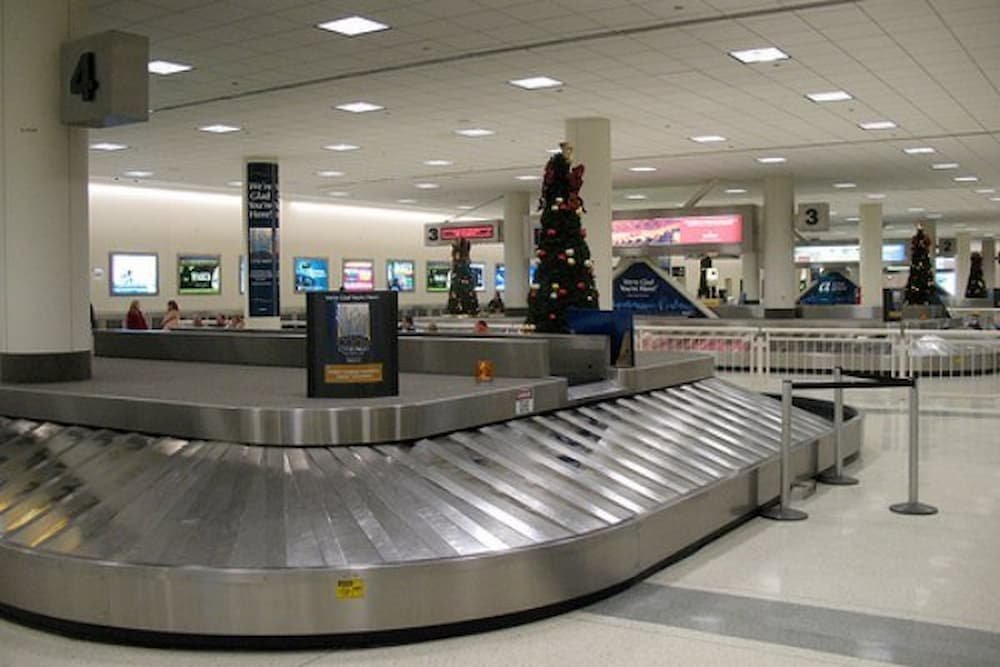
The experience was not only frustrating but also rather time-consuming and no doubt held the plane up for a few unnecessary minutes. Now don’t get me wrong I’m not a hater of carry-on, in fact, I am an advocate of the ‘less is more’ principle but something seriously needs to change here.

So why are the airlines forcing us to travel lighter? Well, the easy answer is that it is extremely profitable for them to do so. Checked bag and related fees netted $6 billion for US air carriers alone in the first 9 months of 2010, federal statistics show.
Now they are looking to capitalize even further. Did you know that several airlines have been experimenting with the carry-on bag fees now too? Spirit Airlines is charging between $20-40 USD per bag, which boggles my mind. Unless you have the most spacious pants pockets in the world, the airline has got you where it wants you — shelling out cash for something you just can’t avoid.

It’s time to have your say… how do you prefer to travel? Carry-on or checked? And what do you think about the airline fees?
Today we ask the age-old question… how important is good service versus getting a cheap ticket?
Recently I purchased a number of flights with the low-cost airline Air Asia through their website. I have been planning my trip to Malaysia and India for some time now and even though I am not staying in luxury hotels, the budget was starting to blow out. So when I saw an advertisement online for a massive sale on airfares with Air Asia I was naturally excited to see if I could bag myself a bargain.

I ended up booking six flights in total for just under $1,000 Australian dollars (AUD) including taxes and all the associated costs (we will address this a little later). Now I need to tell you that I work as a travel agent so I’m well aware of the terms and conditions that are set by airlines and I make sure to check the conditions of the fare before booking. It states that there will be no refund if you cancel your ticket but you can make changes to the flights at an additional cost.
Two of the flights I purchased were from Kuala Lumpur to Kota Kinabalu return as I was looking to travel around Sabah. Unfortunately for me, being a travel agent turned out to be a disadvantage once I started looking into what I was going to do in Borneo. Most of the trips we plan in the region are for families where the best accommodation is in Kota Kinabalu, like the Shangri la Rasa Ria. I was looking for an eco-adventure though, which seems to be on the opposite coast around Sandakan and therefore the flights would be best to fly into Sandakan airport.
I went about calling Air Asia’s reservations line to make the change to my flights. After more than two hours of waiting on hold, I was told that the change was impossible and I would need to forfeit my ticket and purchase a new one. “Not good enough”, I thought so I asked to speak to a supervisor to try and talk some sense. I was willing to pay a change fee and any fare difference, don’t get me wrong, I wasn’t looking for something for nothing.
The reservation girl promptly advised me that there were no supervisors available and that I would just be getting the same response from them anyway. Well as you can probably imagine this infuriated me and I demanded to speak to someone senior who could help me out. She then offered to get someone to call me in the next 12 hours. About an hour or so later I received a call from the so-called supervisor who quickly and repeatedly explained, in detail, the fine print of their changes which states you are not allowed to change the route. I then asked that I be refunded the taxes and services charges (such as meals, seat reservations, and baggage charges) as these were not part of the flight ticket.
To cut a long story short the response was continually a negative one and not a single staff member would help me out. All this drama over the $120 AUD they stood to gain for my cancellation, where I was willing to pay more than that to make the change……. Now they have not only lost a customer (before I have even flown), but I will make sure to tell my network of friends and family not to travel with them.
First, it’s really important to understand that bad airline service is more of an overall attitude than one specific incident. Most experienced travelers can handle a delayed bag or missed flight if there’s a helpful, even sympathetic, and knowledgeable professional on the other side of the counter who sincerely tries to help and seems to care.
Perhaps consumers are tired of taking the time to complain about a system that seems to need a total overhaul. Many have accepted bad airline service as a fact of life. As long as you obsess over low fares as the overriding factor in your decisions to buy, you’re going to get what you seem to demand in the marketplace: a cheap but lousy product.
Is there any hope for relief on the horizon? It’s not easy to see. Clearly, a majority of travelers want the cheapest possible tickets, no matter what. As long as that mindset persists, lousy airline service is inevitable.
So will it end up that you will arrive at the airport ready to check-in and the staff swiftly duck for cover behind the counters…….. I know that I will be basing my flight decisions on service now rather than price alone.
Sometimes all we need is a little nudge to inspire us to venture into new and unfamiliar places. I have compiled a list of interesting and sometimes funny travel quotes that will be sure to entertain you. Some are profound in their meaning while others are purely observations that we can all relate to.
"Travel is glamorous only in retrospect"
– Paul Theroux
"If you wish to travel far and fast, travel light. Take off all your envies, jealousies, unforgiveness, selfishness, and fears."
- Glenn Clark
"Home is where the heart is, and my heart is wherever I am at the moment."
— Lily Leung
"Avoiding danger is no safer in the long run than outright exposure. Life is either a daring adventure or nothing."
— Helen Keller
"A journey is best measured in friends, rather than miles"
– Tim Cahill
"I see my path, but I don’t know where it leads. Not knowing where I’m going is what inspires me to travel it."
— Rosalia de Castro
"We live in a wonderful world that is full of beauty, charm, and adventure. There is no end to the adventures we can have if only we seek them with our eyes open."
— Jawaharal Nehru
"How beautiful it is to do nothing, and then rest afterward."
— Spanish Proverb
"No matter where you go, there you are"
– Confucius
"Our happiest moments as tourists always seem to come when we stumble upon one thing while in pursuit of something else."
— Lawrence Block
"One of the great things about travel is that you find out how many good, kind people there are."
— Edith Wharton
"To travel is to discover that everyone is wrong about other countries"
– Aldous Huxley
"To travel is to take a journey into yourself"
— Danny Kaye
"Without new experiences, something inside of us sleeps. The sleeper must awaken."
– Frank Herbert
"If at some point you don’t ask yourself, ‘What have I gotten myself into?’ then you’re not doing it right."
— Roland Gau
"I travel light. I think the most important thing is to be in a good mood and enjoy life, wherever you are."
– Diane von Furstenberg
"If you reject the food, ignore the customs, fear the religion and avoid the people, you might better stay at home."
— James Michener
"He who is outside his door already has the hardest part of his journey behind him."
— Dutch proverb
"The greatest reward and luxury of travel is to be able to experience everyday things as if for the first time, to be in a position in which almost nothing is so familiar it is taken for granted."
— Bill Bryson
"If you look like your passport photo, you’re too ill to travel"
– Will Kommen
"Long-term travel doesn’t require a massive bundle of cash; it requires only that we walk through the world in a more deliberate way."
— Rolf Potts
"Stop worrying about the potholes in the road and celebrate the journey."
– Fitzhugh Mullan
"I haven’t been everywhere, but it’s on my list"
– Susan Sontag
"A person needs at intervals to separate from family and companions and go to new places. One must go without familiars in order to be open to influences, to change."
– Katharine Butler Hathaway
"A journey of a thousand miles begins with a cash advance."
- unknown
"I have found out that there ain’t no surer way to find out whether you like people or hate them than to travel with them"
– Mark Twain

"The whole object of travel is not to set foot on foreign land; it is, at last, to set foot on one’s own country as a foreign land."
– G. K. Chesterton
"A ship is safe in the harbor, but that’s not what ships are built for."
– Gael Attal
"Travel makes one modest, you see what a tiny place you occupy in the world"
– Gustave Flaubert
"Once in a while it really hits people that they don’t have to experience the world in the way they have been told to."
– Alan Keightley
"Travel is like love, mostly because it’s a heightened state of awareness, in which we are mindful, receptive, undimmed by familiarity and ready to be transformed. That is why the best trips, like the best love affairs, never really end."
— Pico Iyer
"Man cannot discover new oceans unless he has the courage to lose sight of the shore"
– Andre Gide
"Do not seek to follow in the footsteps of men, instead, seek what they sought."
— Matsuo Basho
"What lies behind us and what lies before us are tiny matters compared to what lies within us."
— Ralph Waldo Emerson
"If you come to a fork in the road, take it"
– Yogi Berra
"Heroes take journeys, confront dragons, and discover the treasure of their true selves."
– Carol Pearson
"Let your heart guide you. It whispers so listen closely."
– Unknown
"Don’t let the noise of others’ opinions drown out your own inner voice. And most important, have the courage to follow your heart and intuition."
— Steve Jobs
"The further one goes, the less one knows"
– Lao-Tzu
"Two roads diverged in a wood, and I – I took the one less traveled by, and that has made all the difference."
— Robert Frost
"Travel is like a giant blank canvas, and the painting on the canvas is only limited by one’s imagination."
— Ross Morley
"Not until we are lost do we begin to understand ourselves"
– Henry David Thoreau
"Through travel, I first became aware of the outside world; it was through travel that I found my own introspective way into becoming a part of it."
— Eudora Welty
"You lose sight of things… and when you travel, everything balances out."
— Daranna Gidel
"The great difference between voyages rests not with the ships, but with the people you meet on them."
— Amelia E. Barr
"All journeys have secret destinations of which the traveler is unaware."
— Martin Buber
"When preparing to travel, lay out all your clothes and all your money. Then take half the clothes and twice the money."
– Susan Heller
"Though we travel the world over to find the beautiful, we must carry it with us or we find it not."
— Ralph Waldo Emerson

"A man of ordinary talent will always be ordinary, whether he travels or not; but a man of superior talent will go to pieces if he remains forever in the same place."
— Wolfgang Amadeus Mozart
"If you’re not living on the edge, you’re taking up too much space."
— Unknown
"A journey of a thousand miles must begin with a single step"
– Lao-Tzu
"Don’t be a tourist. Plan less. Go slowly. I traveled in the most inefficient way possible and it took me exactly where I wanted to go."
— Andrew Evans
"Not all those who wander are lost."
— J. R. R. Tolkien
"When you’re traveling, you are what you are right there and then. People don’t have your past to hold against you. No yesterdays on the road."
– William Least Heat Moon
"Bizarre travel plans are dancing lessons from God."
– Kurt Vonnegut
"The first condition of understanding a foreign country is to smell it."
– Rudyard Kipling
"Take only memories, leave only footprints."
– Chief Seattle
"It is better to travel well than to arrive"
– Buddha
"I had rather have a fool to make me merry than experience to make me sad and to travel for it too!"
– William Shakespeare
"I never travel without my diary. One should always have something sensational to read in the train."
– Oscar Wilde
"Perhaps travel cannot prevent bigotry, but by demonstrating that all peoples cry, laugh, eat, worry, and die, it can introduce the idea that if we try and understand each other, we may even become friends."
– Maya Angelou
"We are what our thoughts have made us; so take care about what you think. Words are secondary. Thoughts live; they travel far."
– Swami Vivekananda
"Writing and travel broaden your ass if not your mind and I like to write standing up."
– Ernest Hemingway
"Tourists don’t know where they’ve been, travelers don’t know where they’re going"
– Paul Theroux
Which travel quote is your favorite? Which sayings would you add to this list?
Ok, so the title might have been a little deceiving but let’s find out if you fit the bill.
We’ve all had that experience of feeling like the complete outsider in a new city. Wandering from one tourist trap to another, you end up spending more time in line or at the gift shop than exploring the area. As you trudge between guidebook recommendations, you often get a surface-level view of your destination but never really get to dive into the local culture.
So wouldn’t it be great if you could step off the beaten tourist track and meet locals who are willing to take you around their cities, show you all the best spots, and share stories about their culture, traditions, and lives?
Well, now you can. There’s a new hospitality network called Tripping, where travelers like you can connect with local people. Members live in over 90 countries and they use Tripping to share travel tips, meet over cups of coffee and even open their homes to each other.

Not looking to go traveling anytime soon? No problem- as a local host, you can stay home and still feel like you are away. You might end up playing drinking games with some Australians, perhaps learn how to make Tom Yom Kung from some Thai travelers, or brush up on your French with a Parisian family. In an instant, your life will become more fun, more colorful and – best of all – you’ll have new friends to visit all around the world.
It’s a pretty simple process of registering your details on their website and you can choose whether you would like to host someone or not. Not a bad idea to just scroll through the community of trippers who are already using the service to read their comments and feedback.
Oh and by the way, Tripping is totally free. The founders believe that cultural exchange makes the world a better place and they’re committed to making Tripping the safest and best hospitality network on the planet.
So the question begs – Are you a Tripper?
To learn more, check out Tripping.com
We go through all the trouble of planning where to stay and what we are going to do each day on our trip so why is it that after all this effort we leave our health in the hands of the gods. Holiday illness is one of the main reasons why otherwise perfectly planned trips end up being a disappointment. And there’s no wonder – getting sick gets sucks, whether it is during your holiday or when you get home.
Here is a selection of the most common ailments you may encounter on your travels.
If you are planning on traveling to altitudes above 8000 ft then we recommend spending a day or so acclimatizing before doing any strenuous activity. Especially when traveling to countries such as Nepal, Bolivia, Ecuador, and Peru.
Altitude sickness is caused by a lack of oxygen or low air pressure and the common symptoms include headaches, fatigue, nausea, stomach upsets, and dizziness. If you experience any of these symptoms at altitude it is a good idea to rest up and stay put. Drink plenty of water and avoid alcohol to avoid getting dehydrated.
Doctors say that ear pain is one of the most common travel afflictions. Air pressure in the middle ear should be the same as that outside your body. The ear’s Eustachian tubes help keep it this way. On a plane, the pressure changes rapidly during take-offs and landings playing havoc with this.
So, the air pressure in the middle and outer ears becomes different – and eardrums are pulled towards the brain. In most cases, this is merely painful but in very rare instances eardrums perforate.
Swallowing helps many people while others find chewing gum or sucking sweets helpful. Some say taking decongestants prevents pain. Symptoms are worse if you have a blocked nose.
It’s one of the most common holiday illnesses a traveler could contract during their holiday. The cause of diarrhea while traveling is generally a bacterial infection due to poor hygiene.
When I travel I generally will take some Imodium with me, just in case I come down with a case of ‘the runs’. If you do happen to get diarrhea, make sure to drink plenty of water and replace your salts to avoid dehydration.

If you’re on an island holiday or a beach break it’s easy to get excited and enjoy the beautiful, scorching sun a little bit too much. Do not underestimate the power of the sun. Have a waterproof sunblock with you at all times. It is recommended to get a sunblock with at least 30 SPF (Sun Protection Factor). It is important to know that this actually means your skin will take 30 times longer to burn than with no protection.
If you’re traveling with children, be particularly careful not to expose them to too much sun. Little children should wear sunglasses, hats, and plenty of ‘maximum protection’ sunblock at all times. It’s best to use a sunblock that’s not waterproof on children, as they rub their faces a lot and could get it in their eyes, making it rather difficult to get out afterward. There are also specially designed swimsuits that block out UV rays.
Hepatitis causes serious damage to the liver, so it is not to be taken lightly. As a traveler, you are the most susceptible to Hepatitis A and Hepatitis B. There are other strains of Hepatitis, but when it comes to avoiding travel illness, Hepatitis A and Hepatitis B are the two you need to give a thought. Hepatitis vaccination is routinely performed in many countries – check with your local health center to see if you already have protection.
A vaccination to protect against Hep A consists of a single shot that you should take a few days before departing to your travel destination. A more complete Hepatitis vaccination that gives protection against Hep A and Hep B is also available but needs to be taken as a series of three shots over a six-month period.
Malaria is transmitted by mosquitoes. Mosquito bites are unpleasant on principle, therefore, the use of an insect repellent with DEET is highly recommended in any area prone to mosquitos. I also recommend buying inexpensive mosquito netting that can cover your bed and block those suckers from getting to you while you’re sleeping. You can buy one of those in a dollar store and they don’t take up much space in your backpack.

Malaria is no fun at all. It’s actually a dangerous disease that could lead to coma and death. There are pills a doctor can prescribe to you that you should consider taking before and during your travels if you are going to a destination that is prone to Malaria. Just be aware of the side effects of these pills which is commonly photosensitivity (your skin is more sensitive to the sun’s rays) and nausea.
Dengue Fever is another nasty disease caused by mosquitoes and more distressingly has no preventative measures. The best prevention is to avoid being bitten so use a high DEET repellent.
If you are going to mosquito areas avoid soaps or lotions with floral scents (no scents is best). Eating massive amounts of garlic and vitamin B also makes you less tasty.
If you’re taking a cruise or bus tour you may experience motion sickness. Good thing is that most cruise ships will have medical professionals on board and guess what they deal with most – Sea Sickness. If you are at all concerned about your tummy then it’s a good idea to get hold of some preventative medication before you set off.
I’ve heard of some people having good results sucking on ice…. Accu-Pressure wristbands that rub anti-nausea spots on people’s wrists sound like a much better solution, but those may not work for everyone. Over-the-counter antihistamines can help since the center of motion sickness in the middle ear. Ginger is great for motion sickness. Whether in the form of tea or just plain old ground it works. Chew on some ginger candy and prevent a plethora of tummy troubles.
Check out our complete guide on Motion Sickness.
Stress is a major cause of that run-down feeling which can make a person more susceptible to getting sick. You will no doubt encounter setbacks when you travel so it is important you don’t let them get to you. It is important to remember there are some things you have no control over.
Don’t try to pack too much into your day. Trying to see too many sights, particularly in a hot climate, can lead to exhaustion. Aside from tiredness, symptoms include dizziness and confusion. Related hot-climate risks: painfully blistered feet and raw, itchy groins. (For the latter, over-the-counter anti-fungal creams are available in most countries).
Get Rest: Much like stress, exhaustion can also help make you more susceptible to the airborne germs that multiply during the colder months of the year. Make sure to get 6-8 hours of sleep nightly to help fend off any germs that may be attempting to bring down your immunity.
For long air trips, doctors often recommend wearing compression socks. They’re long (to just below the knee) and apply light pressure to the legs – where DVT most often occurs – to encourage blood to move more efficiently through the limbs.
Though it’s relatively rare, higher-risk individuals (people who’ve recently had surgery, for example) should ask doctors whether taking a prescribed blood thinner (anticoagulant) is warranted.
I can’t begin to tell you the importance of this but when going on holiday, make sure you pack enough of your own prescribed medication. Make sure you have a full supply and it might even be worth carrying extra. Don’t assume you will find a pharmacy with the medication you need at your destination. That goes in particular if you’re traveling overseas. It’s often extremely difficult to find the medications you need at a dose you need in foreign countries. Even if you’re traveling to a country similar to your home country (for example Australian traveling to New Zealand), pack enough of your own medication.
It’s a good idea to have your doctor write a list of your medication for you to take. In some countries, the prescription drugs you take might be illegal. Avoid the hassle and pack your medication in your hand luggage and declare it to immigration.
Consult your local Travel Health Clinic and ask for advice on the requirements for where you’re traveling. They will have up-to-date information on the location and will inform you of necessary or suggested vaccinations and whatever other precautions you should be aware of.
Illnesses that require vaccinations include Typhoid Fever, Influenza, Hepatitis A and B, Varicella, Japanese Encephalitis, Meningococcal Meningitis, Rabies, and Yellow Fever.
If you’re an Australian, go to the Travelvax website for a clinic near you.
