Wagner and Liany Nogueira are a Brazilian couple who moved halfway across the world to live in Bhutan! Both of them are well educated with Wagner holding a Ph.D. in Meteorology and Liany working as a pharmacist.
Since the second half of 2017, they gave up their jobs in Brazil to start a new life in Bhutan. They’ve been living there for over 8 months and plan to remain for the next 5 years.

Wagner became a school teacher and Liany became a tour assistant in the land of the thunder dragon. They have started to travel around Bhutan and begun exploring the many great things Bhutan has to offer. Funnily enough, they are one of the very few foreigners who can really call Bhutan their permanent home.

Want to know more about Wagner & Liany and their adventures? Read more in our interview below and connect with them on their Facebook page or blog Mochilão a Dois.
BT: You left everything to live in Bhutan, which we think is awesome! Why Bhutan? What attracted you there?
Wagner & Liany: With the surge of social media, it is becoming very difficult to find some mystery in the world. Bhutan is one of the places left where places remain untouched and unvisited up to this day. It made our life very difficult, but in retrospect, it was really nice to be unable to find a lot of information about the country in order to make our decision. We came to a country not knowing much about it, apart from that it is very closed off from the outside world, we would live in the Himalayas and I would be a teacher. Everything else, we discovered when we arrived. What attracted me to Bhutan the most was just how difficult it is to come here. It is a very expensive country to visit, they are still very reluctant to hire Westerners to work here, as we might interfere with the local culture a little too much. If you have been given the opportunity to come to one of the most remote places on Earth, the difficult thing is not to say yes, but to say no!

BT: Bhutan is a relatively remote destination, off the beaten path, if you will. Why do you think our backpacking community should be giving it a look when planning their next trip?
Wagner & Liany: Bhutan is, indeed, a place off the beaten track. It receives around 150 thousand tourists per year, which helps keep the country’s wilderness unexplored and pristine. Nevertheless, this is changing very fast. It is like a trip to Cuba. If you went to Cuba 10 years ago, you’d see an unexplored country, still very much set in its ways. If you travel to Cuba now, seeing how often it is appearing in social media, it is losing its charm to make way for uncontrolled tourism, as friends have shared with me.
In order to maintain its identity and attempt to keep the country as wild as possible, it is expensive to come here. The country charges a daily fee of US$250 per day (US$200 off-season), from which US$63 goes directly to the maintenance of national parks and reforestation. This fee covers everything: 3-star accommodation, food, driver, and a guide (the guide is non-negotiable).
Our backpacking community should be looking into coming to Bhutan because its “wildness” will not last much longer. In the next 10 years, you will not see the real Bhutan anymore, unfortunately. Come, and come soon! The investment is big, but the rewards are huge!


BT: What did you find the most challenging about moving your life to a new country? Any tips for dealing with challenges, for those backpackers also looking to make a major move?
Wagner & Liany: Bhutan is the fourth country I [Wagner] have lived in. I have lived in Brazil, Ireland, and England in the past.
Moving is never easy. Saying “bye” at the airport, either if you are leaving or someone is leaving, is never easy. Making a big move has many rewards, but it has many drawbacks too. The most important thing is to be aware and mindful that it will not be easy. It will be difficult as hell, particularly in the beginning and, the older you are, the more difficult it is. You will miss friends’ weddings, family funerals, the birth of new family members, graduations, etc, but you will also gain fantastic new friends, acquire a new language, experience different cultures, explore the country and its surroundings, and have many wonderful unexpected experiences.
One example: I teach students who are not financially privileged. They could not buy you a gift for a special occasion, or just to make you feel better. I build a greenhouse outside my wooden shack so that I could have some food that does not grow at 3200m above sea level.
Not too long ago, my uncle passed away in Brazil and, as you can imagine, we were unable to attend his funeral. I did not attend work for a couple of days. Knowing about this, some of my students turned up at my house with bags of soil that they dug themselves so that it would help me with my greenhouse. They walked 1km to my house with bags of soil on their backs, so that it would make me feel better. Guess what? It did! You will become a collection of stories like this when you get out of your comfort zone and throw yourself into the world.
Does it outweigh everything you’ll miss? It depends on who you are! Will you regret it? Perhaps! But from my experiences, it is better to regret having done something than wonder for the rest of your life what could have been. This becomes much easier when you have an understanding and supportive partner.


BT: What have you learned about each other from this move? Any thoughts on the positive and not-so-positive sides of traveling with a partner?
Wagner & Liany: The dynamics of a relationship changes after you get married. We were in a long-distance relationship for some time. After we married, soon after we moved to Bhutan. Interference from family is drastically diminished, so we have to rely on each other for everything. We spend a lot of time together and we have to learn to live in a very small space. There is no place in our house where we do not see each other or hear each other. We are as isolated as the age of information allows us to be. This has been a fantastic experience, as we have to learn and adapt very quickly to our “common way”.
We have traveled by ourselves in the past. I [Wagner] have visited 47 countries. Most of my trips were done on my own, mostly around Europe and South America. Liany has also traveled by herself. The most positive thing is to know that it is not because we are married that our solo traveler's life is dead. This would not work for us. Our holidays do not coincide all the time, so we have the freedom to explore the world on our own, should we need to. This has not happened a lot lately, but we have very similar travel styles. We like to camp, and hike, we mostly stay in shared dorms in hostels and we have no problem with it. It is difficult to find a travel companion with almost exact similar tastes as you, but we are as close as it gets.
Traveling with a partner, in our case, barely changed the dynamics from our solo backpacker days. Another positive is that we can share the responsibilities of planning our trips, but Liany usually does a lot more, I must confess. The not-so-positive is that, as well as our tastes, match, they do not always do.
Compromises have to be made as for destinations, which volcanoes to hike up, our top destinations do not always match. As we are living in Bhutan, that reduces our options and so, we decided to explore Asian countries during our time here. We always plan 2-3 different destinations, budget, weigh the pros and cons of each place and come to an agreement. None of us get exactly what we want, but we are always happy with the final decision. While traveling, sometimes when one wants to rest, the other does not, when one wants to hire a bike, the other wants to walk. Partners are not always in sync, but that is a fact of life, and we have to deal with it as well as we can.


If you’ve ever visited another country you no doubt know that powering your devices can be a challenge. Unfortunately, there is no universally adopted power configuration, meaning that you’ll definitely need to invest in a power adapter at some point.
With so many options available, how do you make sure you’re choosing the right one? Today, we are reviewing the Passport Pro, a new travel adapter by Zendure.

Whenever I travel I’m always faced with the problem of figuring out what power is being used in the country or countries I’m visiting. I tend to take quite a few devices these days that require regular charging including a laptop, phone, camera, drone, power bank, GoPro, and electric shaver.
I have a few different travel adapters that I use, mostly cheap ones that are very limited and take up a lot of space yet power only a single device at a time. The Passport Pro’s multiple USB ports allow me to charge nearly all my devices at the same time which is great.
Some of the main issues I’ve found with these types of devices are that the pins can be loose in the socket and the weight of the adapter can often pull out from the wall. The Passport Pro has a slim design that definitely goes a long way toward solving this problem.
68mm x 49mm x 66mm
195g
100-250V/AC 50/60Hz 10A Max (1000W/100V or 2500V/250V)
3 standard ports and 1 USB-C port
Black, White
$35 USD


My first gripe is something that unfortunately cannot be avoided due to the nature of the device but I really wish there was some way to make these power adapters even smaller (or for the world to adopt a central pin configuration). This is one of the sleeker adapters I’ve found, yet it is still like carrying a small block in your pack which is never fun.
While the Passport Pro can be used in over 200 countries, I found it to be lacking a couple of important pin configurations. The ungrounded 2 pin plug is still somewhat common in older hotels and homes in the United States and also Australia though this is a safety issue. Zendure has chosen a safety-first stance which I appreciate.
With a wonderful form factor, this is perfect for powering multiple devices during your travels. Just be prepared to pay a little more due to the fast charging and safety this device provides.
Grab yours on Kickstarter
Make sure you read until the end for a special promotional discount!
When you’re traveling for stretches at a time, parts of your travels can seem like a blur. Whether it’s being overwhelmed by the countless number of temples in Japan, or eating way too much sauerkraut in Germany, too much of anything can feel monotonous.
This is why staying at hostels can be a bright part of any journey. You get to meet fellow backpackers, share experiences, and hopefully stay friends long after you’ve met. It all boils down to having a really personal, fun, and unforgettable experience.

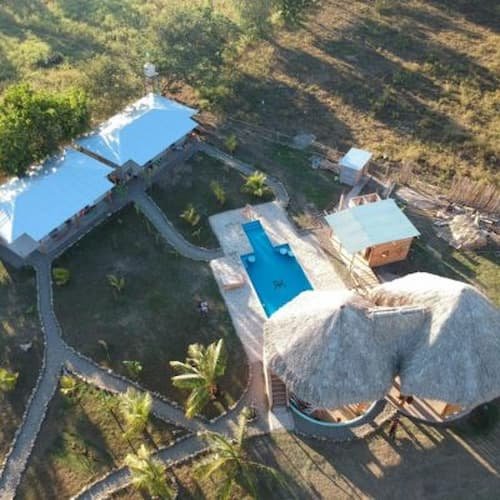
Ruamoko Hostel came from the simple idea of bringing together people from all walks of life, who leave with a rucksack full of memories. After traveling around Southeast Asia, Matt came up with the idea to build a hostel.
While most people would have stopped there, he posted his idea on Facebook and was joined by fellow backpacker Andy. They decided to build Ruamoko (who is the god of earthquakes, volcanoes, and seasons in Maori mythology) in Nicaragua. It’s not too far from their home countries (Matt’s originally from Canada, Andy from California), and it’s in a beautiful part of the country, Popoyo – an up-and-coming town well-known for its gorgeous beaches.
After successfully raising $22,500 through a crowdfunding campaign on IndieGoGo the work began.

Located in Playa Santana, one of the beaches in the area, you can walk to the beach from the hostel in about 5 minutes – perfect to go for a surf, go horse-riding, or simply watch the sunset with a cocktail in hand.
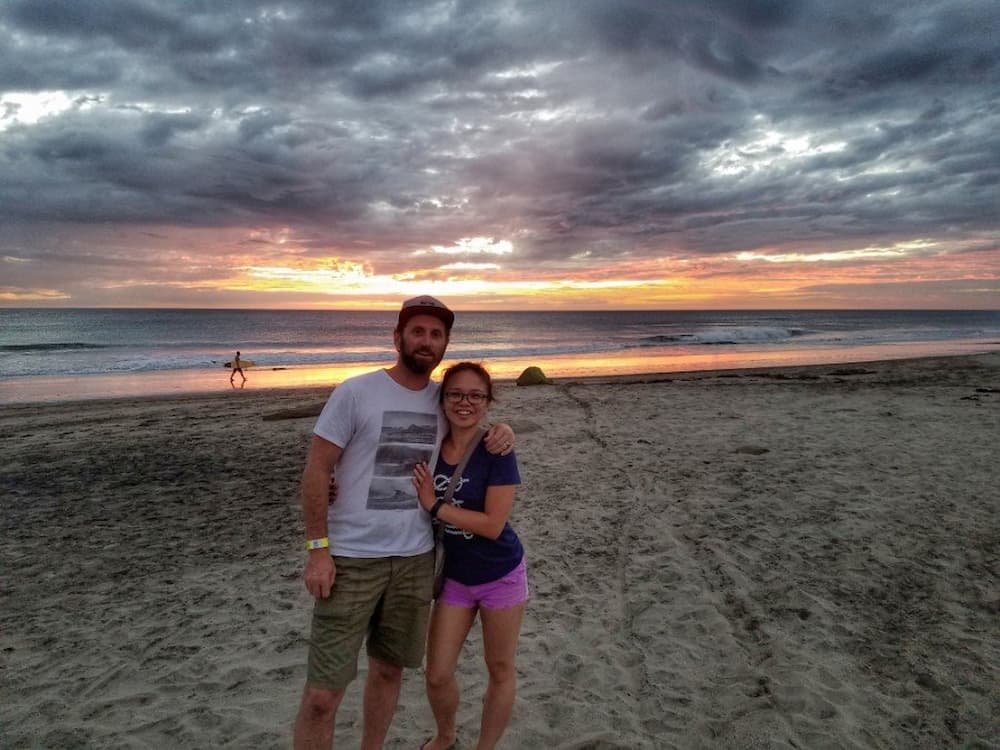
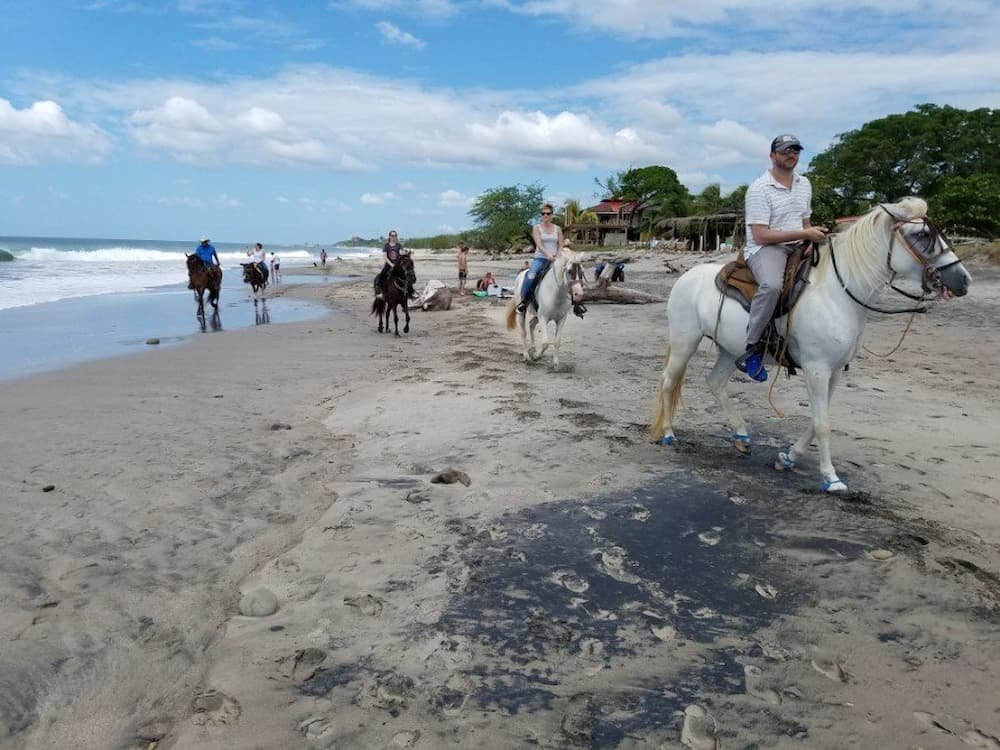
We arrived at Ruamoko within a month of the hostel’s grand opening, which was cool because we were seeing parts of the hostel coming together. There were four eight-person dorms, which conveniently have two bathrooms inside. The bottom bunks also have mosquito nets around them – which we found essential because Nicaragua definitely gets its fair share of these when the sun goes down!

Not that you’d be spending much time in your room besides sleeping. As a boutique hostel, Ruamoko is centered all-around having a community vibe. Right in the center is its signature pool (with a funky logo at the bottom). The bar/reception area is right next to it, where you can grab surfboards for rent (Andy offers surfing lessons), or hang out with other guests over a drink.


Once it gets to nightfall most guests are back in the hostel. In keeping with the community vibe, dinner is served for everyone around the same time (breakfast/lunch available too), which really helps for people to get to know each other. The food was really fresh, creative, and delicious – you can expect salads, sushi, and whatever is available from the local market that day. They even have a truck that passes by every day selling fruit and vegetables!
Peter, who basically dropped everything in his home country of Slovenia to join Matt and Andy to build the hostel, now is at Ruamoko and one night made a delicious “I-just-invented-this” meal that everyone raved about.

After that, it’s party time – there’s a solid sound system that blasts out tunes and even some decks on hand. Even though we were there not long after the official opening, there were already quite a few guests, from countries including England, Ireland, Canada, Sweden, and others. Some had met Andy or Matt from previous travels, while others had heard about it while looking for an inexpensive place to stay by the beach. Getting to relax and chat with everyone in a small group at night – including sharing drinks and laughs with Matt, Andy and Peter – was a lot of fun.


Ruamoko Hostel is brand new, so there are still plans to add private rooms, and finish up some of the fencing (hilariously a cow apparently came bounding in one night to take a nibble from a plant), and add a few more finishing touches. But the essence of Ruamoko Hostel – to create a warm and welcoming home-away-from-home atmosphere – is vividly apparent. It was really exciting to see the hard work put in by the guys running Ruamoko, and we’re excited to see what’s next.
Stay 3 nights and pay for 2 at Ruamoko Hostel is valid only for direct bookings through the Ruamoko website. You must mention Backpacker Travel when arriving at the hostel to be eligible for the promotional discount.
If you’re like me, whenever I’m at home and steeped in my usual routine, I cannot start my day without a cup of delicious coffee.
As the world’s most addictive drug, a trip to Nicaragua naturally included a visit to Cafe Las Flores, which has been cultivating coffee for three generations. Situated along the slopes of Mombacho Volcano (we got there from Granada), Cafe Las Flores has been recognized by the Rainforest Alliance Certification for its sustainable and organic practices.

Cafe Las Flores offers tours that include a walkthrough of the coffee production process, which we kicked off by strolling through the plantation to pick up the few coffee cherries that were still available on the trees. Since we were there in December, we were nearing the end of the harvest season, but there were still a few lingering cherries to plop into our basket.
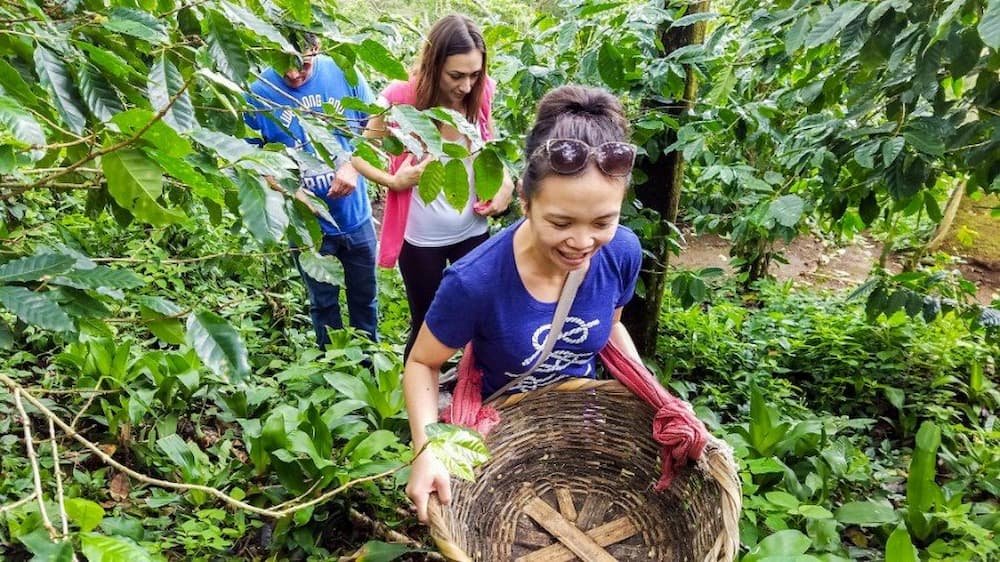

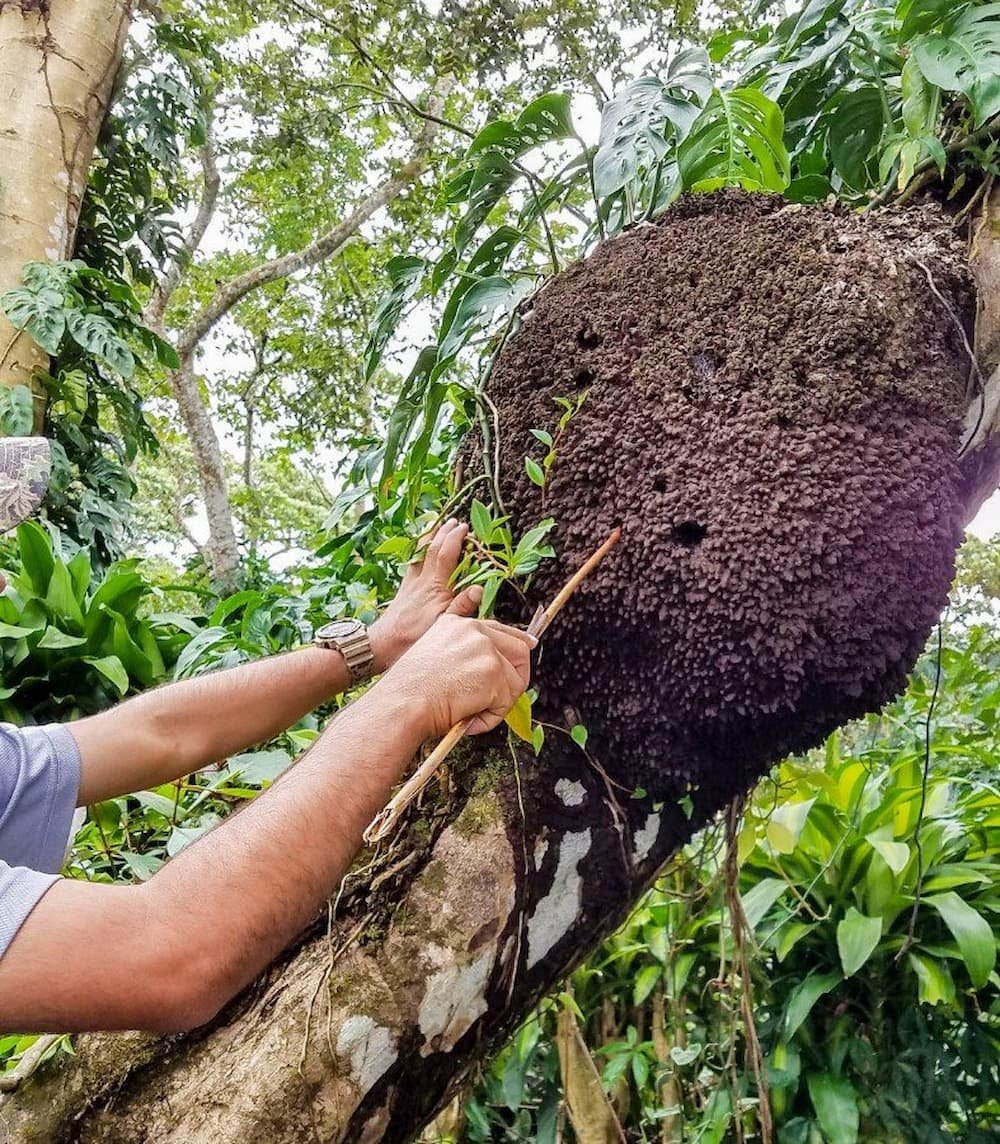
The terrain of the volcano slopes was also filled with a ton of fascinating wildlife – from tiny insects, reptiles, birds, and apparently, even deer! We were also able to spot quite a few termite mounds affixed to trees and sampled a bit of local protein along the way. It tasted woody, though not particularly crunchy.

After picking the cherries and sorting them, we checked out the next step, which is separating the skin and pulp from the bean before laying them out in the sun to dry in wide expanses. They are then milled further, removing the husk of the coffee cherry. Who knew that every coffee cherry has three layers?

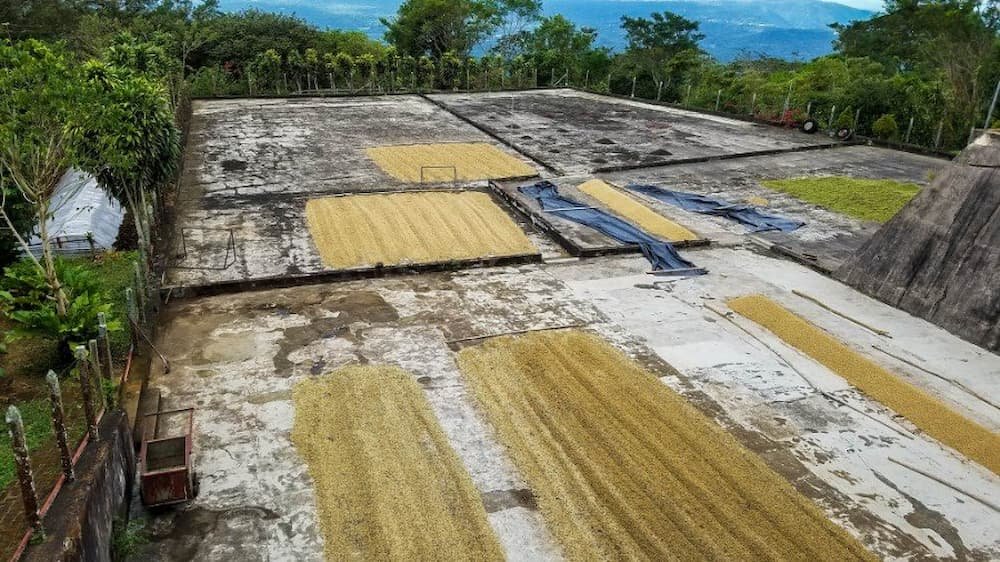

Cafe Las Flores meticulously sorts through its coffee, with the lesser grade beans sold to other suppliers to make instant coffee. For the roasting, turns out that light roast beans have more caffeine in them, but it’s all a matter of preference on which roast you like best.
After the coffee tour, we strapped into harnesses and helmets to go ziplining across the treetops along Mombacho.
What better way to relax than with a cup of coffee or two? There are food options there as well as different espresso, lattes, and flavored coffee drinks (iced and hot). Being there before Christmas, we tried out a couple of holiday-themed lattes as well as more traditional hot drinks. And with that, we’d completed the final step of our coffee tour – from seed to cup.
Cafe Las Flores is a short drive from the picturesque town of Granada and well worth a visit on your trip!
If you’re interested in more info about coffee but can’t make it to Nicaragua, check out this article on the best beans for cold brew.

Daniel and Gina are two travelers from Singapore who went on an amazing 279-day overland adventure, which led them through China, Mongolia, Central Asia, Iran, Turkey, and Greece.
Before setting off on their big adventure, the couple put together a blog to document their travels, share their stories with family and friends, and hopefully inspire others to live their dreams and visit places a little bit off-the-beaten-path.

Daniel, who studied digital filmmaking, was able to use his skills to capture the places they visited in a fun hyperlapse video called Footprints Across Asia (which you can check out below), while Gina focused more on the written content for the blog. Gina is the more outgoing of the two, who was introduced to travel by Daniel, who loves the outdoors, taking calculated risks, and experiencing different cultures.
Between them, they love embracing new experiences, stepping out of their comfort zone, and getting away from the metropolitan bustle of Singapore.
Daniel and Gina took time out to tell us more about themselves, their travels, and what’s next in-store. And before you read on, make sure to check out their amazing video.
Want to know more about Gina and Daniel? Read our interview below and be sure to check out their blog – Sunrise Odyssey.
BT: The Footprints Across Asia video looks is incredible, and really captures your trip across Asia and Europe well. Did you pre-plan with the idea to use hyperlapse in the video?
Sunrise Odyssey: Thanks! Yes, Daniel actually already conceptualized this video before the trip and had planned to use hyperlapse.

BT: Although Daniel had completed film school, did you have a lot of photography and video experience before you took the video?
Sunrise Odyssey: Daniel has been freelancing as a videographer/photographer for the past 5 years and has quite a fair bit of experience already. He specializes more in videography, though.

BT: How much time did you spend in each spot doing the time/hyperlapse, and were there any areas that were a bit more challenging than others?
Sunrise Odyssey: In the beginning, it was challenging as we were still trying to experiment and find out what works best. Took us around 2 hours at each location at the start. But after some time we discovered what works for us and became more efficient at it, reducing the time to around 15-30 minutes per location.
The more challenging areas would be in the cities where it’s a lot more crowded. People will crowd around you and your camera, trying to figure out what this funny couple jumping is all about. At times they will even request a photo with us in the midst of our hyperlapse. Also, for safety reasons, some of our shots are taken with our backs facing the camera. We had to keep turning back to make sure our camera was still there!
Here’s a fun fact, if you watch our video carefully, you will be able to spot some easter eggs (people taking photos with us).

BT: How many individual photos did you take to make the video, and how much did you use for the final product?
Sunrise Odyssey: We stitched together 3,225 individual jump shots for the video.
BT: Was there anything you packed that you wished you hadn’t?
Sunrise Odyssey: Yes when we were in the first country (China) of our 1-year journey, we decided to send back around 2kg worth of stuff each back to Singapore, mostly extra clothing. In the end, we survived with only 1 set of day clothes for the entire year-long journey. Also a monopod (since Daniel already has another tripod) and some other random stuff.

BT: A year is a long time to be traveling with someone, even if he or she is your partner or best friend! How did you find the experience of traveling with each other for a year, and did you learn more about each other along the way?
Sunrise Odyssey: We definitely learned a lot about each other. It’s true that it’s not easy traveling with someone long-term, it’s usually a make or break. I’m just glad we made it out stronger and better. Thankfully our traveling styles and preferences were pretty much similar, and believe it or not, we did not have any major quarrel at all throughout the entire trip!

BT: How did you pick the places that you wanted to visit, and how did you plan the trip before setting off?
Sunrise Odyssey: We already knew that we wanted to do an overland journey. initially, we wanted to travel across Asia via China, Nepal, India, etc. But we found out quite last minute that one of the borders of India will be closed during the period that we were traveling. Hence we decided to travel across Central Asia instead.
To be honest, we hardly planned for this trip. We only had the big picture of which countries we wanted to go (no choice as we had to plan for the visas), and we only bought a one-way ticket to China, that’s all. Everything else was planned almost 1-2 days beforehand and it was mostly spontaneous!


BT: What advice would you give to people who want to travel for a longer duration, and who want to capture their trip in a unique way?
Sunrise Odyssey: Don’t try to cram as many countries as possible during this duration just so you can check them off your list. Instead, spend more time in each country, take your time to slowly immerse yourself in the local culture and interact more with the locals. For us, we spent an average of 1 month in each country. Traveling off the beaten path often brings you a lot of amazing unexpected experiences that you will never find on Lonely Planet or the usual travel sites. And to us, these often end up as the best memories.

BT: What’s next for your travels, and do you plan on making a similar video again?
Sunrise Odyssey: For now, we are back to work, earning and saving up for our next trip. Our next long trip would probably be to Africa and we will likely make a video, but no plans yet for the creative direction of the video.
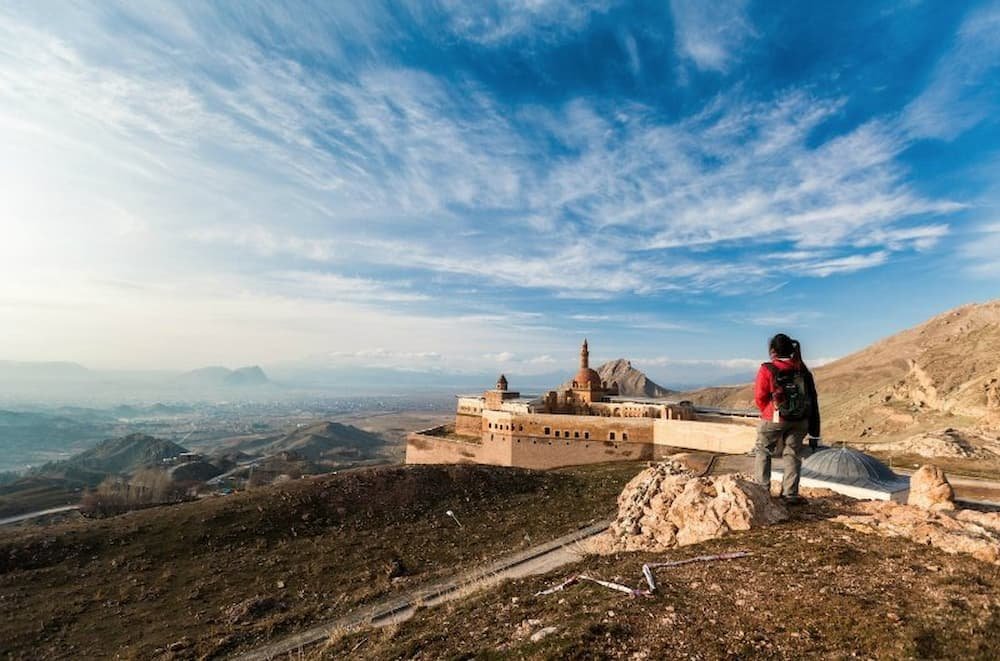
I was introduced to Pedro through the usual social channels – I think it was probably Facebook. After reading about his travels I felt a sense of déjà vu. His story of overlanding from Europe to Asia bore a close resemblance to that of Greg and Emma (who we have previously interviewed). Things got even more bizarre when I discovered his next journey was from Europe to South Africa (their next trip was from South Africa to Asia). I knew I had to interview him!

I mean seriously, when you start to get an understanding of what Pedro has been through during his travels, it’s like an onion, and Pedro’s onion has more layers than most. Not many people can say that they have hitchhiked more than 20,000 km (12,400 mi). To give you some sort of an idea of the scale, that’s nearly double the entire Trans-Siberian Highway!

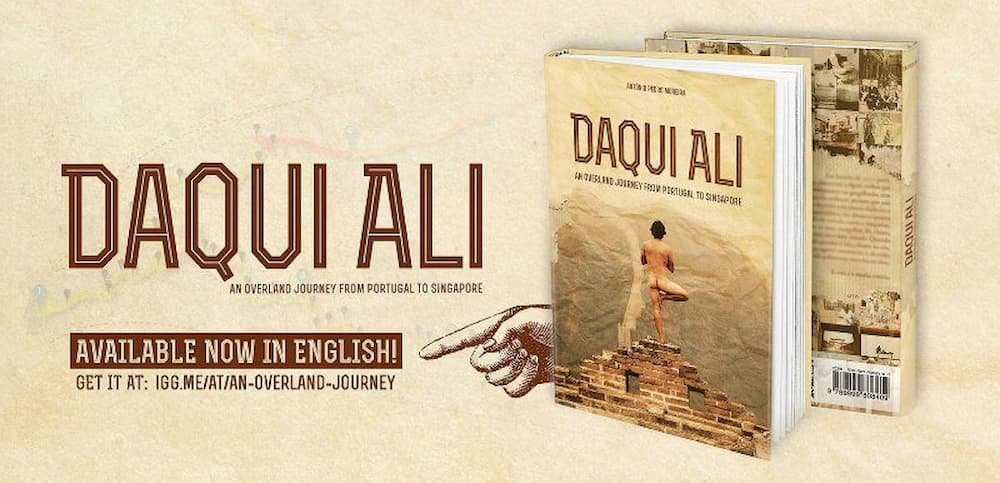
It goes without saying that an extraordinary journey makes for an incredible story, so you will be pleased to hear that Pedro has already published his first book called Daqui Ali. It’s currently in Portuguese only but you can get your hands on the English version and help support Pedro over at IndieGoGo where he is running a crowdfunding campaign.
For just €17 you get 400 pages of non-stop adventure delivered to your door. You can’t beat that! We’ve already ordered our copy. He’s already 86% of the way to his funding goal and needs us backpackers to get him over the line.
Show your support for Pedro at http://igg.me/at/an-overland-journey
Here’s a short trailer to get you wanting more..
Want to know more about Pedro and his adventures? Read more in our interview below and connect with him here on Backpacker Travel and his Facebook page.
BT: Prior to your trip to India in 2009, you were working as a psychologist in Birmingham. Had you done any significant travel before this time?
Pedro: Yes! But maybe for some people, it might seem like nothing special, and I kinda get that… when people go around the world 45 times then other trips might seem less valuable or significant. I believe a trip is as significant as one feels it. So, yeah, going on an inter-rail for 3 weeks is not as big as, say, traveling for a year, but I did feel it as something that made some impact on me. I’d also lived in Norway for 6 months and Finland for an academic year, which was something like traveling. Other than that I had visited about 30 countries in smaller trips, some more significant than others.

BT: Can you tell us of any instances where your study of psychology helped you navigate a dicey situation?
Pedro: Not really. It’s been like a LIFE long mission to understand whether having studied psychology has taught me anything in social terms or not. Because a dicey situation is still a social situation, in the sense that is happening there and then, in real LIFE. Sometimes it frustrates me a bit when I say something and I’m feeling like, “Yeah, I’m so clever” or whatever and someone comes and says, “I can tell you studied psychology.” So where’s the merit in myself?! I’m joking but it is a little bit like this at times. I believe I am good with people and usually know how to approach them. But the question is whether I’m like this because I studied psychology or I studied psychology because I was already like this. I believe it’s the latter. But yeah, of course, a certain social and emotional intelligence, be it from yourself or because you studied how to improve it, goes a long way when traveling. It served me really well with corrupt policemen in Africa… but that’s another question – literally, it’s two questions down.

BT: You ventured through a number of war-torn countries, in many cases, hitchhiking. How did your experience differ in those places?
Pedro: I’m not sure I can establish a link between a war-torn country and a certain experience that I had. Because my first instinct is to say how nice people were with me, to establish a link between war and poverty, then between poverty and kindness. But I’m not sure there is such a link if I look at things objectively. I was in Syria a few days before the revolution and then I proceeded to Iraq. From Iraq, I proceeded to Iran, a country that wasn’t and isn’t, having any war. And I can’t say whether people were nicer in one place or another because they were so nice in all of these places!
In Africa, I was in many countries that had had very violent wars in the recent past. People talked about it. There was an underlying pain but also a will to move forward, it seemed to me. People told stories and explained how brutal things had been. I had friends who were on the verge of becoming child soldiers and perhaps I met other people that actually were child soldiers but didn’t tell me. But the way they related to each other, and to me… I can’t say it was too different than in other countries that hadn’t had a war.
In Nigeria it was different. They have a big problem in the north of the country with terrorism in the shape of Boko Haram. So I crossed Nigeria from west to east cycling, in an 870 km trip and I was stopped 23 times by the police, always fearing I could be a terrorist. It had nothing to do with me looking like this or that, having a beard like this or that, because I know a Swedish guy, looking like he is from where he’s from, that had the same problems. Not only that… if in every single African country, people would shout out “Jesus, Jesus!” a million times every time I passed by, cracking up thinking they were so funny (I got used to it easily and learned how to play it to my advantage), in Nigeria, they’d call me “Boko Haram, Boko Haram!” dozens of times a day, and that sucked ass! You know, I’m a white guy living in a small town in Portugal. I’d experience xenophobia in Birmingham one time but that was that. It’s a concept that is new to me. So… even if that experience was quite heavy, to be called a terrorist all the time, it kinda opened a window for me in understanding what some people go through every day. I was in Nigeria because I wanted to be. Nobody made me, I wasn’t there because I had no money and needed to provide for my family, I wasn’t escaping a war zone. I was just this dude that had an idea of cycling to South Africa. But some people – don’t have a choice but to go to a place where they feel this kind of racist/xenophobic abuse on a daily basis! I don’t think people should go through it to understand it, but I did, and although I was never a prejudiced guy in any way, it was another stone to build a castle of empathy…


BT: Corruption is a major issue in most, if not all, developing countries. Tell us your thoughts on this and how you dealt with this ongoing problem.
Pedro: We’re talking about corruption across the board here, from the guy that gets your bags first in the airport because you paid him and someone else didn’t, to the president. In Southern Europe and other not-so-southern countries it also happens, but more on a high level.
I’m very against this, man, like most of us, I guess, and I’ll go (almost) all the way not to pay anything. And it’s not even about the money, because in many countries you can pay one or two euros and off you go, not wasting a whole hour or two standing your ground. The thing is – by paying you’re contributing to a fucked up system, you’re rewarding corrupt assholes. Also, you’re undermining the next guy, who might actually not have that money! (I know, “Who doesn’t have two euros”, one might think. Trust me – some people travel on such a low budget it makes a big difference).
Having said this – I paid when I was arrested in Laos. I’m not proud of it, but it was such a situation I felt I had no other way. Nowadays I suppose it would have been different, I’d endured it longer… but it was my first big trip, I was in jail and people back home hadn’t heard from me in a while… so I caved.
In Africa it’s different. Police ask you for money all the time. Humans are awesome. But some humans, when they put on a uniform, they turn into giant walking turds, thinking that the uniform is to be used to intimidate you, not protect you. So you have to meet them somewhere. This is where emotional/social intelligence comes in handy. Like in Sierra Leone, which was the worst country in this aspect, many policemen were absolutely arrogant evil bastards, and that intimidated me. However, I couldn’t show that they intimidated me, or they’d use it, so I acted all cool and all, but not too cool, so they didn’t think I wasn’t taking them seriously. They’d ask for all kinds of documents that I didn’t need and even arrested me one night. I spent two hours in jail and managed to get out not paying anything and not even showing my passport, let alone a letter from my government, a letter from the police in the capital, a residence permit, and all the other bullshit papers they were asking for. They were totally drunk, so they were easier to manipulate… but also more unpredictable.
By the time I got to Nigeria, I learned that the best way was to act cool (always) and take control of the conversation. They’d tell me to stop and I’d be the one asking questions. When there was a half-second break I’d go like “So I’ll see ya…” and off I went.
However, this ethical stubbornness sometimes goes bad. When I was to get into Kinshasa (the Democratic Republic of The Congo) I refused to pay a bribe… and that meant I had to go back to Brazzaville (Republic of The Congo) and that meant I had to go back home! Yep… I had a totally full passport and there wasn’t an embassy in Brazzaville where I could make a new one. I’d planned on making a new one in Kinshasa. That sucked. I flew to Portugal, got a new passport, flew back to Brazzaville and did the same thing again. This time I had to pay $20.
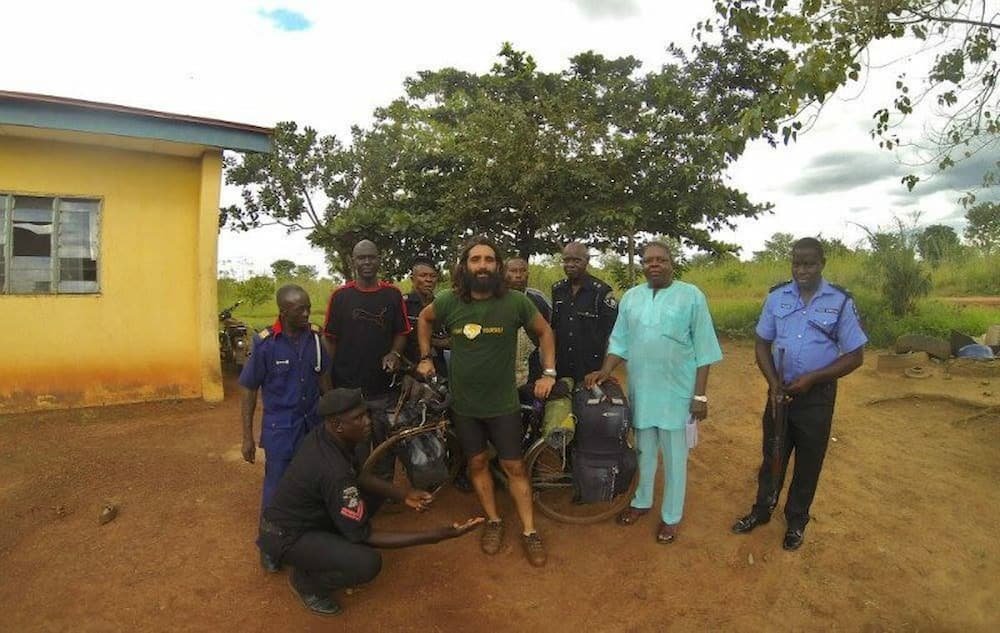
BT: Following on from that, you have been arrested on more than one occasion. What goes through your mind when you realize you’re all alone getting locked up in a foreign country?
Pedro: I was arrested in Finland in 2004 because my flatmates had posted weed from their home countries to themselves in Finland. Customs came, saw all the flags we’d stolen on drunken nights out and took us all to jail. In Croatia, we were gonna spend the night in what looked like an abandoned house, when police came and took us. In Laos, I went tubing in Vang Vieng, came back, had a blackout and woke up in the back of a van in the middle of the bush. I spent two nights in jail. In Sierra Leone, they arrested me because I “didn’t have my papers” but never locked me up, and in Nigeria, they locked me up for a few hours until someone came and assessed whether I was a threat or not.
I was pretty okay in all of these, except for the one in Laos. That was one bad experience, man. The worst of my LIFE. I don’t know whether I was drugged or what happened but for the first couple of hours, I thought I had been kidnapped. I knew I was gonna die, and that’s not a cool thing, no sir… I didn’t remember anything but knew I couldn’t have done anything really bad because that’s not me, not who I am. Some people get drunk and then violent, but I had never had a violent episode in my LIFE. So I was the victim of this scam perpetrated by the people that are supposed to protect me, the tourism police. I felt powerless and had this deep feeling of unfairness. I felt abused and almost like… violated.
But then it was over.

BT: Of the two journeys, which was the most challenging and why?
Pedro: That experience in Laos was the most challenging of my whole LIFE, but that was one thing. So I have to say my cycling journey through Africa was the most challenging. I cycled for 15,000 km in a continent famous for its scorching heat. So the physical effort was quite demanding. I had this period for about 6 weeks when, every now and then I’d start having these headaches, goosebumps, I’d start sneezing and I felt like I was dreaming… my head spinning. It’s like nothing was real. That was extreme tiredness. Also, every time I crossed a border I was always on edge because I never knew whether I’d come in contact with some asshole policeman that would catch between countries and use that to his advantage. Then the problem in Nigeria, when I didn’t feel too welcome so many times… it doesn’t mean I didn’t like the trip, I adored it, but it was more challenging, for sure.


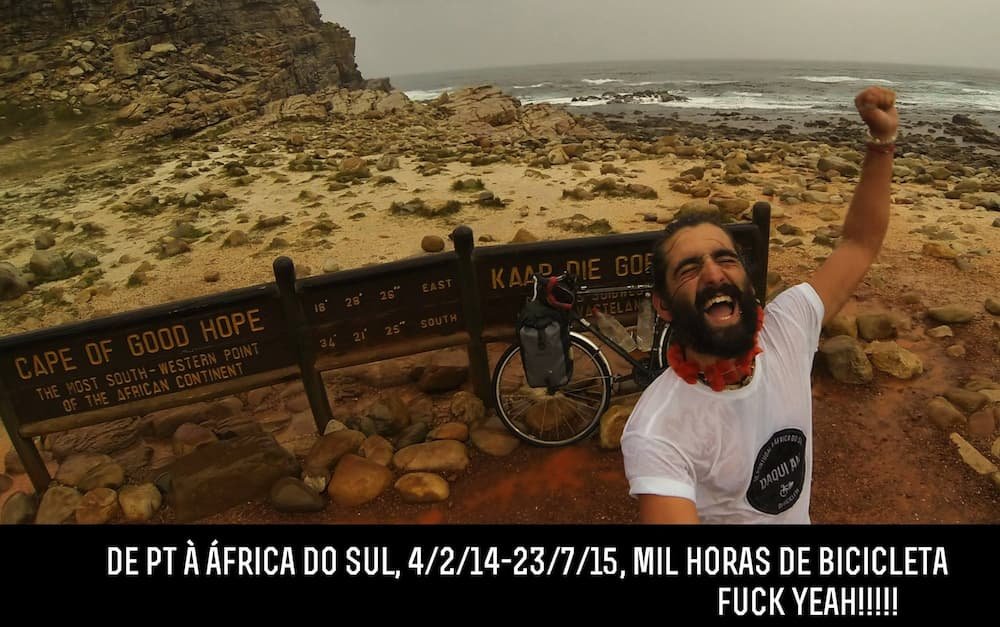
BT: The backpacking community is always looking for ways to travel cheaper and more authentically. You made it through Iraq with no money, Iran with only $35, and ended up spending around €3,000 over the entire 9 months of your first trip. How on earth did you manage that?
Pedro: Yes, I wanted to travel on a low budget for several reasons: first, because the less you spend, the more you have for the next trip, for LIFE, for whatever. Then because when you travel on a low budget you end up having experiences that are more authentic. Like being in Turkey with no place to stay because I don’t find a cheap one, asking some people whether it’s safe to sleep on the street there and ending up at their place eating, hanging out, and spending the night. You’ll also resort to Couchsurfing more which means you’ll stay with real people rather than hotel hosts. Finally, I wanted people to understand that traveling for a long period of time is possible even if you’re not a rich person.
How did I do it? Couchsurfing helped a lot. I slept for free for over a hundred nights. And on my second trip, the African one (I don’t know how much money I spent there yet) I slept for free for about 370 nights out of the 450 that I traveled. Here, more than Couchsurfing, I was hosted spontaneously by locals, a lot.
In order to save money, I also hitchhiked a lot. And if I was in a European country I’d eat supermarket food. If not, local stalls on the street, always. The €3000 also included insurance for the whole trip and a camera. I have to say I could have done it with less – I must have spent about €1000 partying.


BT: Having hitchhiked over 20,000km, what have you learned?
Pedro: I learned that usually the cheaper the car, the more likely it is they’ll give you a ride. I learned that the poorer a country is the more likely it is they’ll give you a ride. And I learned this is one of the best ways to travel. I had never hitchhiked before, we just don’t do that in Portugal.
Now I still even if I have to go to Lisbon or somewhere like that. It’s for free and I get to know someone!

BT: How did the idea for your wedding proposal come about?
Pedro: I like stories. If it has to do with my LIFE, I like nice, beautiful stories.
On my first trip, my girlfriend came to meet me in India. We’d been together for 12 years already at that time, so it was safe to assume we’d marry eventually. But how would I propose? How would I give her a nice story? Because when you love someone, if you give them nice stories, you’re giving yourself nice stories.
I had an idea about proposing in a nice place. But which one? I’d have to wait. With what ring? What if she gave me the ring that I was gonna propose with? Yeah, that seemed cool. So I hinted that I’d like to have one of those one euro rings but it’d be lame for me to buy it for myself. She got the hint and gave me one. She then returned to Portugal and I kept going. Nepal, Thailand, Malaysia, Singapore… so many nice places, but not exactly what I was looking for. Till I saw myself in Angkor Wat. That was it! I hid the ring there, kept going and when I arrived in Portugal told her I’d lost the ring at the beach. She lectured me a bit, like “You never keep the stuff I give you” but it was alright. I also told her that it’d be nice if she started saving 50€ a month and a couple of years later we could go to Cambodia, as I’d really like her to see Angkor Wat.
Time passed, and I went to Africa. After this 15-month journey, we agreed to meet in Cambodia. And so we did. We went to Angkor Wat but I couldn’t find the goddamn temple where I’d left the ring! Man, I knew it’d be hard to find the ring, I never thought I’d have trouble finding the temple! Maybe it was one of those that was under renovation. I searched for 3 days and at the end of the third, I had to give up. Luckily I had a backup ring I’d ask her to choose “for my friend’s girlfriend”. I chose a temple, sat down and explained that no, we hadn’t been looking for a certain temple because of the sunset there. I’d left something there for her. I explained everything and also told her how I want her to have nice stories about her LIFE.
She said yes.


BT: You have already written and published one book and are in the process of writing another. What led you to write about your travels and what was your biggest challenge in putting your story together?
Pedro: I’ve always loved writing. Before writing the book about my Asian trip I wrote two fiction ones. And when I left, I confess that I imagined a book would come from it. I was gonna live so much, gonna have so much… food for thought… You know, I think a lot, and I knew there would be so much to think about, I’d learn so much… and if that’s the case, it’d be almost selfish not to share it. And yeah, that’s exactly what happened. For example, I was treated so kindly in so many places most people consider scary that I felt it was my responsibility to share these experiences and defeat, even if just for a single person, some of these stereotypes.
My biggest challenge in putting my story together was to keep it short. Or not gigantic. It’s difficult to be objective in selecting what’s important when everything is important to you! So I had about 700 pages of text but eventually, I managed to bring it down to 390. I’m currently going through the exact same problem with my African book. But I’ll get there!
The other challenge was to self-publish. I didn’t like the way the publishing system works so I decided to do it on my own. Turned out great!

BT: Finally, the obvious question that we always like to ask – what’s next?
Pedro: I don’t know man… I’m getting married this year and I’ll probably have a kid next year. My girlfriend, or fiancé, wouldn’t quit her job to come traveling with me, and I’d never ask that. It’s not something you ask. If we lived in a country where jobs were easier to come by I might encourage her a bit more, but we don’t, so I don’t want her to make a decision to please me and then find herself unemployed for ages. So when and if I have a kid I don’t want to leave like for a whole year, so I’ll have to adapt my style. Maybe envision a big trip but do it 3 months at a time… There are many things I’d like to do, but I’m not really focusing on them now. I daydream, sure… but I’m living here, now, and that’s cool. The future will tell!
I’d like to thank Pedro for taking the time to chat with us and wish him all the best with his upcoming wedding.
Here are our top reads for those times you are waiting at the airport, on a long flight, bus trip or simply relaxing. We've compiled our favorite 52 books, that's enough for one per week! Where possible, we recommend downloading the Kindle version. It's not only cheaper but gives you the opportunity to have an entire library in your day pack.
Please read our disclosure statement regarding the affiliate links that are contained in this article and on the Backpacker Travel site.

Week 32
The Great Railway Bazaar

Week 33
The Man Who Quit Money
Possibly one of the most important purchases you will make before traveling is that of a daypack. This backpack needs to be your go-to accessory, capable of carrying your camera, snacks, sweater, and everything in-between.
We’ve carefully selected 10 excellent daypacks to help you make a better choice when you decide to purchase a new pack. If you are looking for something bigger, see our Top 10 Travel Backpacks for 2016.
Please read our disclosure statement regarding the affiliate links that are contained in this article and on the Backpacker Travel site.

Lightweight, durable, and secure, the Venturesafe 25L GII anti-theft daypack is ideal for use on long hikes, adventures abroad, your daily commute, and as a handy carry-on. The Venturesafe 25L GII offers a wealth of organizational options, plus an internal padded sleeve for a 15-inch laptop.

Osprey’s Axis Daypack comes with 1100 cubic inches of space for you to tote your favorite gear. Take it for an out-and-back hike and carry your water bottle, a few extra layers, and an afternoon snack. Throw it on your back for your next bike commute and clip your blinker light to the back attachment strap.

The updated Marmot Kompressor Plus pack combines wrap-around compression and ultralight performance with plush comfort and generous volume for a day of outdoor fun. And it packs into its own lid!

You want an ultralight, speed-friendly pack that will hold your essentials, so it sounds like you want the Deuter Speed Lite 20 Backpack. The wraparound compression straps minimize your pack’s profile, reduce excess movement, and keep your gear from getting jumbled, while the Delrin frame-support rod can be removed if you want even less weight and a closer fit.

The Capture 25 all-terrain backpack doesn’t just provide generous storage space and a front-shove-it pocket that offers easy access to essentials. It gives you the freedom to film every moment on your smartphone with a built-in action pocket that works hands-free. Whether it’s on your chest or on the ground, you can capture the awe of any day and instantly turn yourself into an action-in-the-outdoors adventure star.
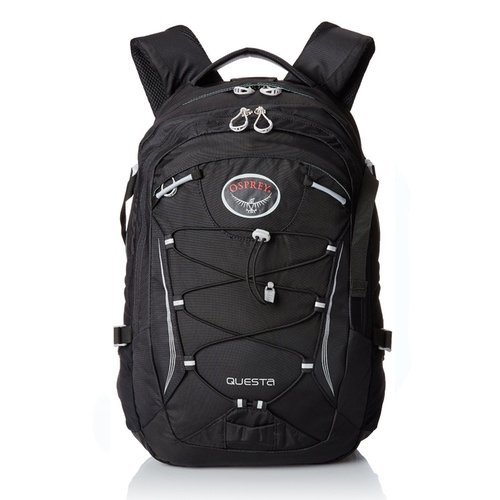
This affordable, full-sized backpack features a spacious main compartment that holds your gear and food for a week of trekking in the wilderness. Plus, its separate sleeping bag compartment makes it easy to pull out your bag without totally unpacking, and a side-access zipper lets you quickly grab gear or a puffy when the weather gets a bit chilly.

Granite Gear’s Barrier Technology provides 360-degree water repellency coverage. Our durable water repellent zippers, Taurolite material, repel weave fabric, and extreme water-resistant valuables pocket zipper shelter your gear from the elements.

Designed with hyper-durable ballistic nylon, this thick-skinned daypack doesn’t take abuse from anything. Fully-dialed features include a separate, zip laptop compartment (which fits most 17″ laptops), a dedicated tablet sleeve, and three other main compartments with plenty of space to stash essentials for a day’s outing.
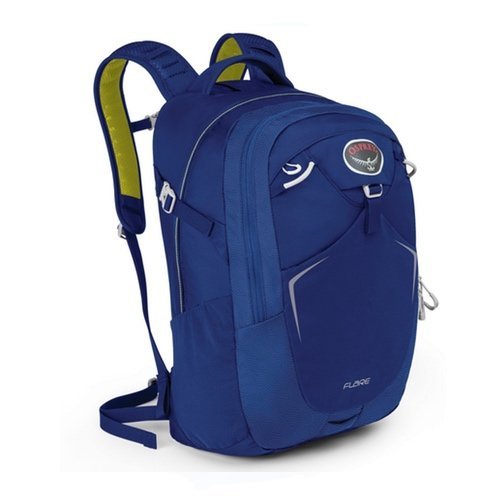
Whether you need a daypack for an excursion downtown or a walk in the woods, reach for Osprey’s Flare. The mesh shoulder harness and back panel provide comfort, even when the pack is fully loaded with gear, books, or heavy electronics. A comfortable hip belt adds extra stability under load and vanishes inside the stretch mesh side pockets when you’re traveling light.

American inspired with a modern twist – this backpack works equally well for travel and everyday use. It features a roomy main compartment with a padded sleeve to hold a 15.6-inch laptop. Two easy accesses, locking front compartments, and an organizer includes a zippered RFID blocking pocket. Anti-theft features have slash-resistant construction, locking compartments, and slash-resistant adjustable straps that will keep you and your belongings protected.
So you’re thinking about setting off on the journey of a lifetime, well, you’re going to need a sturdy backpack that’s able to carry all your gear. Luckily, we’ve done all the hard work for you, researching and testing a bunch of options to bring you the top 10 backpacks for travel below!
Any of these packs will be an excellent addition to your gear, and make sure to check out our Top 10 Daypacks of 2016 too.
Please read our disclosure statement regarding the affiliate links that are contained in this article and on the Backpacker Travel site.

With specialized fabric that protects from slash-and-run thefts, the VentureSafe 65L GII Travel Pack from PacSafe lets you see the world without having to keep an eye on the gear in your pack.
This pack also comes in a smaller Women's 55L model

The Deuter Act Lite 65+10 Backpack’s Aircontact Lite system supports heavy weekend loads while providing continuous airflow and a comfortable fit. The anatomically shaped X-frame distributes weight equally on your shoulders and flexes with your movements, so you can focus on the hike instead of your pack.

The North Face engineered its Terra 65 Backpack with the easy-to-use Optifit suspension system to give you a fully adjustable fit before you hit the trail for a weekend. An included tool measures the length of your back so you can match the Optifit system in the backpack to your exact measurements.

Gregory gave the Baltoro 65 a hefty helping of cargo capacity and a supremely comfortable suspension system so that even when the pack is fully loaded on a one, two, or three-day trip, it will offer stable support for mile after mile.

Bring everything you need without checking a bag. Suitcases aren’t up to the demands of city travel. Hiking packs are disorganized and too big to be carried onto a plane. International travelers like you need the right luggage.

This affordable, full-sized backpack features a spacious main compartment that holds your gear and food for a week of trekking in the wilderness. Plus, its separate sleeping bag compartment makes it easy to pull out your bag without totally unpacking, and a side-access zipper lets you quickly grab gear or a puffy when the weather gets a bit chilly.

Capacious enough to easily accommodate a week’s worth of gear, the Osprey Porter 65 Backpack also is versatile and impressively mobile. You can sling it over your shoulder in a mad dash from bus to plane or don it like a full-on backpack for the trek to gate Z99.

The Osprey Exos 58 Backpack has space for your backpacking trips in summer and ice climbing trips in winter, and it’ll carry your gear without adding excess pack weight to your trip. A combination of the AirSpeed back panel and the light yet durable 6065 aluminum frame brings a lot of breathability by dumping excess heat out of the sides.

The bestselling Osprey Aether 60 pack just got even better with an updated design and a stiff, well-padded hip belt. You’ll be amazed by its lightweight, support, comfort, and highly customizable fit.

Ready for your next plane trip, the lightweight REI Vagabond Tour 40 Travel Pack has a comfortable backpack-style harness that stows away neatly when it’s time to slide the pack into an overhead bin.
In partnership with Dive.is
If you’ve ever been snorkeling or scuba diving before, it’s a fun and indescribable experience. You’re aided by a snorkel or an oxygen tank to breathe while exploring what’s underwater and marveling at the life below.
For many people, snorkeling or scuba diving in Iceland is not the first thing that springs to mind – obviously, because it’s so cold. But in Iceland, you can snorkel in the only place in the world in between the North American and Eurasian continents, which drift apart about two centimeters every year.
Be brave, the water might be freezing but it’s well worth taking a snorkeling tour in Silfra, Iceland.

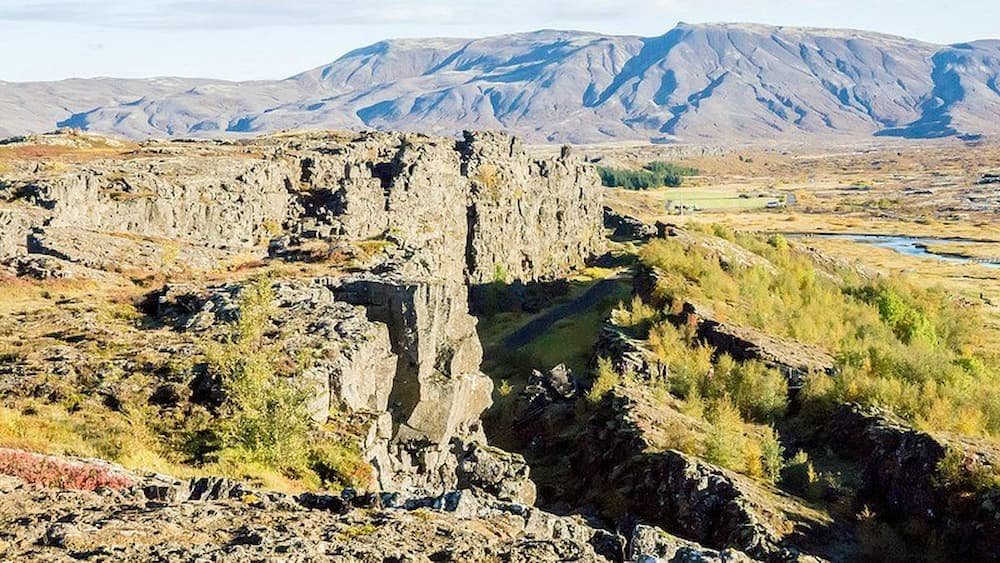
The Silfra fissure is the crack between these two continents, and where the water averages a chilly two to four degrees Celsius (yes, it’s pretty much freezing)! We arrived at Silfra, not far from the UNESCO World Heritage site Þingvellir, which we could see from a distance and which we had visited only a couple of days before.
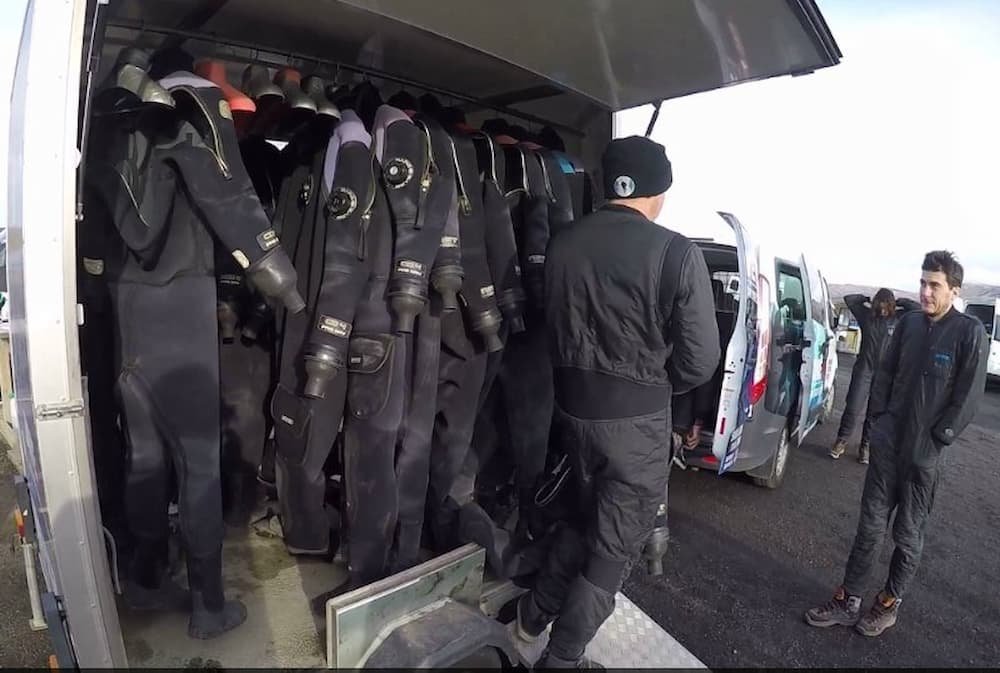
Once we arrived at Silfra, we put on a dry suit over our clothes, which was light and so comfortably insulated that we didn’t want to take them off. On top of that was our hooded wetsuit, plus our snorkel and goggles. We had two pairs of socks over our boots and flippers and waterproof gloves to top everything off. The only thing that was exposed was our faces.

Our group of friends clambered down a few steps leading into Silfra fissure, and even though we were more than adequately insulated, as soon as my body touched the water I could feel the cold water surrounding me. Once my face was in the water I was admittedly shocked by the cold, but too exhilarated to care. Here we were, bobbing up and down in the water, seeing the colorful rocks and landscape underneath with incredible clarity – we could see 100 meters ahead. The water was so clean, that if you wanted to you could take a bit of a sip of it (I tried it – the guides even recommended we do it).

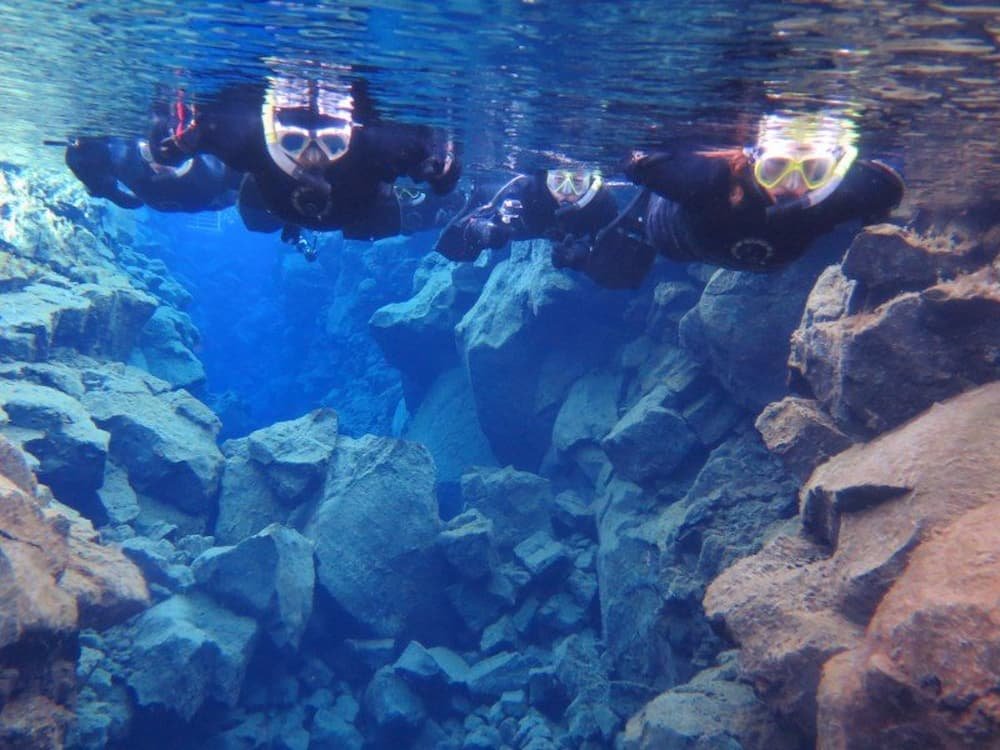
There are several sections of Silfra, with the deepest being Silfra Cathedral, which is 20 meters deep and 100 meters long. Here we saw lava rock walls dramatically sloping downwards, as well as algae. At the narrowest part of the fissure, you could practically touch the tectonic plates on either side of you. The last section is Silfra Lagoon, where the fissure widens out and we were able to freely swim around and explore.

While you don’t see any fish in Silfra, the experience itself was so unique and fun. Towards the end of the experience, I could feel my fingers chill and freeze, so I wouldn’t have stayed in much longer than the time they had given us about 30-40 minutes, which was perfect. Before you go in, the guides tell you that your fingers, while covered, will inevitably get wet, and the best way to avoid them from getting colder is not to move them much – so either swim with your hands behind your back, or outstretched in front of you (which looks kind of weird admittedly, but I did that because it was the most comfortable).

Once we got out of the water, I could tell that my face was flushed from the cold and my lips, which had been wrapped around the snorkel the entire time, felt swollen and numb. Talking felt hilarious. We walked back to the van to change out of our wetsuits (which was quite an endeavor itself) before being treated to hot chocolate and biscuits – the best way to finish up a one-of-a-kind experience.
If you would like to dive or snorkel at the Silfra fissure be sure to check out Dive.is.