If there’s one thing that Iceland isn’t scarce on, it’s natural beauty. From imposing volcanoes and glaciers, to animated clouds and awe-inspiring waterfalls, Iceland has something to marvel at behind every turn.
Extreme Iceland packs in as many of these sights on its South Coast and Jökulsárlón Ice Lagoon tour, where you see icebergs, black sand beaches, glaciers, lava fields, and waterfalls in an action-packed two-day adventure.

Driving out of Reykjavik, the first stop is Seljalandsfoss, a beautiful waterfall that plunges down over 60 meters into a shallow pool. The water comes from the infamous volcano and glacier Eyjafjallajökull, which erupted in 2010 and led to thick volcanic ash covering the earth and halting flights all over the world for weeks. We had a lot of fun trying to pronounce the name on the bus with our tour guide (hint: the letter j is pronounced as a y sound, and two consecutive l’s are pronounced as ‘at’). You can also walk behind the waterfall for a unique view – although wear wet weather clothing, as you will certainly be splashed!


The word ‘foss’ means waterfall in Icelandic and not too far away is Skogafoss, which is also 60 meters in height. You can see this waterfall from further away and what’s great about it is that there are stairs (which are more tiring than they look to scale!) that lead to the top of the waterfall. For those not as inclined to make the hike up, there are plenty of beautiful vantage points on the ground level – whether it’s standing by the stream where the water plunges into, or from further away to take in all the grandeur. We were fortunate enough to see a couple of rainbows while there, making the waterfall even more magical to behold.


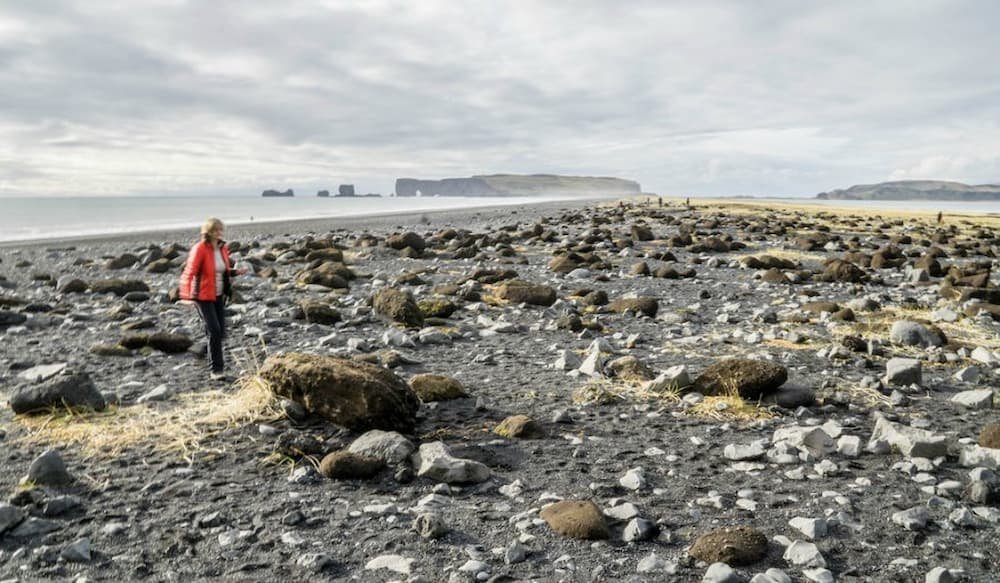
When you think of beaches, Iceland is not the first country to spring to mind, but it’s home to a beautiful black sand beach in the village of Vik, which is also characterized by intricate basalt column formations next to Reynisdrangar, which are basalt sea stacks that stand next to a cave right by the shore. The beach is also littered with pebbles and rocks – mostly black in color, although you can see tinges of greyish-blue and brown rocks as well. You can sit on the beach, and stack some rocks while looking out at the dark ocean in front of you. Apparently, it’s common for someone to try and go for a dip (which I wouldn’t dare to) – and yes, a tourist did in fact try it out in the freezing cold while we were there!

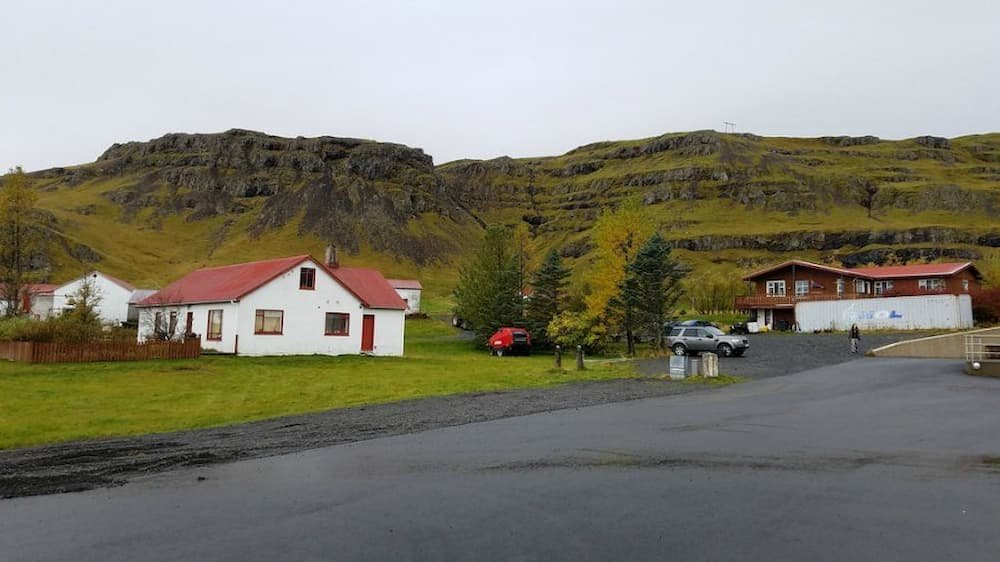
As our tour bus snaked our way through the south of Iceland, everyone continued to be struck by how gorgeous and impressive the scenery was in the country. Photos and videos as we zoomed past on the minibus would not be able to do it justice. Houses looked minuscule against the backdrop of a huge mountain, which would more often than not have a waterfall behind it. And we’re not talking a little stream either – rather, it seemed like every house had its own personal waterfall!

As the sun started to set for the day, we made it to Jökulsárlón Glacier Lagoon – and if you weren’t awestruck before, this place will absolutely blow you away. Jökulsárlón is the setting for many Hollywood movies and it’s easy to see why. There are huge chunks of icebergs sitting in the lagoon, with many glistening bright blue in the light, or tinged black by volcanic ash. Some of them idly sit in the lagoon, while at times you can hear some suddenly crack and break into smaller pieces, floating out to sea. You most likely will see seals hanging about and leisurely swimming through the icebergs, looking like they have not a care in the world and not noticing how frigidly cold it is.

Our accommodation that night was at the Country Hotel Katla in South Iceland – very cozy with a yummy dinner, warm and neat rooms and wi-fi. The decor is rather kitsch – think random plug-in crystals and hand-stitched crafts in glassed shelves – but that’s what makes it more quaint and charming.
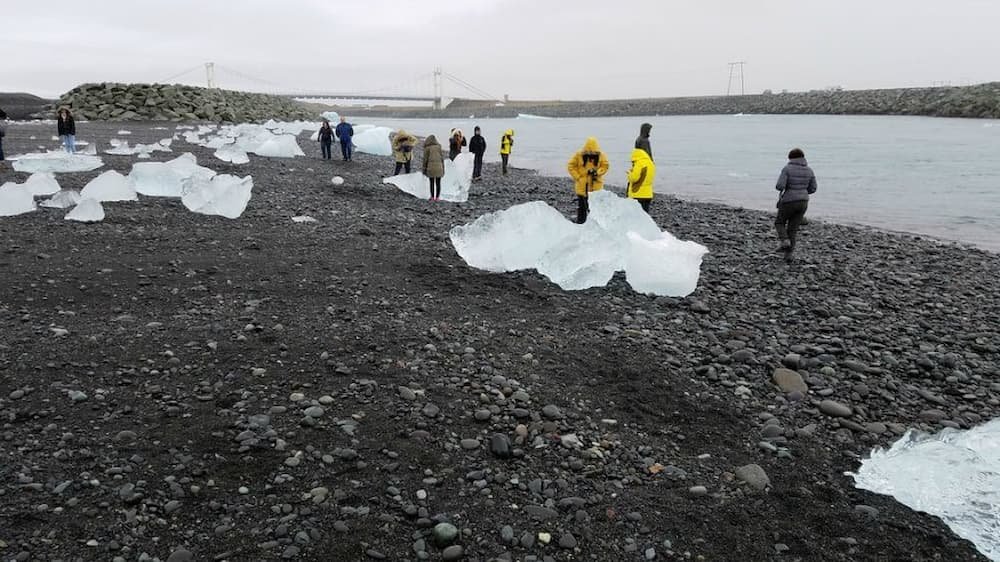
The next morning it’s back to Jökulsárlón to see the magnificent lagoon in a different light. If you’re so inclined, you can pay for a boat ride to take you through the lagoon, or you can walk along it and spot more seals, try your hand and balance skills at rock stacking or just sit and enjoy the view. If you walk past the bridge towards the ocean and keep going until the shore, you’ll be rewarded with more phenomenal sights – huge, glistening and crystal clear icebergs stranded on the shore. It’s fun to take pictures next to (or on!) these icebergs, and see even more seals playing in the water.



One of the highlights of this tour is hiking up a glacier in the Skaftafell area. The glacier is made up of fallen snow, that compresses as the weight of the snow keeps accumulating over hundreds and hundreds of years. After being fitted for the right size crampon to put on over our hiking boots, given a helmet to wear, and an ice pick to walk along with, we were off.
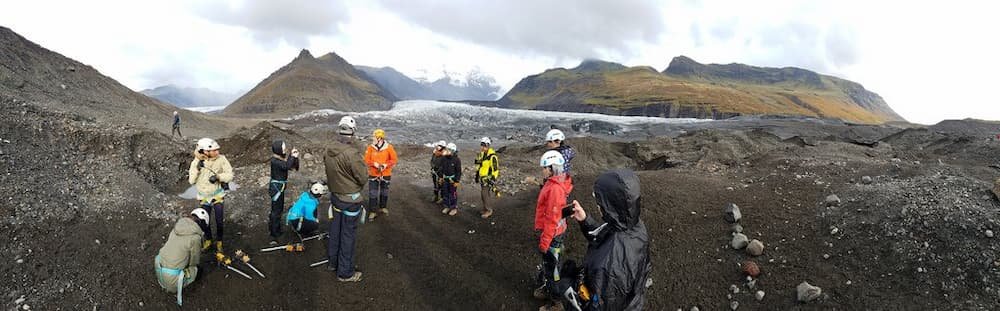
Walking with crampons is sort of like walking with ice skates on as they’re both heavy on your feet and you feel like you’re walking on clouds as soon as you take them off. But the best way to walk with crampons is like you’re in a Western movie – feet apart, slightly bent knees, and stomping flat on the ground with each step!


During the hour-long hike, we saw crevasses gushing with icy water within, and areas where the snow was not as compressed to see the dark rock exposed a bit underneath. The air and the whole area seems so pure – we even picked a bit at the packed snow to find a clean chip of ice and taste the delicious freshwater. There’s something very special about walking on ground that you feel not many people have walked on and seen the exact way you have.


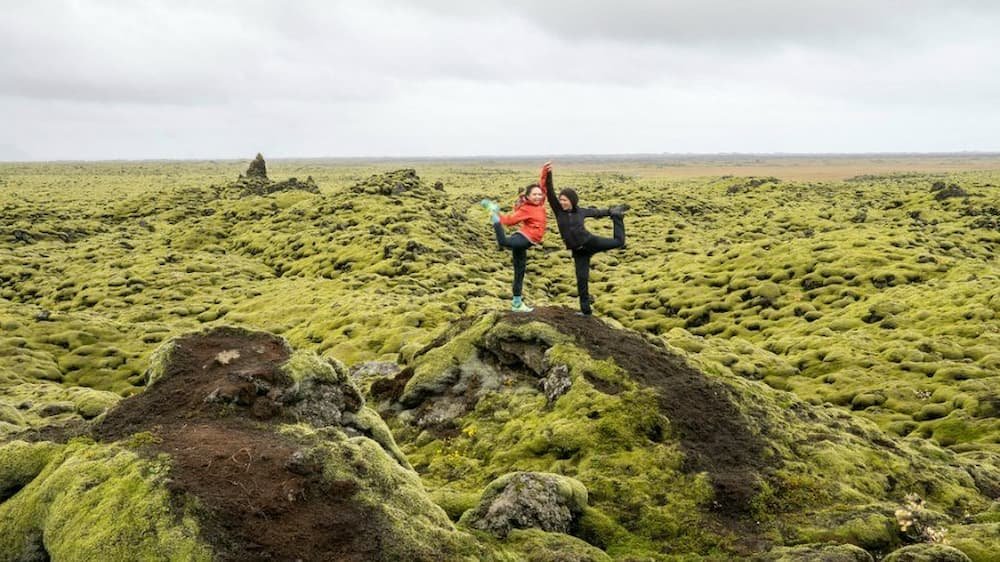
The weather can change very quickly and dramatically in Iceland – fortunately, during the hike the weather was sunny and clear, but before and after it we did experience dark, brooding clouds and rain. The cold is also biting – we ran out one time to check out a lava field (the ground is so fun to jump on because it’s so spongy) but didn’t last long before wanting to run back in the warm minivan – the icy wind made sure of that!
Our guide, Thiddy, was a wealth of knowledge throughout the entire trip – he was extremely informative and entertaining, and we felt like we were traveling with a genuine Viking descendant (in a good way, of course). Whether you’re a solo traveler or visiting Iceland with a group of friends, this two-day tour is a great way to pack in many of Iceland’s southern highlights for a memorable adventure.

After spending a week using Reykjavik as a hub for our travels through the Southern Highlands and the surrounding areas, we set off on a week-long road trip around Iceland. Our aim was to leave Keflavík and snake our way clockwise up to the northernmost tip of the country past the town of Akureyri, before snaking our way back towards the west of the country back to where we started again.
From Keflavík, we got onto the Ring Road and despite driving in a sturdy SUV that we had hired from Lotus Car Rental, our vehicle was shaking quite violently on the open road against the gusty wind. I can only imagine how much more inhospitable the weather is in the winter months.

Our first stop for us was a small town called Borganes, which has a small town center that includes a historical and Settlement Centre the Museum Borgarfjörður, which focuses on the life and surroundings of children in Iceland in the 20th century. Next to the Settlement Centre is a cozy cafe/restaurant where we had a divine traditional Icelandic rice pudding with raisins, brown sugar, and warm milk – very creamy and satisfying against the chilly wind! In this tiny town, there is even a Filipino restaurant – not sure how they wound up here!


Not far from our guesthouse for the night is a place called Fossatún, which has adorable-looking camping pods, a guesthouse, a hotel, and a restaurant. The surrounding area is troll-themed. Various paths lead to different sculptures of trolls, which were created by a man who found a rock shaped like a troll’s face and decided to write a series of folk stories about trolls.

The next day, we drove into Hvammstangi, a great spot for seal-watching on the peninsula. Most of these small towns have the essentials – a guest house or campsite, bakeries or cafes, fuel stations, which double as convenience stores (selling yummy Icelandic hot dogs, fries, and other basic items), a bank, a post office, and of course, a geothermal swimming pool. There’s not much else beyond that in these tiny towns, and I couldn’t help but wonder how uncomplicated their lives must be (besides having to deal with a foreign traveler every now and then).

While you could drive for miles along the ring road and not see a single person, the landscape was always stunning. Alongside us, there were always dozens of fluffy white and black sheep and majestic Icelandic horses. In the distance, we saw commanding volcanoes and snow-capped mountains. But I loved the clouds the most – they were so expressive – whether it was dark clouds opening up to let a bit of sunshine through (it looked like the heavens were opening up) or piles of white fluffiness darting across the sky and changing color as the sun rose or set.

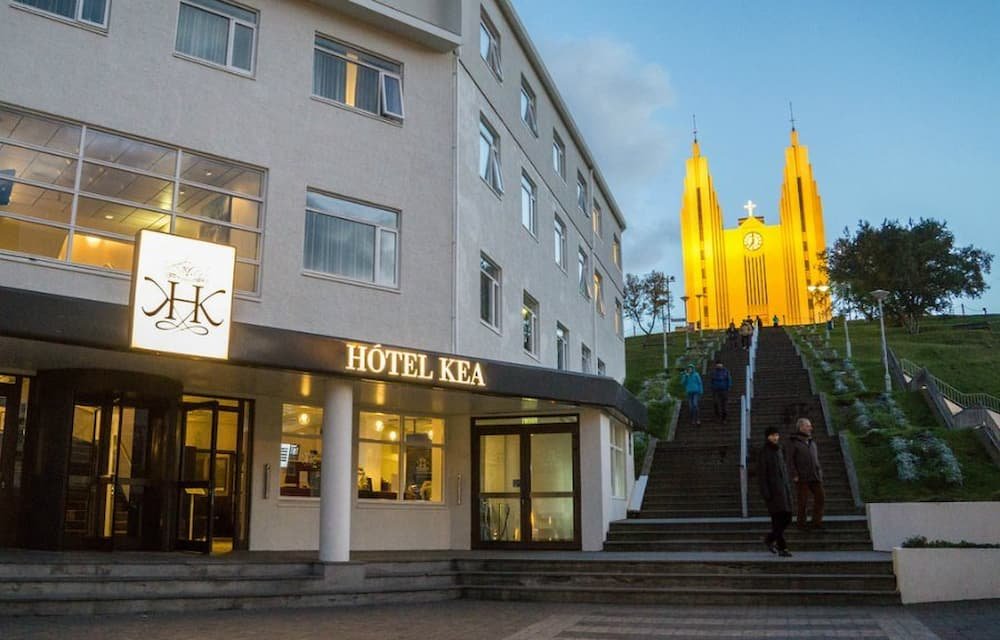
By evening we’d made it to Akureyri, the “Capital of the Shining North,” so-called due to its midnight sun in the summer and the northern lights during winter. It’s the second largest town outside of Reykjavik with a population of over 18,000 people, making up more than half of the population of North Iceland. Just like Reykjavik, the city also boasts a tall and prominent church in the city center (Akureyrarkirkja) and has a host of cool restaurants and cafes.



We splurged not on dinner but on dessert at a shop called Brynja, which some people say has the best ice cream in the country. The lady was amused by our excitement at sampling the different flavors. You can get an ice cream, have it dipped in a fudge sauce, and add as many toppings as you like. Icelanders love licorice so there was a black sauce for that and both sweet and salty licorice flavors, as well as other types of chocolates and sweets. Definitely a must-eat for anyone with a sweet tooth!

After leaving Akureyri, our first stop was Goðafoss, which literally means “the waterfall of the gods”, referring to an incident in one of the Icelandic Sagas when Thorgeir the Lawspeaker (cool name, huh) threw his symbolic likenesses of the old Nordic gods into the waterfall, after making Christianity the official religion of the country. The falls are 12 meters high, with a width of 30 meters. There’s a viewing platform, paths surrounding the falls, as well as a bridge along the side to check out the spectacle at every desirable angle.


For me though, the most impressive waterfall was Dettifoss, which has the greatest volume of any waterfall in Europe. Over 500 cubic meters of water spill over into the river below each second and the falls are 45 meters high by 100 meters wide. What’s cool is that you can view it from both sides (which we did on two separate days) – on one side you can get right up to the water (there’s only slippery rocks as your fence between that and the strong waterfall), while on the other side you need to park your car a while away but hike past some splendid lava rocks until you get to the waterfalls. The drive itself to these rocks is incredibly bumpy because it’s laden with lots of big rocks, which means that it takes about an hour to get to the falls from the main road.


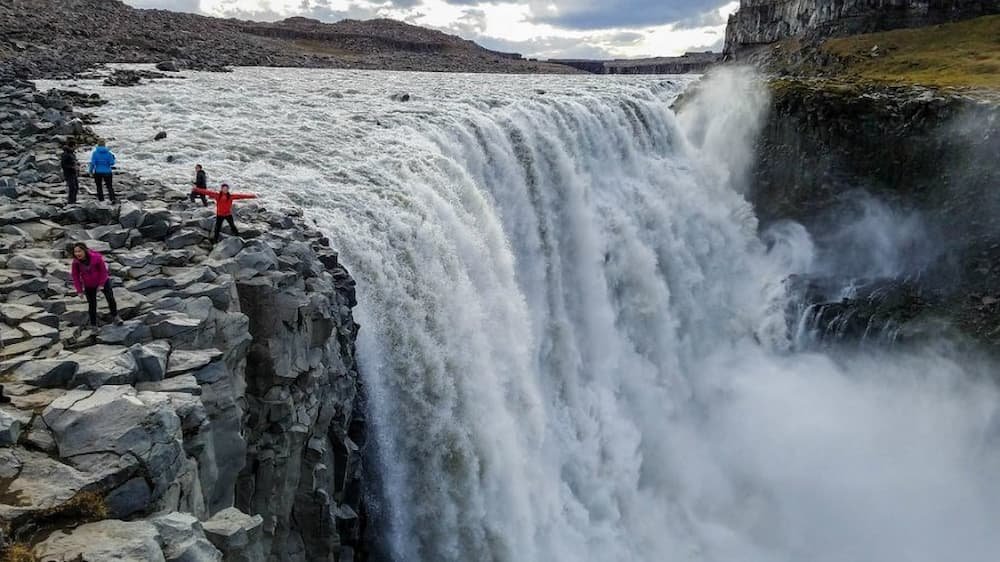
Dettifoss itself is part of Vatnajökull National Park, which is filled with wonderful sights like the Vatnajökull glacier (the largest in Europe) and the horseshoe-shaped cliffs of Ásbyrgi, which you can hike right into. It’s easy to see why there’s a lot of mythology surrounding this remote place when you have so much beautiful natural scenery surrounding you.
One of the most popular destinations in north Iceland is the Lake Myvatn region, which is well-known for its hot springs, craters, geothermal nature baths and lava formations. Here you can really appreciate the ruggedness of Iceland, and see how the volcanoes and craters continue to evolve the landscape.


We were driving east of Lake Myvatn when we saw a bunch of cars parked along the side of the road, and everyone walking up to what looked like blasts of smoke rising up in the distance. It turned out to be Hverir – these crazy boiling mud pots and steaming fumaroles, which were literally in the middle of nowhere. Basically, there were several spots that had opened in the planet’s crust, letting off steam and gasses including sulfur, so it can be extremely hot and certainly very smelly. If you want to be blasted by hot air pungent with the scent of rotten eggs, this is the place to be.


In Lake Myvatn, we decided to splurge on somewhere quirky, a place called Vogafjós Café. It’s a cowshed café where you can dine face to face with a cow (well, they’re in a shed behind glass, but it’s about as close as you want to get while eating anyway). The food is delicious – they smoke their own meats and trout, and also serve homemade cheeses, geysir rye bread (baked hot underground), and rye bread flavored ice cream. You can wash everything down with specialty shots made with local angelica herbs. Very gourmet.

One of our goals was to reach the northern tip of the country, which is just below the Arctic Circle. We reached the village of Raufarhöfn, which was eerily quiet and where you can find the Arctic Henge (still under construction). It’s a huge stone structure reminiscent of Stonehenge in Ireland, designed to interact with the unique natural light.

We kept driving up north and made it to a place called Hraunhafnartangi, which has a lighthouse looking out to the Arctic. We couldn’t drive all the way up to it because the path is basically smooth black rocks, so we walked along what seemed like a path that had been abandoned long ago – there was evidence of fishing, with lots of used nets, but no signs of life otherwise. It was very peaceful to look out into the ocean and marvel that the Arctic Circle is less than a kilometer away.

Leaving Hraunhafnartangi, we drove as the sun was setting and saw one of the most spectacular sunsets we’d ever seen in Iceland, and perhaps even in our lifetimes. The sky was filled with rich and vivid shades of red, orange, yellow, purple, pink, and blue… which seemed to dance and change each minute. Stopping along the road by the coast, we took photos along the beach and wound up finding a waterfall along the side of the cliff crashing into the ocean below. Amazing.

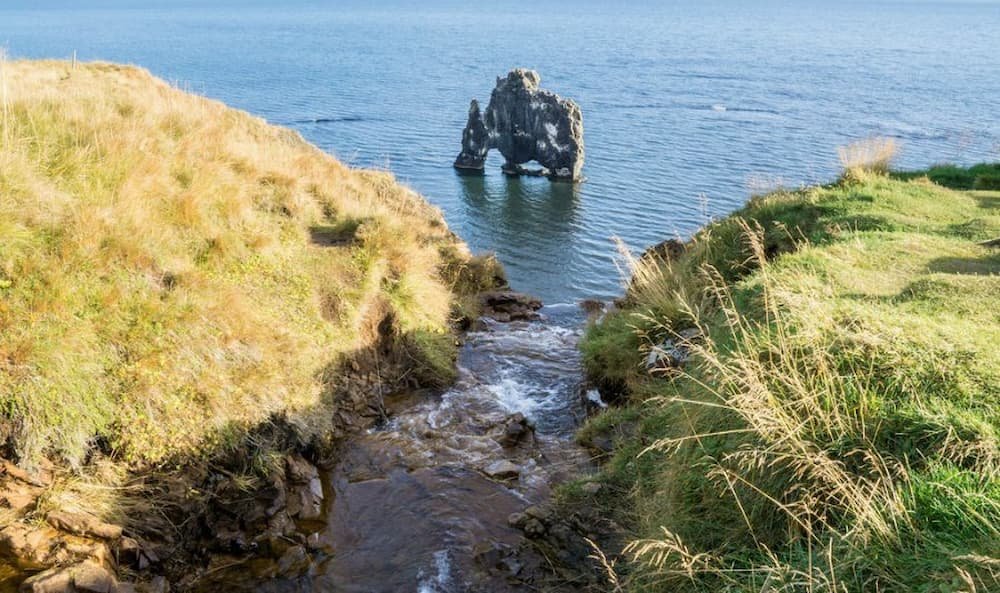
On our final day making the long drive back to Keflavík, we checked out the Vatsnes Peninsula, home to Hvitserkur, an impressive 15-meter high rock formation in the middle of the ocean. While we didn’t see any, just south of the rock is apparently a good place to see seals, while the rock itself has many birds living on it.
Our final stop was Kirkjufellsfoss, a waterfall in the western part of Iceland. You’d think that we’d be all ‘waterfalled-out’ by this time but every one we saw was so unique and beautiful. Kirkjufellsfoss was certainly not the highest or most powerful waterfall, but it makes up for it by being surrounded by rolling lush hills and the scenery around it, which makes for that perfect panoramic picture.


While was certainly a lot of driving at times, it was worth it to see so much of the country in a week. Iceland is a country that’s harsh, cold, and rugged – but that’s exactly what makes it breathtaking and worth a visit all over again.
The Golden Circle is one of the most popular routes for Iceland’s visitors, covering about 300 kilometers from Reykjavik, around the southern highlands and back. After yet another hearty breakfast (rye bread, fruit, coffee/tea and the all-pervasive skyr) – and of course, packing a huge bag teeming with snacks, we left Reykjavik on our tour with Mountaineers of Iceland and arrived at Þingvellir National Park, a site of huge historical, cultural and geological significance to every Icelander.
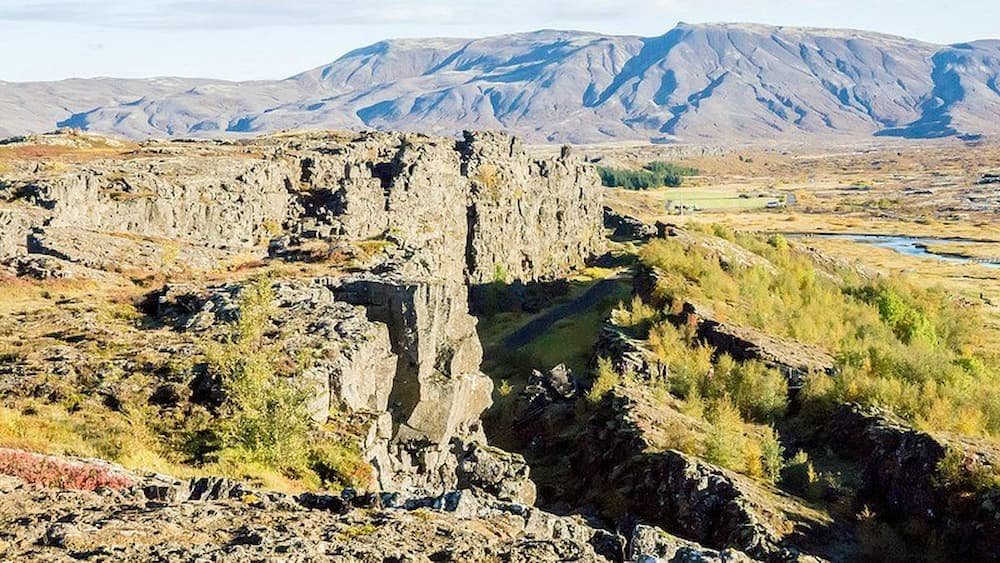
Þingvellir is the site of the country’s first parliament. Founded in 930 AD, it is the oldest parliament in the world and was where laws were passed and approved. In the 17th and 18th centuries, Þingvellir was used to carry out the death penalty – the most common crimes were incest and infanticide, but people were also burned for witchcraft in the late 17th century. In 1944, Icelanders again flocked to this location to commemorate the founding of the Republic of Iceland (previously it was part of Denmark).
A UNESCO World Heritage Site, Þingvellir is geologically significant because you can see the continental drift between the North American and Eurasian plates – and it’s a unique (but obviously cold!) place in the world to go snorkeling or scuba diving in between the continents.

Leaving Þingvellir, we made our way to one of the most famous waterfalls in the country, Gullfoss. Whether checking out the waterfall close-up (and getting sprayed with water in the process) or being enthralled by it from a higher viewing platform, Gullfoss is definitely a grand attraction to behold. The water from Gullfoss comes from the Langjökull glacier, which was where we were going next.

Langjökull Glacier is the second largest icecap in Iceland, and where tourists today can go into the glacier (via a man-made ice cave) or snowmobiling up the glacier. We were going to drive along the snow and ice on snowmobiles and marvel at the scenery around us.

The drive to Langjökull glacier built up our excitement, as the roads widened to show off massive snowcapped peaks, gorgeous blue skies dotted with expressive clouds, and a rugged landscape. We arrived at the base of the glacier and geared up – bulky black spacesuit-like onesies, chunky boots, thick gloves, balaclavas, goggles, and helmets to safeguard us from the chilly wind. Clunking down back into our super jeep, our guide gingerly drove down the hill towards a line of black snowmobiles waiting for us below.

There were at least 20 snowmobiles riding up the glacier, and we drove single file on the well-trodden path, with the most comfortable riders at the front. Cruising up the glistening glacier, the wind whipping our faces and surrounded by majestic mountains, felt both exhilarating and liberating at the same time. When I turned around I could see that my friends were just as thrilled as I was with the experience.

We got to the top and lined all the snowmobiles alongside each other, where we got to take photos (and the inevitable selfie) and have an impromptu snowball fight (somewhat unsuccessfully, the snow was packed solid and was rock hard). There was nobody else but us at the top, and for miles and miles around us, it was pure incredible nature.

Afterward, we had the chance to rev at top speed downhill, giving us even more of an adrenaline rush, before slowing down as we got back to the base of the glacier, where parts of the ground had melted the ice to expose jet black lava rocks underneath.
Our final highlight was to check out Geysir (the English word geyser comes from this attraction). While we were there, the great geyser erupted about every 15 minutes, shooting boiling water up to 70 meters up into the sky. People circled the geyser posed like you would at a bonfire with bated breath, phones on their cameras held in anticipation of capturing that explosive moment.

Up until the end of the 19th century, the geyser was owned by a local farmer, who sold it to James Craig, who would later become the president of Northern Ireland. During this time, entrance fees were charged to see Geysir, but today it’s, fortunately, become a free attraction.

While certainly, the tour is a bit of a splurge, it’s not every day you get to snowmobile up a glacier, and hey, it’s all about collecting experiences in life, right? I would have loved to have spent more time cruising all over Langjökull glacier, and this a fun tour that combines action, culture, and history into one fun day.
The Blue Lagoon Geothermal Spa is undoubtedly one of the most well-known attractions in Iceland. The water temperature hovers around 37-39 degrees Celsius (around 100F), and being in rich in silica and sulfur minerals, is also said to help people’s skin ailments. The water is completely renewed every two days.


With so many people flocking to the Blue Lagoon, you’ll need to reserve an entrance time and admission package well in advance. There are four different admission packages – a standard option that includes entry and a silica mask, up to a luxury package wine at the Blue Lagoon restaurant, entrance to an exclusive lounge, bathrobe and slippers, and a couple of other additions.
We chose the second cheapest option called Comfort. It included – entry, a towel, a silica mask, algae mask and a free drink in the Lagoon. The Standard package doesn’t include the towel, drink or algae mask, so it was definitely worth the upgrade.


Once we were in, you get a rather high-tech bracelet with an electronic tag to a locker you can put your valuables in. You then have to shower first before you can dip into the Blue Lagoon.
It was indescribably warm and relaxing. We dunked our hands into a bucket filled with silica, where we lathered our faces and necks with the thick white minerals. We then wandered to the other side of the Lagoon to a bar where we chose our drinks (alcoholic and non-alcoholic options). We dunked our heads into the water to wash out the silica after a solid 10 minutes or so, before getting smooth and chilly algae masks to refresh and beautify our faces.

Besides the warm Lagoon pool, there’s a mini waterfall that splashes cool water on you and a hot sauna. You can even get a massage in the lagoon if your muscles need that extra bit of attention.
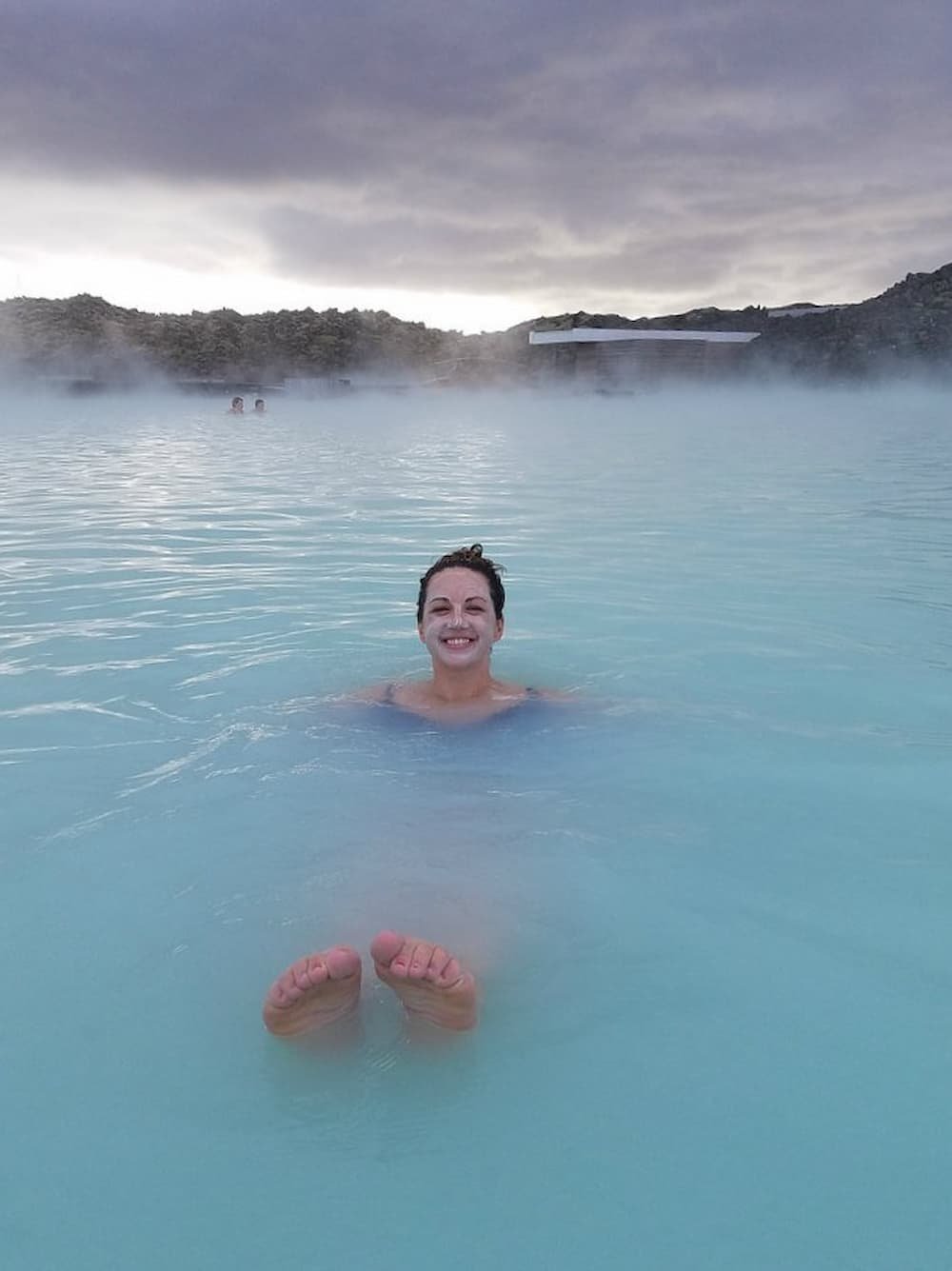
We stayed until our toes and fingers pruned up – and finally, feeling happy and rejuvenated, hopped on a bus back to where we were staying in Reykjavik to relax for the rest of the evening.
Be warned, there will be crowds of people at the Blue Lagoon. Tourists come from all over so it is absolutely essential that you reserve a time well in advance to avoid disappointment.
This is a sponsored article in partnership with Extreme Iceland
You don’t need to be a speleologist (someone who studies caves) to be impressed with the lava tubes of Iceland. Lava tubes are formed when hot magma from a volcanic eruption flows into tunnels of already petrified lava, creating incredible underground caves where you walk, crouch, and slither your way across.
About 30 minutes drive from Reykjavik, Cave Leidarendi (which means “End of the Journey”) is about 900 meters long and sits in a lava field near a volcanic crater. The cave was named after the discovery of a sheep’s carcass, which had the misfortune of falling into the cave and being unable to climb back out. The entire area was surrounded by various lava fields, which are covered in green moss and feel light and spongy underneath your feet. It’s incredible to think that these lava fields exist so close to the capital.

My husband, a self-confessed claustrophobe, was excited about checking out the lava stalactites, colors and formations until we arrived at our lava tube (Cave Leidarendi) and realized that we were descending into a fairly narrow abyss. Provided with helmets, headlamps, gloves (it’s quite cold inside) and sturdy hiking boots by Extreme Iceland, I squeezed his hand as we slowly made our way down the narrow entrance.


As soon as we walked down into the cave, we were enveloped by the darkness, with only the faint lights of our headlamps helping us navigate around the cave. As our eyes adjusted to the diminished light, we were able to explore the cave with our guide. We saw the sheep’s carcass (mere bones, but given how cool it was underneath, very well preserved), and checked out the features of the cave up close. In some places, the cave’s walls were smooth, and in other places, they ran jaggedly with the black stalactites pointing downwards towards us. In some parts of the cave, the colors were only jet black, but in other areas, we could make out unexpectedly bright colors shining back at us. It was incredible to think that all of this formed naturally from a nearby volcano – and the country continues to change with every natural phenomenon that happens.

In some parts of the cave, we could comfortably walk upright, but in many places (especially for anyone above average height), you are constantly doing the limbo – whether it’s ducking your head, waddling while in the crouched position, or even sliding and rolling around on your stomach. Thank goodness for our helmets as even the shortest visitor can easily find a way to knock their head on a rocky surface or two. Our guide mentioned to us that with so many forks and turns, it can be easy to get lost in a lava tube – it’s easy to see how that can happen if you’re unprepared, as obviously experienced by that poor dead sheep.
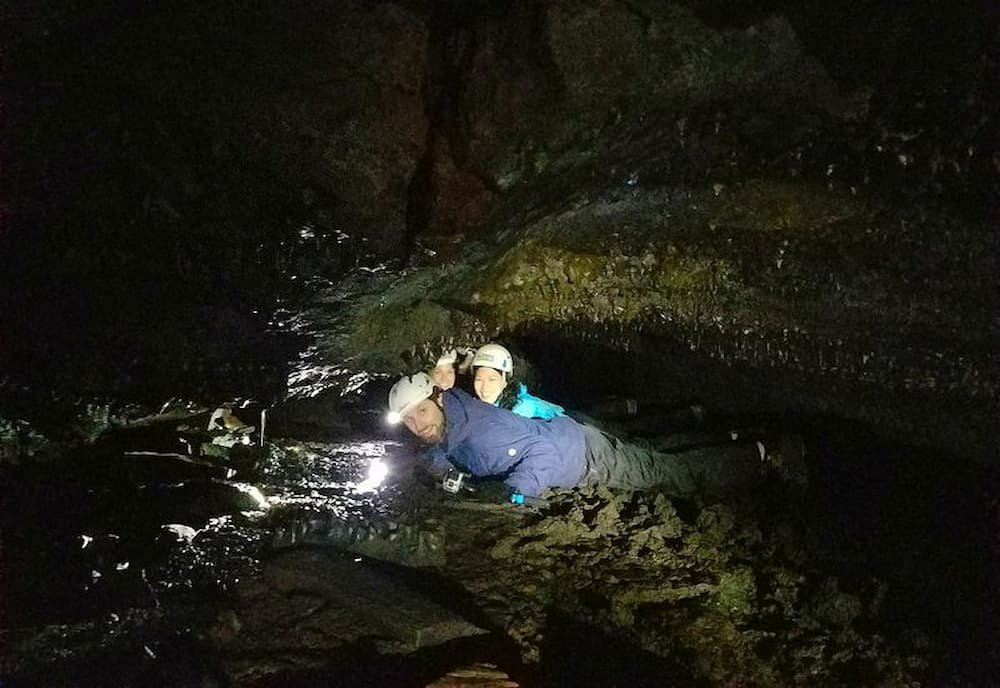
We literally saw the light at the end of the tunnel at the end of our caving experience, and my husband, having twisted and contorted himself, managed to come up sweaty but unscathed. Ditching our caving gear, we had a quick stop to check out some fish being dried out on branches in the sun.
It was quite the sensory overload, seeing hundreds upon hundreds of huge fish (heads and carcasses) being dried out while getting an intense stink. It’s an Icelandic tradition to dry fish out in this way, to be used again in dishes to give them what will certainly be a strong flavor.

Bangkok is a bustling city nestled in some beautiful geography, and there are tons of fun places to go and fun activities to do in this traveler’s paradise. Hitting up all of the standard tourist stops like the many beautiful temples is worth your time, but there are also some lesser-known unique things to do in Bangkok. Check out this list for some cool additions to your schedule while in Bangkok.

Italy has wine, France has cheese, Germany has beer, and Thailand has coffee. If you’re a lover of java, you will definitely want to take advantage of all the incredible, organic coffee produced here. You can definitely enjoy some delicious coffee or specialty coffee drinks at any of a number of cafes and restaurants, but the best way to get the full Bangkok coffee experience is to go on a coffee tasting tour with a local.
You can find a local coffee connoisseur to guide you through the city with a focus on coffee. A great place to find a coffee guide is Take Me Tour. Chances are, your guide will be able to offer all kinds of unique Bangkok insights beyond just coffee.

Escape room games are becoming popular all around the world, but this gem in Bangkok is worth making time for. One thing that makes Escape Break Bangkok stand out is that they offer four different scenarios – Outbreak, Relic Rush, Ghost Ship, and Kowloon Captive. Work together with a team of 2-7 players and solve puzzles to try to get out of the room within 60 minutes. Hitting up an Escape Room in Bangkok is a perfect thing to do before grabbing a great meal in the Bangrak district.

When thinking about fun things to do in Bangkok, you can’t ignore the nightlife. Sure, there’s an active club scene and plenty to do in this city after dark, but perhaps the coolest thing not to miss during a Bangkok night is a climb up the infamous Ghost Tower.
The spookily nicknamed Ghost Tower is really an abandoned condominium building called Sathorn Unique Condominium. Urban legends abound about this place, the construction of which was halted after the architect was involved in a political assassination plot. The abandoned structure is not in great shape and is even a little bit dangerous, but you really can’t beat the view. A climb to the top of this tower at sunset will yield a breathtaking view of the city. Stay into nighttime for the full display of Bangkok’s night lights.

Like many major cities, Bangkok has tons of great markets to explore. What makes Bangkok stand out, though, are the many fabulous nighttime markets. There are several busy night markets to explore in Bangkok, with an abundance of unique shopping opportunities. If you’re into vintage style, check out Green Vintage Night Market. If you like shopping and classic cars, check out Rot Boran Market. This market features classic cars converted into pop-up shops. Other markets like Siam Gypsy Junction offer anything and everything.

They say that when one sense is taken away, the others are heightened. One Bangkok restaurant decided to take advantage of that. A meal at Dine in the Dark is a truly unique dining experience. The goal of eating completely in the dark is to heighten your sense of taste. The 4-course meal (Asian, Western, Vegetarian, or Surprise) is served by visually impaired guides. Proceeds from the meal benefit Foundation for the Blind in Thailand. After eating in the dark, you get to see what you just ate. Without question, this is a meal you will never forget.
These 5 are just a few of the many fun things to do in Bangkok. Add in a few of these unique experiences alongside your other activities, and it will be a trip to remember. If you can’t hit them all this time around, there’s always next time!
In partnership with Inside the Volcano

On a gray and miserable afternoon, my husband and I took a tour with Inside the Volcano, to descend 120 meters into Thrihnukagigur (‘Three Peaks Crater’), a dormant volcano that had last erupted 4,000 years ago.
We drove out of Keflavik, with our four-wheel-drive feeling like a toy car thanks to the strong gusts that rattled our windows and blew the entire way. When we arrived at the meeting point, the sky was an even grimmer shade of gray. We battled not having the car door blowback in on us as we got out and into the little cabin where we waited for our tour to begin.
Once our group of about 15 had assembled, we were off on a 45-50 minute hike to the crater, with the wind billowing persistently behind us. The landscape around us was bleak – mossy lava fields and black upon black lava rocks. While the path itself was moderately flat, the surface was slightly uneven in parts, and the wind made it that slight bit more challenging.


When we arrived at the cabin by the crater, it was time to put on our special descending-the-volcano gear – a helmet with a headlamp (we were going deep into the volcano, after all), and a trusty harness, which would be clipped onto the caged metal elevator that we would use to go up and down the volcano, as well as walk across the little bridge to get in and out.


The wind continued to blow stronger and mightier as we donned our gear – and as we made our way to the volcano mouth itself, I felt at times that I would be lifted up and blown away! But I made it to the volcano without flying off, and as our group of about seven squeezed into the elevator that seemed to barely fit into the crater, it took about six months for us to eventually get to the bottom. Along the way, we were greeted with glowing colors of red (iron), yellow (sulfur), and even blues and greens from the different minerals that had been left exposed after the volcanic eruption.


The sheer size of the volcano from inside is incredible – apparently, you can easily fit the Statue of Liberty inside it, and we were able to explore the different little paths near the base of where we descended. There was one particular area on the volcano wall that was impressive – a huge splattering of black rock surrounded by bright yellows, which almost looked like it was a big eye glaring at us below.


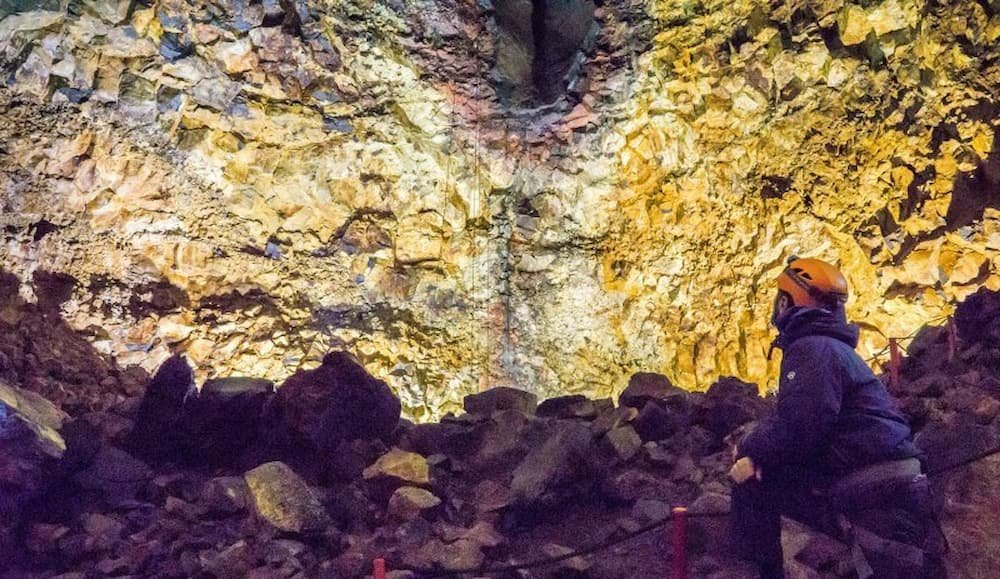
Thrihnukagigur volcano is unique because when the eruption happened, the magma in the chamber seems to have disappeared, with experts believing that the magma either solidified in the walls or retreated somehow into the depths of the earth. Tours started about 40 years ago, giving people a unique experience to go into a volcano for an extreme close-up.
After we had wandered around the volcano, we made our way back to the cabin where we were treated to traditional Icelandic meat soup, coffee, and tea. With the icy wind continuing to hammer around us, it was a very comforting treat. It was also clear as to why the volcano tours only operate until September – the weather here could obviously be treacherous and unforgiving in the colder months.

And then it was time for the hike back…. And very quickly, the weather went from crazy to insane. The skies turned vicious, and there was a ferocious downpour of sideways rain, carried by a howling wind. Then it started to hail, with the ice feeling like it was cutting tiny shards into my face. I felt drenched despite wearing multiple layers and a Gortex jacket and waterproof pants on top of my leggings and thermals.
Trudging along the path and combating the wind, we eventually made it back to the cabin where we started, where we quickly wiped our faces and ran back to our car for the 30-minute drive back to Keflavik.
While I was relieved to be out of my wet clothes, I felt thrilled by what I had just experienced. It’s a perfect summary of Iceland – enthralling, majestic and rugged all at once, and a country that makes you want to go back and relive it all again.
In partnership with Dive.is
If you’ve ever been snorkeling or scuba diving before, it’s a fun and indescribable experience. You’re aided by a snorkel or an oxygen tank to breathe while exploring what’s underwater and marveling at the life below.
For many people, snorkeling or scuba diving in Iceland is not the first thing that springs to mind – obviously, because it’s so cold. But in Iceland, you can snorkel in the only place in the world in between the North American and Eurasian continents, which drift apart about two centimeters every year.
Be brave, the water might be freezing but it’s well worth taking a snorkeling tour in Silfra, Iceland.

The Silfra fissure is the crack between these two continents, and where the water averages a chilly two to four degrees Celsius (yes, it’s pretty much freezing)! We arrived at Silfra, not far from the UNESCO World Heritage site Þingvellir, which we could see from a distance and which we had visited only a couple of days before.
Once we arrived at Silfra, we put on a dry suit over our clothes, which was light and so comfortably insulated that we didn’t want to take them off. On top of that was our hooded wetsuit, plus our snorkel and goggles. We had two pairs of socks over our boots and flippers and waterproof gloves to top everything off. The only thing that was exposed was our faces.
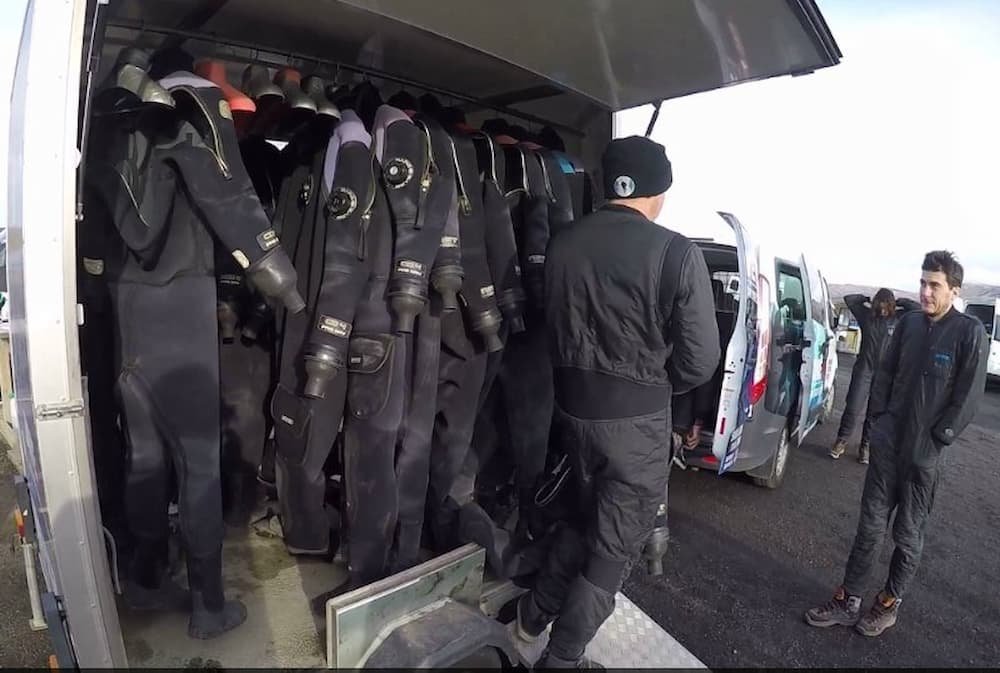

Our group of friends clambered down a few steps leading into Silfra fissure, and even though we were more than adequately insulated, as soon as my body touched the water I could feel the cold water surrounding me. Once my face was in the water I was admittedly shocked by the cold, but too exhilarated to care. Here we were, bobbing up and down in the water, seeing the colorful rocks and landscape underneath with incredible clarity – we could see 100 meters ahead. The water was so clean, that if you wanted to you could take a bit of a sip of it (I tried it – the guides even recommended we do it).

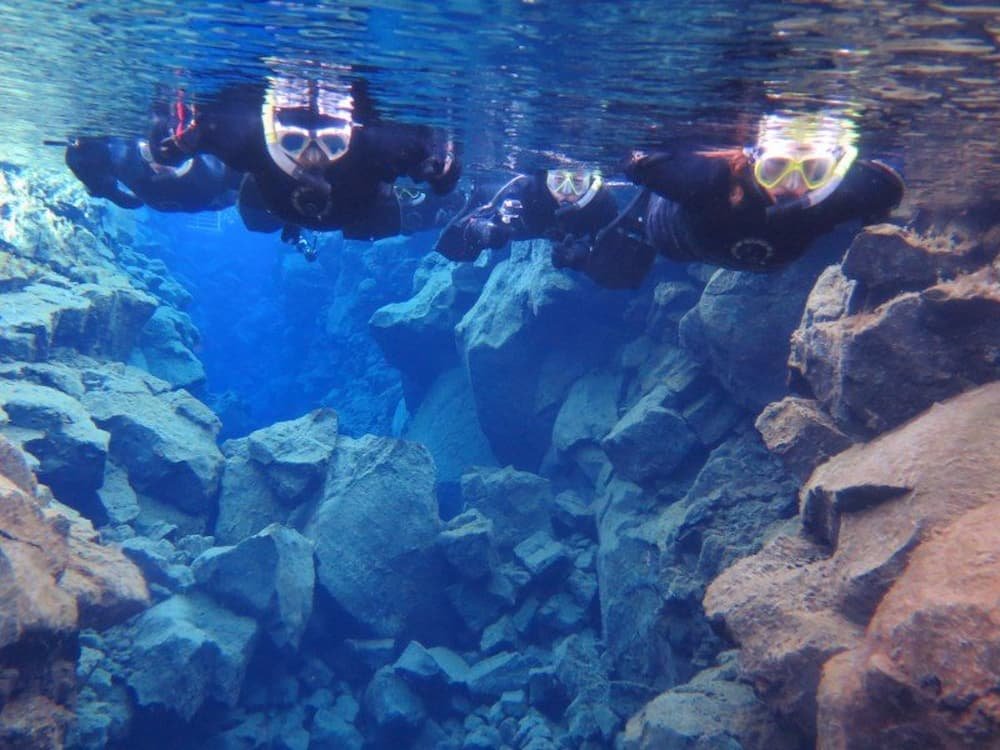
There are several sections of Silfra, with the deepest being Silfra Cathedral, which is 20 meters deep and 100 meters long. Here we saw lava rock walls dramatically sloping downwards, as well as algae. At the narrowest part of the fissure, you could practically touch the tectonic plates on either side of you. The last section is Silfra Lagoon, where the fissure widens out and we were able to freely swim around and explore.

While you don’t see any fish in Silfra, the experience itself was so unique and fun. Towards the end of the experience, I could feel my fingers chill and freeze, so I wouldn’t have stayed in much longer than the time they had given us about 30-40 minutes, which was perfect. Before you go in, the guides tell you that your fingers, while covered, will inevitably get wet, and the best way to avoid them from getting colder is not to move them much – so either swim with your hands behind your back, or outstretched in front of you (which looks kind of weird admittedly, but I did that because it was the most comfortable).

Once we got out of the water, I could tell that my face was flushed from the cold and my lips, which had been wrapped around the snorkel the entire time, felt swollen and numb. Talking felt hilarious. We walked back to the van to change out of our wetsuits (which was quite an endeavor itself) before being treated to hot chocolate and biscuits – the best way to finish up a one-of-a-kind experience.
If you would like to dive or snorkel at the Silfra fissure be sure to check out Dive.is.
Once a year, around the full moon of November, a huge camel fair takes place in Pushkar, India. When the eighth month (one of the most sacred) of the Hindu calendar has come, camel drivers of the Thar desert begin the long journey that will lead them to Pushkar for the full moon of Kartika Poornima.
Every year, some 300,000 people come here, bringing 50,000 camels and cattle. The city turns into a whirlwind of colors, sounds, and movements, where musicians, mystics, merchants, tourists, devotees, and animals come together for an amazing experience. This is the Pushkar Mela, commonly known as the Pushkar Camel Fair.

Imagine being in a vast and dusty plain, drained of energy by the sun’s rays and lack of water. The surrounding area is dotted with nomad tents. Men in white tunics sporting spectacular mustaches and elaborate turbans, with tens of thousands of camels as far as the eye can see. Yes, the Pushkar Mela is an event of pure magic.
Prepare to be transported back to the days of caravans, where people lived a nomadic life in the desert with their wives and children. Their possessions consisted only of the food they needed, tents, and their precious water supplies, moving from place to place to conduct their business.


At the Pushkar Mela, camel drivers organize themselves according to the sun. Every day passes the same as the last for the entire week-long festival.
Around 5:00 AM, the sun rises over the desert, located just outside the city, and slowly the masses awaken from the serenity of the night. Slowly, in the cool of the morning, we hear voices, whispers, and groans of those armies of cattle that had lay silent all night.
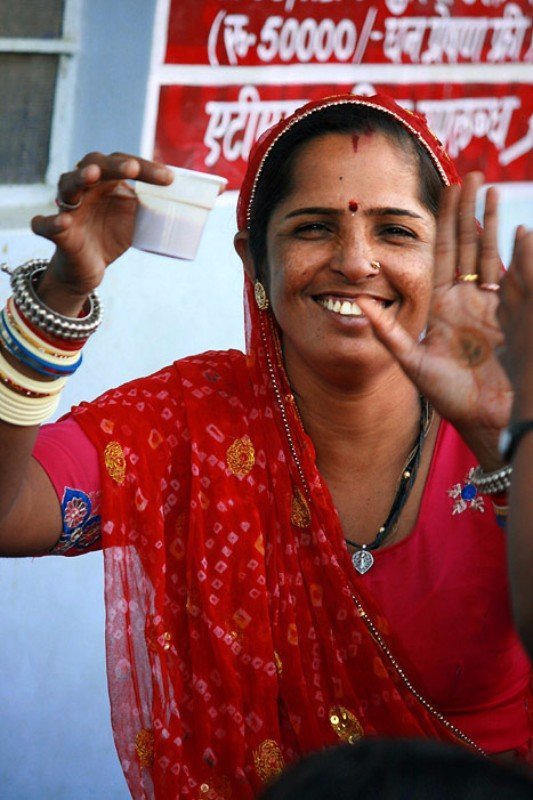
Fires appear here and there, and the plain suddenly ignites with pink and orange tones. Men are pressed in circles around campfires, wrapped in heavy blankets, sipping a chai tea or smoking a bee-dee. Meanwhile, the women prepare food in large pots on glowing fires which are fueled by cow or camel manure (it’s efficient and cheaper than wood).
Here, people prepare tea and food with water provided by wells drilled in the area and chapattis are cooked in the sand, as they do in the Sahara. The toilet is a little further, beyond the hill, or even incognito among the tents or sleeping people.

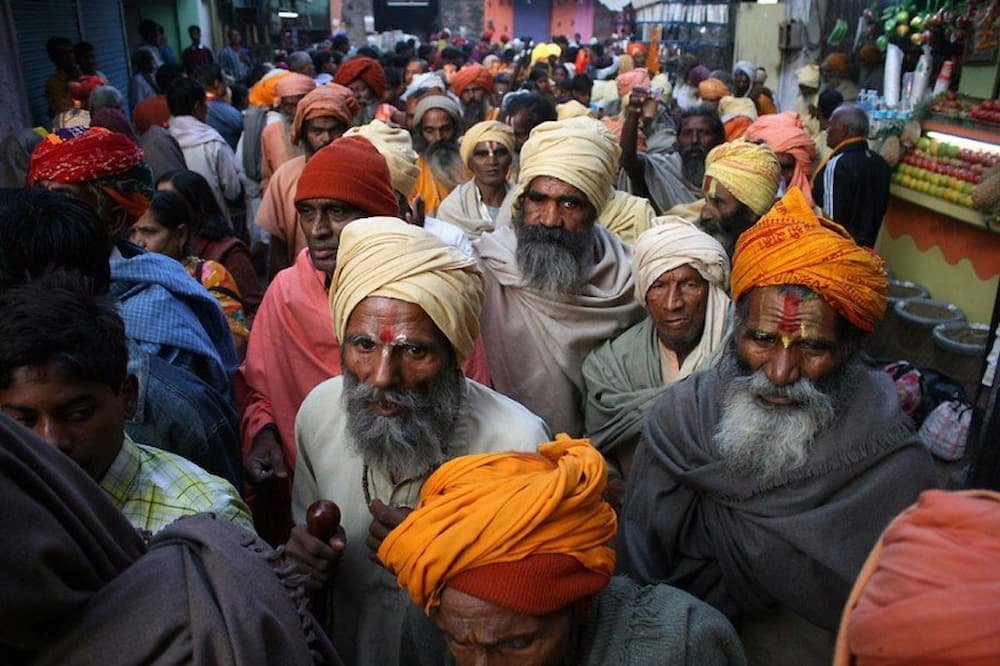
Rajasthani men usually wear a turban, a specific color that is representative of their family, tribe, or caste. They always have an imposing mustache that they are constantly looping between their fingers.
The price of a camel is around 15, 000 rupees (approx $220 USD), and may even increase to 20, 000. While this may seem cheap for such a large animal, it is exorbitant when you factor in the proportionate cost of living in India. People are willing to pay though, as these animals are essential tools for work and travel.

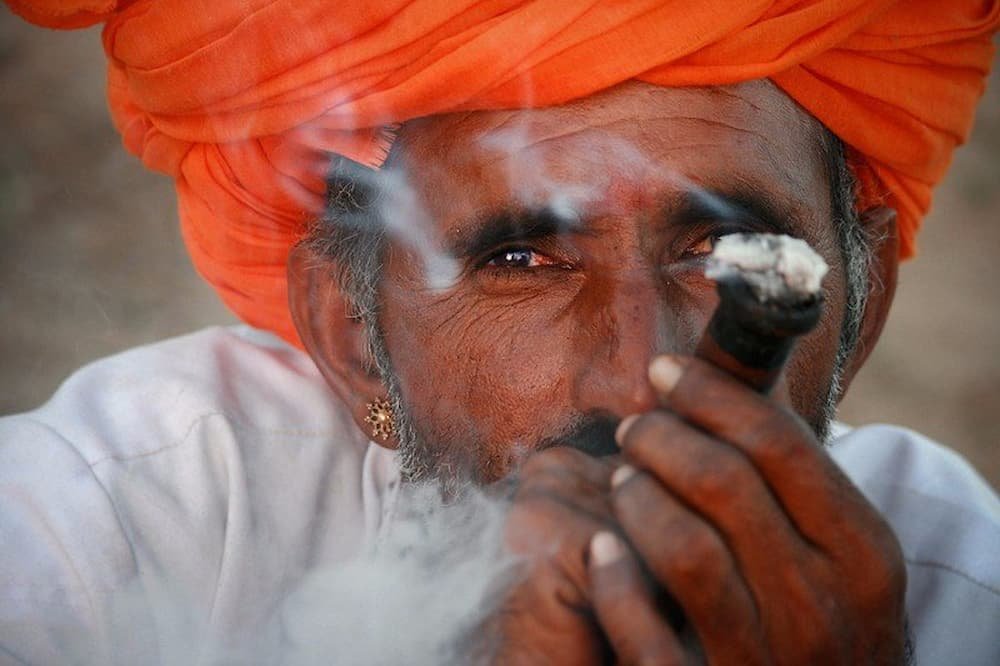
The chillum is a clay pipe, full of charas that the camel drivers share together in small groups. The grass is pure and super strong. Most men smoke here at sunrise, and of course again at sunset. It’s part of their desert culture. It may be interesting to make good negotiations … Who knows?
When we approached, they often invited us to sit with them for tea. They drink chai here in small bowls that they will use afterward for their food since they don’t carry glasses. And then comes the chillum…. it’s so strong that after a few drags, there’s no need to consider undertaking anything for at least an hour … you take time to land smoothly.
Once again it is sunset on the Mela grounds. By immersing myself in such places I feel that traveling has definitely brought me to a higher level. It opens doors that become impossible to close. They are sometimes indefinable sensations, and visions, hidden behind an opaque veil, through which we can only guess a vague outline. All these travels are like a kind of succession of baptisms that accumulate themselves over and over again. They entirely become stories of your own life, that you’ll never forget and that will continue to beat in your inner self, for the rest of your life.
These experiences become stories of your own life, that you’ll never forget and that will continue to beat in your inner self, for the rest of your life.



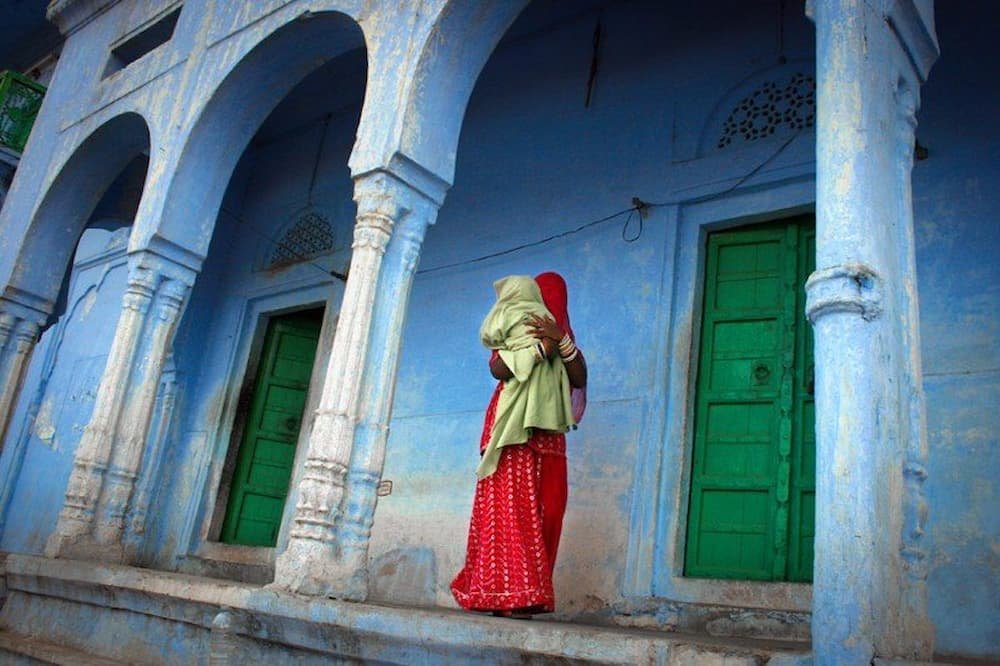


According to the system of castes, the gypsies of Rajasthan are part of a vast Indian population of “untouchables” and society expects nothing from them. These outcasts are acrobats, Kalabilia dancers, Bhopal puppeteers, snake charmers, yogis, musicians, or dancers. Their arts have always been used for the entertainment of the Maharajas.


Every hour, a new performance is given in the Pushkar stadium. People are not always aware of what will happen next since many of the shows are improvised. From afar, we only need to follow the tide of colored saris and turbans as the crowd makes their way into the arena, through clouds of dust.
There is dancing and acrobatics, stunning and impressive, often carried out by gangs of gypsies. They roam around the country, but are not well-considered and are treated poorly by many people here in India.


Rent a car in Jaipur for a convenient road trip to Pushkar, located about 150 kilometers away. Enjoy a smooth drive on NH48 and explore the attractions at your own pace. Moreover, having a car in Pushkar provides easy access to renowned attractions, such as the sacred Pushkar Lake and the famous Brahma Temple. For a hassle-free and enjoyable road trip from Jaipur to Pushkar, consider renting a car in Jaipur.
If you’d like to read about my journey through India or see more images from the Pushkar Mela, jump on over to my website www.parcheminsdailleurs.com.
After sleeping soundly in our warm Reykjavik apartment and a hearty breakfast consisting of Icelandic skyr, coffee, and rye bread with cream cheese, our group was excited for our “Landmannalaugar on Big Wheels” tour with Extreme Iceland.

The “big wheels” description lived up to its name – our super jeep looked like it belonged in a monster truck rally (all it needed to do was breathe fire). Clambering up to the vehicle (assisted by a little step ladder), we met our guide Ragnar (which means “warrior of the gods” in Norse), who has been a tour guide for over two decades. As the monster truck slithered through the narrow Reykjavik streets and finally left the capital, Ragnar mentioned that he owned a farm half an hour away from Reykjavik with horses and sheep and that he could be both “nasty and nice.” I felt like we were riding with a true Viking descendant.

The city landscape quickly gave way to the ruggedness of Iceland, where we were greeted with sweeping mountains and cliffs laden with black volcanic rocks with sheep and horses roaming around. We passed a geothermal plant shooting sulfur into the air, looking very much like it was producing the clouds in the sky (“the cloud factory”, Ragnar joked), and dozens of hot springs embedded into the hills (there are about 600 hot springs around the country). We drove past greenhouses that produce a lot of exotic fruit and vegetables – including bananas (apparently Iceland is the third biggest producer in Europe – and I checked because I found it so hard to believe – this urban myth is false).
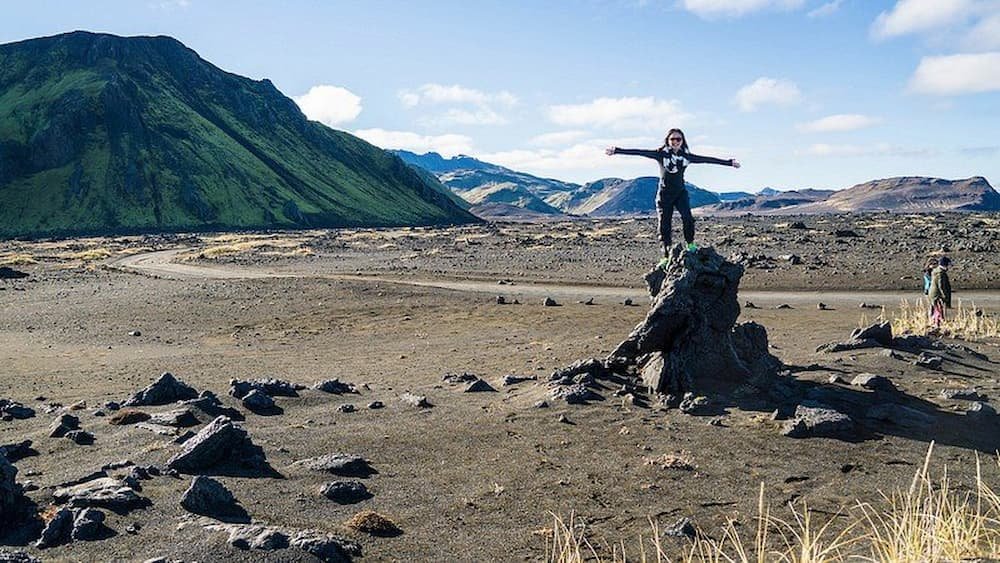
Our first stop was Þjórsárdalur Valley, home to the Hjálparfoss waterfall, meaning the Helping Falls. This name comes from when travelers arrived at this lush area and their horses could graze and recover. The waterfall has a very convenient wooden platform in front of it to check out the waterfall head-on, and is flanked by rocky but relatively easy paths to get views from different angles. It’s a very picturesque waterfall, with a parallel pair of waterfalls falling into the valley below.

Next, we headed towards the highlands, stopping briefly at Crater Lake Ljótipollur, formed in 1477 and now filled with a cobalt-blue deep lake. It literally means “ugly pond” but is far from it – even standing from a great height looking below, we were impressed with how vividly blue the lake gleamed back at us. We also stopped at Lake Frostastaðavatn, before we reached our main destination.

Lava rock is very porous and makes a great natural filter for glacial water, and we could see the difference most vividly on the drive towards Landmannalaugar, with brown water being “unfiltered” from a volcano, while the crystal blue water sidling up next to it being fit to drink. Driving past the jet black rock, it’s easy to see why NASA has used Iceland to train its astronauts – it’s an otherworldly landscape that looks like it is more appropriate for Mars than planet Earth.

We arrive at Landmannalaugar, a region forged by different and compelling geological elements, such as extensive lava fields and multi-colored rhyolite mountains. We go on a short hike and once we’re high enough, see a breathtaking display of the mountains splashed with bright hues of yellow, brown, black, and even pink and blue.
The Icelandic highlands really live up to the hype and you will most definitely want to include a trip here. Accessibility is a bit of an issue at times and the weather can change without notice so a tour is the easiest option. This was one of the main reasons we decided to go with Extreme Iceland.


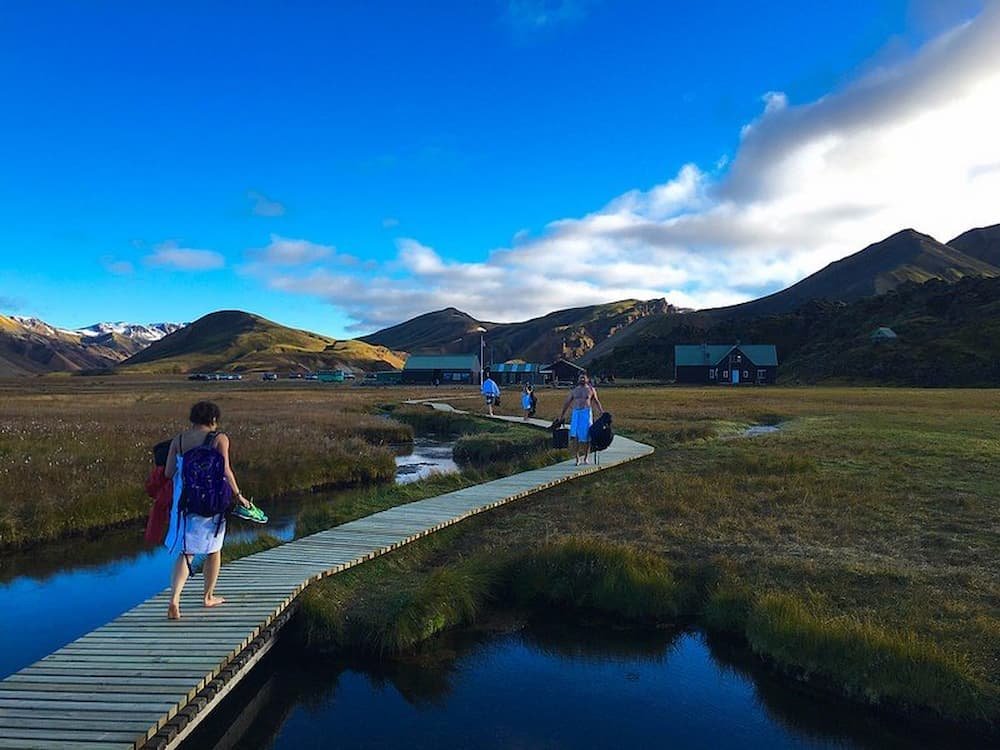
Before we leave, we walked across a jetty to the site of an outdoor hot spring, where we stripped on the wooden platform to our swimming costumes, and plunged into the bath to warm our quickly shivering bodies. The hot spring’s temperature is inconsistent in places – near the source of the spring it can be boiling hot, but move an inch or two in the opposite direction and you can feel cooler water, which probably seems chillier than it is given the cool air around you while you’re sitting still in your bathing costume.

Once we were all in our monster truck ready to get back to Reykjavik, our guide Ragnar lived up to his warrior name by excitedly demonstrating what our vehicle was capable of. The road back, which was pockmarked with deep-set potholes filled with water, was the perfect opportunity for Ragnar to plunge the super jeep into every pool, splattering it with so much muddy water that we couldn’t see through the front windshield. We bumped and splashed along this road, screeching and laughing, feeling like we were on a rollercoaster ride.

Unfortunately, this wasn’t a thrill for everyone. We wound up encountering a couple who had driven their four-wheel-drive rental into a deep creek and had gotten the wheels stuck on the soft sandy ground underneath. Ragnar, ever the Viking, pulled out a rope from the boot of the car and stripped to his shorts to try and use the super jeep to rescue them. Meanwhile, we stood around shivering in the cooler air as the sun quickly started to set. Unfortunately, with nothing to tie the thick rope around, the four-wheel-drive proved to stay stuck, and the couple had to wait for help to arrive, adding to the already four or so hours that they’d been sitting in the creek.

The sunset was a beautiful mirage of pinks, purples, oranges, and blues, eventually descending us into darkness as we made our way back to the capital. But our adventure wasn’t over. As the sky turned pitch black, the Northern Lights emerged, with greens, whites, and purples vividly mingling and dancing together. A perfect conclusion to a day’s adventure.


