It’s hot in Bali. Scorching, in fact. Year-round, temperatures hover between 28-33 degrees celsius. So, you have three options. First, follow the crowds and flock to the beach for surfing, swimming, sunbathing, and selling (well, you get approached a lot by people trying to sell you everything from pineapples to beach mats – like how I managed to get all the verbs start with ‘s’?).
Second, you can chill by the hotel and laze by the pool, presuming that you have one. And third? Arguably the most fun of the three is to spend the day at Waterbom Park in Kuta.

Bali Waterbom has more than 17 waterslides and leisure facilities, ranging from the placid to the scream-worthy. Open from 9 am to 6 pm year-round, the park sits upon 3.8 hectares surrounded by tropical Balinese gardens and prides itself not only on building rides that are maintained to strict international standards but also on its ongoing commitment to environmentally sustainable operations.

Showing up on yet another fine day in Bali, Michael and I arrive just before lunchtime amid a sea of people queuing up to spend the day splashing about.
Admission is US$26 (US$16 for children under 12), which doesn’t include locker hire, towel hire, food and drink, or some of the additional rides (these are a water blaster game, a euro bungy and a 10-meter high rock climbing wall).
Rather than carrying around your cash and or credit card though, visitors wear a waterproof wristband that can be topped up with cash. When making a payment, this is simply scanned by staff. To check your balance, multiple barcode scanners are available, and any unused funds are refunded at the end of your stay. Meanwhile, there are obviously no paper maps in sight – the park is well signposted though and it’s easy to find your way around.

Stripping down to our swimwear, Michael and I first checked out the “Lazy River”, grabbing a bright orange floatable “donut” and making our way downstream. We didn’t float down for long though – the screams of people making their way down waterslides were too enticing.
Most of the slides are in the same little tower – check out “Smashdown” for an eight-story slide at a 60-degree angle, reaching speeds of up to 70 kilometers per hour. Then get on those floating donuts for a winding slide down the “Macaroni”. Or go head-to-head with a friend on your stomach down a specially made sled to see who gets to the finish first in the “Boogie Ride”.

For more thrills, the “Boomerang” on the other end of the park gets the heart pumping, as you twist down a sheer 20-meter drop before being swept back up again. But the park’s claim to fame is the newest ride, “Climax” – so freaky that peoples’ legs have buckled at the top and they’ve actually turned around and walked all the way back down the tower, while grown men have been heard to squeal as they zoom down, shocking and cracking up witnesses.
With height and weight requirements as well it’s not for everyone – you stand in a small chamber 19 meters above the ground, as the door is shut (and locked) on you. Then a woman’s voice counts down…3…2…1… before the trapdoor opens up beneath you and you are sucked down a near-vertical dip, then up and around before finally sliding to a mighty splashing stop at the bottom.
At 2.5 G-force speed the ride is over soon enough, but not before you skip a heartbeat or two – I screamed the first time but it was well worth a second (and even third) go! For guys that have metal anywhere on their board shorts (e.g. zippers, pockets, etc), they will need to turn their shorts inside out (Michael had to), while girls – watch your bikini tops and bottoms when you get to the end!
For those not keen on rides, there are plenty of places to wade, sunbathe and just relax in the sun – even VIP-designated areas to laze about, sunken pool bars, and massage parlors.
The only downside? Walking around in our swimming suits all day meant that we had no pockets – and nowhere to put our locker key. While the key is on a band, this isn’t adjustable and Michael did drop it somewhere in the theme park, which meant 20 minutes of fruitless searching at the end of the day. Fortunately, someone stumbled upon the key and handed it in to lost property, saving us from having to pay for a replacement. But after a day of sun and water fun, how trivial does this sound?
“Massage? You want massage?” She called out to my fiancé Michael and I from her perch on the steps outside her salon, giving me the once over as she monotonously ran through the words.
“No thanks,” I quickly mumbled, barely breaking my stride as I continued past.
At the salon next door, another lady looked languidly at me from her seat. “Yes, massage?” she entreated, peering up at me from within an arm’s reach.
I shook my head, walking single file ahead of Michael down the narrow footpath.
“Massage!” she called out to Michael, grabbing his hand and trying to yank him into her store.
Grr.. Get the hint lady. And keep your hands off my fiancé, please.

Beauty salons run amok in Bali, and as a tourist, being asked if you’re interested in a massage/manicure/pedicure or other beauty treatment is as commonplace as seeing someone wearing a Bintang singlet down the street. Salon ladies (and occasionally men) prepositioning you for their services seem to have an uncanny ability to sense you coming from a few meters away, as the words “massage” automatically leave their lips as soon as you walk past.
Michael and I were keen to get massages throughout our stay in Bali, trying out a number of lower-end parlors and splurging on our last day. In Bali, two types of massage are typically offered – Balinese and stone massages. Balinese massage techniques are a blend of Swedish and Thai massage styles – Swedish due to their use of oil and long, gliding strokes, and Thai thanks to the emphasis on pulling and cracking the joints.
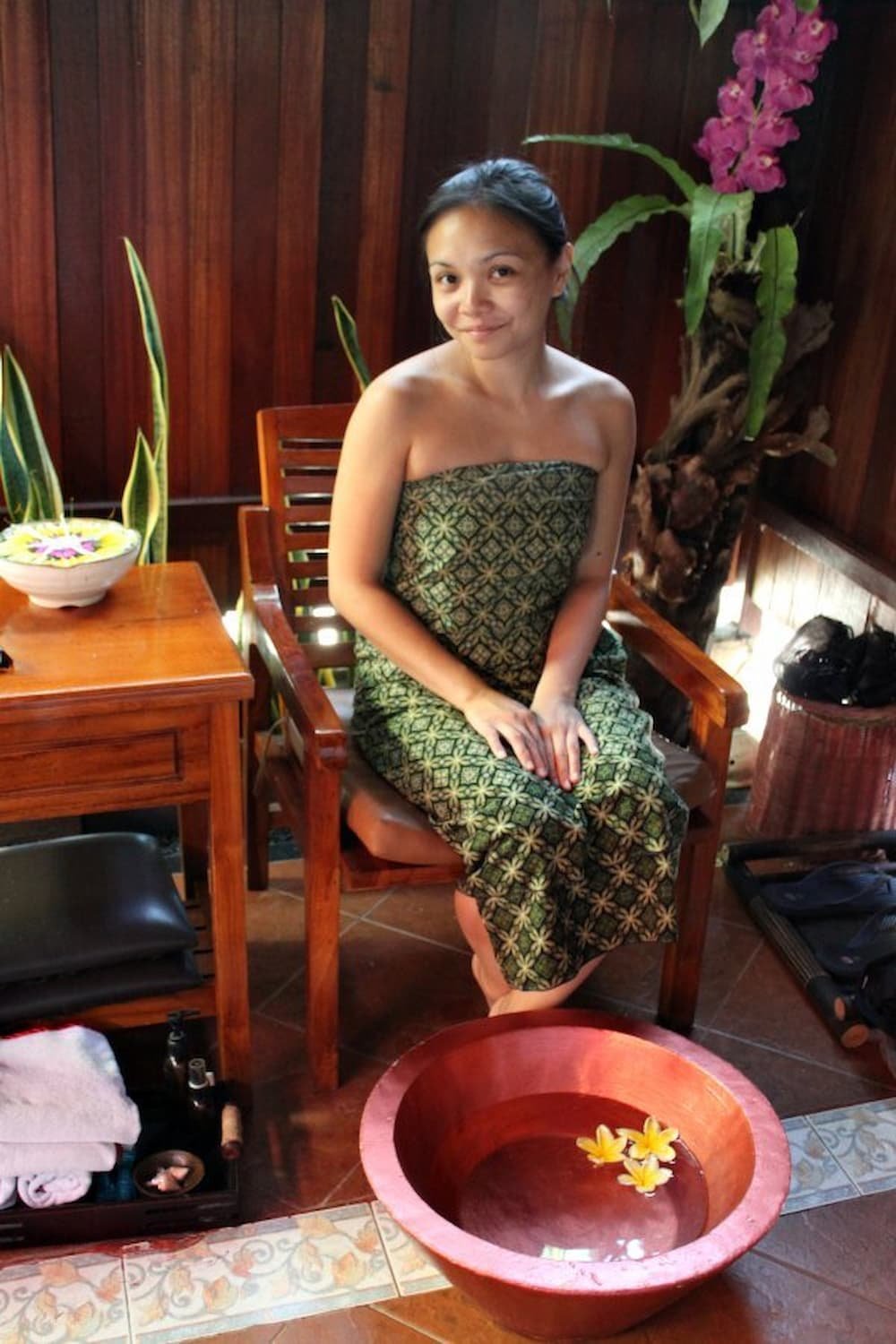
Starting prices for one-hour Balinese massage is from about 50,000 rupiahs, while a one-hour stone massage is from about 80,000 rupiah – although, of course, prices vary depending on how posh the salon is. A sign outlining a salon’s services and prices are typically lit up outside the store, while brochures are also available.
Balinese massages may vary slightly depending on the salon you go to, but typically you enter a section cordoned off with curtains with either one or two beds (depending of course if you are getting a massage with your partner), where you strip down into to your underwear.
Lying face down on the massage table/bed, the emphasis starts with long strokes on your back – for those who like hard, let-me-beat-you-up massages though, you may be disappointed – the massages are more relaxing than the deep tissue kind. You then get your shoulders and limbs kneaded before they turn you over and focus again on your limbs, fingers, toes, head, and face.
The only major difference I found was with a) one massage parlor not wiping the oil off me afterward and b) one salon massaging my stomach (making me feel rather queasy as I’d made the not-so-wise decision to just gobble up a massive dinner of fresh juice, steamed vegetables and nasi goreng topped with prawn crackers).
Meanwhile, stone massages are just that – hot stones are applied to your limbs, back and stomach, with the aim of relaxation and improving circulation. The stones are used to massage you then lined up in these sections one at a time, so that you have a line of hot stones placed on your legs at one point, which stay there for a couple of minutes before they are transferred to another part of your body.

For ladies wanting more pampering, you can also try and bargain to have a cheaper overall price if you want to also have a pedicure, manicure, or other treatment. Walking past a restaurant next to my hotel one day, a lady offered to give me a manicure and foot scrub/pedicure for the bargain price of 30,000 rupiahs and 40,000 respectively (about US$3.75 and US$5). Given that this was half the price of the salon I had been considering a few blocks away, I promptly said yes, although I was puzzled by the fact that there was no salon in sight.
She nodded at me to follow her, turned on her heel, and entered a little alcove within to the restaurant, up two flights of stairs and past a row of ramshackle doors that looked like they had seen better days. It turned out that this was a cheap hotel, with rooms hovering around US$20 per night (due to no hot water and basic amenities). Going into one of the rooms, it turned out this was the lady’s salon – she and a couple of other ladies worked here, providing simple beds, pillows and curtains for massages and modest seats and washtubs for manicures and pedicures amid the peeling paint on the walls and ceiling. Here my feet were freshly scrubbed, moisturized, and painted hot pink with little flowers dotted on with toothpicks, while my hands were similarly smooth and pampered. Although my salon surroundings weren’t glamorous I left feeling relaxed and refreshed.

The lady who pampered me, Ita, spoke little English and I didn’t speak Indonesian or Balinese, but with gestures, smiles and small talk, we got along swimmingly. I learned that Ita was 23 years old and was brought up in a village not too far away from Kuta. She had come to Kuta to earn an income, leaving behind most of her family and her boyfriend, who tried to come and visit her once a month. She lived with her brother in a small, one-bedroom apartment that included a kitchenette – but the toilet was a communal one with everyone else living on the same floor. For this, they paid 500,000 rupiahs per month (about US$62.50) – money trivial by Western standards but certainly not to the same level of comfort that we’d expect.
On our last day in Bali, en route to the airport, Michael and I went to Green Garden, a hotel that also doubles up as a spa, in South Kuta. Finding their brochure at the airport when we first arrived, Michael recalled that he had been to the spa on a previous trip. The spa has also been featured in a number of guidebooks and has been rated very positively.
We were indulging in a three-hour treatment that included a foot scrub, a 1.5-hour massage (Balinese for Michael, stone for me), a mini facial, body scrub and bath/shower. The experience started off with us being picked up by Green Garden staff and whisked to their hotel, where we were greeted with pineapple juice and selected what oils and scrubs we wanted to be used during the massage and facial/body scrubs. Our surroundings all illustrated a picture of bliss – here we saw a water feature of a nude couple forever looking lovingly into each other’s eyes, pots of water framed with fresh frangipani petals floating in them, a picturesque pool and manicured gardens, as well as soft calming music playing throughout the premises.

After choosing our treatments, Michael and I were guided to a private room enclosed in a bamboo face, which had natural light and fresh air seeping through. Rather than curtains, shells hung from the ceiling, while a mini tropical garden with smooth white pebbles lined one wall, next to the bathtub.
Once the three-hour indulgence was over, we were treated to a three-tiered glass of fresh pineapple, melon and papaya, and honey/lemon tea. Gliding back to the hotel’s restaurant afterward, my feet barely touched the ground as I had my last Indonesian dinner, topped with banana fritters and a banana split for dessert. Pure. Bliss.
In addition to the traditional hands-on approach, most spa salons in Bali use spa salon software, making it quick and easy for visitors to make bookings and enjoy a seamless spa experience.

Do you love the water – but don’t want to lie on the beach or splash around all day? For the more adventurous traveler to Bali, white water rafting is right up your stream.
There are a number of companies that offer white water rafting packages, however, all go down the same river (at varying points). We chose Sobek, which provided a grade three rafting experience that lasts around 2.5 hours and includes a buffet Indonesian lunch afterward.
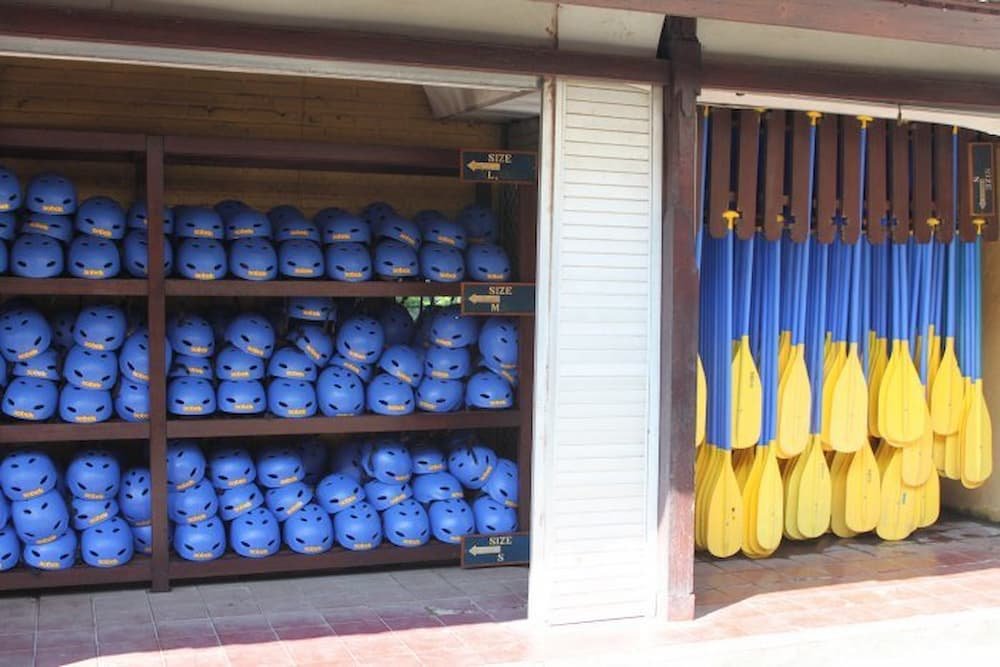
We were staying in Kuta, so a car picked us up from our hotel, driving over an hour and a half or so to Ubud. Here, we quickly put on our lifejackets and helmets, packed all of our valuables into waterproof bags, got into teams, and chose our oars. Getting to the river below is a mini trek in itself – there were 543 steps leading all the way down.
Our guide, Rocky, was hilarious and good-natured. He would sometimes slap the oar on the river surface, making us jump, or dribble cold water down our necks. When we’d jump and squeal he’d yell, “Anaconda!”. The guides looked like they really enjoyed their jobs – they'd paddle past each other, encouraging us to race the other tourists, or we’d get into water fights, flicking the oars towards each other. Needless to say, even though nobody fell into the water, you are guaranteed to get wet.
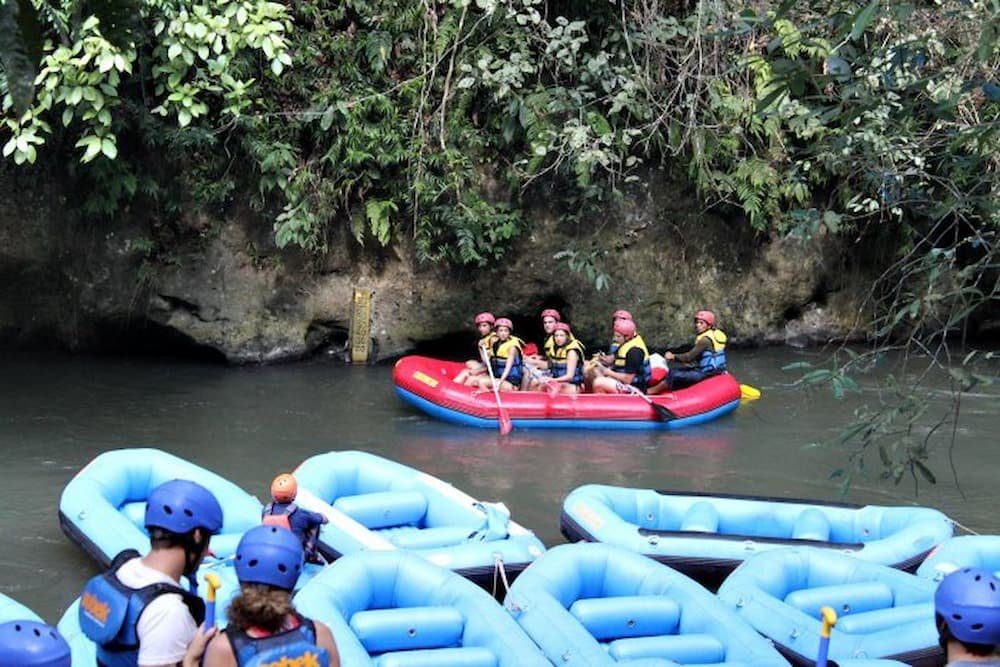
The rapids were not particularly challenging, and the guides are very good in directing us to paddle forwards and backward when we need to. We did manage to get stuck on one of the rapids which meant that Rocky had to jump out and drag us over the rocks, however other than that the rapids are quite easy and are suitable for ages young and old.
We saw monitor lizards almost camouflaged on the banks of the river, were amazed by beautiful, moss-encrusted rock carvings (they looked ancient but were disappointed to hear that they were only about 15 years old) and were drenched under gushing waterfalls (well, Rocky made us go underneath it).

At the end of the tour, Michael jumped into the water, which was freezing as it was in the shade. Drenched, we made our way to our well-deserved buffet lunch that included fish satay, mie goreng, curry chicken, rice, and fried soybeans, followed up with fresh fruits and sticky rice sweets.
Incredibly, we still had the energy to return back up to where we started, to change, and also, in true tourist form, check out the professional photos of you rafting and potentially purchase it.

Sobek is one of many major adventure tour companies operating in Bali, but there are many other companies that offer white water rafting. When choosing a company, be sure that they are accredited to ensure that they have the proper safety and insurance regulations in place.
Sobek is accredited and has won a number of tourism awards as well.
If you enjoyed this article and would like to find out more about the best places to go, check out our Wanderlist - Best Places to go Whitewater Rafting.
Have you ever been to a place that you consider paradise? A place that is so breathtakingly beautiful that you have to think twice about sharing it with anyone else, lest it be overrun with tourists next time you go?
For me, paradise is summer weather all year round, cloudless blue skies, crystal clear waters, and lazing upon shimmering white sand in an idyllic tropical setting. And I stumbled upon it in Gili Trawangan, without even planning to.

Gili Trawangan is one of three other “Gili” (gili means “small island”) islands northeast of Bali. The largest of the three islands (the other two are, Gili Air and Gili Meno), it is known as a bit of a party hub, although this is relative to the serenity of its neighboring sister islands.
To get to Gili, you can take either a slow boat (takes about 10 hours) or a fast boat (2.5 hours) from Bali. We chose Gili Getaway, which got us quickly and easily to and from Gili and does numerous trips to and fro each day. The company is run by Tony – a native Englishman who has lived on the island for three years, he has had a varied and interesting business career and has an affable, chatty nature to boot.
While the trip is speedy, I recommend taking seasick tablets before embarking on the fast boat, even if you have sturdy sea legs – the Lombok Strait’s waters are one of the deepest in the world which means that you feel like you’re on a never-ending rollercoaster for almost the entire trip. The waves lift the little speedboat (it takes about 20 people) so high that it slams violently back into the water, crashing so loudly that it’s a wonder the boat doesn’t irreparably damage itself on each trip.

Arriving in Gili, we jumped off the boat onto white sand and refreshing water that swam around our knees. Odi met us at the ‘wharf’ and promptly led us to our bungalow. Another striking feature of Gili is that there are no motorized vehicles on the island whatsoever (your choices are walking, cycling or by horse-drawn cart), adding to the relaxed atmosphere of the place. In fact, over lunch we realized that the island was so laidback that service over lunch took forever – luckily we felt just as lethargic as the waiters and weren’t starving either, so we could wait.

Compared to Bali (and more similar to the rest of Indonesia), Gili is deeply and predominantly Muslim. Being there during the month of Ramadan meant that not only did we get the call to prayer five times a day (including at 3 am and 5 am), we also heard the entire prayer over the loudspeaker from the mosque which was a block away. In the evenings when Muslims could break their fast, prayer lasted for over four hours, finishing at about 10.30 pm.

Visitors should also be mindful of such cultural and religious differences – for example, there are signs on the outskirts of the beach that request that tourists be respectful and cover up (i.e. not wear bikinis, go shirtless) outside of the beach.
Not that everyone did this unfortunately – I couldn’t help but cringe when I saw a guy strolling around in nothing but tiny swimming trunks (not a good look on anyone anyway) or a lady casually wandering around or cycling with a bikini top and shorts on.

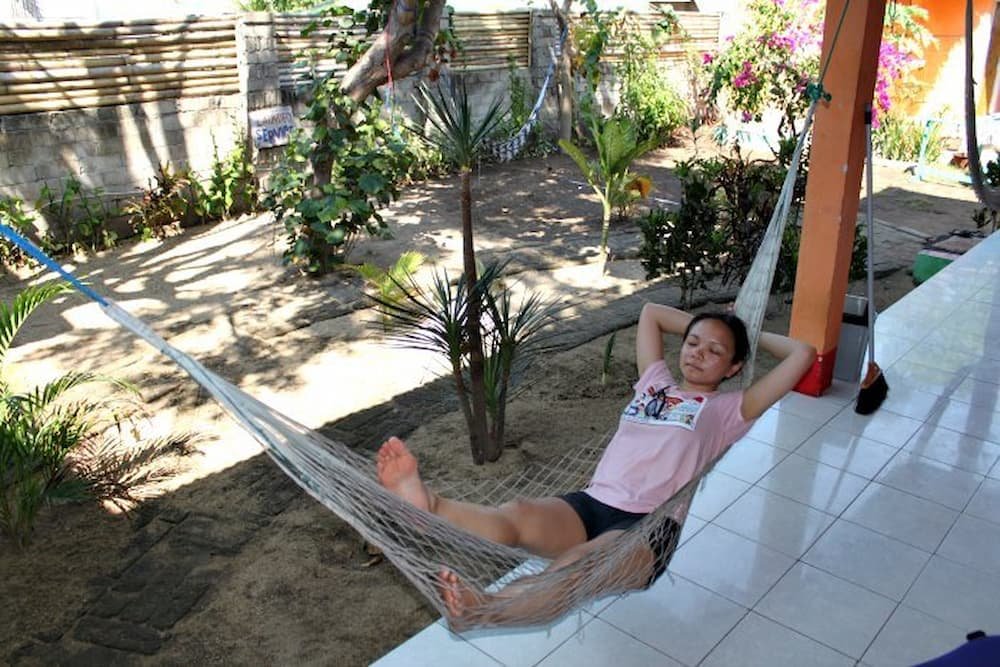
We had first heard about Gili from a friend of ours who had spent a week in this tropical utopia and were convinced to go when we chatted with Chris, a Canadian who owns and runs the Palm Bay Bungalows, budget accommodation within minutes from the beach with comfortable beds, clean rooms (it’s custom to remove your shoes before entering), hammocks swinging outside your door and ceiling fans.
Despite the heat, if you’re the type of person that likes to sleep with sheets, you will need to bring this (or a sleeping bag to throw over the bed) with you if you stay here. We were upgraded while we were there to an air-conditioned room and an en-suite bathroom – in short, the bungalows were bliss. Odi, who looked after the place, was incredibly laid back and also arranged bike hire for us on our last day.


Besides chilling out on the beach, snorkeling, and scuba diving during the day, be sure to also hire a bike and ride around the island. At eight kilometers wide and two kilometers across, the ride takes an easy 1.5-2 hours to complete – it would be less if you didn’t have to push your bike across some of the sandy and less populated parts of the island.
For those who want a bit more isolation and relaxation, there are a few villas and private beaches to the north of the island where you can have what feels like your own slice of tropical paradise, with the only sound coming from the waves gliding along the shore.

At night, the island wakes up, offering dinner specialties of barbecued seafood (choose your fresh fish or other seafood along with your choice of sauce, they weigh and cook it for you) along with unlimited salads. There are other options available such as pizzas and pasta, but it’s virtually impossible not to be drawn to the look, smell, and sizzle of the seafood and continue living blissfully, eating dinner in a little hut overlooking the beach.
As the night matures, DJ’s spin tunes in the bars and restaurants along the main road, enticing people to drink, dance and be merry.

If eating in a hut wasn’t enough for you, there is also a row of huts facing the beach that all have little TVs inside them. You can choose from a vast selection of recent and classical movies in a range of languages and then simply relax, eat popcorn and watch the film.
Across from this little enterprise is a ‘cinema’ that plays two movies each night. Sitting on cushions or on high chairs at the back, the 50-odd patrons only need to buy a drink in order to watch the movie of the night.
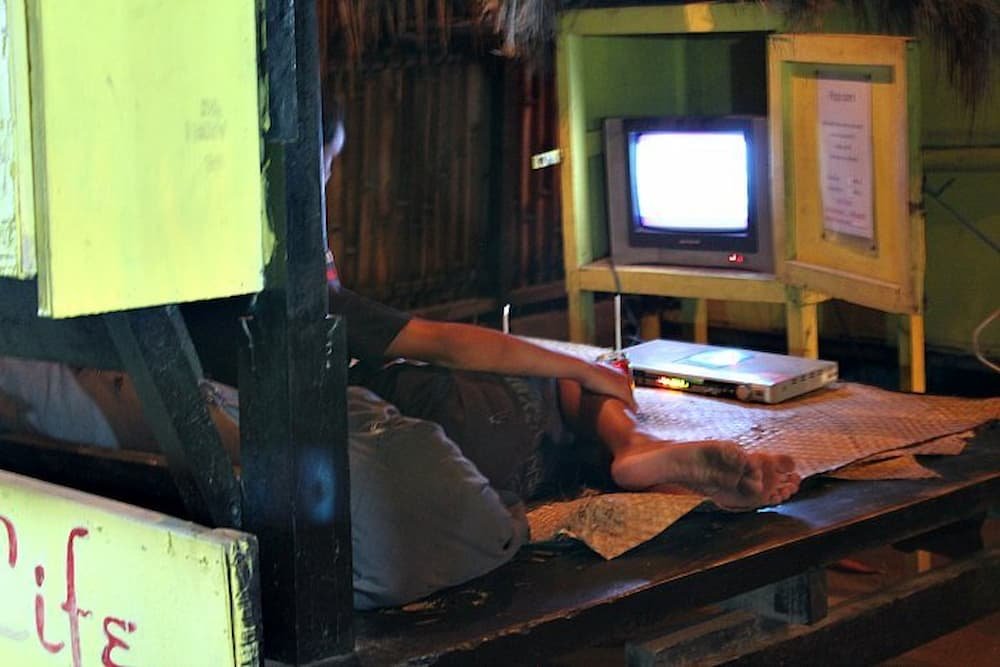
Of course, if you are looking for something a little more on the crazy side the island is famous for its magic mushrooms. While not legal, you will find them advertised all over the island.
Just like this.

Before Michael and I arrived in Gili, we had already planned to stay there for two nights. But with the laidback vibe, the enviable weather, and the heavenly setting, if we could have stayed longer, we would have done this in an instant.
A big thanks to Tony (Island Getaway) and especially Chris (Palm Bay Bungalows) for making our stay both enjoyable and memorable.
Bali is one of the most popular holiday destinations for Australians – it’s not far (from Darwin it’s just over a two-and-a-half hour flight), it’s cheap and it has a lot of the ingredients that Aussie tourists love – sun, sand, and cold beer.
While the flight isn’t long, we had a child screeching, screaming, and squealing at the top of her lungs the ENTIRE time. It was an unrelenting, piercing scream that could burst your eardrum – she didn’t even stop in between screams to take a breath. She’d be a good opera singer/horse racing announcer/auctioneer one day. The flight attendants looked harried, the passengers were grumpy and one man completely lost it, barking to change seats and making his own booming yell of frustration that shut the kid up for a nanosecond, she was completely in shock. All I can say is, luckily the flight wasn’t any longer.

Arriving in Denpasar at night, getting through customs takes a while as everyone needs to pay a visa fee at the airport equivalent to US$25 – notes only and change is given in Indonesian rupiah. The airport is similar to many others throughout South East Asia – you walk out to be greeted with warm, balmy air, a sea of people milling about outside offering transport, and a row of taxis parked next to the sidewalk.
Standing in line to catch a cab, we went to the Oasis Hotel, where we would be staying for the next few days. My first impression was that it was quite fancy – a nice lobby/dining area, an inviting pool surrounded by lights, which was then flanked by palm trees. Around this were all the rooms – there are a few blocks of rooms across two stories. Bali has rooms to suit every budget though – we had opted for a fairly schmick hotel at the lower end of the price range so that we could relax, but there are also more upmarket villas and hotels as well as budget backpacker accommodation available.
Settling into our room, flicking on the air-conditioning, and tuning into some TV, we promptly fell fast asleep.


The next morning, given that it was my first time in Bali (and Michael’s seventh), it was a case of tour guide leading the tourist for a bit of an orientation to the city. Our hotel was about a 10-minute stroll toward the beach and we walked first to the Matahari shopping complex, then to the beach, and then up the street parallel to Kuta Beach to check out Poppies Lane (there are two Poppies – Poppies 1 and Poppies 2 and they are lined on both sides with restaurants, convenience stores, and shops).
Along the way, we were accosted by the standard Balinese greetings – “Massage?”, “Transport?”, “Braid your hair?”, “Manicure?” and even (under their breath as you walk past), “Magic mushrooms?”. While a simple “no thank you” while you walk past usually suffices, there are some instances where the vendor can be rather persistent. While this pressure can become annoying after a few days before you start making faces at these guys do put it into context – this is their livelihood and they don’t get paid much – so they’re doing their utmost to earn a few bucks from any tourists that come by their way.

If you do laze on Kuta Beach, the greetings continue – ladies hoisting baskets on their heads with pineapples that they slice to resemble an upside-down popsicle that you can eat on the beach, and men walking around offering surfing lessons, water, beach mats, and wide-brimmed hats. While some ladies did sunbathe topless, this is not the norm and is culturally frowned upon – particularly awkward as well when you’re half nude and being accosted so often.
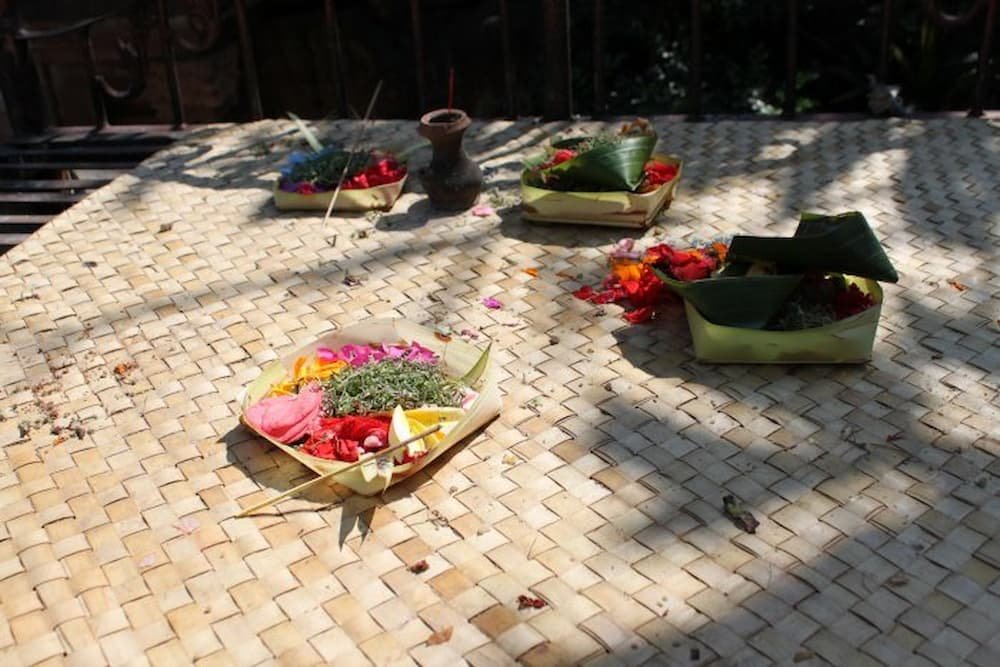
Unlike the rest of Indonesia which is predominantly Muslim, Bali’s main religion is Hindu – evidenced by the hundreds of straw-woven offerings that you will inevitably step on during your stay. These litter the streets of Bali and don’t worry if you accidentally trod on them – they are made daily and are filled with flowers, cookies, rice, and even money and cigarettes. You won’t go two meters without seeing one (or three) outside a home, shop or temple.
If you’re lucky, you may also stumble upon a beachside Hindu ceremony – during this time, the street is momentarily blocked so that a parade of people singing, beating drums, and carrying food, flowers, and other offerings could arrange this on the sand.

Similar to the rest of South East Asia, the climate is tropical, with the peak seasons being July/August. Daytime is hot, so make sure that you cover up with sunscreen etc, while the nights can be pleasantly cool, with a mild breeze. If you are the type that gets attacked by mosquitoes though, make sure that you put on a bit of insect repellent once the sunsets.

The majority of tourists by far are Australian, but there are plenty of English and European tourists visiting nowadays as well. If you want to look like the biggest tourist in Bali, be sure to do at least two of the following things: braid your hair, wear a Bintang (local beer) singlet, look like a deer stuck in headlights as you wait for ages to cross the road and take market prices at face value.

If you’re keen on nightlife, check out Jalan Legian (Legian Street) where you can find two-for-one cocktails, listen to live music, and get your groove on with DJs spinning tunes until early morning.
Here you can also find numerous ATMs (even Commonwealth Bank for Aussies), as well as money exchange places that also double as stores. Be wary though if you decide to do the latter – while the exchange rate is clearly advertised on a whiteboard outside the store, some do not include their commission in the rate.
Unfortunately, there have also been some incidents of scams where through a sleight of hand the money exchange teller will slip himself a note – or get a friend to distract you. This is easy to do when the smallest note is 1000 rupiah and the largest is 100,000, and no receipt is provided for the transaction. To be safe, try to exchange money $100 at a time (that way you can easily work out the rate) and hold on to your money until you’ve counted it all up in front of the teller(s).

Don’t let that deter you though. The Balinese people are some of the happiest, most hospitable and laid back people you will ever meet, and English is widely spoken (the language is also very phonetic in comparison to English). Bali has activities to cater to every interest – evidenced by the fact that 80 percent of all tourists to Indonesia only visit this island. Besides the beach, shopping and nightlife, there are water sports including white water rafting, scuba diving and parasailing, cycling, volcano trekking, cooking schools, and traditional dancing and batik weaving to do – and you’ve only just scratched the surface. Read our individual posts to find out more about some of these activities.
Here’s a short video montage of our time in Bali.
After finishing a three-day Adventure Tours trip that visited Alice Springs, Kata Tjuta, Uluru and Kings Canyon, we were back in Alice Springs, getting up before dawn to meet our new guide, JB, at the lobby of our hostel.
JB is what you’d call a quintessential Aussie – in his mid-60s, he was still going strong, with a friendly nature, a laidback attitude, and a typical mumbling drawl that meant that tourists can oftentimes not completely understand what he was saying. He seemed genuinely interested to know where the 20-odd people on our tour had come from, what they did for a job, and what their interests were, spending time chatting to us around the table after dinner on our first night to ask lots of questions. I liked him immediately.
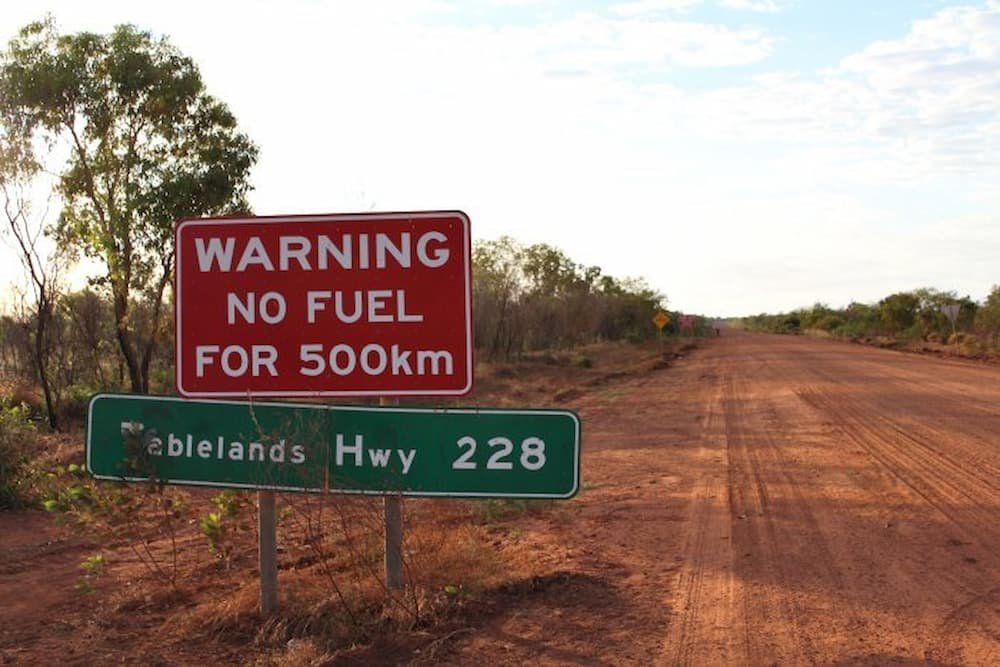
Our first stop was through the Tropic of Capricorn, which sounds quite exciting, except that besides one sign that tells you that you’re passing by, there’s nothing else around. There’s no line through the dirt, there’s no fanfare about it. Plus it was incredibly dark so the photos were just as underwhelming.
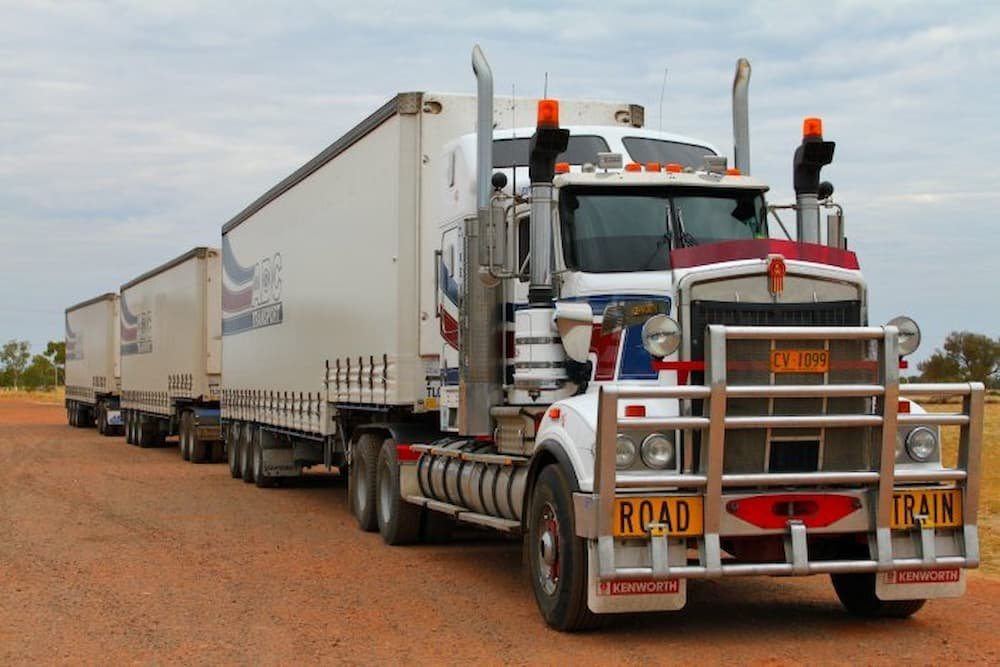
Driving on, we were reminded about how remote we were with a store that sold its goods for double the price of other major Australian cities, as well as a couple of statues of a male/female lizard (very cute) and an Aboriginal woman touting a spear (very massive). The next signs of life come via a gas station that markets itself as the most remote in Australia. “Road trains” – essentially gigantic trucks toting up to five loads of cargo (groceries, cattle, etc) behind them – were our road neighbors as we continued to make our way north.
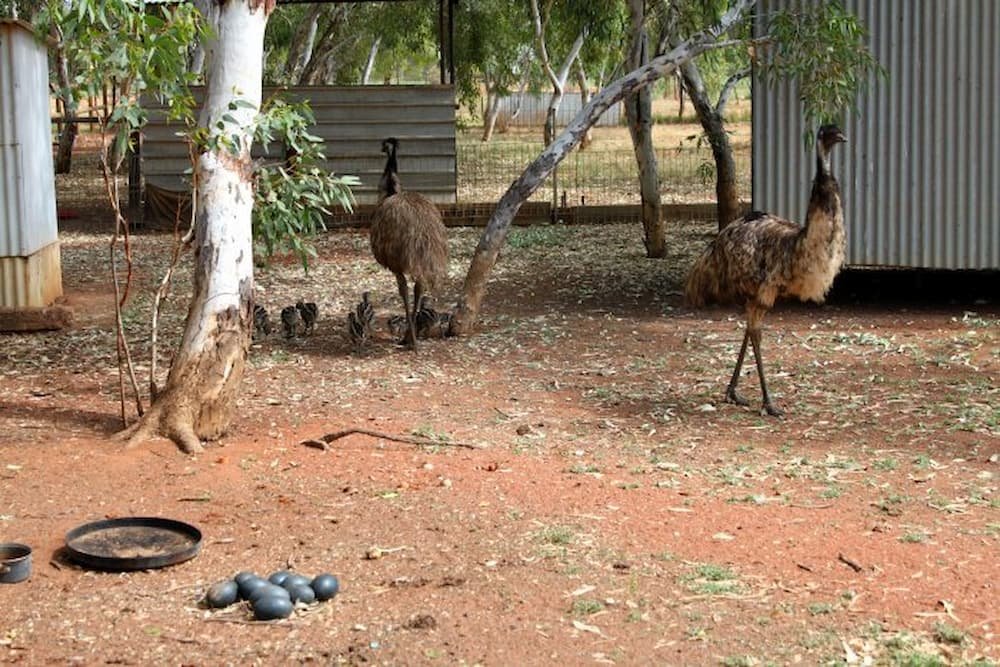
Lunchtime was at Wycliffe Well – the UFO capital of Australia, thanks to it having the most UFO sightings. The people that run the one little park/hotel/store/petrol station in the area have completely capitalized on this – there’s a little museum, as well as plenty of posters, including signs for the “malien” and “femalien” toilets (geddit)? There’s also a mini-farm housing a number of Aussie native fauna, including some very territorial emus guarding their eggs.


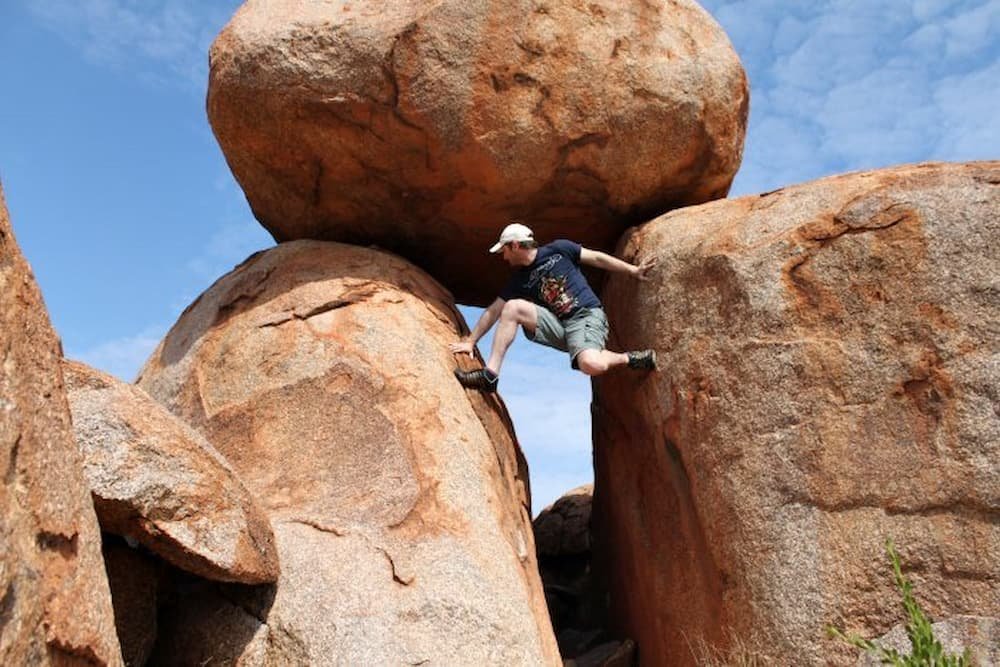
The main attraction for the day was the Devil's Marbles, a site sacred to its traditional Aboriginal owners. A deep brown color, there were literally dozens of huge boulders scattered across the flat plains. There were some boulders that showed clear signs of erosion – one looked like a massive salami, it had been sliced cleanly in half, exposing its white flesh underneath, while others were chipping in places. I felt like a kid again, clambering over piles of rocks to get the best shots.
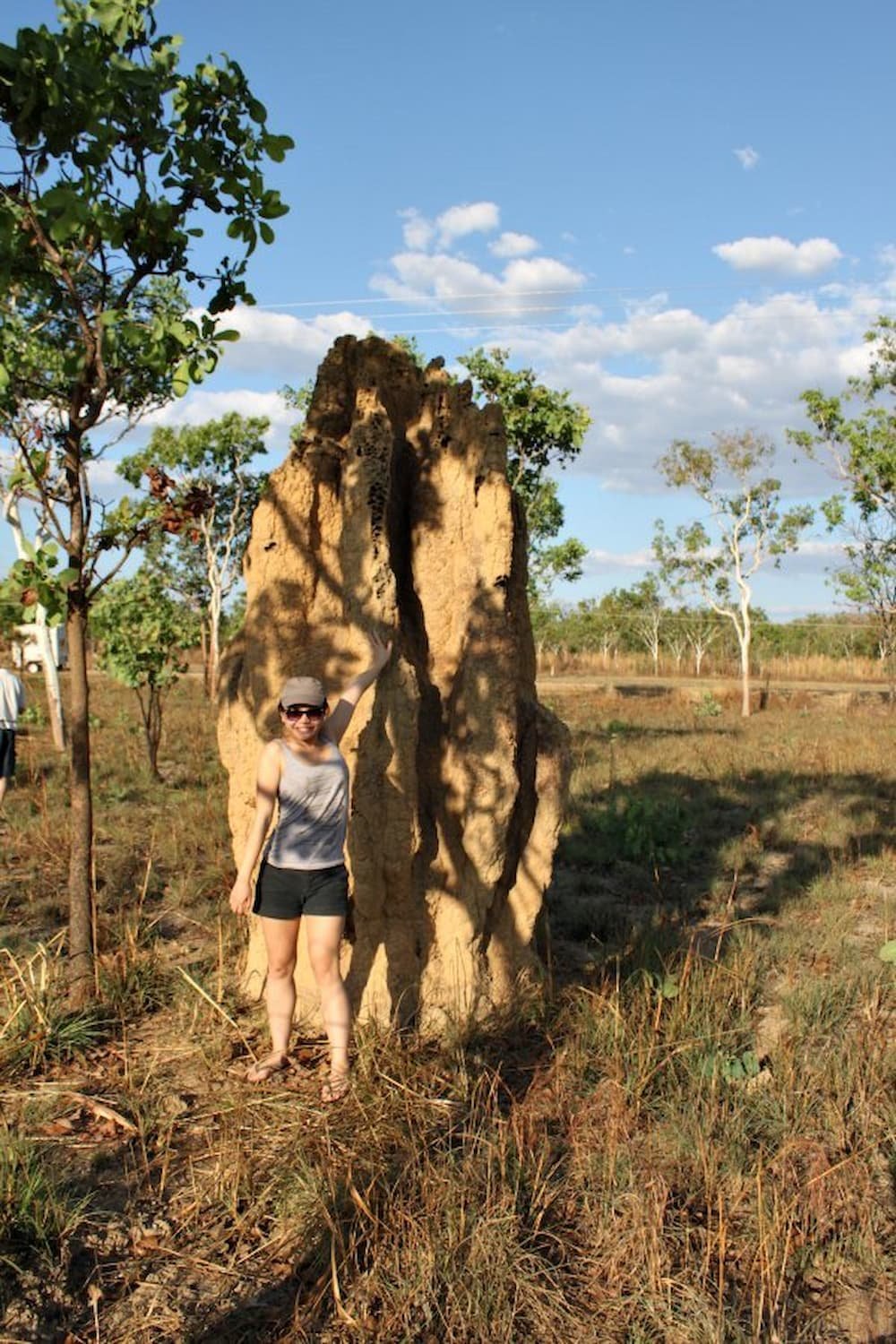
Besides these boulders, what also litters the landscape is the numerous termite mounds – this was the start of the millions more we would see as we went up to Darwin. Scaling up to a whopping eight meters in height and lasting up to 80 years, the mounds are hard as rock and made by termites gathering the surrounding dirt and spitting it out to create a hill that other animals can live in and birds can perch on, so they’re great for the ecosystem. They were amazing – some were stout, some had pointy tips, some were red and some were almost green/grey thanks to the color of the dirt that we went past.

If Alice Springs is remote, the town of Tennant Creek just up from the Devil's Marbles is even more so. Sadly, the town’s liquor store is arguably the most popular shop for its residents. The Northern Territory has six times the alcohol consumption compared with other states in Australia, and the problem is so acute that there is a two-hour timeframe to buy cask wine (4-6 pm), while ID is scanned with every alcohol purchase. Getting to our campsite, we walked up a hill and looked out at the scenery – with the occasional road train and car driving past into the distance, we truly were in the middle of nowhere. Welcome to hot, dry, red, remote outback Australia.
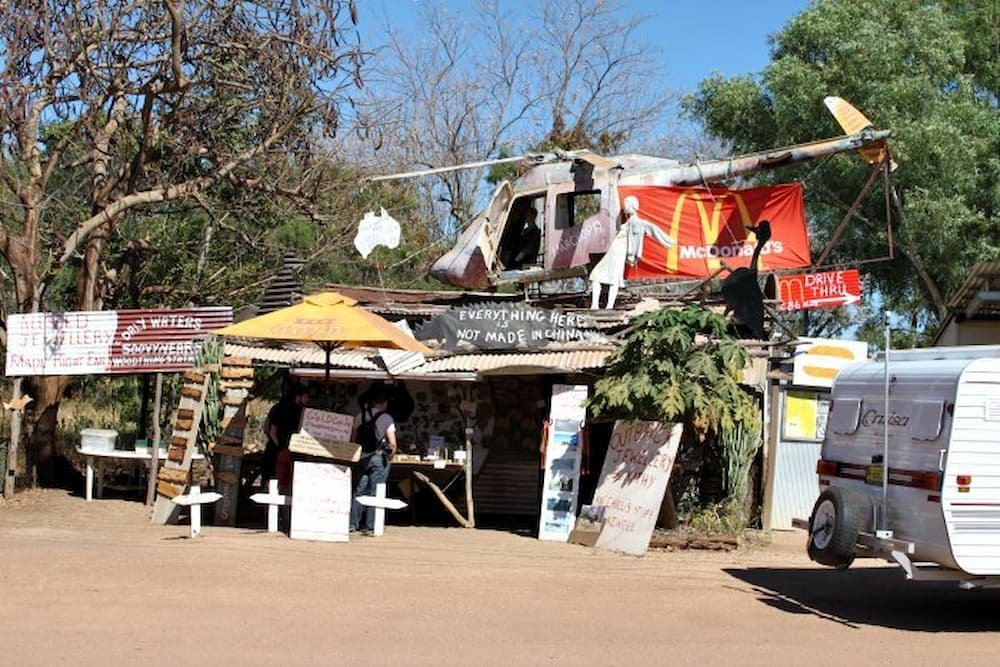
If you ever want a sample of the quintessential Aussie humor, look no further (but do travel far) to Daly Waters Pub, an outback roadhouse for travelers from all corners of the globe. For example, next to the pub is a traffic light permanently on red (apparently a tourist waited there for about 15 minutes with no other cars in sight before catching on). Meanwhile, the store next to the pub sells various necklaces and other bric-a-brac, greeting you with signs like “The burglars (sic – burgers) are better at Hungry Jack’s”, “Next McDonalds – 285km” and a helicopter perched precariously on the roof above.
Going inside the pub, you can spend ages checking out all the memorabilia of travelers before you – people have left copies of their IDs, jerseys and even bras and underwear hanging from every corner of the room.
Driving on to Mataranka, right in the heart of the “never never”, people can come and soak in the thermal springs that are about body temperature in warmth. The springs are not very big though, so in peak season be prepared to be rubbing shoulders and feet with other people keen to take a dip – not particularly relaxing. You can walk around (about 1.2 kilometers) and see if you can spot any native wildlife like crocodiles or kangaroos, but other the walk is not particularly enthralling.


Arriving at our campsite before dark, fortunately, we had gathered more than enough firewood to compensate for the previous night, managing to dump all the wood to create a substantial bonfire. The heat was starting to pick up too – our permanent tents were sweltering and a few of our fellow friends were rather spooked by fairly large Aussie spiders lurking about. There was also a green tree frog stuck in a tap pipe in the men’s toilets – sadly, after rescuing the creature he leaped outside to freedom, only to be found shriveled to a crisp by the hot sun at noon the next day..!


The next morning we had a sleep-in, not needing to depart until the late time of 6.30 am (woohoo!). Our stop was Katherine Gorge, where we could choose to walk, kayak ($30 for double, $45 for single), or go on a cruise ($60) down the spectacular waters. Despite the heat, you wouldn’t really want to go for a swim right by the shore – the trees nearby were completely infiltrated with bats (there were so many that they looked like brown leaves shaking in the wind), and the area was filled with the aroma of bat droppings.
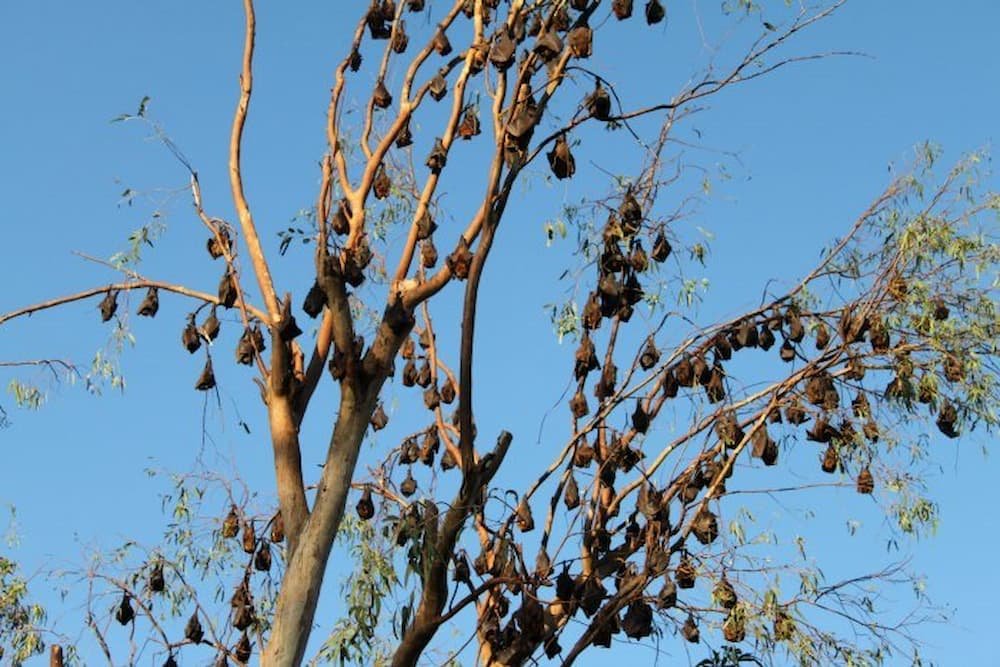
Michael and I shared a kayak and paddled down to the first gorge (there are three) – this takes about 2.5 hours return, including time to go for a walk and sunbathe up to the rock face dropping down to the water below once you’ve reached the gorge. I’ve only been three times but I absolutely love kayaking – even though after a few hours my arms feel like jelly and I try not to think about each stroke so that I can keep on going. One thing that eludes me though is how to kayak and not finish completely saturated as I wind up splashing myself with every stroke. Is it possible to be dry the entire time?

The gorge is awesome – it’s fairly wide (but you’re told to keep to the right at all times so that boats can cruise easily past you in both directions), and you can see crocodile traps (we didn’t see any crocs stuck in them though – not sure if that was a good or bad thing), small waterfalls and an eerie little cave. The weather was perfect – warm sun and a blue, cloudless sky. We also had another chance to take a dip at the next stop – Edith Falls, a fairly rapid but small waterfall. It’s a 500-meter swim to get to the gushing falls. It’s a picturesque little spot, nice for a quick dip.

While the landscape of hot, outback Australia doesn’t vary too much, two major features continued to strike us – the first was the thousands of termite mounds that we continued to pass (it became a game to point out really tall or particularly interesting mounds to note while on the bus – the number of mounds in the Northern Territory surely outnumbers the Australian population), while the second was the amount of “back-burning” that was going on in the outback. In order to curb the spread of massive bushfires, the practice of pre-empting this in summer by purposely burning the dry grass in a contained area is common throughout Australia. Apparently, a practice conducted by the Aborigines before European settlement, it’s not an uncommon sight to see the skies being colored by lots of black smoke as back-burning is done in the distance.
Arriving in Darwin, we checked into our hostel, Frogs Hollow, separately to the majority of our tour, who were all staying in Cavanagh Hostel as they were continuing on for the next few days to Kakadu (we were going to Bali the next day instead).
I would have willingly eaten a cane toad to have stayed in Cavanagh instead of the skanky hole we slept in, otherwise known as a double hostel room. I could have put up with the loud, death metal music blaring downstairs. I could have put up with dirty showers that smelled like bad sex – even though they were right next to our room. But really, did I have to sleep on a bed that had sheets with mysterious, yellowed stains all over them, in a cramped room with mold all around it?
The day after our tour ended, we woke up from our hellhole (i.e. hostel), had a quick shower, and got the hell out of there. Starving, I made my way down to the communal kitchen to see if I could score some breakfast, but all I was greeted with were some crumbs, a few dirty knives, and not much else. So we wandered up to the city center and scored ourselves a fairly fancy breakfast to keep us going and to dust away the rest of the skankiest that we had just left behind. A swanky eggs benedict, toast, and coffee will do that to you.
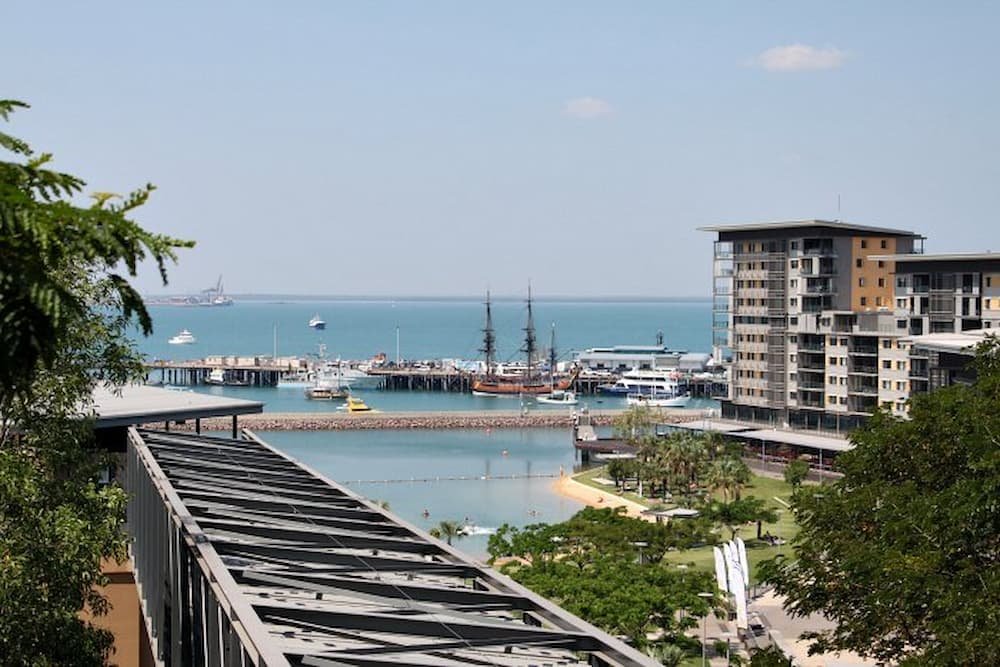
While Darwin is by the coast of Australia, it doesn’t have the pristine beaches that the east coast is known for (e.g. Bondi, Manly, Four Mile Beach etc). It is pretty swanky by the coast though – there’s a swimming pool with a man-made ‘surfing’ area where you can perch atop a surfboard and see if you can withstand the ‘waves’, as well as some nice sandy and grassy areas to sunbathe upon. This area is flanked by a boardwalk, as well as some expensive-looking cafes, shops, and residential apartments and offices. If you’ve ever been to Darling Harbour in Sydney, it looks a bit like a smaller version of that. Surrounding this area, you can walk to some of the other main buildings in Darwin – check out some parliamentary offices and the like.

We decided to skip the latter though and make our way to Darwin’s museum. It’s about a 15-minute bus ride outside of the Woolworths shopping center behind Mitchell Street (the main street in Darwin) – catch bus number 4, you can buy your tickets on the bus.
The museum has some interesting exhibitions, including some fossils from the Northern Territory that are thousands of years old, stuffed native fauna (did you know that two-thirds of all snakes in Australia are deadly?), Aboriginal artwork, and a dedicated section to Cyclone Tracy. This cyclone hit Darwin on Christmas Eve just over 25 years ago and the whole city was completely flattened, so it’s amazing to realize that everything that you see in Darwin today is a result of them having to rebuild. There are some interesting aerial shots before/after the cyclone and even a dark room that you can go in to hear what the cyclone sounded like when it struck – people that experienced the ordeal won’t go into this room, it brings back too many bad memories.

Besides the museum, most of the sites in Darwin can be found within the city center. While it’s not a big city, the main street, Mitchell Street, really comes alive every night as casual pub-goers mingle with their more upmarket bar-hoppers on the strip. There’s also a melting pot of cuisines available, from Thai and Chinese to standard Aussie grub.
I was embarking on a trip of a lifetime… starting in the middle of nowhere.
I had just finished up my job in Sydney and was going to be starting a new role in San Francisco, a city that I had heard great things about from all who had been there, although it was a place that I had never seen firsthand. Luckily I had arranged to have a month and a half vacation before starting work again, so here I was with my boyfriend Michael, spending a week in Australia’s Northern Territory on an Adventure Tours trip, before spending some time in Bali (Indonesia) and Seoul (Korea) before jet setting to the US of A.
June to August is winter in most of Australia. But with Australia being so vast, climates vary, and while Alice Springs faces the same fate as its southern cousins at night, during the day the temperature usually hits the generous mid-20s. We got off the plane from Sydney and were greeted with a warm 27 degrees – and not much else but a tiny runway, sundried shrubs, and passengers leaving the airport via bus or car, red dust flicking up behind them.

Arriving a day before our tour commenced, our bed for the night was at the Haven Resort, a hostel apparently close to the town center. We wandered up the flat, barren streets to town (it’s about a five-minute walk) and found a grocery, pharmacy, and a few fledgling restaurants – but not much else. People strolled aimlessly, while the shop where we ate our MSG-tasting noodles had staff who sat around bored, waiting for the next customer to arrive.
Honestly, unless you have a reason to stay longer, Alice Springs is a place to stay for just one night en route to somewhere more interesting, like Uluru or Kings Canyon. The hostel we were staying at was clean and we had managed to score a double room all to ourselves, TV and en-suite bathroom included. The beds are comfy and clean; it’s $10 for linen if you need any.

Waking up the next day for a 5.40 am departure from our hotel, we stumbled out to the darkness, meeting our guide, Ilse, as well as the 24 other tourists hailing from France, the UK, Holland, Italy, Japan, and Korea in our mini-bus that we would be with for the next three days. We would be making our way south to see Uluru (Ayers Rock), Kata Tjuta (the Olgas), and Kings Canyon before snaking our way back up to Alice Springs.
First stop after sunrise was camel riding. While camels aren’t native to Australia (they were introduced via the Middle East and the Subcontinent), they thrive in the Aussie northern climate and now number over one million in the wild. Here we found two, ready to be ridden on – costs you $6 for a couple of minutes. Ironically, besides riding a camel you could also eat one in a burger, in the café across from where they slept…


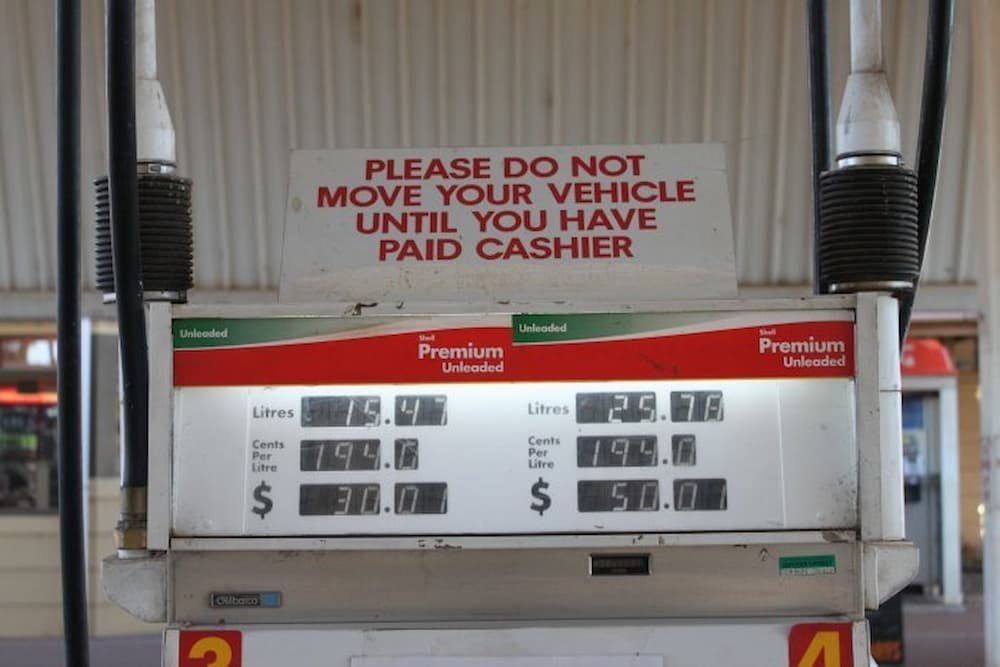
With Alice Springs being close to the heart of Australia, we soon made it up to arguably the most central point of the country. The actual center is open to debate as it can be measured in a variety of ways – median, gravity, etc. We also realized how remote we were when we saw the prices of goods at the gas station – petrol was a whopping $2 per liter (50c more expensive than other Aussie cities), while ice cream, water, and sweets were in some cases double the average price.

The Northern Territory hosts two dual UNESCO World Heritage places – only six other such sites exist. In the one national park, there is Uluru and Kata Tjuta – both giant rock formations that have come out of the ground and continue to evolve and erode to this day. Kata Tjuta, otherwise known as the Olgas, is Aboriginal for “many heads”. Interestingly, in the Aboriginal language the numbers only go up to three – then after that everything else is “kata” or “many”. In fact, there are 39 massive red rock formations, with the tallest well over the height of Uluru, which is in the Guinness Book of Records as the largest monolith in the world.
The surrounding land is as flat as a pancake, this is what makes these rocks even more amazing, as some of the formations are apparently as tall underground as they are above the earth. The color of the rocks is interesting too – thanks to the rich iron ore in the soil, the dirt is a deep red color. The rocks themselves have rusted over the years thanks to the iron, giving them this rich redness.

We trekked for a couple of hours around some of the “heads”, trampling across rocks piled high above each other, walking uphill to see a sliver between some of the heads where sunlight peeked in between, opening up to let us see the land below and the blue skies overhead. It is hard to describe the feeling that you get when you climb up a hill and check out the views – it’s simply glorious. While the rocks seemed fairly solid, in some places it could be quite unsteady as some of the stones continued to erode, exposing the grey original color of it underneath.

Next stop was Uluru, which is a few kilometers away, facing Kata Tjuta from across the plains. With the sun starting to set, we were here for a quick stop to have a sip of sparkling wine, cheese, and dips while overlooking the rock change its color, from a rich red to a shadowy purple. It’s a great idea – one that many other tour groups had capitalized on, as they set up their own champagne/cheese feasts in varying luxury.

Returning to our campsite, it was a dinner of camel (sadly, no I didn’t feel bad about eating the animal that I rode on earlier that day), sausages and salad before sitting around the campfire. With nightfall upon us, the temperature had dropped dramatically, but rather than sleep in the tents provided, most people chose to sleep in a “swag” beneath the stars. A true Aussie outback experience, a swag is a canvas bag that you can put your sleeping bag in – it has a big flap at the head to keep away the cold (or the mosquitoes) at night and is easy to roll up and dust off the next morning as you make your way through remote country. With a full belly and another fantastic view, despite the cold, it was easy to fall fast asleep.
Getting up at 5 am is not something that comes naturally to me. I never spring out of bed – and I definitely will not when I’m waking up in darkness, facing the freezing cold, sleeping on the floor next to a campfire that has dimmed overnight.
Yet on a holiday, we will overcome all of these obstacles in the quest to see that tourist attraction that we’ve been dying to check out. Today it was Uluru, or Ayers Rock, which is in the Guinness Book of Records as the largest monolith in the world.
As the bus made its way to Uluru where we would see the sunrise over it, the sun started to also rise and paint pastel pink, violet, and orange streaks across the sky. In the semi-darkness, we arrived and followed the green lights dotted across the footpath to where we could see the front of Uluru. Most people continued up the path to an elevated platform, however, Michael grabbed my hand and led me to the left where we stood on ground level with the massive rock.

It was absolutely freezing while we took a few customary tourist snaps, but then the unexpected happened. He proposed. I’ll spare the specifics other than to say that I was shocked, taken aback… but happily, said yes. Nothing like a romantic sunrise over a big rock to give me a big rock.. and make me overly emotional!

Uluru is 9 kilometers in circumference and most people don’t walk around it entirely – rather, they do what we did and walk half of that, which takes about 1.5 hours at a leisurely pace. It is well worth it – if you’ve seen pictures of Uluru on postcards they are taken from far away which gives the illusion that its surface is smooth – yet this is completely the opposite.
Up close, you can see not only the deep pockmarks that it has but also the thick, black, tar-looking residue from water that has slid down the rock over thousands of years. You can also check out a small watering hole on the base walk, as well as see some examples of Aboriginal rock art – the ones that you can see though are not very old, only about 150 years.

Uluru is incredibly sacred to the Aboriginal people, particularly the Mala tribe who were from the area. As such, there are areas where you can’t enter and areas that are strictly for women or men only. While you can climb Uluru if it’s not windy, the Aboriginals do request that you don’t do this for sacred reasons. Also, postcards will never have pictures of Uluru from the back – so unless you go there, you won’t know what it looks like (see the end of this post though if you want to read a description).* While many tourists did take photos of the back while on the bus, Mike and I decided not to.

Unfortunately, someone within the Mala community had died, which meant that we missed out on the opportunity to have a guided walk around Uluru with someone from the tribe. Luckily, Ilse was incredibly knowledgeable and provided us with a solid rundown of the area. We saw some bush tomatoes, learned about bush medicine, and found out about some Aboriginal myths and legends. Be sure to also check out the nearby cultural center to learn and see more about how Aborigines lived.

The next morning, we awoke again at the crack of dawn on our tour, leaving our campsite to go to Kings Canyon, a hiker’s dream. While we trekked through the canyon through winter (and yes, it was freezing the whole time – I wore four layers pretty much through the whole four-hour hike), there are numerous signs all over the place stressing the importance of drinking water regularly and ensuring that you have brought enough with you.
Be sure to drink lots of water in the warmer months, wear layers that you can easily put on/take off while walking, and also protect yourself from the sun even if you’re not walking in the middle of the day.

The trek starts off with a challenge almost immediately – trekkers are confronted with a steep hill with an almost vertical ascent leading 100 meters to the top. While it wasn’t fun with a blocked nose and a cough (Michael and I had terrible colds thanks to the winter we had left behind in Sydney), the views from above were well worth it. Similar to Kata Tjuta (the Olgas), the rock is a rich red in color thanks to the iron in the soil, however, beneath the rust, the rock unveils a marble white underneath. Also, the rock is incredibly brittle-looking in places.

Making our way across, we stopped at the “Garden of Eden”, a watering hole in the shade, where you could sit peacefully and look up at some of the massive trees growing overhead and birds flying around. The landscape from the top of the canyon is a lot drier – rocks are piled on top of each other, resembling stacks of crumbly pancakes or waffles in the wild, while the cliff face is a sheer, smooth surface in contrast.


There are more comprehensive walks that you can do, but unless you are an avid hiker, the four-hour walk sufficed. The hardest part of the walk is definitely at the start, but at the end it’s a simple step down some rock stairs, all the way back down to the parking lot.

*Uluru spoiler alert: So, you’re curious to know what Uluru looks like from behind, eh? From seeing pictures, most people get the impression that Uluru is longer than it is wide – but actually, the width of Uluru is about two-thirds the size. While there are still lots of pockmarks and black streaks across the rock on this side, one massive part in the middle has eroded to look like a profile of an Aboriginal person looking left… perhaps this is why this part of the rock is so sacred to the Mala tribe.
continued from Action and Adventure on Kangaroo Island
While our hotel is clean, convenient, and has all the amenities we need, if there’s one downside it’s the paper-thin walls. It also doesn’t help to be on the ground floor and have the hotel staff wandering the corridors, talking and vacuuming at 8 am. Needless to say, if you’re a light sleeper or a late riser, this isn’t going to work in your favor.
Shoving the sleep from our eyes, we got up in search of breakfast and a decent coffee, heading towards Chinatown and the central market. This area, which had been thriving with activity on Thursday morning, was a ghost town at 9 am on a Sunday. Managing to find the one bakery and the one café that was open, we decided to drive out of the city towards the Barossa Valley – home to South Australia’s (and even Australia’s) most popular and renowned wineries.
Not really knowing which route to take, Lisette plugged the address into Google Maps – which unbeknownst to us, lead us on the windiest route to get towards the Barossa. Great if you’re keen to explore the scenic route, but if you’ve been driving a lot over the last few days, have seen your share of national parkland, and have a blistering migraine-like Michael did, then we wouldn’t recommend it.
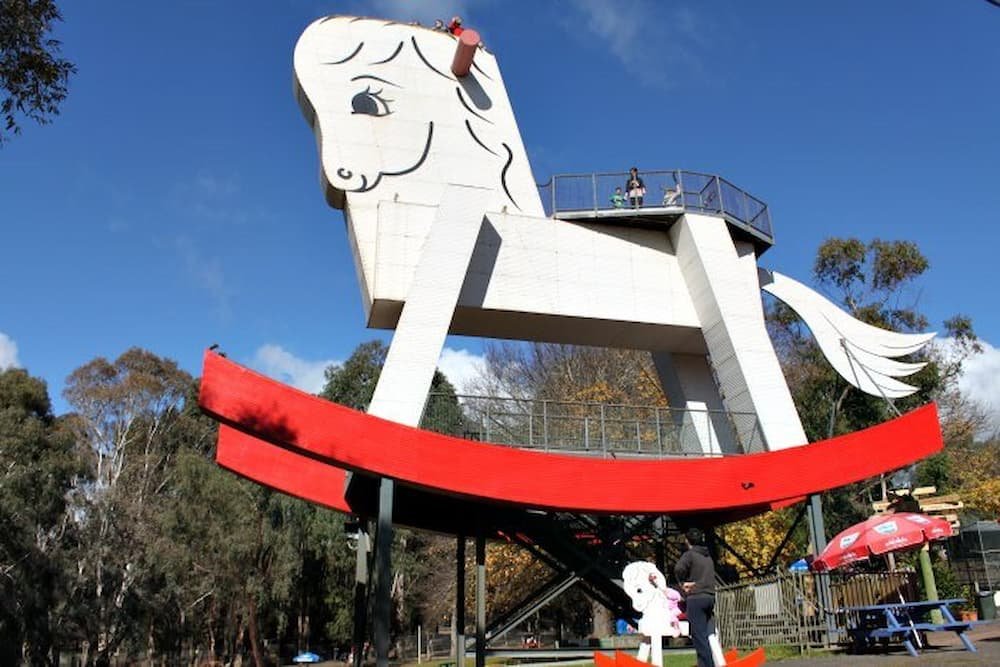
En route to the Barossa, we stopped in the town of Guneracha, home to the largest rocking horse in the world. Australia has a love affair with making the “biggest” monuments of something and this is one fine example. Built in 1981, this tourist attraction is fantastic for little kids – they can scamper up to the top of the horse and get a view of the people below.
There’s also the opportunity to go crazy checking out the various wooden toys and candy at the shop, and there’s a mini zoo (free entry, a bag of food pellets $2) where you can come face to face with native Australian animals such as kangaroos, galahs, and cockatoos, as well as guinea fowls, bantam chickens, ibis, alpacas, and goats.

There are dozens of wineries in the Barossa Valley as well as the surrounding areas. Being autumn (fall), many vineyards had already been harvested; however, there were still hundreds of vineyards that had leaves on the vine, which were a bright and beautiful golden color. Fortunately for us, the day was picture perfect – gorgeous blue skies and warm sun meant that the rolling Adelaide Hills, autumn leaves, lakes, and vineyards were bathed in their best light.
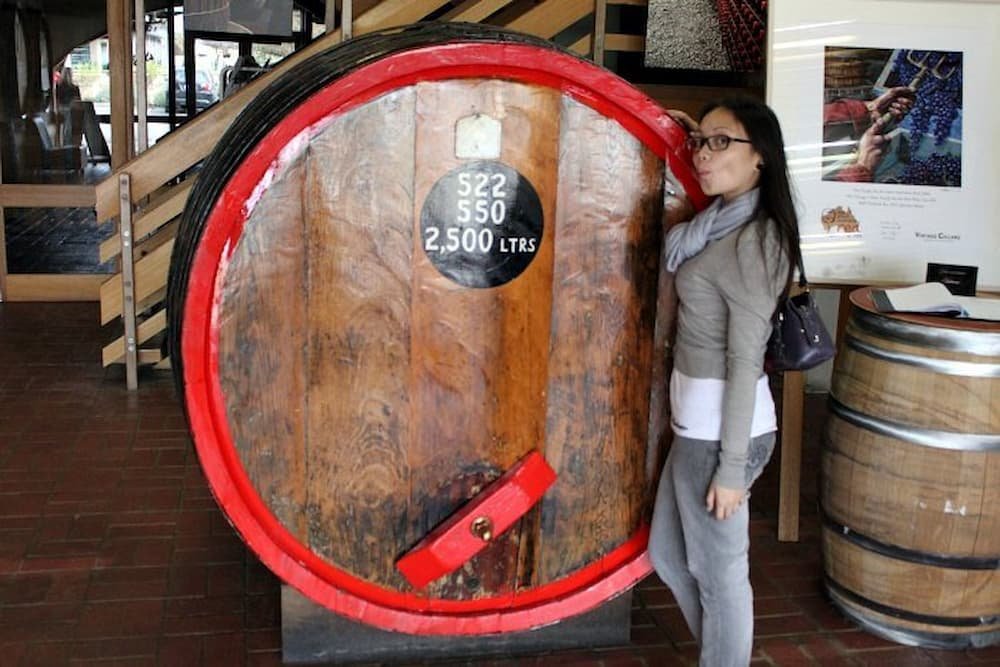
While some wineries only offer free wine tasting by appointment only, you can still spend hours upon hours traveling from one winery (cellar door) to another, sampling everything from fruity and refreshing white wines (think sauvignon blanc, pinot gris, chardonnay), rich reds (think shiraz, cabernet sauvignon), dessert wines and everything in between.
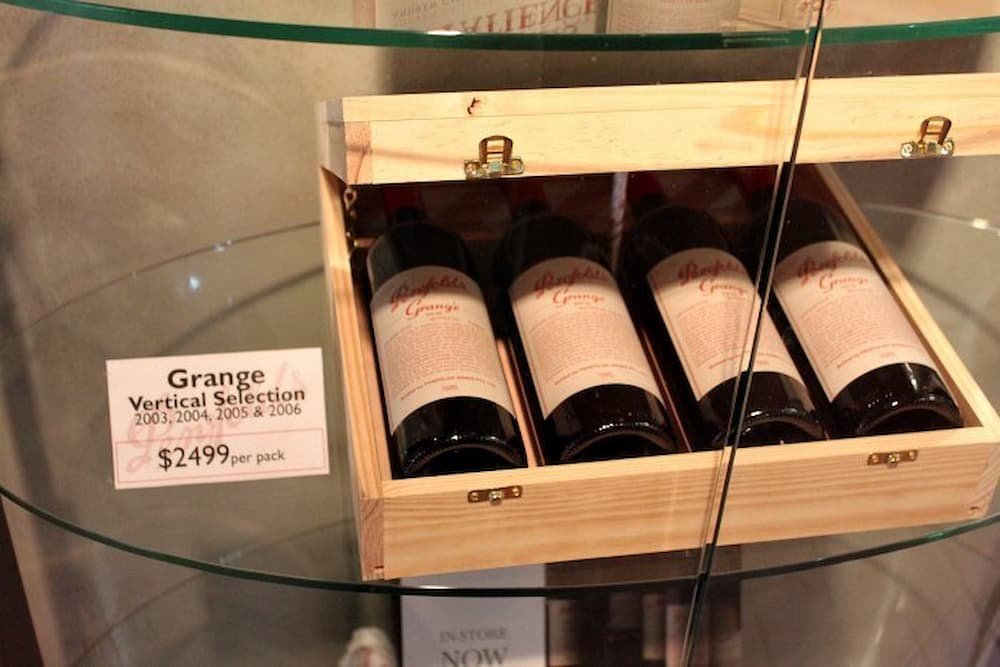
We had decided not to go crazy on drinking wines as a) we had just bought six bottles back in Kangaroo Island and didn’t want to be enticed to buy more, b) Michael was driving and c) we aren’t huge wine drinkers.
We did stumble on McGuigan’s Wines and highly recommend their award-winning 2010 Pinot Gris though, as well as a wander around the beautiful chateau that houses the tasting. With so many other wineries around though (from the highly commercial Penfolds to the more boutique offerings), it’s best to simply drive around and pull into the cellar door that takes your fancy.

Besides wine, another worthy stop was Maggie Beer’s Farm Shop. Maggie Beer is a household name in Australia, publishing dozens of cookbooks in our mothers’ generation and now experiencing a celebrity revival thanks to guest appearances on Australia’s MasterChef TV show and appearing on commercials for a major supermarket chain.
Her shop has daily 2 pm cooking demonstrations (cooking with verjuice), offers picnic fare food (no lunches), provides free samples of sugo, jams, chutneys, and other condiments, and sells other gourmet food lover items.

Amidst food and wine lover land, lunch wound up being oily pizza at 3 pm (although it was the gourmet option), before we headed to our last stop on the fringes of the Barossa Valley – a lavender farm. The farm, situated away from the main road, has been around for over 20 years and has over 90 varieties of the flower.
The couple who run it sure love lavender too – they sell anything lavender you can think of (perfumes, lotions, cookies, tea, ice cream, even shots with the ice cream). We settled for a few scoops of the ice cream, which had a little lavender sprinkle on top and had two chocolate sticks in it as well. While lavender food may sound a bit odd, the ice cream was delicious – it was a vanilla ice cream base with enough of a hint of lavender, but not too much that you felt like you were eating a flower.

As the sun started to set on our way home, we checked out the changing tones of the hills, plants, and lakes before making it back to the City. Our last Adelaide dinner was back towards Chinatown, which was once again bustling with people lining up to eat at the Cantonese, Szechuan, Thai, Malay, Korean, and other (Asian) restaurant options available (although there is one Italian, one Argentinean, and one burger joint around as well). Pretty much all restaurants were sufficiently packed inside so choose whatever suits your taste and budget – in order to compete, most restaurants prominently display their menus on the wall/door outside.
Refilling our bellies, we strolled back to our rice paper-thin lodgings for our last night sleeping in Adelaide… early start tomorrow before our 12.30 pm flight back to Sydney!
….continued from Impressions of Adelaide
This morning we woke to another inclement day and after a shower, we head to the General Store for a quick bite of breakfast.
First stop on the agenda today was a good hour drive away at the far south-west of the island. We drove on the main sealed road past vineyards and paddocks before arriving at the Flinders National Park.
A quick stopover at the Visitors Centre was needed to purchase our park passes. In the center they had a great exhibition of animal skins and rock samples, it was quite an educational experience and would be very interesting for children (as everything is hands-on).

Another 15 kms into the park we encountered the Remarkable Rocks. These rock formations are perched on a cliff face near the ocean and make for a wonderful sight. We wandered around the rocks climbing and taking photos before heading to our next stop, Admirals Arch.

Only one kilometer along the road was a beautifully kept lighthouse that had been built in 1909 to try and put a stop to the large number of vessels that had been coming to grief nearby.
Walking down the boardwalk we encountered a large colony of New Zealand Fur Seals that were lazing on and around the rocks. There was a very pungent fishy smell but you couldn’t stop smiling at these magnificent creatures up close in the wild.
Admirals Arch was at the bottom of the boardwalk and made for a great snapshot as there were some seals perched below.


On our journey back we stopped again at the Visitor Centre and ate lunch. The food was delicious and I would highly recommend it. (So much so that we decided to grab some baguettes to have for dinner later that night).
We had planned to check out the seals at Seal Bay which was a short drive east of our cottage, but on arrival, the Park Ranger explained that it was another $27.50 pp fee to have a guided tour to the beach (really the only way you could get up and close), so we decided to give it a pass on this occasion.
The sun was now starting to fall so we headed back towards our cottage, stopping for a quick walk at Little Sahara (a number of white sand dunes that were just off the side of the road).
With the sun setting, we made it back home just in time for a brief stroll along Vivonne Beach before chilling out for the rest of the night.

After patches of rain overnight, we woke to our second day on Kangaroo Island to clear blue skies. If there’s one thing that we’ve learned about the Island, it can be sunny one moment and then drizzly the next.
With nowhere nearby to eat breakfast except Vivonne Bay General Store (and liquor shop and petrol station), it was a repeat of yesterday’s bacon and egg sandwich before we headed over to Kangaroo Island Outdoor Action to go quad biking and sandboarding (with time not on our side we decided to give kayaking down Harriet River a miss).
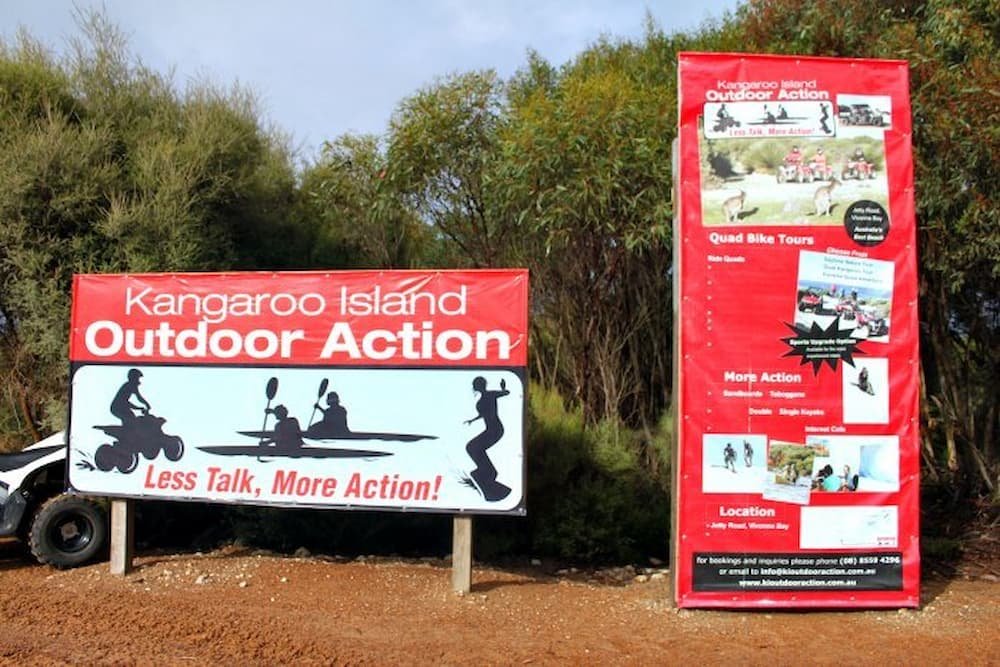
We had booked the 2.5-hour extreme adventure quad biking experience – which Lisette was slightly apprehensive about, given that she is rather uncoordinated on anything with four wheels and perches on the other side of ‘speed demon’ status.
However, with the company catering to children as young as six, we soon realized that quad biking is pretty easy to learn – the bikes simply need to have the ignition started, the start button pushed and the gear shifted to forward and you’re off.
Probably the only thing challenging is keeping your thumb continually pushed on the throttle to move – by the end of the adventure, it feels like your thumb is going to drop. You’re also more than adequately geared up – you get a helmet, gloves, and goggles before you jump on.

Our guide, Mick, was awesome – attentive, funny, and informative, he took us through open plains, windy paths, and incredibly bumpy trails where we encountered kangaroos, manmade lakes, sleepy koalas, funky native trees (including the spiky ‘black boy’) and lots of puddles!
We also had a brief pit stop to walk down to the beach below, admire the rugged coastline being lashed by some pretty ferocious looking waves, and check out a bee’s nest that had apparently been thriving there for years. Lisette still managed to almost run into a tree in line with her lack of coordination, but no serious damage to person or vehicle done.

Lunch was a drive 14 kilometers away to the Marron Cafe. Marron is a crustacean that is darker and bigger than a yabby – which looks like a cross between a lobster and a prawn. The Marron Cafe grows its own produce which means that the food is fresh and absolutely delicious.
Starving after the drive on the quad bikes, we practically inhaled our lunches – and if Lisette could have licked the bowl any further, she would have (the marron in garlic and parsley sauce, served with rice and salad with a balsamic dressing is divine, while the whiting with the cafe’s own lemon myrtle tartare sauce is worth raving about too).

Adjacent to the Cafe is the marron viewing area, where you can learn about the breeding process. In about a dozen deep vats, about 5,000 marrons were categorized by weight, awaiting their fate to land as cafe meals or to be sold commercially. We settled instead for some wine tasting, which lead to us getting five bottles of Pinot Gris and a pear liqueur being mailed to us within a week’s time.

The thought of scampering around the sand dunes of “Little Sahara” on a board, on our bellies, then doing it all over again was enough to make our seafood and wine-filled bellies churn. However, we drove back and tried it out. Michael was a natural at sliding while Lisette… well, if she’s uncoordinated on four wheels I’d say that she’s even more so on a board.
My tips for a successful sandboard? If you’re using a toboggan-style board, make sure it’s well waxed on the bottom each time, run across the top before sliding onto the board, and slide on your belly rather than sit on the board to get more control and speed.

Rushing back to our lodge to shower and pack, Michael used his newly-acquired speed demon skills to zoom halfway across the island in time for a quick dinner and ferry ride back to Adelaide. The only place open near the terminal was a rather classy-looking pub.
If there’s another thing we’ve learned about the Island, it’s that the food is absolutely delicious – and incredibly gourmet. How does dukkah-coated snapper served on a bed of Asian greens and mango mayonnaise, or a red chicken curry with julienned vegetables with a side of jasmine rice sound?
Just making it on time to catch the ferry, after 45 minutes it was back on the mainland and what felt like a long and tiring drive back to our hotel in Adelaide. Finally arriving, we both had hardly hit the pillow before we were sound asleep.
Want more? Read the next article here: Wine Tasting in the Barossa.
Lisette and I have made it a mission to explore more of our own backyard before we head off for our big move to San Francisco. This trip to South Australia actually completes my circumnavigation of Australia, having covered all States and Territories (Lisette is close behind with only Western Australia and Northern Territory remaining).
Our trip began with us arriving over 1.5 hrs prior to boarding, waiting in line for ages before the check-in lady called for anyone going to Adelaide to move to the front of the queue. There was a rush as most people were on that particular flight. Then when we got to the counter our bags weighed in at 22kg (7kg overweight and they wanted to charge us $20 per kilo – $120) we decided to move to the side and try and re-pack a bit (wondering if it was even possible to remove 7kgs)
The end result was putting 3 jackets on, a hat and now had 3 heavy pieces of hand luggage. It was very hot and very stressful (not to mention the fact that I must have looked like a drug mule or something)
Then Lisette realized she had lost her boarding pass – we were running out of time to get some food too so we were both getting a little grumpy.
After some Mcdonalds, we walked to the gate only to find out that our flight was delayed over an hour (thanks Tiger Air).

On arrival we got our hire car and drove into town… a journey of only 10-15 mins, arriving at the Wright Lodge only to find another guy that had been on our flight waiting out the front. He said that the door to get in was locked. I called the number and spoke to a Chinese girl who had no idea what was going on and couldn’t find our booking.
Eventually, we sorted it out that they had put it under Lisette’s name and there was a letter sticky taped to the window of another entrance.
Once inside it was a maze… we couldn’t find our room until we ended up walking out the back where there was a laundry and woke up an old Chinese lady who spoke no English but pointed the way for us.
The room was a decent size with a small kitchenette but was quite musty smelling and the sheets looks brownish (not dirty… just old)

There was a multitude of building noises throughout the night and the walls were paper thin. So much so that I heard the entire conversation of “John” (who I established was in the room next to us), calling a taxi at 5 am to go to the airport. After a very poor broken sleep (Lisette slept through it all) we woke and I went to pay for parking.
We realized after a short walk that we were right behind Adelaide’s own Chinatown, which as every city’s Chinatown has greeted us with its traditional red arches. After a simple breakfast of coffee and ham and cheese croissant/egg and spinach brioche, we rushed back into our car to make it before the parking inspector got to it.

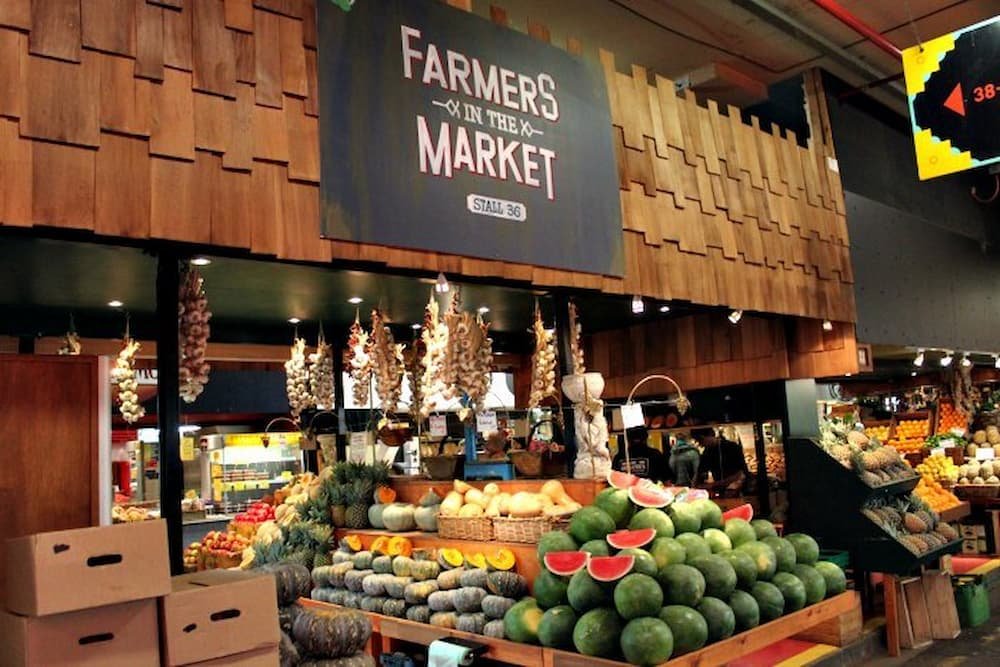
Fortunately, we found out that while the city itself has parking meters, within a short walking distance away the parking spots have no meters at all. Returning to Chinatown we made our way to the central market, a busy hubbub to find the best and freshest produce – seafood, meat, fruit, vegetables, cheeses, coffee, confectionery… there were dozens of stalls selling it all. The food looked amazing and everything looked incredibly fresh and picture-perfect. Lisette could have spent many hours (and many dollars) hanging around in there – but alas, we only wound up buying four mandarins.
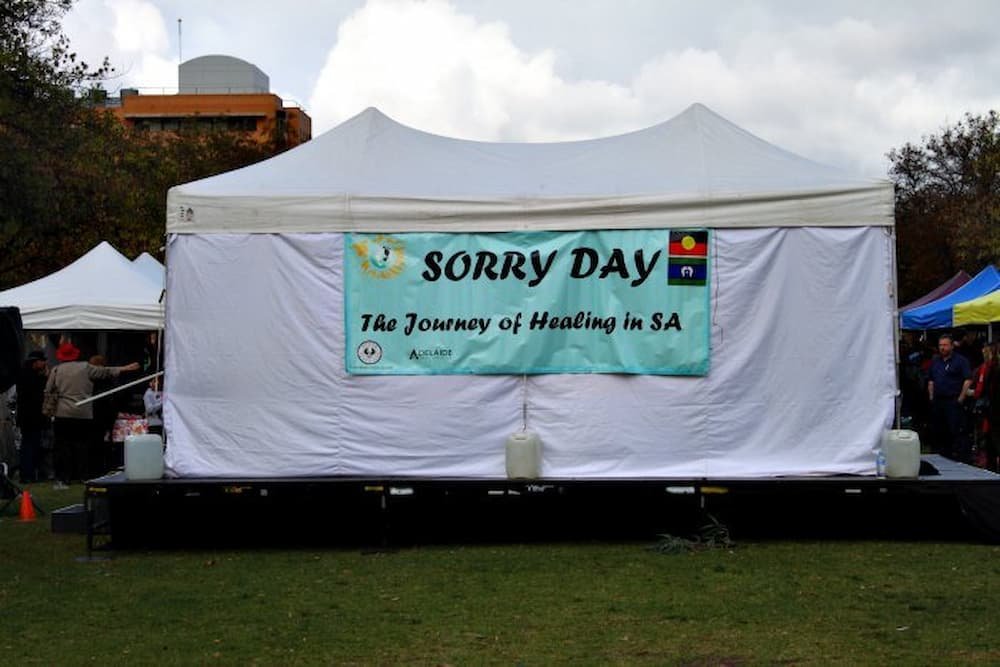
The next step was a stroll towards the city center, stumbling across parks and churches along the way. It was ‘Sorry Day’ – Australia’s apology for mistreating the indigenous population during and after settlement – and there were a number of stalls in the park celebrating the occasion.
The city was small and clean and had the typical strip of chain stores that you’d find across any major city in Australia – Review, Myer department store, Sportsgirl… so we didn’t spend much time wandering through here. Rushing back towards central market we stuffed ourselves with some decent food court lunches – Japanese miso ramen. Interestingly, the choice of cuisine is entirely Asian – Taiwanese, Japanese, Korean, Chinese, Vietnamese, and Thai were the options.
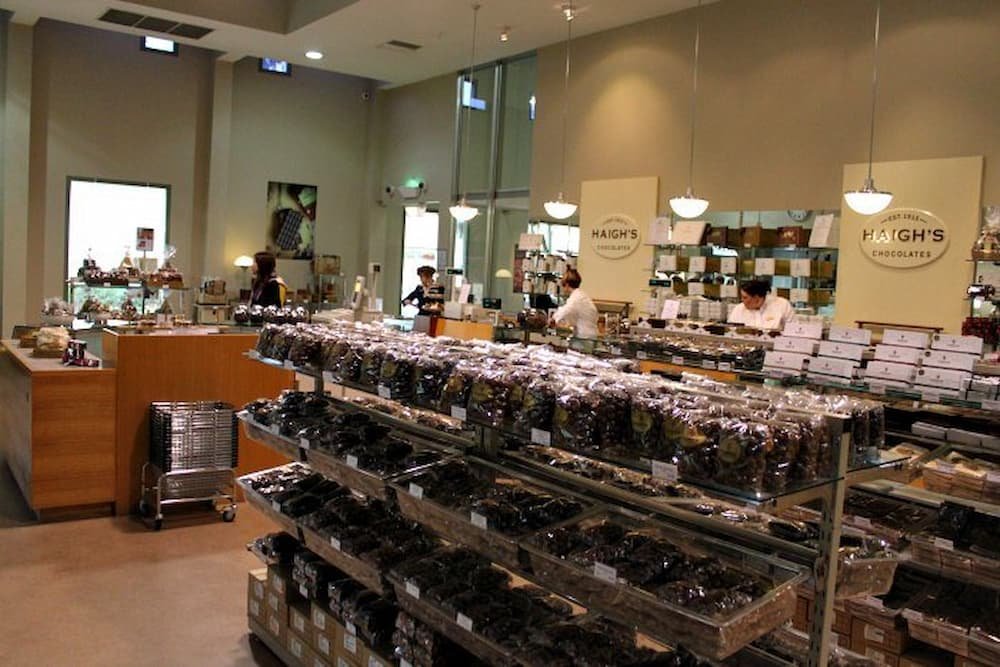
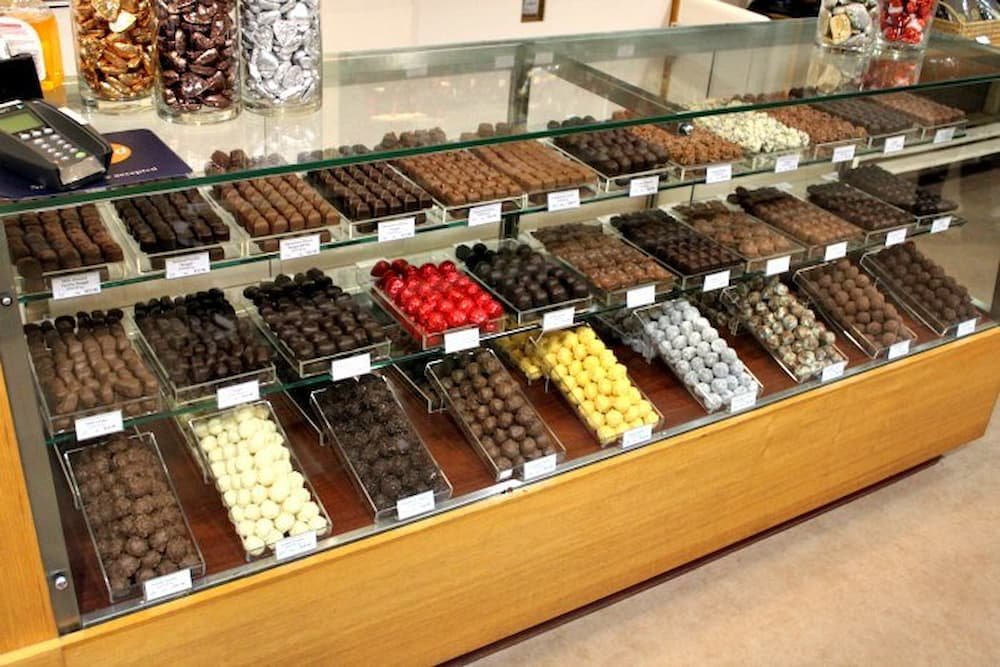
Still left with room for dessert, next stop was the famous Haigh’s chocolate factory, a South Australian icon, where we had a 2 pm factory tour booked (note these tours are for free but bookings are essential). After learning about the process of making chocolate and seeing some of the processes in action (hand-rolling chocolate truffles, creating mounds of almond clusters, individually putting little lemon candies on each piece of lemon myrtle cream), we had a newfound sense of appreciation for the time and effort spent creating each chocolately masterpiece. So much so that Lisette decided to buy a whole collection of these individual creations and a packet of rocky road (despite the collection of free tasting that we got during the tour).
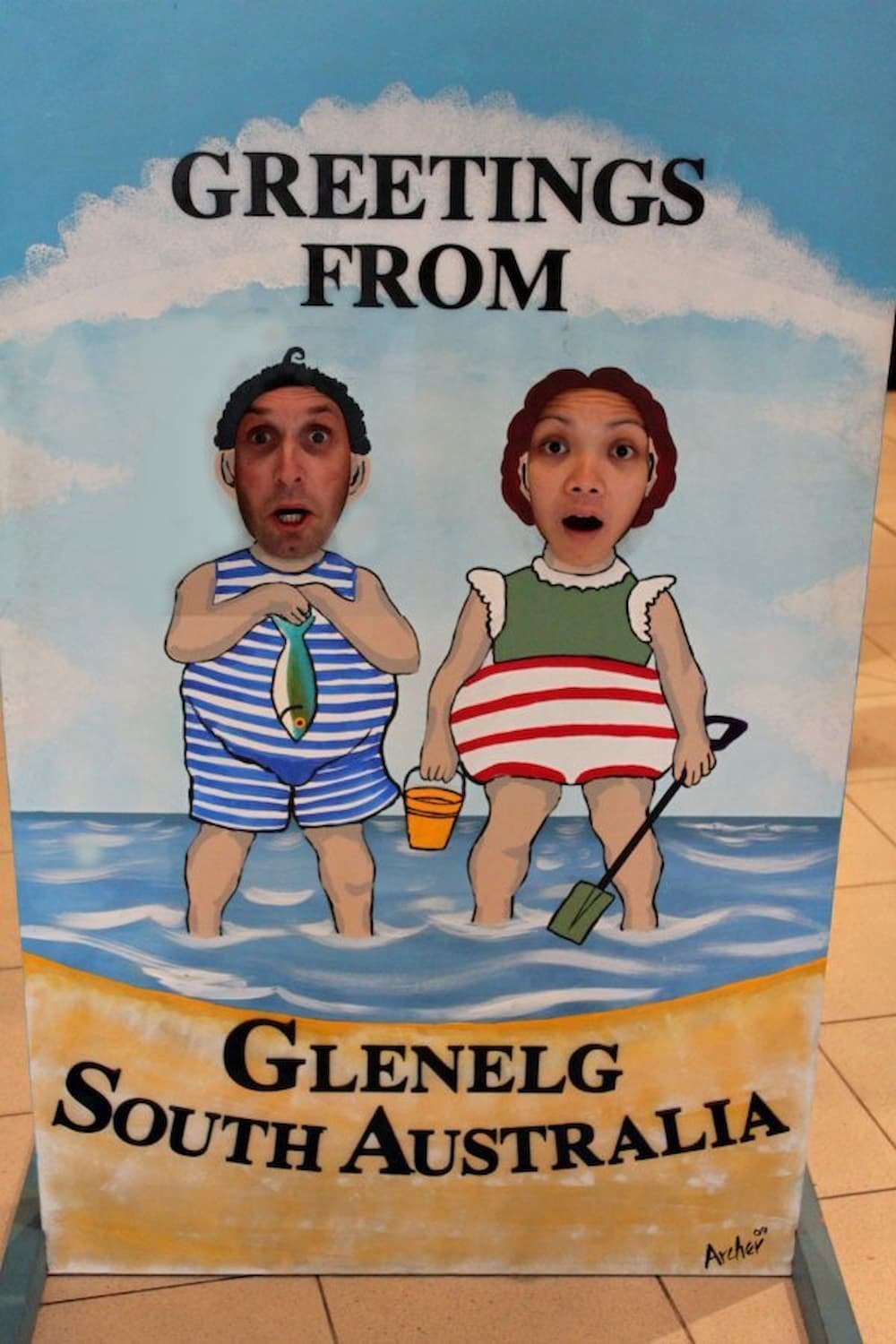
After a quick tea and coffee, we were off again to the beachside suburb of Glenelg, 30 minutes from the city. The sleepy little suburb is reminiscent of the English seaside town of Brighton, with its streets of cafes, shops, and pubs, as well as a little museum which had some interesting photographs, paintings, and sculptures from local artists.
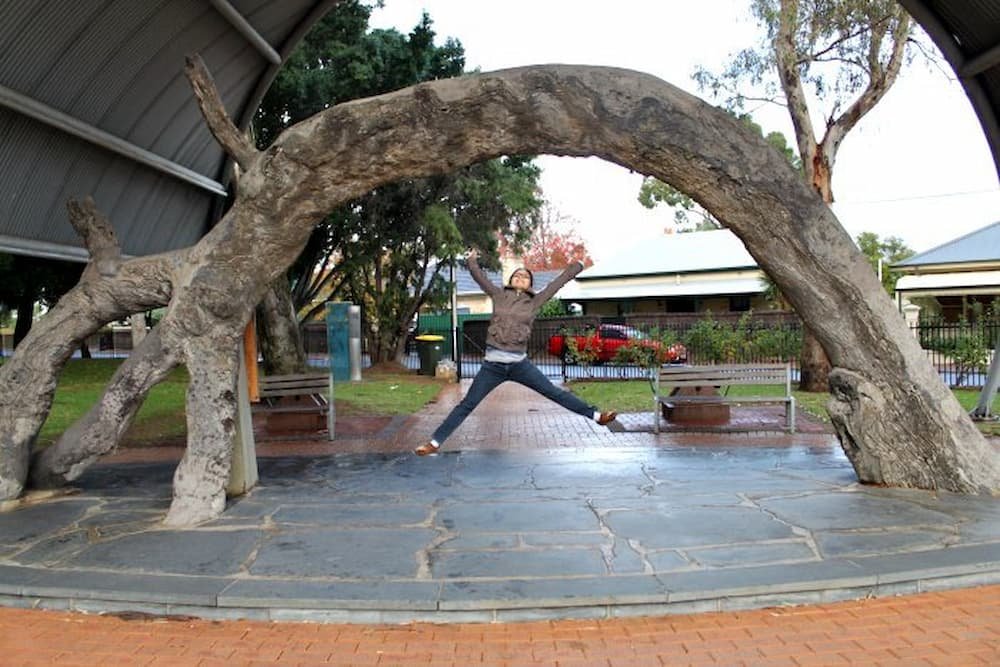
Getting back into our car as patches of rain started to hit, we had a quick stop at the Old Gum Tree. Situated within a small park in a residential area, this unassuming tree is the site where Adelaide was founded in 1836.
From there, it was 1.5 hours drive south to Cape Jervis, to catch the last ferry to Kangaroo Island, with a quick stop at a tavern beforehand to get some dinner. The ferry takes vehicles onboard and takes 45 minutes to get to the other side, even though the Island is only 15 kilometers from the mainland.
Arriving at Kangaroo Island at nightfall, we were meant to only take an hour or so to arrive in our little cottage – Honeyeaters Hideaway – however with the roads lit only by street reflectors, trying to navigate proved extremely difficult (and we had no cellphone reception – note if you are with any provider other than Telstra you are screwed). Luckily for us, we stumbled upon a Telstra payphone to call the lady who owned the cottage, who then directed us to where we were staying. Finally arriving in the pitch black, Michael searched for what felt like ages to find our cottage keys which were apparently in the electric box – only to realize that they were in the door.
Dumping our luggage on the floor of our cozy cottage, we crashed out for the rest of the night. Zzzzzzz…
Read the next episode here: Action and Adventure on Kangaroo Island.
