Want to travel stress-free to and from San Francisco International Airport (SFO)? Right from the get-go, you should have reliable transportation sorted out. Whether it's public transportation or SFO rental cars, knowing how to commute in and around the city will make your trip easier and hassle-free. With the myriad of transportation options available, ensuring a comfortable and convenient journey won't be a problem.

The AirTrain connects San Francisco Airport to Bay Area Rapid Transit (BART) via the Garage G AirTrain/BART station stop. It also serves Caltrain by taking BART to Millbrae Station. This fully automated transit line operates year-round, 24 hours a day, with station departures as frequent as every four minutes. It is wheelchair accessible and has elevator service at all stations.

These are a cost-effective option, especially for groups or families. The shared-ride services operate on fixed schedules, picking up passengers from various locations and dropping them off at designated stops or accommodations. You should also look into complimentary shuttle services that your accommodation may offer.
Ride-sharing services like Uber and Lyft are popular choices for airport transportation. You can book a ride in advance or on the spot using their apps, providing convenience and flexibility. You can choose to book economy cars, luxury vehicles, and larger cars for groups or families. Just keep in mind that fare rates are higher during peak times. For your convenience, you should also check the designated pick-up areas at SFO for these services. Pick-up locations may vary by terminal.

For a more private, personalized or even luxurious experience, rent a private vehicle. Most car rental companies offer a diverse fleet to suit different budgets. National Car Rental, for example, offers economy cars, SUVs, convertibles and more to cater to varying travel preferences. What you book is entirely up to you. Make sure to check terms and conditions, especially fuel policies to avoid surprises. Even better, San Francisco Airport's AirTrain's Blue Line connects to the Rental Car Center and Long-Term Parking area. Your rental is ready to use right after you get off the plane.
Traditional taxi services remain a reliable means of transportation to SFO. They are readily available at designated taxi zones outside each terminal. Although taxis provide a direct and regulated transportation option, you may not get one during busy and peak times. It's often a point-to-point transportation as well. Unlike a rental or private car service, you can't choose to make random stops when you see something worth exploring that's not in your itinerary.

Shared vans are an affordable option for travelers heading to downtown San Francisco hotels, residential neighborhoods, the East Bay, the South Bay, or far outlying suburbs. With a typical price averaging around $17, they offer an economical way for individuals or groups to commute to their desired locations.
This may not be the first choice for travelers looking for comfort and privacy, but San Francisco's public transportation system does offer a level of convenience. BART (Bay Area Rapid Transit) and SamTrans buses, for example, provide convenient connections to SFO. BART connects the airport to various locations in the Bay Area, offering a quick and economical mode of transport. SamTrans buses also serve SFO, providing access to different parts of the city and surrounding areas.
Whichever transportation option you choose, ensuring a stress-free journey starts with ample preparation.
Securing quality transportation around the city and to and from San Francisco International Airport is integral to a seamless travel experience.
For those looking to explore the region further, wine country tours from San Francisco offer an exceptional way to experience the renowned vineyards and picturesque landscapes of California wine country.

Whether you prioritize convenience, affordability, or luxury, exploring the various options available and planning ahead can help you find the ideal transportation solution. By considering your preferences and needs, you can ensure a stress-free journey, allowing you to focus on enjoying your time in the vibrant city of San Francisco.
The East African island of Mauritius is a melting pot of different cultures and customs that come together to create a truly unique way of life, which is best discovered up close. A more authentic and immersive island experience awaits you beyond the world-class beaches and luxury hotels; read on to discover how you can enjoy the cultural delights of Mauritius.

What better way to truly immerse yourself in a new culture than by testing out the local fare? Mauritian cuisine has been infused with so many different international flavors throughout history, with various dishes celebrating different aspects of the island’s heritage. You’ll notice particularly strong Asian and European influences, but the locals also like to champion native African flavors, too.

There are so many different ways to enjoy an authentic taste of Mauritian cuisine. If you’re out and about, keep an eye out for the street food vendors serving local dishes to go. These convenient spots will introduce you to the traditional flavors of the island, and are also an excellent option if you’re looking for cheap eats to fuel your adventures. Or, if you want to really live like a local, visit one of the markets and pick up some ingredients to recreate your own Mauritian dishes. However you choose to enjoy the wonderful food on offer, we’re sure you won’t be disappointed.
It’s not just the cuisine that’s drawn influences from the different countries to have settled on the island throughout history. Granted, Mauritius is probably best known for the natural elements that make up its alluring landscape, from the world-class beaches to the viridescent valleys. But the island’s architecture has an important story to tell, and if you want to know more about the culture and history here, exploring some of the historical hotspots is a great place to start.

From the British-built Martello Tower that was used in defense against French invasion to the museum at Beau Plan Sugar Mill, each spot uncovers a different aspect of the island’s fascinating past. If you can peel yourself off of your beach towel for an afternoon, the historic buildings across the island are well worth a visit.
Mauritian people have a reputation for being extremely friendly and welcoming to international visitors, and spending some time mixing with the locals is a great way to learn more about island life. The markets are a wonderful place to meet people and find out about the local culture through the medium of food and crafts. Or, consider signing up for a guided tour where you will not only get a local expert’s perspective on the sights, but it’s also an easy way to meet new people along the way.

As it is anywhere in the world, it will always be appreciated by the locals if you try to converse with them in the local language. There are a range of dialects spoken across the island including Mauritian Creole, French and English. Even keeping a few phrases handy can go a long way to helping you integrate into the local culture and interact with the people who live there.
Taking a road trip with your teenage kids driving can be a daunting prospect. As a parent, you want to ensure they drive safely while also giving them independence. With some planning and common sense rules, road-tripping with young drivers can be rewarding for the whole family.
Read on for the best road trip tips to ensure a safe and fun holiday for the whole family.

When your teen is first learning to drive, it's wise to avoid road trips in vehicles that are challenging to maneuver. Stick to sedan-style cars rather than 4WDs or vans which require more skill. Automatic cars are preferable to manuals for beginner drivers too. If possible, get them practicing locally in the car you plan to road trip in so they build confidence. Modern cars packed with safety features are ideal.
Research your route together and aim for major highways over trickier rural backroads. Try to avoid driving at night when visibility is lower. Plan daily segments of 4-6 hours max with regular breaks to prevent fatigue. Consider routes with fewer road trains that can intimidate young drivers. Use a GPS navigator to alert upcoming hazards like school zones. Being well-prepared with maps will give you both peace of mind.
Discuss expectations before departing and establish clear rules. Remind them of road rules like no mobile phones and always wearing seatbelts, as well as maintaining a 2-second gap between vehicles. Explain that you're there to coach, not criticize. Let them know that it's ok to pull over anytime they feel uncomfortable, as long as they do so safely. Clear rules provide a framework for them to build skills.
For more information, you can check out ROLLiN’s guide for beginner drivers to get a strong sense of what those first starting their driving journey need to do to stay safe.

A road trip is tiring for any driver, especially a novice. Swap drivers at least every 2 hours and avoid marathon stints. Draw up a schedule taking advantage of times when they're most alert, such as morning time. Allow them to observe your driving so you can demonstrate good habits. Have an experienced driver accessible at all times. Never pressure them to push through fatigue.
Look for accommodation close to highways to avoid navigating tricky new areas at night. Seek out motels with easy parking that don't require difficult reversing maneuvers. Choose places with restaurants nearby so you aren't reliant on their night driving. Let them recharge with a good night's rest before hitting the road again.
An organized, clutter-free car makes driving less stressful. Pack gear tightly with heavier items low down to improve vehicle stability. Use a non-slip mat under coolers and bags. Remove or secure loose items that may roll around and distract them while driving. Do a walk around checking doors and boots are shut properly. A tidy car with good visibility enhances safety.
Suppress any nervous backseat driving tendencies! Have confidence in the training you've given them and avoid criticism. Be patient - their driving skills will improve each day. Praise them when they demonstrate good habits at the wheel. They'll remember the trip fondly instead of how stressed their parents were!
Get in some driving practice as a family before embarking on a big trip. Do some local drives on highways and unfamiliar routes. Have them drive at night and practice maneuvers like parking, reversing, turning, and roundabouts. Build up from short trips to longer drives as their confidence grows. This will reassure you both that they can handle different road conditions.
Being hungry or thirsty can affect concentration so keep the car well stocked. Pack nutritious snacks like fresh fruit, mixed nuts, muesli bars and sandwiches. Have a cooler with water, juice, and sports drinks easily accessible. Schedule regular snacks and toilet stops to keep energy levels up.
Take some time to familiarize young drivers with common blind spots around the car that are easy to miss when checking mirrors and over the shoulder. Hazards like cyclists, pedestrians, and merging cars can seem to appear from nowhere. Drive slowly together around other vehicles and get them to call out when anything disappears from view. This awareness saves lives.
With the right mentality, rules, and preparation, a road trip can be wonderful for young drivers. Following these tips will help install life-long safe driving habits while creating priceless memories. Maintain realistic expectations, share the workload, and ensure adequate rest. Most importantly, savor the adventure together! In no time they'll be an experienced road trip veteran like you.
If you've been dreaming of a grand European adventure, look no further! The Euro Extravaganza with Eurail Passes is your passport to traverse the mesmerizing beauty of the European continent. Travel the enchanting landscapes of Europe, savor the delectable cuisine, and immerse yourself in diverse cultures with Eurail Passes: The Ultimate European Adventure!
This comprehensive travel guide will whisk you away on a journey through history, art, architecture, and gastronomy, all while uncovering the secrets of different European cultures. So, let's hop on board the Eurail train and begin this unforgettable expedition!
With Eurail Passes, you have the freedom to explore Europe at your own pace. Say goodbye to fixed itineraries and hello to spontaneous discoveries. Whether you want to wander through the romantic streets of Paris, witness the breathtaking Northern Lights in Norway, or indulge in the vibrant nightlife of Berlin, Eurail Passes allow you to roam effortlessly across multiple countries, making your Euro Extravaganza a memorable and personal experience.

Traveling through Europe can be a hassle, especially when dealing with various currencies and language barriers. However, with Eurail Passes, you can wave goodbye to these worries. Simply present your pass, board the train, and you're on your way to your next destination. Moreover, the trains are well-equipped with modern amenities, ensuring a comfortable journey, so you arrive at each city feeling refreshed and ready to explore.
For those aiming to visit multiple destinations, Eurail Passes are a cost-effective solution. Instead of purchasing individual tickets for each leg of your journey, a Eurail Pass offers you unlimited travel within a specific time frame. This means more savings to spend on delightful experiences, delightful cuisine, and cherished souvenirs.
Europe is a treasure trove of art and history, with its majestic castles, awe-inspiring cathedrals, and world-renowned museums. Dive into the Renaissance wonders of Italy, stand in awe of the ancient ruins in Greece, or admire the splendid architecture of Spain. Eurail Passes provide you with the flexibility to explore these cultural gems, enriching your understanding of European heritage.
One cannot talk about Europe without mentioning its culinary delights. Each country boasts a unique culinary heritage, and with Eurail Passes, you have the opportunity to savor an array of gastronomic wonders. From the delectable pasta dishes in Italy to the mouthwatering pastries in Austria, and the delectable tapas in Spain, your taste buds are in for a treat on this Euro Extravaganza.
Festivals and Traditions
Experience the liveliness of European festivals and traditions that showcase the spirit of each culture. Attend the colorful Carnival in Venice, witness the stunning fireworks of Bastille Day in France, or be part of the Oktoberfest celebrations in Germany. With Eurail Passes, you can immerse yourself in the vibrancy of these events, making your journey even more unforgettable.
Eurail offers a variety of passes to suit different travel needs. The Global Pass allows you to explore up to 33 European countries, making it perfect for those seeking extensive travel. If you have a specific region in mind, such as Scandinavia or the Balkans, there are Regional Passes available too. Moreover, if you're a solo adventurer or traveling with family and friends, Eurail has passes catering to individual and group travelers.

The beauty of the Euro Extravaganza lies in the flexibility it offers. Before embarking on your journey, outline the destinations you wish to visit and the experiences you want to indulge in. Whether you're interested in exploring iconic cities or venturing off the beaten path to hidden gems, Eurail Passes grant you the freedom to design an itinerary that aligns perfectly with your travel aspirations.
While having an itinerary is helpful, leaving room for spontaneity can lead to unforgettable experiences. As you travel from one destination to another, you may come across charming towns, picturesque landscapes, or intriguing festivals that weren't initially on your radar. Embrace these serendipitous moments and allow yourself to be immersed in the unexpected wonders of Europe.
For well-known tourist hotspots, it's advisable to plan your visit ahead of time, especially during peak seasons. While Eurail Passes provide flexibility, some attractions may require reservations. Booking in advance ensures a seamless experience, allowing you to fully enjoy the sights without worrying about long queues.
As you delve into different cultures, take the time to understand and respect local customs and traditions. Learning a few basic phrases in the local language can go a long way in creating meaningful connections with the locals. Additionally, try regional dishes and partake in local customs to truly immerse yourself in the authentic European experience.
Traveling by train offers convenience, but it's essential to pack smartly. Make sure to bring comfortable clothing and suitable footwear for exploring each city on foot. Also, remember to carry a small daypack for essentials like water, snacks, and a camera to capture the breathtaking landscapes and memorable moments.
Embark on a Euro Extravaganza like no other with Eurail Passes, where you'll discover the captivating cultures, delectable cuisines, and historical marvels that make Europe a timeless destination. Whether you're a history enthusiast, a food lover, or an adventurer at heart, this journey will leave you with cherished memories and a profound appreciation for the richness of European diversity. So, don't wait any longer – book your Eurail Passes, and let the Euro Extravaganza begin!
Backpacking is an exhilarating adventure that allows you to explore the world on a shoestring budget, but let's be honest: it can sometimes leave you feeling a little rough around the edges. With cramped hostels, sleepless nights on uncomfortable buses, and the constant hunt for cheap eats, it's easy to lose sight of the finer things in life.

But fear not, fellow wanderers! There are ways to infuse your backpacking escapades with a touch of culture and sophistication, and one of the most memorable ways to do so is by experiencing the Verona Opera.
Ah, the Verona Opera, where music, drama, and history converge to create a truly enchanting experience. Picture this: a warm summer evening in the heart of Verona, Italy, sitting under the stars in a stunning Roman amphitheater that dates back over two millennia. The stage comes alive as the orchestra strikes up a symphony, and the velvety curtains part to reveal a mesmerizing performance. It's an experience that will transport you to a different time and place, and leave you feeling utterly captivated.
Attending the Verona Opera is an excellent way to immerse yourself in the cultural fabric of Italy. Verona, renowned for its rich history and association with Shakespeare's Romeo and Juliet, offers an extraordinary lineup of operatic performances throughout the summer. From timeless classics like Carmen and Aida to enchanting renditions of La Traviata and Nabucco, there's a production to suit every taste.
Now, I can already hear some of you saying, "But I'm backpacking on a budget! How can I afford tickets to the opera?" Fear not, my frugal friends, for there are affordable options available. The Verona Arena, the magnificent open-air venue where the opera takes place, offers tickets at various price points. Opting for the unreserved stone steps, known as "gradinata," allows you to enjoy the performance at a fraction of the cost. It may not be the comfiest seating arrangement, but trust me, the atmosphere and the music will more than make up for it.
Of course, the Verona Opera is just one of many ways to infuse your backpacking adventure with a dose of culture. Here are a few more ideas to consider:
Explore Local Museums: No matter where you are, there's bound to be a museum nearby waiting to be discovered. Museums offer insights into the history, art, and heritage of a place, allowing you to expand your knowledge and appreciation for different cultures.
Check if there are any festivals or cultural events happening during your backpacking journey. Whether it's a traditional dance performance, a vibrant street parade, or a religious celebration, participating in local festivities can provide a unique and immersive cultural experience.
Food is a universal language, and what better way to connect with a culture than through its cuisine? Sign up for a cooking class and learn to whip up traditional dishes from the region you're visiting. Not only will you get to savor the flavors firsthand, but you'll also gain a new skill to impress your friends back home.
Delve into the history of the places you visit by exploring ancient ruins, castles, and landmarks. Walking in the footsteps of those who came before you can give you a profound sense of the culture and heritage that shaped a particular location.
While all these options offer fantastic opportunities to embrace culture during your backpacking adventure, there's something undeniably magical about the Verona Opera. It's an experience that transcends language barriers and cultural differences, uniting people through the power of music and storytelling. So, next time you find yourself planning a backpacking trip, consider adding a little culture to your itinerary and make sure the Verona Opera takes center stage. Just remember to pack your sense of wonder and prepare to be swept away into a world of enchantment.
Who said backpacking had to be all rough edges and sleepless nights? With a sprinkle of culture, your journey can become an unforgettable tapestry of experiences, creating memories that will last a lifetime. So go forth, intrepid traveler, and let the Verona Opera be the crescendo that elevates your backpacking adventure to new heights of cultural bliss!
The allure of backpacking is irresistible to many. There's an unspoken thrill in the juxtaposition of ancient earth beneath your boots and cutting-edge technology in your backpack. As we head to the off-the-beaten-path, electronics—phones, cameras, GPS devices—become more than mere conveniences; they morph into lifelines, connecting us to civilization and guiding our adventures. But the wilderness, while breathtaking, harbors hidden hazards for our gadgets.
This article illuminates unseen perils and offers practical ways to shield your devices from harm.

The great outdoors, while magnificent, is a double-edged sword. It's filled with awe-inspiring beauty but also harbors elements that can harm your electronics. Protecting your belongings is a must. Dangers like water, dust, heat, and cold can pose a serious threat.
Imagine this: you're caught in a surprise rain shower, trekking through a dusty desert, or facing the harsh cold at a mountaintop. All of these scenarios can cause severe damage to your devices, potentially cutting off your vital connection to the world.
Physical dangers are just as real. They're not always as noticeable, but they're equally destructive. Picture accidentally dropping your device on a rocky trail or the constant jostling in an overstuffed bag. These incidents might seem minor, but they can quickly turn your lifeline to the digital world into a useless piece of metal.
The first line of defense lies in choosing the right protective gear. Waterproof and shockproof cases are a modern adventurer's best friend. Serving as a formidable shield, these cases protect your gadgets from an array of environmental and physical threats. They're available in a variety of sizes, so be sure to choose one that snugly fits your equipment, offering optimal protection.
But don't just stop at individual cases. Think about your travel backpack, your primary storage unit, as an impromptu fortress. Look for bags with dedicated, padded compartments designed to house electronics. These not only keep your devices organized but also provide an extra layer of protection, preventing any potential damage due to compression or impact from other gear.
As any experienced traveler will tell you, moisture can be a formidable enemy. That's where the humble dry bag comes into play. Often overlooked, these lightweight, compact bags offer an additional layer of defense against water damage. They're ideal for protecting your electronics during heavy downpours, river crossings, or when you're lounging by the beach.
As we continue to rely heavily on technology, electronic device insurance has become a sensible consideration, especially for high-value items. Whether you're a professional photographer carrying expensive equipment or a traveler with a high-end smartphone, the investment in insurance can pay off significantly in case of an unfortunate incident.
Comprehensive insurance policies typically cover a wide range of unfortunate events, including theft, accidental damage, and in some cases, water damage. This means that should your device get stolen in a crowded marketplace, accidentally drop off a cliff, or even have it submerged in water during a boating trip, insurance can come to your rescue.
While having insurance won't prevent these mishaps from occurring, it certainly helps soften the financial blow that comes with such incidents. Depending on the specific terms of your policy, insurance can cover repair costs or even the replacement of your device in its entirety.
It's important to remember that not all insurance policies are created equal. So, be sure to thoroughly research different providers, understand the terms and conditions, and choose a plan that suits your specific needs and the nature of your travel. Pay particular attention to the claims process and customer reviews to ensure you're choosing a reliable provider.
Think of insurance as a safety net for your electronics. While we hope it never has to be used, it's comforting to know it's there if needed. After all, being prepared for the unexpected is a cardinal rule of travel.
The best gear can only take you so far. Adopting good habits can make a significant difference in the longevity of your electronics. Regular cleaning of ports and screens can prevent dust and grime buildup, ensuring optimal functionality.
Packing correctly is crucial. Aim to evenly distribute weight, and isolate heavier items from delicate electronics.

Avoid exposing your devices to extreme temperatures. If hiking under a blistering sun, shield your phone or camera. In freezing conditions, keep them close to your body for warmth.
Managing power is also essential. Carry extra batteries and power banks, but store them safely to prevent short-circuiting or overheating.
Even with the most diligent planning and precautions, accidents can still occur. Your devices could fail, get lost, or be damaged, resulting in the loss of valuable data. This is where having a backup and data recovery plan becomes essential.
Backing up your data regularly is a fundamental part of this plan. There are numerous ways to do this, and among the most popular and efficient are cloud-based services. Platforms such as Google Drive, iCloud, or Dropbox allow you to store and access your data from anywhere in the world, providing a virtual safety net for your important information and memories. It's advisable to set a regular backup schedule and stick to it diligently, so you always have the most recent version of your data safely stored.
Consider investing in a good quality, reliable portable hard drive as well. This can serve as an additional backup solution, especially useful when you have limited internet access for cloud backup. The combination of cloud and physical storage adds an extra layer of protection for your data.
Data recovery services form the last line of defense in the event of device failure. These services specialize in retrieving data from damaged, failed, or corrupted storage mediums. While not every situation guarantees a successful recovery, these professionals have specialized tools and expertise to recover data in many seemingly hopeless situations.
Safeguarding your electronic devices when backpacking is a blend of thoughtful selection, appropriate protection, good handling habits, and meticulous backup strategies. With these precautions, you can embrace the excitement of your journey, knowing that your digital companions are well-protected against the unseen perils that might lurk on your path.
Do you know how to behave yourself when you're about to travel to a new country where you don't understand a word? Well, here's a little tip: the most popular tourist destinations often have something in common - their language is spoken by millions and millions of people. So, before you embark on your adventure, why not learn a few words to get by in these incredible places?
Just imagine landing in Paris and being able to throw out some random words in French. It would be pretty awesome, don't you think? So, let's dive into the list of top tourist destinations and get ready to impress the locals with your newfound language skills!
France, with its rich history, vibrant culture, and stunning landscapes, is an enticing destination that captivates travelers from around the world. From the iconic Eiffel Tower and romantic streets of Paris to the charming vineyards of Bordeaux and the picturesque lavender fields of Provence, France offers a diverse range of experiences. Art enthusiasts can explore world-class museums like the Louvre and Musée d'Orsay, while food lovers can indulge in exquisite French cuisine and sample delectable pastries from local patisseries.
Whether you're strolling along the glamorous French Riviera, exploring the historic châteaux of the Loire Valley, or getting lost in the charming villages of Alsace, France guarantees unforgettable adventures and lasting memories. And hey, if you really want to immerse yourself in the local culture, don't forget to brush up on some French slang for that extra je ne sais quoi!

Who hasn't dreamed of a trip to the United States of America, or simply the USA, right? This enormous country has a bit of everything to offer. As a multicultural nation, each region has its own peculiarities and plenty to discover.
There are countless tourist attractions throughout the country, spread across 50 states, ranging from family-friendly destinations to bustling cities. There are the famous Disney parks in Orlando, beautiful beaches in California and Miami, vibrant nightlife in Las Vegas, breathtaking nature in the National Parks, and so much more.
To explore the United States, careful planning is essential, so we've gathered all the tips for you. Jot everything down and make the most of your trip.
Imagine visiting Pandora in Animal Kingdom, having dinner with the princesses in Magic Kingdom, exploring Epcot, the Star Wars Disney Park, Hollywood Studios, and much more.
How about renting a bike to explore Central Park in New York? Or visiting the Golden Gate Bridge and the museums in San Francisco? And why not take a helicopter tour of the Grand Canyon? These are just a few of the activities you can enjoy in the United States.
There are numerous parks, museums, historical sites, restaurants, theaters, cinemas, and charming places to discover in one of the world's most famous destinations.
Greetings and Social Expressions:
Ordering Food and Drinks:
The history of Spain is incredibly ancient, and various peoples have passed through it, contributing to the country becoming what we know today: a place that blends flavors, cultures, and architecture from different origins. From the Romans to the Arabs, their rich and diverse architecture is present, whether you're strolling through the historic streets of Toledo or the wide avenues of Madrid.
The natural landscapes of the Pyrenees, the beaches of Mallorca, the vibrant party islands, Gaudí's exotic buildings, the astonishing museums with valuable works of art, the Moorish architecture in Andalusia, the thrilling football matches, the monumental churches—these are just a few glimpses of what the country has to offer.
The capital, Madrid, with over 6.5 million inhabitants, is an excellent destination for art enthusiasts, boasting some of Europe's most important museums. Barcelona, the country's second-largest city, located by the sea, has a more laid-back rhythm but impresses with its liveliness, gastronomy, and impressive architecture. For partygoers, Ibiza is already a well-known destination, and those interested in history can explore Seville, Toledo, Segovia, Granada, Salamanca, and many more.
With modern and historic cities, Spain offers destinations for every type of tourism, whether urban or natural, always accompanied by good wine (or sangria) and mouthwatering dishes. Traveling by train through the country is a delight, allowing you to admire the diverse landscapes through the windows.
Why visit China? China is a fascinating country, with immense cultural, historical, and gastronomic diversity. Additionally, there are stunning natural attractions. You must visit this country and explore its historically significant and incredibly enchanting tourist spots, such as the famous Great Wall of China.
Great Wall of China: You can't go to China and not visit the famous Great Wall. The Great Wall of China spans over 21,000 kilometers. Along the wall, you can do various activities like meditating, hiking, running, and even taking a cable car ride. The wall is enchanting and massive, with eight entrances, each more beautiful than the last.
Beijing: The capital of China is home to over 19.6 million people. It's a bustling capital city with numerous captivating attractions, such as the Forbidden City and Olympic structures like the Bird's Nest. Spending a day in Beijing is incredible. The Forbidden City holds a strong historical connection, and by visiting this place, you'll also learn more about Chinese culture.

Shanghai: The most glamorous metropolis that attracts a significant number of Brazilians annually. Shanghai is the hub of China's economy, science, and technology. Moreover, if you're looking to shop and experience China's nightlife, Shanghai is perfect for you—it has the most vibrant nightlife in the world.
Macau: If you're seeking entertainment and want to experience the livelier side of China, Macau should be on your list. You can have a great time at the casino, known as the Las Vegas of the Orient. There, you'll encounter the largest casino in the world, The Venetian Macao.
Guilin: A small village in southern China that became famous through Chinese films. The scenery is enchanting, surrounded by mountains and streams. It's so beautiful that the landscape of Guilin is featured on the 20-yuan banknote in the country.
To know all about Italy, including Italian swear words, you also need to understand its history and how it strongly influenced culture and social development, both in Europe and the rest of the world.
It was the birthplace of Etruscan civilization, Magna Graecia, the Roman Empire, the Catholic Church, the maritime republics, Humanism, and the Renaissance.
Italy was the homeland of many artists, scientists, musicians, writers, and explorers. Among the various ancient peoples, we have the Ligurians, Venetians, and Celts in the north, Latins and Samnite Etruscans in the center, Greek colonies flourishing in the south (Magna Graecia), and the ancient Sardinian civilization blooming on the island since the second millennium BC.
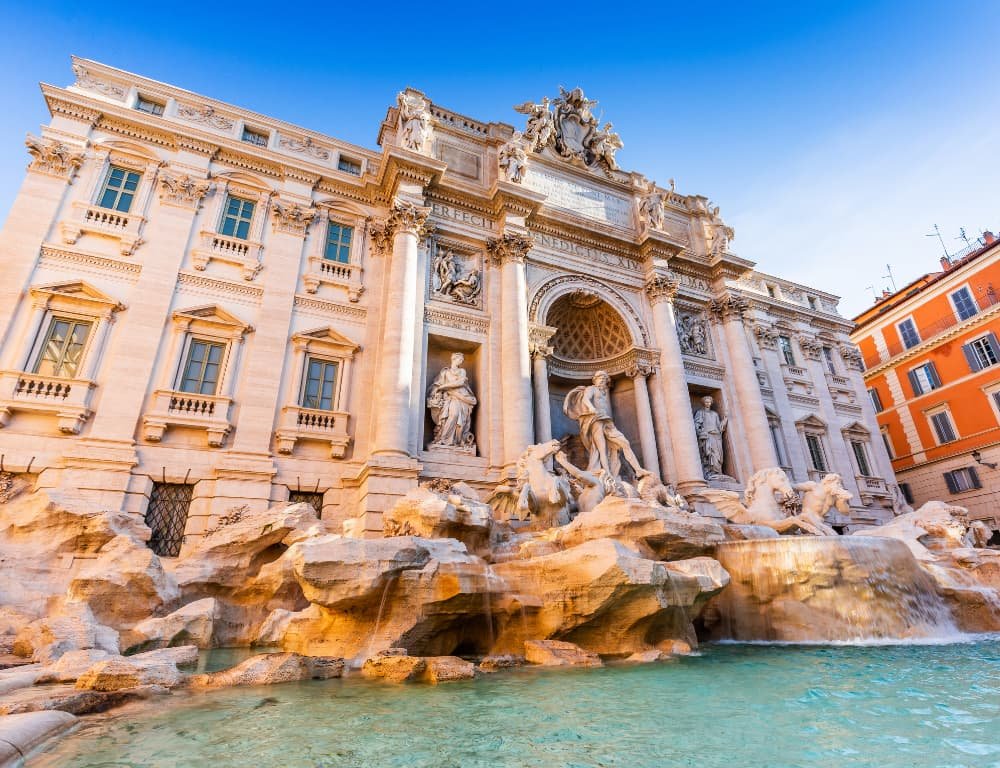
It's practically impossible to think of any area of culture and art where Italy doesn't have a significant influence. Let's break it down: music, painting, sculpture, architecture, fashion, design, gastronomy, and cinema say it all about Italy.
The country is home to at least 50 UNESCO World Heritage sites, including monuments, buildings, and cities. Among them, we have the Colosseum in Rome, the Milan Cathedral (Duomo), the historic center of Florence, the Leaning Tower of Pisa, the archaeological site of Pompeii, and the city of Venice.
The United Kingdom, formed by the political union of four nations - England, Scotland, Wales, and Northern Ireland - brings together a lot of history, classical architecture, bustling modern centers, and breathtaking natural landscapes. If you decide to study in the region, you'll enjoy excellent university facilities and have the advantage of being able to explore places that will undoubtedly provide unforgettable experiences.
The UK boasts at least 50 university cities that are attractions in themselves. Some of the oldest universities in the world are located in the region, featuring buildings that have been used as filming locations for period dramas, fantasy films, and epics. The Times Higher Education Student publication selected the most beautiful universities in the UK, with rolling green spaces and Gothic and modern buildings.
As if the beauty of their campuses wasn't enough, 11 out of the top 100 student cities in the world are in the region, according to the QS Best Student Cities 2019. The ranking showcases the best cities for studying abroad based on various indicators, including diversity, convenience, employability, affordability, student view, and how universities in each city performed in the QS World University Rankings.
Whether you're diving into the world of French or exploring ancient languages like Latin, Greek, or Hebrew, immersing yourself in the language is an exciting journey that opens up a whole new culture. It's like digging into a plate full of opportunities to connect with people and understand their unique ways of communication.
Sure, learning popular languages like English, Italian, Mandarin, or Spanish can open doors to a world of possibilities, but don't overlook the lesser-explored gems like Portuguese and Russian. They can be surprisingly rewarding and offer a whole different perspective. So go ahead, embrace the joy of language learning and let yourself be captivated by the richness of diverse cultures!
A reusable water bottle is essential for travel – whether it’s for a short hiking trip, a long-haul flight, or something in between. Today, many airports allow travelers to fill up their water bottles at refill stations after clearing customs, helping them stay hydrated while reducing single-use plastics.

There’s a huge range of reusable water bottles in the market, coming in all sizes, weights, materials, and colors. We tried several stainless steel water bottles from Super Sparrow to see how they stacked up.
This water bottle can hold a generous 51 ounces (oz) / 1500 milliliters (ml), perfect for quenching the most insatiable of thirsts. While the material is not stainless steel, it is made from a 100% toxin-free, US-imported Tritan Co-polyester plastic, that is free from harmful BPA chemicals. The transparent design is very useful to see how much water you’ve consumed, and how much water you need to refill.
The pinhole above the main opening allows air to escape ensuring a steady flow with the typically bubble release that you get from most water bottles.

While the bottle has hand grips for where you would hold the bottle to drink it, the grips are designed on the other side. What this means is if you use the grips, you’re holding it in at a 90-degree angle to then drink from the nozzle. It’s a minor feature flaw, but it means that the grips go unused.
Something else to be conscious of is the small pinhole above the main opening. If you don't have this lined up so it's vertically above when you take a sip it will leak water on you.
USE PROMO CODE GETBACKPACKING
Holding 25oz / 750ml, this bottle is perfect for a quick day trip. The water bottle comes with 2 straws that you can stick underneath the lid to sip from, but you can also do without this and still easily sip without these straws. This series has a ton of fun patterns – I was drawn to the cheerful pineapple yellow design – and there are also bright and colorful birds, flowers, and fruit style options. This is a great lightweight yet robust water bottle that is easy to carry around.

So far, so good! I personally am used to the wide mouth versus the straw design for drinking water bottles, so it would be great if Super Sparrow could also extend the pattern design series to its wide mouth options for those who prefer this.
USE PROMO CODE GETBACKPACKING
This bottle holds 25oz/750ml, a good option for a day trip. Available in a range of solid colors, this bottle, like the ultra-light stainless steel water bottle above, comes with two straws that you can stick under the sport cap to quickly drink from without removing the cap. The main difference with this bottle is that it is perfect for anyone who can’t decide whether they want a sport cap (drinking from a straw), or a loop cap (twisting the lid open to drink).
Rather than stick to only one option, why not do both? This is also the perfect bottle combination for someone who wants to carry hot and cold fluids.
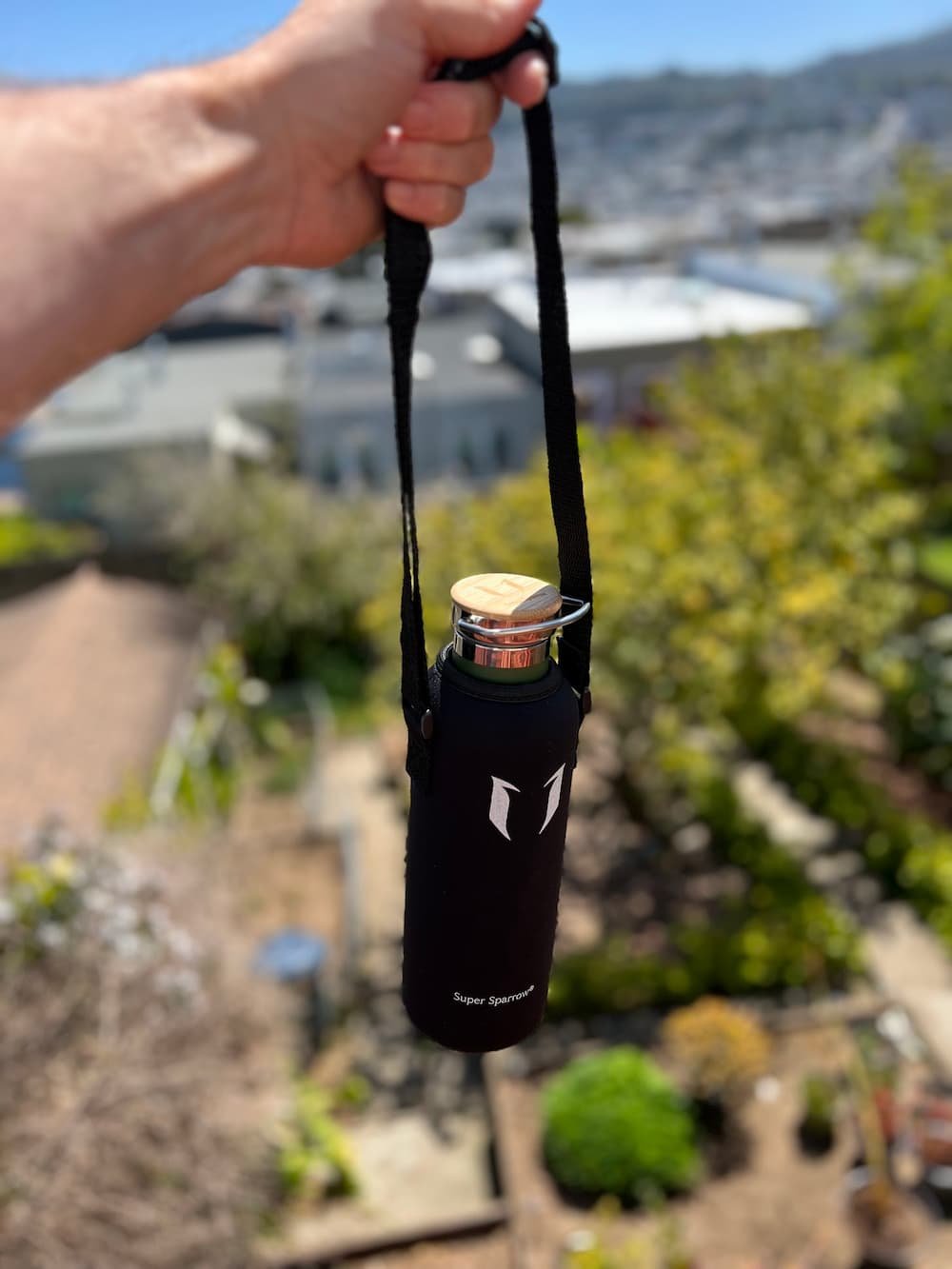
No complaints so far! The dual cap options are a welcome inclusion so you can choose which to use, depending on your activity. The immense range of colors only means that you could spend a lot of time weighing up your options ahead of purchase… Am I more a “lavender” or a “jade” color water bottle person?
USE PROMO CODE GETBACKPACKING
Reusable water bottles have become increasingly popular not only as a more eco-friendly option, but as a more cost-effective and convenient must-have while traveling. Super Sparrow is a fantastic option as its bottles don’t contain Bisphenol A (BPA), a chemical compound that can be found in many everyday products such as shatterproof windows and eyewear, which has also been linked to a range of health issues.
As long-time reusable water bottle drinkers, we found that the water in these bottles seemed to taste better, and hope that these bottles will continue to hold up over a long period of time. We also really liked the extensive options they have – there are standard mouth, wide mouth, straw top, and mugs and tumblers, with sizes ranging from 12oz/350ml to 51oz/1500ml – which should satisfy everyone’s thirst.
An Arctic expedition promises the thrill of a lifetime, and not surprisingly, features on many people’s travel bucket lists. From the magical Northern lights to the unique Arctic wildlife, it’s a memorable travel opportunity not many get to experience.

But do you know what to expect on an arctic expedition? Discover all you have to look forward to, and look out for, in this concise guide.
You’ll need travel documents, just like any other trip. Not every Arctic expedition is the same. You may go through different countries, and therefore you’ll need not only your passport but perhaps also visas.
This depends on your particular expedition package, as well as your nationality. Be sure to check these requirements before you leave.
You’ll also probably have to make one or more transfer flights to get to the point of departure and to get back home after your trip. Some expeditions include these transfers, but not all. Be certain that you allow enough time between transfers and the start of your trip. A delayed flight could make you miss the ship!

It’s going to be cold. Very cold. You’re expecting that, and will probably pack your winter sweaters. But this is a whole other level of cold. Pack for extreme cold and rugged terrain, You’ll probably be advised about what to pack when you book your trip. But here are some good basics to include.
Include thermal wear, wool beanies (they keep you warm, but are still breathable), wool socks, gloves and scarf, good quality waterproof hiking boots, and comfortable trousers. And break in those hiking boots before you go. The last thing you want is blisters while trekking through ice and snow.
What do you need waterproof hiking boots for? You’ll not only be viewing the scenery from the icebreaker ship, but also doing some exploring. You’ll need boots with tread that won’t slip on ice or snow, too. Most Arctic yours provide rubber boots and all provide life jackets.
You may get seasick, at least at first. If you have never been on the open ocean before and aren’t sure if you’ll get seasick, just assume that you will.
Err on the side of caution and get some seasickness medication from your local drugstore before you go. Don’t worry too much about it, though. While unpleasant, seasickness is usually fleeting.
Even if you are not new to being on the water, this is not your average boat trip, and you may still be struck down by a bout of queasiness. Seasickness bands are available from many sports stores. Or get some natural remedies like ginger to take with you on the trip.
Believe it or not, you can get sunburned on an Arctic expedition!
And that’s not the only skin-related concern. The extreme cold can also play havoc with exposed skin, especially delicate facial skin.
To prevent damage to your skin from sunburn, windburn, and the cold, pack plenty of moisturizer with a high SPF, and extra sunscreen. And don’t forget some chapstick for your lips, too.
You need to be fit. An Arctic expedition is not for the faint-hearted. You need to be able to withstand extreme weather and heavy-duty trekking through harsh conditions.
We’re not talking triathlon-fit here, although that would certainly be a plus. But you’ll need to have a basic fitness level at least, to enjoy the more demanding aspects of your trip. You’re sure to do some more strenuous hiking than you’re used to.
This may be the chance to use those hiking essentials you never knew you needed before. But if you suffer from any medical condition, are overweight, or have physical impairments, discuss your plans with your doctor before booking your trip.
Taking selfies can be hazardous. Yes, you’ll surely want to take some epic selfies and photos of the breathtaking scenery. You’ll also spot wildlife unique to the Arctic zones, and be tempted to capture an Instagram-worthy pic or two.
But pack a waterproof camera cover, and don’t lean out over ship rails to take photos. When you get off the ship to do some trekking, be responsible. Stay with the group. Don’t go wandering off in search of awesome photo opportunities.
You may run into the local wildlife that is camera-shy at best, and aggressive at worst. No selfie with a bear is worth it. Ever.
Yes, snow blindness is a ‘thing’. It’s caused by UV rays that are reflected off the snow and ice. Both professional and experienced amateur skiers know all about it when they go all over the world in search of the best ski spots. That’s why they wear protective goggles.
But snow blindness is even more likely at the poles. To prevent eye injury with the correct eye protection. You can protect your eyes with sunglasses or, preferably, specialized goggles that have polycarbonate lenses.
This will keep flying snow and debris out of your eyes, and protect them from snow blindness as well. Fortunately, snow blindness is not permanent. Its effects last between 24 and 48 hours. But it’ll put a serious damper on your trip. So take the necessary precautions.
Barcelona is a Roman-founded city that dates back to the 1st century BC. It is rich in cultural heritage and is also the main biotechnology hub in Spain, which has consistently drawn visitors from all walks of life into the City.
It is estimated that annually Barcelona records the in-flow of about 23 million visitors and tourists into the country. With a staggering number of over 150,000 visitors daily.
This article focuses on the advantages and also tourist attractions that have contributed to Barcelona's success as a vacation destination.
Barcelona has a lot of advantages that have given it an edge over other countries such as great culinary skills. However, the two advantages listed below are on top of the list.
One of the most common concerns that people have when traveling to other countries is being met with hostility. This is in stark contrast to the atmosphere created by the people of Barcelona.
Barcelonians are known for being friendly, receptive, and eager to welcome visitors into their city.
Barcelona has some of the best hotels and rental apartments in the world for both short-term and long-term stays. These apartments are spacious and comfortable, with a reliable wifi connection, making them ideal for short-term rental for digital nomads.
Holiday apartments in Barcelona are easily accessible and cost-effective due to their low cost. This makes it easy to book a Barcelona holiday apartment for your next trip.
Barcelona is said to have one of the top tourist attractions in the world. Below is a list of some of the top, most sought-after sites in Barcelona.
The famous FC Barcelona football club is based here. Camp Nou is the stadium where talented and skilled football players have been able to showcase their abilities.
The stadium can accommodate approximately 100,000 people at one time and has rightfully earned the title of one of the world's largest stadiums. Lionel Messi, Ronaldinho, Diego Maradona, and Christiano Ronaldo have all played there.
Camp Nou also houses a museum dedicated to the history of the Barcelona football team. From their trophies to their players and all of their matches, Camp Nou makes sure you never forget this memory.

The Casa Batllo is a tall structure in the heart of Barcelona. It is regarded as one of the greatest works of the famous architect Antoni Gaudi.
It is well-known for its distinctive design, which has earned it the nickname house of bones or house of dragons. Casa Batllo has also been designated a UNESCO World Heritage Site.

One of Barcelona's most popular and visited sites is the Sagrada Familia, also known as the Holy Cathedral. It is yet another masterpiece by Antoni Gaudi.
The cathedral's design is a fusion of arts, nature, late Gothic architecture, and modern Catalan design. This structure stands out as a one-of-a-kind and iconic structure in Barcelona.

The Picasso museum is home to over 4000 works of art by the famous painter Pablo Picasso. The museum is located in Barcelona's La Ribera district.
The Picasso Museum provides insight into Pablo Picasso's life as well as different periods in Barcelona's history.

One of the works by Catalan architect Antoni Gaudi in Barcelona included in the UNESCO list of world heritage sites is Parc Güell. It was built between 1900 and 1914. From 1984 to 1993, it was restored by José Antonio Martnez Lapea and Elas Torres.
The 17-hectare Guell Park is filled with undulating forms, tree-like columns, animal sculptures and geometric shapes. Most of the area is decorated with mosaics made of small pieces of colored pottery.

Finally, with its stunning beaches and never-ending nightlife, Barcelona gives you the feeling of being at home away from home.
