Washington's rugged landscapes are a massive draw for touring cyclists and backpackers. But the state's highways can pose serious risks, and a series of recent collisions has brought that reality into sharp focus.
On State Route 26, a popular route through rolling hills, a fatal crash involving a cyclist serves as a sobering reminder for all vulnerable road users. A 42-year-old man from Spokane was killed after being struck by a vehicle late at night. For anyone navigating the Pacific Northwest on two wheels or on foot, understanding these risks isn't about fear; it's about preparation. In this guide, you'll find a breakdown of the current dangers on Washington's roads, along with actionable advice to help you explore safely.
Preliminary 2024 data from the Washington Traffic Safety Commission (WTSC) suggests a potential drop in some traffic fatalities. But the danger for vulnerable road users like cyclists and pedestrians? Still alarmingly high. That follows a grim milestone in 2023, which saw 810 traffic deaths, the highest number in Washington since 1990.
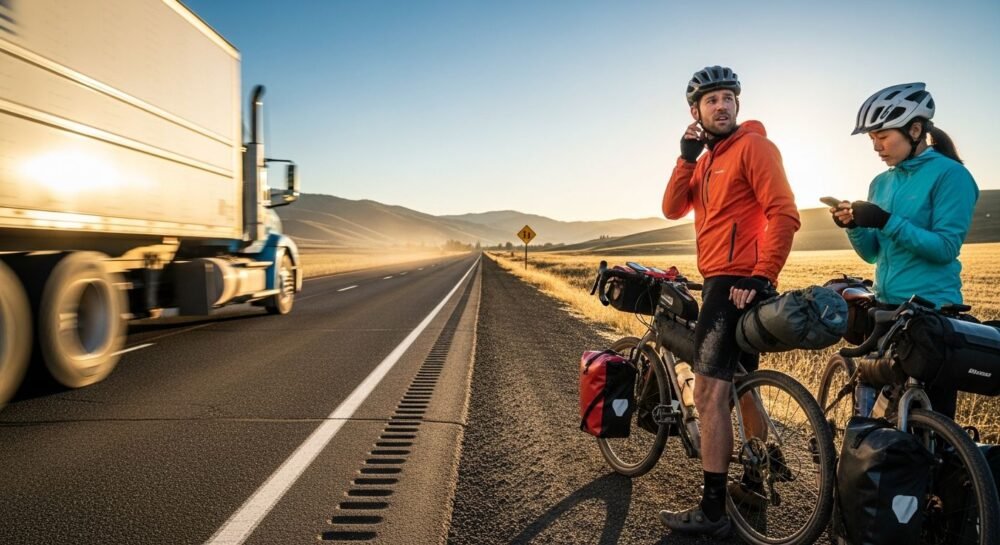
The incidents on SR 26 illustrate a common, dangerous scenario: a cyclist on a rural highway at night. In the Whitman County crash, the cyclist was struck around 11 p.m. on a dark stretch of highway. Visibility was critically low for both parties. Key factors in collisions like these include high vehicle speeds, narrow shoulders, and driver inattention.
And then there's the right-of-way problem. According to research, "failure to yield" was one of the top contributing behaviors in collisions that killed or injured pedestrians and cyclists in Washington between 2017 and 2021. It's a single issue that keeps showing up in preventable tragedies.
Here are some of the biggest risk factors you'll encounter on Washington's roads:
Your number one job is to be seen. That means bright, high-visibility clothing during the day and powerful front (white) and rear (red) flashing lights at all times, even in broad daylight. At night, add reflective tape to your gear, helmet, and bike frame. The goal is to create a larger, more recognizable profile for approaching drivers.
Don't just rely on Google Maps. Use cyclist-specific apps like Komoot or Ride with GPS, which often feature heatmaps of popular cycling routes and can help you find roads with lower traffic or wider shoulders. These tools reveal elevation changes, road surfaces, and safer alternatives that standard navigation apps miss entirely. Sometimes a slightly longer route is a much safer one.
And here's something many touring cyclists overlook: in Washington, you're legally a vehicle. That means riding in a straight, predictable line, using hand signals for all turns and lane changes, and taking the lane when necessary to avoid hazards like potholes or debris. Always assume a driver doesn't see you until you've made eye contact.
Not sure how urban and rural cycling risks stack up? Here's a quick comparison:
| Feature | Urban cycling (e.g., Seattle, Spokane) | Rural highway cycling (e.g., SR 26) |
|---|---|---|
| Primary danger | Complex intersections, car doors, distracted drivers | High-speed traffic, narrow shoulders, low visibility |
| Essential gear | Helmet, strong lights, loud bell or horn | All of the above, plus high-vis clothing and extra reflective gear |
| Key strategy | Claiming your lane, making eye contact at turns | Riding predictably on the shoulder, staying hyper-aware of passing vehicles |
Even with perfect preparation, accidents happen. Knowing what to do in the immediate aftermath can protect your health and legal rights. Stay calm and follow these steps:
After the immediate crisis, the focus shifts to recovery and figuring out who was at fault. Many of these crashes come down to a driver's legal responsibility to yield the right of way to cyclists and pedestrians. In Washington, the failure to yield law is a complex set of regulations that dictate who has priority at intersections, crosswalks, and on shoulders. Knowing these rules can make a real difference if you ever need to establish fault after a collision.
Washington's natural beauty is best experienced up close, and exploring by bike or on foot is one of the most rewarding ways to do it. The recent tragedies aren't a reason to cancel your trip. They're a call to travel smarter.
Be visible. Plan your route with care. Know your rights. Do those three things, and you'll significantly cut your risk while keeping the focus where it belongs: on the experience. So pass these tips along to fellow travelers, look out for each other, and enjoy everything Washington has to offer.