A Red Sea holiday can feel complete until Egypt’s deeper history begins calling from beyond the coast. Cairo rises around the monuments of the Pyramid Age, while Luxor preserves the temples, tombs, and ceremonial landscapes of ancient Thebes. Experiencing both within one short extension changes the entire character of a Hurghada stay: one city introduces the ambition of Egypt’s early kings, the other reveals the power and ritual world of the New Kingdom. Together, they create a journey through time rather than simply another pair of sightseeing stops.
Cairo and Luxor are often treated as separate destinations because the experiences feel so different. Cairo introduces monumental scale through Giza, major museum collections, and the energy of a vast modern capital, while Luxor feels more concentrated around archaeology, the Nile, temple complexes, and the desert necropolises of ancient Thebes. Their differences are exactly what make them work together.
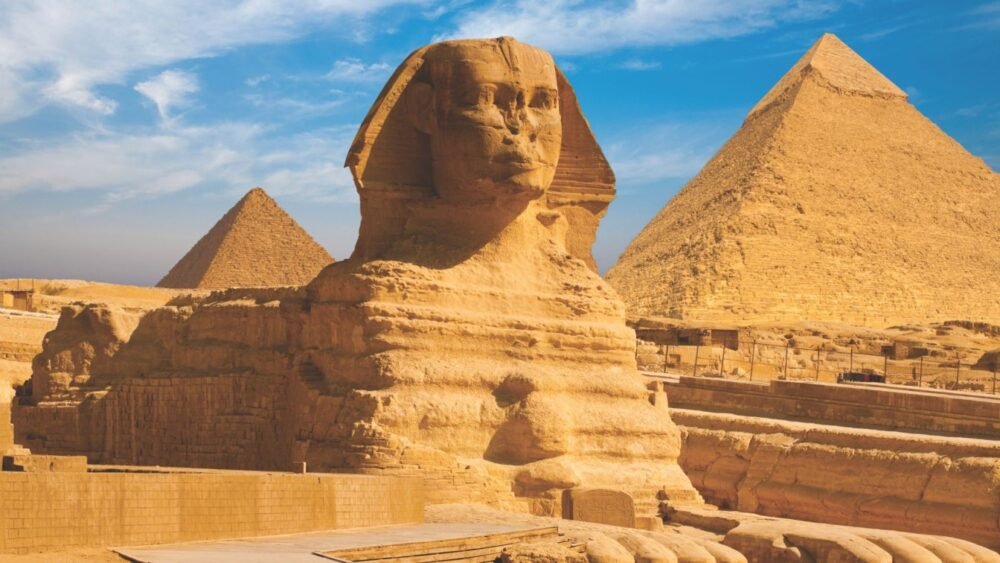
Seen as one historical arc, a Cairo & Luxor Tour from Hurghada can move naturally from the Pyramid Age into the later world of New Kingdom pharaohs without repeating the same type of experience twice. Giza introduces royal ambition through stone and geometry; Luxor shifts the story toward temple ritual, decorated tombs, monumental columns, and a landscape shaped directly by the Nile. The contrast creates continuity rather than competition between the two cities.
That chronological movement gives the trip a stronger narrative. Instead of returning from Hurghada with disconnected memories of “the pyramids” and “some temples,” travelers begin to understand that ancient Egypt changed dramatically across thousands of years, with different capitals, religious centers, architectural priorities, and royal traditions.
The Giza Plateau works as a powerful first chapter because it immediately establishes the physical ambition of ancient Egyptian kingship. The Great Pyramid, neighboring pyramids, the Sphinx, funerary structures, and the surrounding desert create a landscape where architecture dominates the horizon.
The most rewarding visit is not the fastest one. Standing close to the Great Pyramid reveals details that disappear in panoramic photographs, while moving to a wider viewpoint makes the relationship between the monuments easier to understand. The plateau becomes more meaningful when it is treated as an integrated royal landscape rather than several unrelated photo stops.
A focused Giza experience should leave enough time to notice:
These details create a foundation for the second half of the journey in Luxor, where royal architecture takes a completely different form.
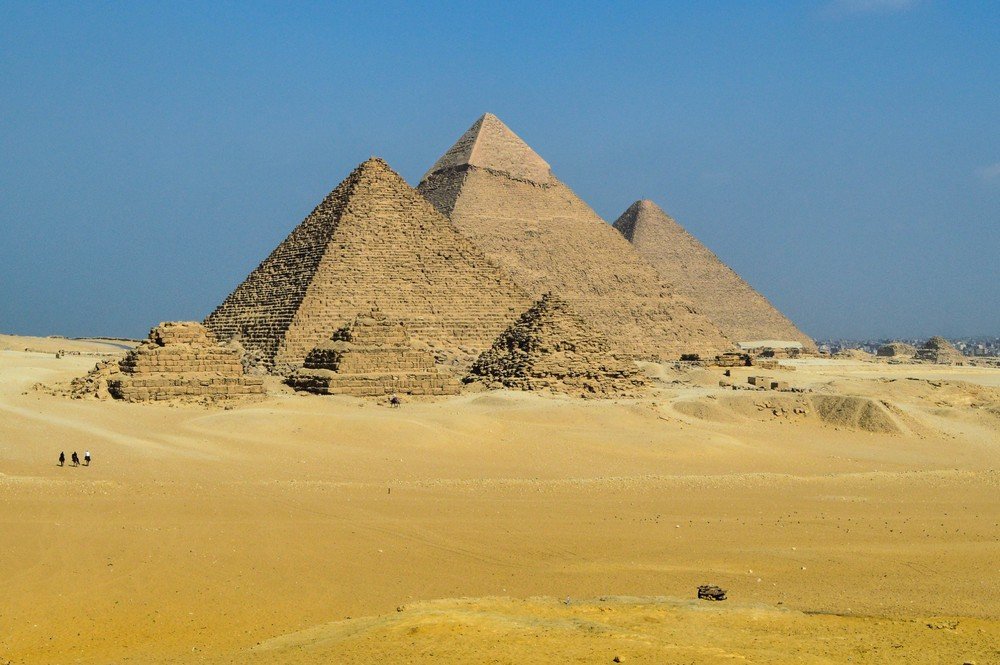
The enormous span between the Pyramid Age and the New Kingdom can be difficult to grasp through monuments alone. A museum visit provides the missing connection by placing sculpture, funerary objects, royal imagery, craftsmanship, and everyday material from different periods within a broader historical sequence.
This makes the museum more than an additional attraction. It becomes a bridge between the architectural world of Giza and the later political and religious landscape that will appear in Luxor. Statues, inscriptions, artistic changes, and royal objects make it easier to see that Egyptian civilization evolved continually rather than remaining visually or culturally static for three thousand years.
Large collections can quickly become overwhelming, especially during a short multi-city journey. Trying to examine every gallery in detail often creates fatigue before the second destination has even begun.
A better museum strategy is to look for historical transitions:
This approach turns the museum into part of the narrative rather than a separate block of sightseeing.
A two-city journey can become exhausting if every moment is treated as available sightseeing time. After Giza, a museum visit, airport transfers, and the movement between destinations, the evening should provide an actual pause rather than another major program.
That break performs an important function. Cairo has introduced a dense combination of desert monuments, museum collections, urban movement, and travel logistics; Luxor will require another full day of archaeological attention. A comfortable overnight stop gives the second chapter enough mental space to feel fresh rather than like an extension of the first.
The best short itineraries recognize that rest is part of sightseeing quality. A traveler who reaches Luxor rested is more likely to notice painted tomb details, temple inscriptions, and architectural differences than someone who has spent the previous evening chasing one more attraction.
The arrival in Luxor introduces a different Egypt almost immediately. The Nile Valley is greener, the desert cliffs sit close to cultivated fields, and archaeological sites appear across both sides of the river rather than being concentrated on the edge of a huge modern metropolis.
Ancient Thebes was shaped by temples, royal necropolises, religious institutions, and a close relationship between river, fertile land, and desert. The change from Cairo is therefore not simply visual; the entire historical setting is different.
The second day works best when Luxor is understood through two complementary landscapes:
This division makes the city easier to read historically.
Pyramids communicate power from a distance, but the royal tombs of Luxor create a much more intimate experience. Instead of standing outside enormous monuments, visitors descend into decorated spaces carved into the cliffs, where painted figures, hieroglyphs, symbolic journeys, and celestial ceilings surround them.
The shift is striking. Royal burial has moved from monumental pyramids visible across the desert to hidden tombs embedded in the Theban landscape. That difference alone helps illustrate how much Egyptian royal tradition changed across the centuries.
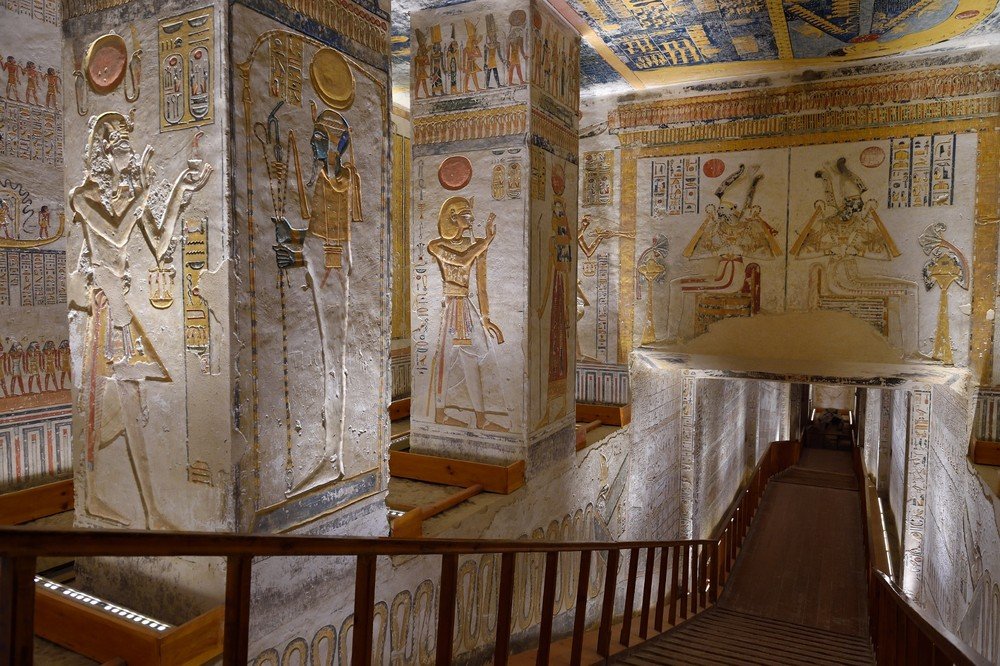
The strongest experience usually comes from noticing differences between several tombs rather than trying to enter as many as possible. Layout, decoration, color preservation, scale, and religious imagery can vary considerably.
A slower comparison encourages visitors to look for:
These details reveal a far more personal side of ancient Egyptian belief than monumental architecture alone can provide.
The Temple of Hatshepsut shifts the atmosphere again. Its terraces rise against the limestone cliffs of Deir el-Bahari, creating an architectural composition that feels carefully integrated into the surrounding landscape.
The site also introduces questions about political legitimacy, royal representation, religious authority, and memory. Hatshepsut’s architectural program offers another perspective on kingship after the Pyramid Age of Giza and the hidden royal tombs nearby.
That variety matters during a short trip. Instead of seeing another monument that resembles the previous one, visitors move between completely different architectural solutions, each connected to a different royal purpose.
By the time the journey reaches Karnak, the historical progression has moved far from Giza. The focus is no longer royal burial alone but an enormous religious complex shaped by successive rulers over centuries.
The Great Hypostyle Hall creates one of Luxor’s most memorable visual experiences. Massive columns rise overhead, carvings cover the stone surfaces, and shafts of sunlight move through spaces that make visitors appear almost miniature by comparison.
This is an ideal place to recognize how different the two ends of the journey have become. Giza relied on clean monumental geometry against open desert; Karnak creates complexity through columns, courtyards, gateways, inscriptions, and accumulated building phases. Both express royal power, but they do so in entirely different architectural languages.
The real value of combining Cairo and Luxor is not that more famous attractions fit into a short amount of time. It is that each destination explains something the other cannot.
Cairo can establish:
Luxor can then reveal:
Viewed this way, the itinerary becomes chronological rather than simply geographical.
Hurghada still plays an important role even when the historical portion of the trip becomes more ambitious. The Red Sea provides the slower setting before and after the cultural journey, allowing the traveler to move between relaxation and high-intensity sightseeing instead of remaining in the same travel mode for the entire vacation.
That balance is one reason thoughtfully structured Egypt tour packages can feel more complete than simply stacking independent excursions together. The coastline, flights, hotel stay, archaeological days, and return to Hurghada should form one continuous journey, with enough contrast between each stage to keep the experience fresh without making it feel fragmented.
The rhythm might look like this:
That final recovery period matters. It gives the trip time to settle rather than ending immediately after the most intensive sightseeing.
Two days across multiple destinations naturally create pressure to maximize every hour, but adding too much can weaken the very experience the itinerary is designed to provide.
Instead of asking whether another stop can technically fit, ask whether it adds a new historical or visual idea.
Useful planning rules include:
The itinerary should feel ambitious, not punishing.
A short multi-city extension requires surprisingly little luggage. A compact overnight bag is usually more practical than carrying anything that makes airports, hotel transfers, or archaeological visits more complicated.
Useful essentials include:
The objective is to move easily between airports, archaeological sites, museum interiors, hotel spaces, and outdoor temples without constantly managing luggage.
Returning to Hurghada after Cairo and Luxor creates one final shift in atmosphere. The pyramids, museum galleries, royal tombs, towering columns, and Nile Valley give way once again to open water, resort lights, mountain silhouettes, and the quieter pace of the Red Sea.
That final contrast helps explain why the journey works. Hurghada does not compete with Cairo or Luxor; it frames them. The coast provides relaxation, Cairo introduces one era of ancient Egyptian ambition, and Luxor reveals another world of temples, tombs, and ceremonial landscapes.

Two days will never reveal everything about either city, and that should not be the goal. A successful journey chooses enough from each destination to make the historical transition clear: pyramids rising from the desert, ancient objects connecting centuries of change, tombs hidden beneath the Theban cliffs, and temple columns towering above the visitor.
What remains afterward is not simply the memory of seeing two famous places. It is the feeling of having traveled through two different versions of ancient Egypt—and then returned to the Red Sea understanding the country as something much larger than the coast where the journey began.