Machu Picchu may be the headline attraction, but getting there is an experience in its own right. For independent travelers exploring Peru, the journey takes you from busy Andean cities and high-altitude valleys toward the forested mountains surrounding one of South America’s most famous archaeological sites.
Unless you are arriving via a multi-day trek, the train is likely to play an important role in the final part of your journey. The railway through the Sacred Valley follows a spectacular route toward Aguas Calientes, also known as Machu Picchu Pueblo, the gateway town below the citadel. Understanding the different train experiences, departure points, and practical considerations beforehand can make this part of your Peru itinerary much easier to organize.
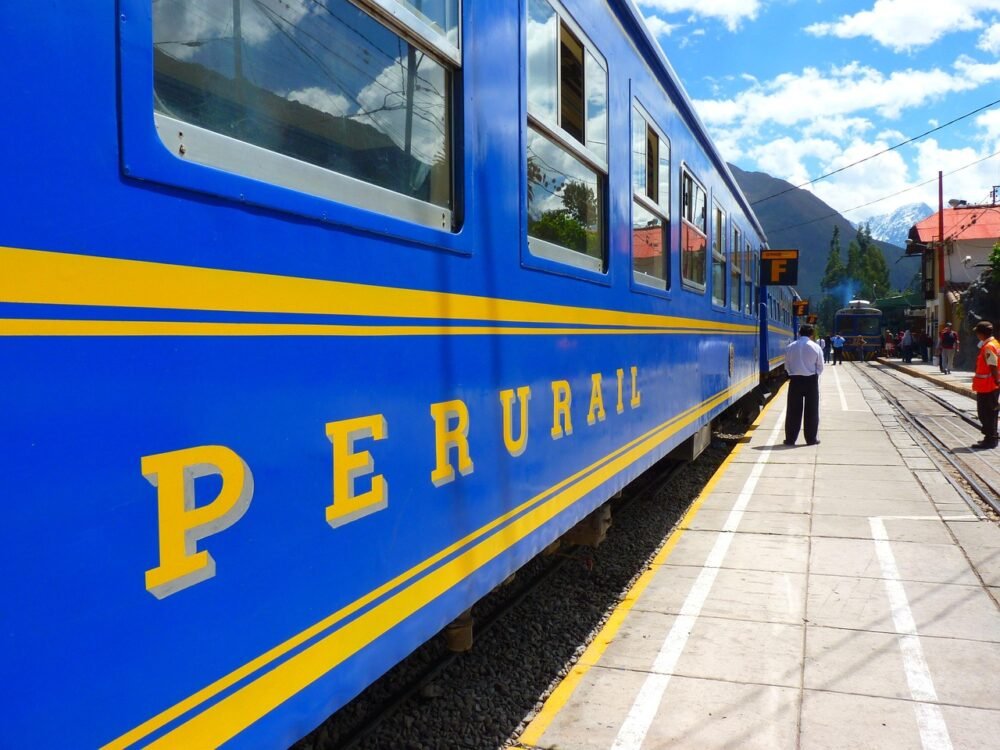
It is tempting to think of the train simply as transportation between the Sacred Valley and Machu Picchu. In reality, the scenery makes the journey worth paying attention to. As the train travels toward Aguas Calientes, the surrounding landscape gradually changes. Mountains rise sharply alongside the railway, the Urubamba River follows much of the route, and the terrain becomes increasingly lush as you approach Machu Picchu.
For travelers accustomed to backpacking by bus or shared van, sitting beside a window and watching the Andes unfold provides a completely different perspective on the region. It is also one of those occasions when the journey itself deserves some space in your itinerary. Instead of treating the train as dead time between destinations, keep your camera accessible, take the window seat when possible, and enjoy the transition between the Sacred Valley and the cloud-forest environment around Machu Picchu.
One useful thing to know before booking is that there is no single type of train experience. Travelers can choose between services emphasizing straightforward comfort, panoramic scenery, additional onboard experiences, or more exclusive travel. Inca Rail, for example, operates several categories for different travel styles.
Before booking, it is worth comparing the available Inca Rail trains rather than choosing solely according to departure time. Options range from The Voyager and panoramic-focused The 360° to The Prime, The First Class, and The Private. For backpackers and independent travelers, the important question is not necessarily which service has the most features. It is which one makes sense for your budget and priorities.
If your main objective is reaching Machu Picchu comfortably while keeping costs under control, a simpler service may be enough. If you have additional room in your budget and consider the railway journey one of the highlights of the trip, panoramic windows or additional onboard experiences may be worth considering.
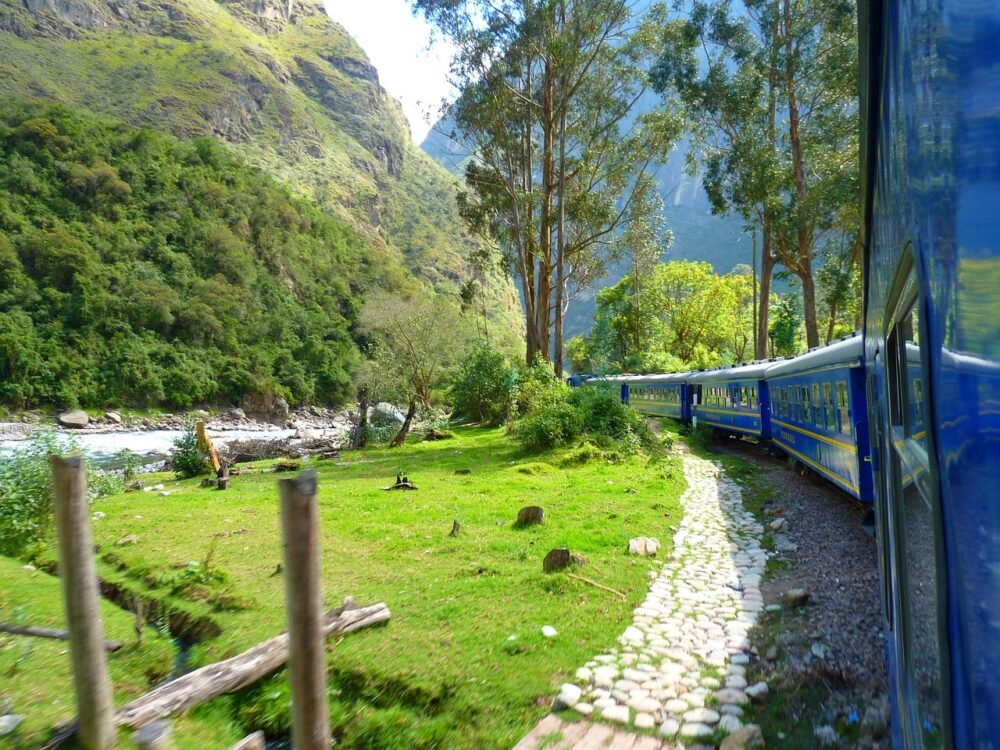
The Voyager is positioned as Inca Rail’s economy category and provides a comfortable way to make the journey while still enjoying the scenery through wide windows. This type of service can make sense for travelers whose budget is primarily going toward experiences elsewhere in Peru.
If you are spending several weeks backpacking through the country, you may prefer putting extra money toward accommodation, food, trekking, or another destination rather than upgrading every part of your Machu Picchu visit. That does not mean ignoring the journey. You still travel through the same remarkable Andean landscape on the way toward Machu Picchu.
If scenery is one of your biggest priorities, the 360° takes a different approach. The service is designed around panoramic views and includes an open-air observatory area, allowing passengers to experience the surrounding mountains beyond the view from their seats. There are also onboard elements such as Andean music and cultural experiences.
This can be particularly appealing to photographers and travelers who enjoy scenic railway journeys as much as the destination itself. The Sacred Valley is one of Peru's most dramatic landscapes, so having greater visibility during the journey can add another dimension to the trip.
Traveling independently does not necessarily mean choosing the cheapest option for every part of a trip. Some backpackers travel on a tight budget for weeks and then deliberately spend more on one or two experiences. For those travelers, Inca Rail also offers The Prime and The First Class.
The Prime focuses on additional space, comfort and a more refined atmosphere, while The First Class moves further into a premium experience with features such as gourmet cuisine, live music and an open-air balcony.
At the other end of the spectrum is The Private, a customizable private-carriage experience intended for travelers seeking privacy and personalized service. These options will not fit every backpacker's budget, but knowing the full range makes it easier to decide where the train journey sits among your priorities.
Your departure point is another important part of planning. Ollantaytambo is one of the key departure points for trains toward Machu Picchu. For independent travelers, spending some time there rather than simply passing through can be worthwhile.
The town sits within the Sacred Valley and has its own impressive archaeological site, traditional streets and surrounding mountain scenery. Staying overnight can also break the journey into manageable stages instead of trying to squeeze transportation and sightseeing into the same day.
Depending on your itinerary, services involving Cusco and ground transportation toward Ollantaytambo may also be available. Check exactly what your ticket includes before travel day so you know where and when you need to board.
If there is one habit backpackers usually already have mastered, it is traveling light. That skill is useful on the Machu Picchu train. Inca Rail states that passengers can generally carry one piece of hand luggage weighing up to 8 kg. If you are traveling around Peru with a much larger backpack, consider leaving unnecessary belongings at your accommodation or arranging storage before heading toward Machu Picchu.
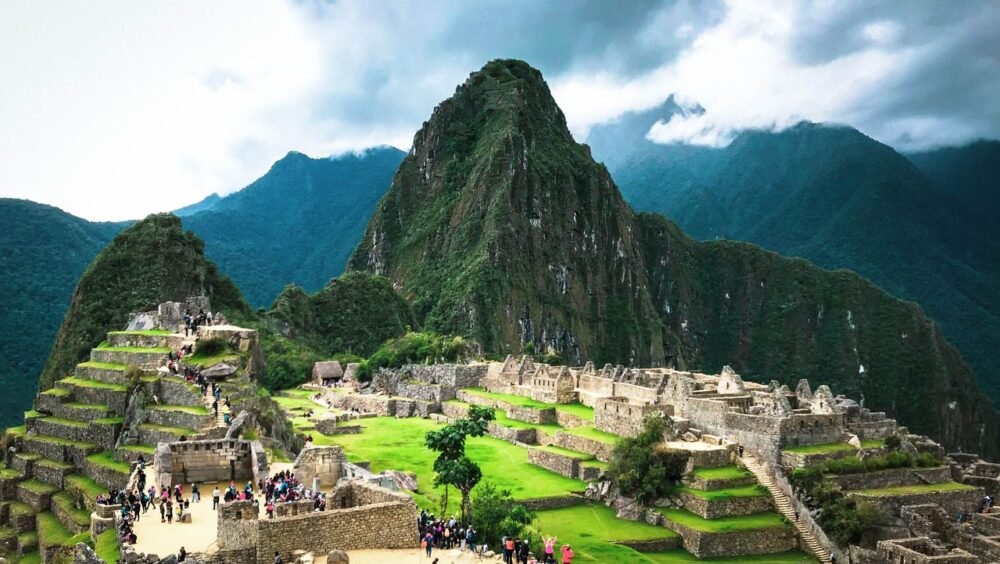
For a short Machu Picchu visit, you probably need much less than you think. Keep your passport and travel documents accessible, along with water, weather protection, essential medication, your phone or camera, and anything else you will need immediately after arrival.
A tightly packed itinerary can become stressful quickly when several transportation connections depend on one another. Avoid planning your arrival at the station down to the last minute. Inca Rail advises travelers to arrive at least 30 minutes before departure, and allowing a little extra flexibility is sensible when traveling through an unfamiliar region. The same principle applies when planning the rest of your day.
If you are connecting transportation from Cusco, traveling through the Sacred Valley, or continuing to accommodation after arriving in Aguas Calientes, build some breathing room into your schedule. Independent travel is usually much more enjoyable when one minor delay does not threaten the entire day's itinerary.
Backpackers often enjoy keeping plans flexible, but Machu Picchu is one destination where complete spontaneity can work against you. Train services and Machu Picchu entry availability can become limited during popular travel periods. Inca Rail recommends booking train tickets early, particularly for travel between May and September.
You do not necessarily have to plan every detail of your Peru trip months in advance. However, once you know roughly when you want to visit Machu Picchu, securing the important components of that part of your itinerary can save you from having to reorganize everything later.
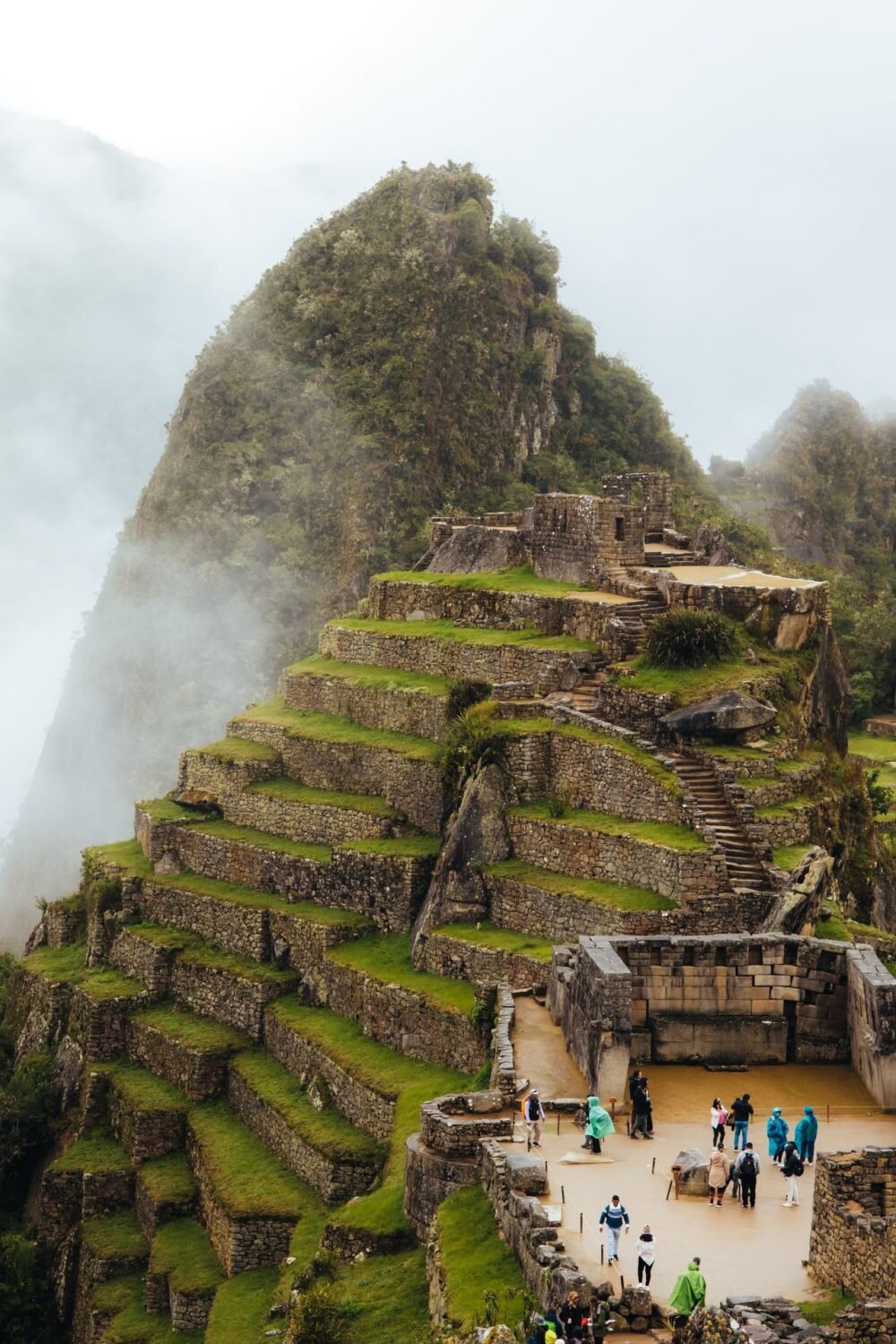
One of the pleasures of independent travel is learning that getting somewhere can be just as memorable as arriving. The journey to Machu Picchu demonstrates that perfectly. You can explore Cusco, travel through the Sacred Valley, spend time in Ollantaytambo and then watch the mountains transform from your train window as you approach Aguas Calientes. Each stage reveals a different side of the Peruvian Andes.
Choose the train experience that fits your budget rather than someone else's idea of the perfect trip. Pack lightly, leave enough time for connections, and keep some attention on the landscape outside your window. Machu Picchu will understandably be the highlight for many travelers. However, when the route there passes through one of the most spectacular landscapes in Peru, the journey deserves to become part of the adventure too.