Motorhome backpacking is a style of independent travel that combines transport, accommodation, cooking facilities and storage in one vehicle. Instead of moving from hostel to hostel, travelers can carry the same low-cost mindset onto the road.
That freedom works particularly well in the UK, where beaches, national parks, villages and hiking routes are often spread beyond major transport hubs.
The challenge is cost. Fuel, campsites, parking and vehicle hire can quickly add up, but careful route planning, simple meals and slower travel can make a motorhome trip surprisingly affordable.
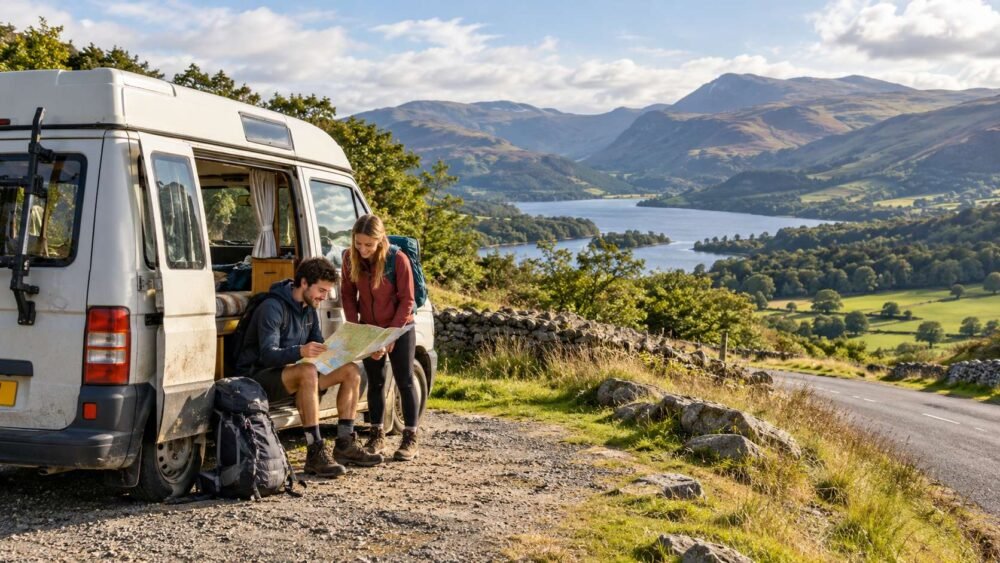
Traveling around the UK by motorhome can be affordable for backpackers, especially when two or more people share the main expenses. The vehicle acts as both transport and accommodation, which changes how the travel budget works.
A traditional backpacking trip may involve separate spending on hostels, trains, buses and restaurants. Motorhome travel replaces some of those costs with fuel, campsite fees, parking and the cost of renting or owning the vehicle.
It is not always cheaper. A solo traveler moving between well-connected cities may save more by using coaches and hostels, while a couple exploring rural Scotland, Wales or northern England may find a motorhome more practical.
UK campsite prices also vary. In 2026, a typical motorhome pitch with electric hookup can cost around £30 to £45 per night, although basic pitches may be cheaper.
A realistic motorhome budget should include the full cost of traveling, sleeping, eating and sightseeing. There is no reliable universal daily figure because spending depends heavily on mileage, season and travel style.
A traveler who drives 100 miles every day will spend much more on fuel than someone who stays in one location for several nights.
The main expenses are:
Create a budget around your actual itinerary rather than an optimistic daily target.
Travelers generally have three options: renting, borrowing, or owning a motorhome. The most suitable choice depends on trip length and how often you plan to travel.
For a short holiday, renting is usually simpler. For repeated or extended trips, ownership may be more attractive, although you must also consider insurance, storage, servicing, and depreciation.
Motorhome rental is the temporary hire of a recreational vehicle for a fixed period, and it is often the easiest option for first-time travelers.
Compare several rental companies and check what the advertised price includes. Mileage allowances, insurance excesses, cleaning charges, bedding and additional equipment can all affect the final cost.
Prices are often higher during summer and school holidays, so traveling during quieter periods may provide better value.
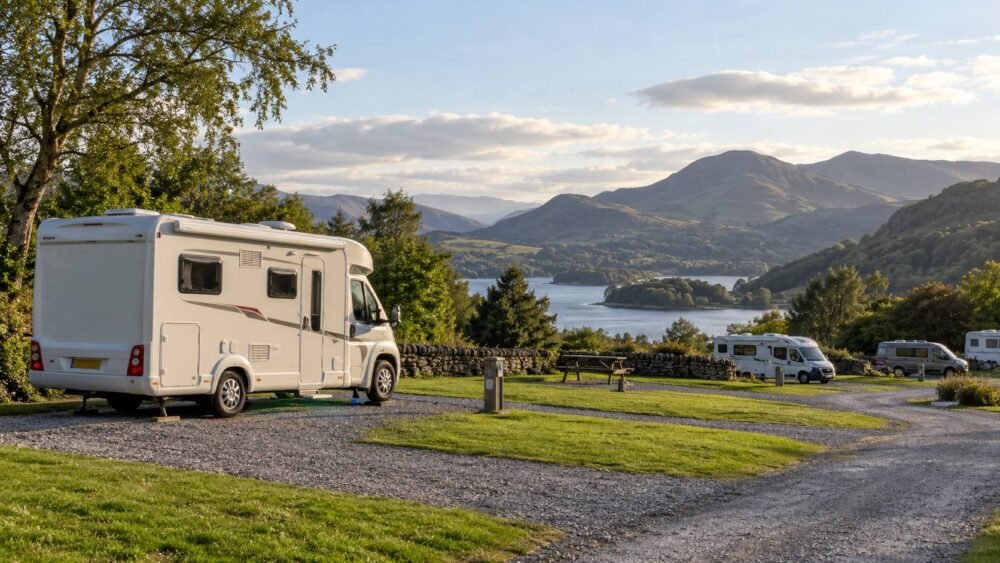
A used motorhome is a previously owned recreational vehicle that combines road transport with sleeping and living facilities. Buying one can make sense for travelers planning frequent or longer trips.
The market includes compact two-berth motorhomes and larger family layouts, so buyers should choose a vehicle based on how they plan to travel.
Travelers comparing long-term rental with ownership can browse used motorhomes to see available layouts and price ranges.
When comparing motorhomes for sale or used motorhomes for sale, check service history, mileage, tires, damp inspections, payload, and habitation equipment. Established motorhome dealers can also explain the differences between campervans, coachbuilt vehicles and larger motorhomes.
A cheap motorhome route starts with controlling distance. Constant driving increases fuel costs and leaves less time to enjoy each destination.
The UK may look compact on a map, but rural roads, mountain routes, and congestion can make relatively short journeys take longer than expected.
A budget route should follow five basic steps:
Scotland, Wales, southwest England and northern England can each support a full road trip.
Slow travel is often cheaper and more enjoyable because you spend less time refueling and more time exploring.
Motorhome travelers should use campsites, designated overnight areas, or locations where overnight stays are specifically permitted. Parking somewhere does not automatically mean you can sleep there overnight.
Rules vary between councils, landowners and destinations. Some car parks allow motorhomes during the day but prohibit overnight stays.
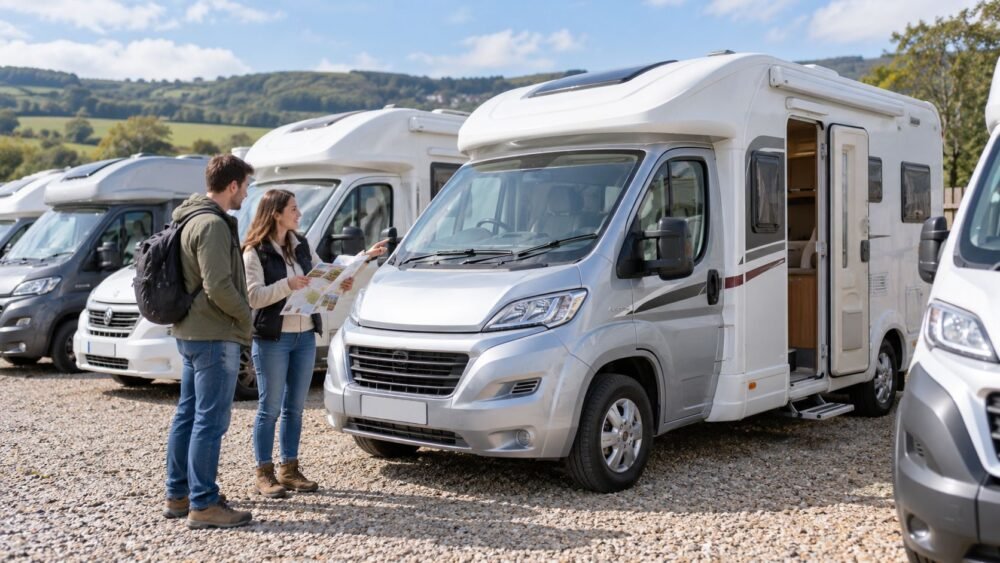
In the Lake District, for example, the tolerance sometimes associated with tent wild camping does not automatically apply to motorhomes and campervans. Travelers are encouraged to use approved locations or obtain landowner permission.
Possible overnight options include:
Always read local signs and check current restrictions rather than relying only on older online advice.
Reducing overnight costs requires flexibility. Full-service campsites are useful when you need showers, electricity, fresh water or waste disposal, but you may not need those facilities every night.
A practical approach is to combine fully equipped campsites with cheaper legal stopovers.
Useful strategies include:
Some councils offer designated overnight schemes. These can cost considerably less than conventional campsites, although availability varies by region.
Cooking is one of the main financial advantages of motorhome travel. A small kitchen lets travelers prepare breakfast, packed lunches, and evening meals instead of constantly buying food.
Simple meals are usually best because storage and cooking space are limited.
Good habits include:
Pasta, porridge, rice dishes, wraps, soup and one-pan meals all work well in compact kitchens.
The UK offers many low-cost activities because some of its strongest attractions are landscapes, public spaces and walking routes.
A motorhome makes these places easier to reach, especially outside major cities.
Budget-friendly activities include:
Building the itinerary around outdoor activities can significantly reduce spending without making the trip feel limited.
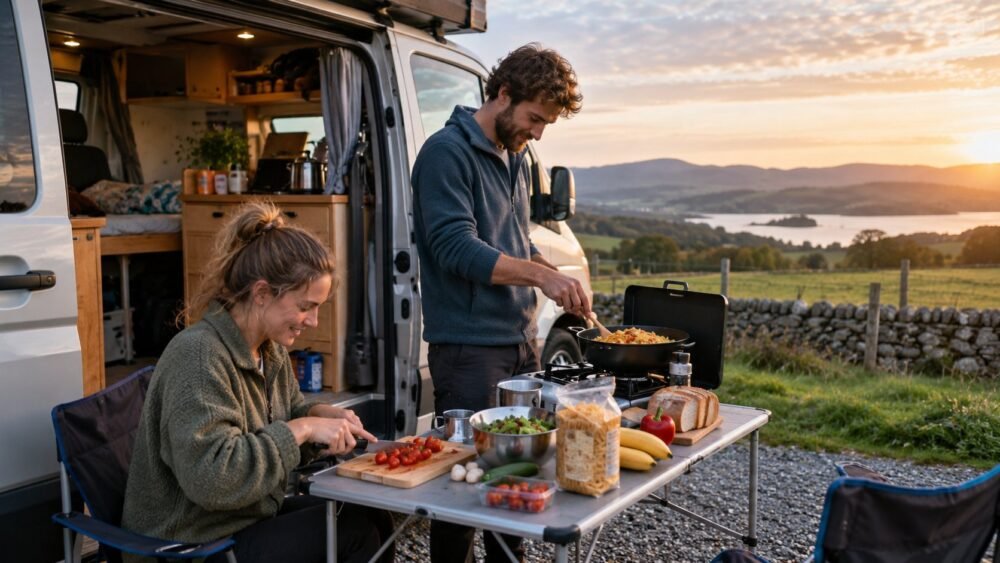
Backpackers can reduce motorhome costs by keeping the same habits they use on hostel and public transport trips.
The vehicle changes the logistics, but the underlying budget principles remain the same.
Useful habits include:
A motorhome does not need to turn a simple trip into an expensive holiday. The vehicle is simply a mobile base.
Budget motorhome trips often become expensive because of several small planning mistakes.
Common problems include:
You can avoid most of these problems with basic preparation.
Knowing roughly where you are going, how far you will drive, and what facilities you actually need helps keep costs predictable.
A first motorhome trip should be simple enough to enjoy without spending every day solving logistical problems.
Avoid trying to cover the whole country in one short trip. Too much driving increases fuel costs and leaves less time for hiking, sightseeing and relaxing.
A practical approach is:
Leave some flexibility in the schedule. If you discover a good walking route, peaceful beach, or interesting town, you should be able to stay another night.
That freedom is one of the biggest advantages of motorhome travel.
Exploring the UK by motorhome doesn't have to involve expensive campsites, constant driving, or restaurant meals every day. A carefully planned trip can combine the independence of backpacking with the convenience of carrying your accommodation and kitchen with you.
Three principles make the biggest difference: travel slowly, research overnight stops, and keep a backpacker approach to food and activities.
Spend more time exploring and less time driving. Cook simple meals. Pay for campsite facilities when you genuinely need them.
Do that, and a motorhome can become an affordable base for discovering UK coastlines, trails, villages and countryside at your own pace.