Most Paris itineraries stay on the surface. You walk the river, climb a tower, and line up for a museum, and you never think about what is under your feet. That is a shame, because Paris has a second city below the sidewalks, with quarries, sewers, a buried canal, and the walls of a castle. Much of it is open to visitors, and it stays cool whatever the weather is doing above.
Here are five places where you can go underground, and what to know before you head down.
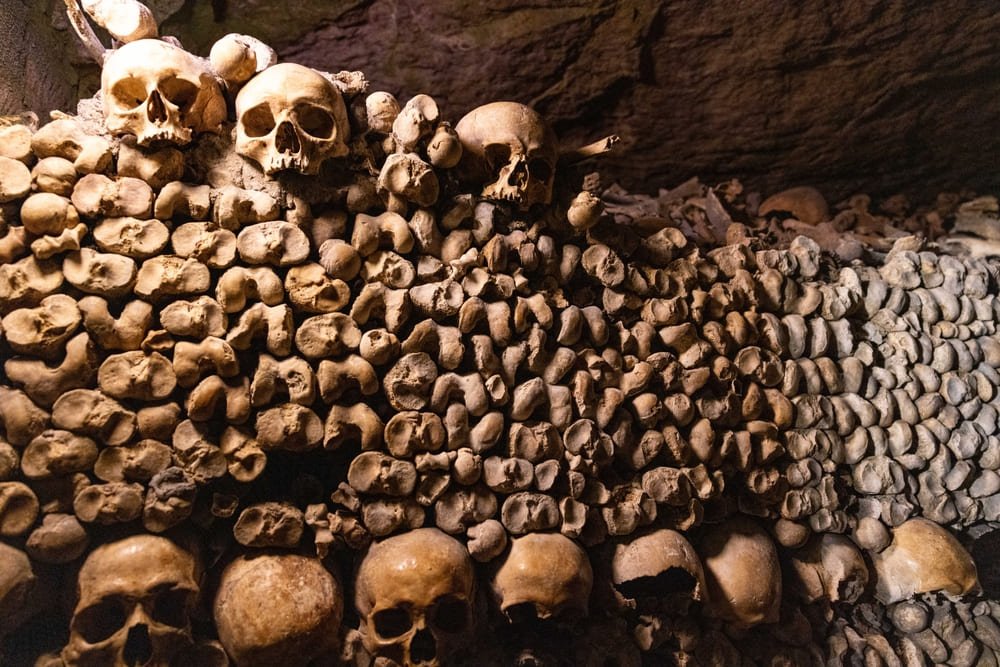
The Catacombs are the most famous stop below the city, and they earn it. In the late 1700s, the cemeteries of Paris were so full that they had become a public health problem. The city decided to move the bones into old limestone quarries that lay outside the capital at the time. The first transfers ran from 1785 to 1787, at night, and the site was consecrated as the municipal ossuary in April 1786.
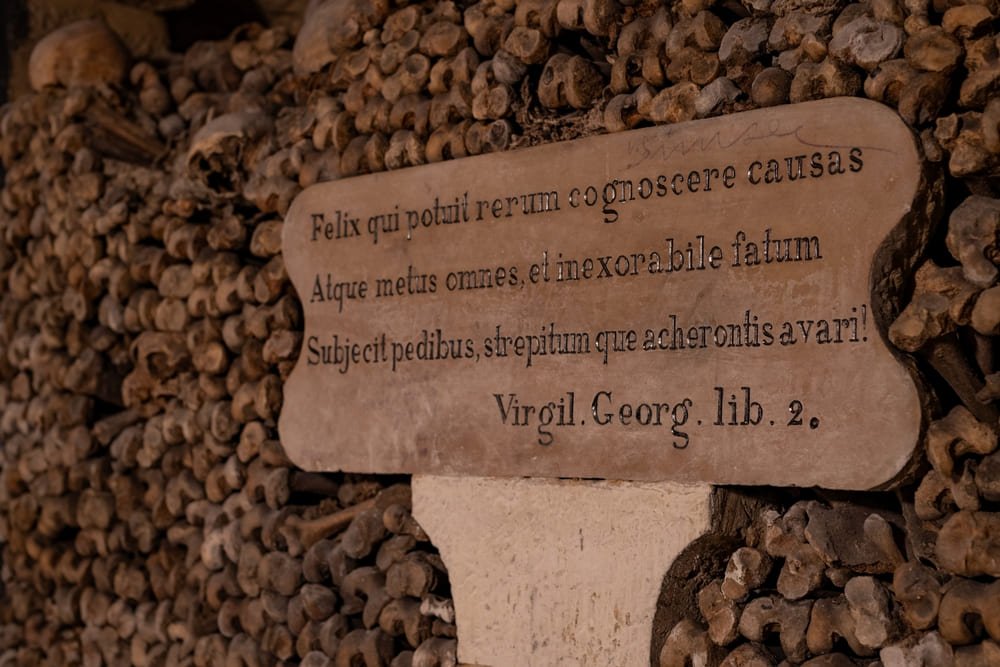
At first the bones were simply piled up. Before the site opened to the public in 1809, an inspector named Héricart de Thury had them rebuilt into walls, with rows of thigh bones and skulls facing the corridor. The remains of more than six million Parisians rest here. At the entrance to the ossuary, a stone gateway carries the warning "Arrête! C'est ici l'empire de la mort," which means "Stop! This is the empire of death."
A few practical points make the visit much easier:
One rule matters more to backpackers than to anyone else. Suitcases and large bags are not allowed, there is no cloakroom, and the exit is nearly half a mile from the entrance. Leave your pack at the hostel and bring a small daypack that you can carry in front of you.
The standard route covers only a small part of the old quarries. If you want to go further, some guided visits take small groups into the galleries closed to regular ticket holders, with a guide to explain what you are looking at.
It sounds like a dare, but the Paris Sewer Museum is one of the most interesting small museums in the city. It sits inside a working part of the sewer system beside the Pont de l'Alma, on the left bank of the Seine.
Organized tours of the sewers began in 1889, when visitors rode through the tunnels on boats and wagons. Today you walk. The displays follow the story from the first medieval drains to the modern network designed in the 19th century by the engineer Eugène Belgrand. Victor Hugo sent Jean Valjean through these tunnels in Les Misérables, and it is hard not to think of him as you go.
The museum reopened in 2021 after a full renovation and, like the Catacombs, is closed on Mondays.
You do not need a museum ticket for this one, only a ride on the metro. The Line 11 platforms at Arts et Métiers have been covered in riveted copper plates since 1994, when the Belgian comic artist François Schuiten redesigned the station.
The effect is like standing inside a submarine from a Jules Verne novel. Large cogs hang from the ceiling, and a row of portholes along the platform opens onto small scenes linked to the science and technology museum above. Step off the train, let the next one go, and take a few photos before you carry on.
The Canal Saint-Martin is known for its iron footbridges and tree-lined banks. Fewer travelers know that nearly half of it runs underground. The canal was completed in 1825, and in the mid-19th century the stretch between Rue du Faubourg du Temple and Place de la Bastille was covered over to create wide boulevards on top.
Canal cruises pass through this vaulted tunnel, which runs for about a mile and a quarter. Openings in the roof let in shafts of daylight, and the noise of the city disappears. If you would rather stay on dry land, walk along Boulevard Richard-Lenoir and look for the vents among the gardens. The water is right below you.
Millions of people visit the Louvre for the paintings and never see its oldest part. Around 1190, King Philip II began a fortress here to protect the city wall. When the glass pyramid was built in the 1980s, workers cleared the base of the castle's keep and its walls.
You can now walk past them on the lower level of the Sully wing. It is part of the regular museum visit. For the rest of the building, Backpacker Travel has a deep dive into the Louvre Museum.
Paris is beautiful at street level, but it makes more sense once you have seen what lies below it. The quarries supplied the stone, the sewers made the city healthy, and the canal brought in its water. Pair one or two of these stops with a few lesser-known attractions in Paris, and you will go home with stories your friends have not heard before. If you are arriving by rail from London or elsewhere in Europe, the train travel guide is a good place to start planning.


